


ISO 2758 vs ISO 2759: How to Choose a Bursting Strength Test Method
Date: August 23, 2026 Categories: Technical Guides & Blog Views: 2981
Use ISO 2758 for paper within its stated 70–1,400 kPa application range. Use ISO 2759 for board, including corrugated and solid fibreboard, generally within 350–5,500 kPa. Do not select the method only because a predicted result falls inside the overlapping 350–1,400 kPa range. Material classification and intended use still control the decision. ISO 2758 specifically says that components of combined board—such as fluting medium or linerboard—are more suitably tested by ISO 2759.
1. The Core Difference
2. Selection Table
3. Why Results Are Not Interchangeable
4. How the Test Works
5. Laboratory Workflow
6. Results and Burst Index
7. Equipment Selection
8. Common Errors
9. Burst vs Box Compression
Frequently Asked Questions
The Core Difference: Paper Method vs Board Method
ISO 2758 and ISO 2759 measure the same broad property: the maximum hydraulic pressure a clamped sheet can withstand before it ruptures over an expanding diaphragm. The standards are not, however, two interchangeable pressure ranges for one universal procedure.
ISO 2758:2014 is the paper method. ISO states that it applies to paper with bursting strengths from 70 kPa to 1,400 kPa. It is not intended for the individual papers used to make combined board, such as fluting medium or linerboard; ISO directs those materials toward ISO 2759.
ISO 2759:2014 is the board method. Its published scope covers all types of board, including corrugated and solid fibreboard, from 350 kPa to 5,500 kPa. It can also be used down to 250 kPa for certain papers or boards intended to make a higher-strength material, although ISO warns that the stated accuracy or precision may not apply in those lower-strength cases.
ISO 2758 or ISO 2759? Use This Selection Table
| Material or task | Starting method | Published application range | Decision note |
|---|---|---|---|
| General paper | ISO 2758 | 70–1,400 kPa | Confirm that the specimen is paper and not a component intended for combined board. |
| Linerboard | ISO 2759 | Board method | Its role in corrugated construction is more important than a result that may overlap the paper range. |
| Fluting medium | ISO 2759 | Board method | ISO 2758 explicitly identifies components of combined board as more suitable for ISO 2759. |
| Solid fibreboard | ISO 2759 | 350–5,500 kPa | Select a pressure system and diaphragm configuration appropriate to the expected board strength. |
| Corrugated fibreboard | ISO 2759 | 350–5,500 kPa | Check whether the customer requires testing of combined board, a component, or the finished box. |
| Unknown or customer-specified stock | Do not guess | — | Request the material specification, intended construction, governing document, and expected result range. |
Customer specifications may reference TAPPI or another regional method instead of ISO. For example, TAPPI lists T 403 for paper and T 807 for linerboard. Treat the named method and edition as a contract requirement; do not substitute an ISO method merely because the test principle looks similar.
Why the Two Results Should Not Be Treated as Interchangeable
The standards overlap numerically between 350 kPa and 1,400 kPa, but that overlap does not mean that one specimen will produce an equivalent result under either method. Apparatus requirements—including the clamping geometry, diaphragm system, hydraulic delivery, pressure range and verification provisions—are method-specific.
These differences affect how the sheet is restrained, how the diaphragm loads the specimen, and how the rupture pressure is captured. If a laboratory changes methods, diaphragms, clamping condition or pressure range, it should not merge the new results into a historical control chart without a documented correlation study and customer approval.
First classify the material and confirm its intended use.
A new diaphragm or clamping arrangement can shift the measurement system.
Record the standard, edition, instrument configuration and conditioning with every result set.
How Hydraulic Bursting Strength Testing Works
A specimen is clamped over a circular elastic diaphragm. Hydraulic fluid expands the diaphragm at the controlled condition specified by the selected method. The diaphragm pushes against the specimen until rupture, and the system records the maximum pressure associated with that event.
The measured value is not a pure single-direction tensile property. It reflects the combined response of the sheet structure as it deforms over the diaphragm. Fibre type, fibre preparation, formation, sheet weight, bonding, sizing, moisture, coatings and local defects can all influence the result.
Because moisture changes paper and board behaviour, specimen conditioning and the test environment are not administrative details. Use the atmospheric and preparation requirements named by the governing document or customer specification, and record any deviation.
A Defensible Laboratory Workflow
The sequence below is a planning framework, not a substitute for the authorized standard. Sample number, conditioning, pressure application, validity criteria and calculations must come from the selected edition.
Record grade, grammage, construction, coating, production direction, supplier or batch, and whether the sheet is paper, board, or a component of combined board.
State ISO 2758, ISO 2759, TAPPI, or the customer method before preparing the test. Record all approved deviations.
Follow the required atmosphere and time. Protect conditioned samples from uncontrolled moisture changes before testing.
Confirm pressure verification status, diaphragm condition, clamping surfaces, fluid system, zero, selected range, software method and safety controls.
Place a clean test area over the diaphragm opening. Use the method-required clamping condition; wrinkles, pre-damage and slip invalidate the load path.
Run the correct stored method and observe the event. Do not change pressure delivery settings merely to shorten test time.
Reject tests that violate the method's validity criteria. Test the required number of representative areas and retain individual results.
Report individual and summary values, units, specimen information, conditioning, method and edition, instrument identification, deviations and—when required—burst index.
Bursting Strength, Burst Index, and Result Interpretation
Bursting strength is the maximum pressure recorded at rupture and is normally reported in a pressure unit such as kilopascals. It is useful for comparing like materials tested under the same method and controlled conditions.
Burst index relates bursting strength to grammage. This normalization can help compare sheets with different basis weights, but it does not make unlike fibre systems, coatings, moisture histories, methods or constructions directly equivalent. Use the exact calculation and reporting rules in the governing standard.
Use the units, significant figures, and grammage method specified by the governing document
Investigate the distribution, not only the average. Wide spread may indicate non-uniform formation, local defects, moisture variation, coating differences, clamp slip, diaphragm condition or samples taken from inconsistent positions. A trend that changes immediately after replacing a diaphragm or changing the test method should trigger a measurement-system review before a process conclusion.
Bursting Strength Tester Selection Checklist
A label such as “paper and board burst tester” does not prove that one configuration satisfies both methods across the required range. Ask the supplier to map your material, standard and expected results to the actual pressure system, clamp, diaphragm, software and verification package.
Confirm these equipment capabilities in writing
- The exact method and edition supported by the supplied configuration
- Measurement range matched to expected paper or board results
- Method-correct specimen opening, clamping arrangement and diaphragm
- Controlled hydraulic delivery and automatic peak capture
- Pressure verification, calibration access and traceable documentation
- Individual results, average, variation, units and optional burst-index reporting
- Safety shielding, overpressure protection, fluid containment and service access
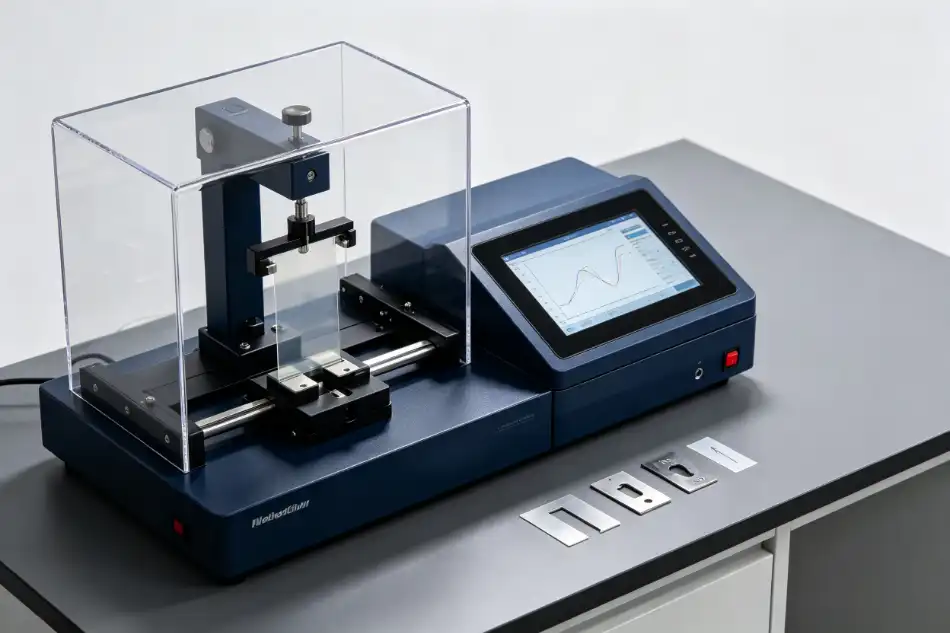
Review the DERUI automatic bursting strength tester as a starting point, then send the material, method and expected pressure range for configuration confirmation. Do not assume support for both ISO methods until the supplied clamp, diaphragm, pressure range and software have been verified against your requirement.
Eight Errors That Distort Burst-Test Decisions
- Choosing by predicted kPa alone. Material classification and end use determine whether ISO 2758 or ISO 2759 is appropriate.
- Calling linerboard “paper” without considering its role. Components of combined board are directed toward the board method.
- Using one generic instrument setup for both methods. Method-specific apparatus requirements still apply.
- Testing outside a suitable pressure range. Poor range selection can weaken resolution or exceed instrument capability.
- Ignoring moisture and conditioning. Paper and board are moisture-sensitive, so uncontrolled atmosphere can obscure real process differences.
- Using a worn or wrong diaphragm. Diaphragm condition is part of the measurement system, not a minor consumable detail.
- Reporting only an average. Individual values and variation reveal defects, sampling problems and instrument changes.
- Claiming compliance from a product label. Compliance requires the correct configuration, controlled workflow, current standard and defensible records.
Bursting Strength Is Not Box Compression Strength
Burst testing evaluates a sheet or board material under hydraulic diaphragm loading. A box compression test evaluates the load-bearing response of a finished container between compression platens. The tests answer different design questions and should not be presented as substitutes.
| Test | Specimen | Primary output | Use it to answer |
|---|---|---|---|
| Burst test | Paper, linerboard, paperboard or combined board as defined by the method | Rupture pressure; optionally burst index | How does this material or grade compare under the selected burst method? |
| Box compression test | Assembled shipping container or relevant package configuration | Peak compression load, deformation or load-hold behaviour | Can the finished container resist stacking or the specified compression load? |
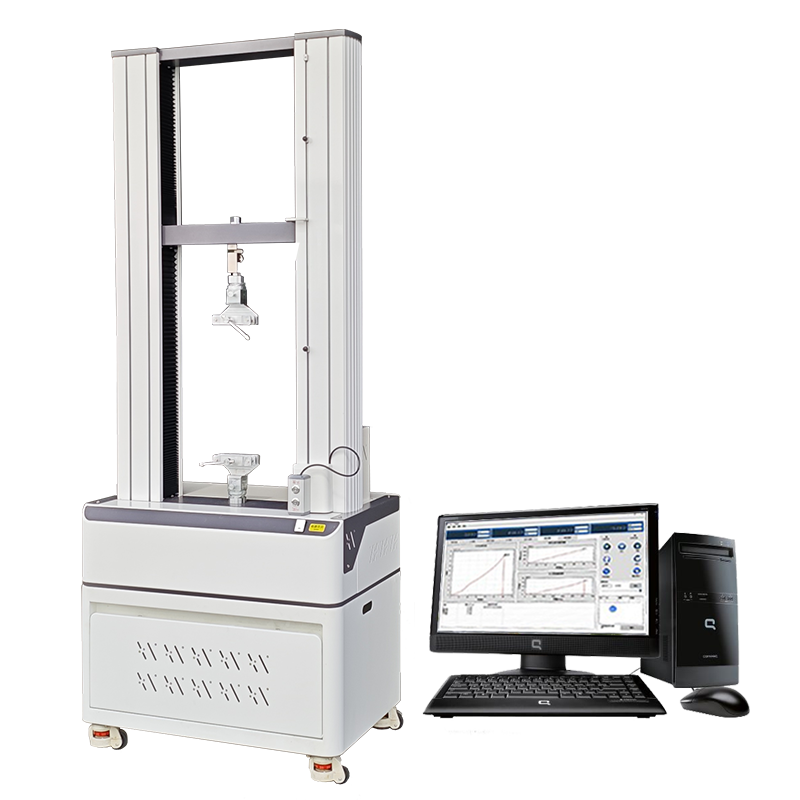
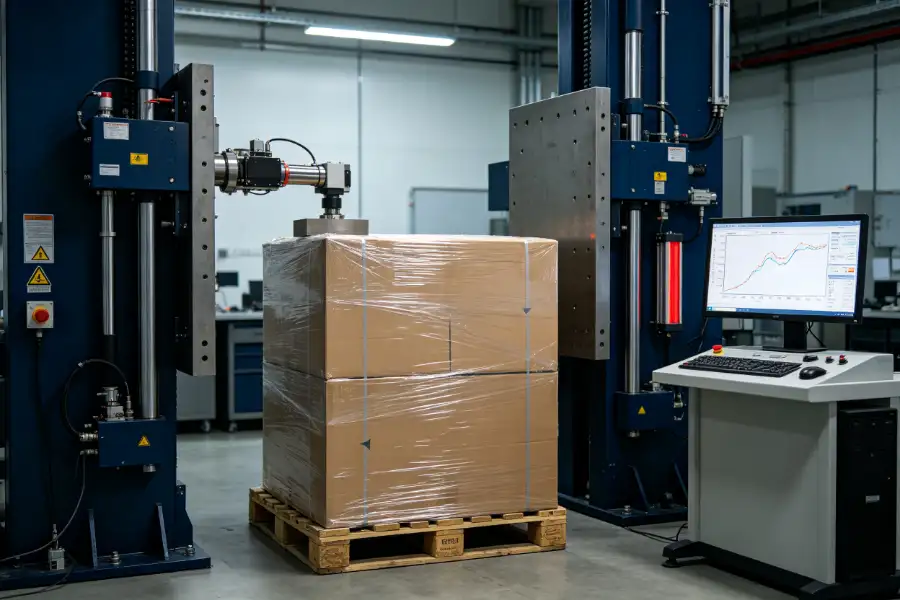
If the decision concerns a complete carton, review the box compression tester and its applicable method rather than trying to infer finished-box performance from burst pressure alone. Laboratories building a broader capability can compare material-level and package-level equipment in DERUI's packaging validation systems.
Select the method first. Then configure the pressure range, clamp, diaphragm and reporting system.
Send DERUI your material type, test standard and edition, expected burst range, grammage range and reporting requirements for a technical configuration review.
View Bursting Strength Equipment
Request a Test Configuration
Frequently Asked Questions
ISO 2758 is the bursting-strength method for paper, while ISO 2759 is the method for board, including corrugated and solid fibreboard. The selection is based on material classification and intended use, not only the expected pressure.
ISO's published scope for ISO 2758:2014 is 70 kPa to 1,400 kPa for paper. It is not intended for components such as linerboard or fluting medium used in combined board.
ISO's published scope for ISO 2759:2014 is 350 kPa to 5,500 kPa for board. It can apply down to 250 kPa in specified circumstances, with an ISO warning about the stated accuracy or precision at those lower values.
Do not select the method on pressure alone. ISO 2758 states that components of combined board, including linerboard and fluting medium, are more suitably tested using ISO 2759.
Possibly, but only if the supplied pressure system, clamping geometry, diaphragm, software method and verification package meet each method over your required range. Confirm the exact configuration in writing.
Burst index relates bursting strength to grammage. It supports comparisons across basis weights when the same valid method and controlled conditions are used. Follow the governing standard for units and calculation details.
No. Finished-box compression also depends on board construction, flute, box dimensions, converting quality, joints, moisture, loading and other factors. Use a box compression test when the requirement concerns the assembled container.
- ISO 2758:2014, Paper—Determination of bursting strength
- ISO 2759:2014, Board—Determination of bursting strength
- TAPPI/ANSI T 403 om-22, Bursting strength of paper
- TAPPI T 807 om-25, Bursting Strength of Linerboard
This article is an equipment-selection and workflow guide. It does not reproduce or replace the copyrighted standards. Purchase or access the authorized edition before performing a conformity test.