

Cornell vs Rollator Mattress
Date: July 14, 2026 Categories: Technical Guides & Blog Views: 6070
Cornell vs Rollator Mattress Testing: Which Method Actually Predicts Real-World Failure?
The Cornell method (109 kg hexagonal roller, 100,000 cycles) and the Rollator method (1,000 N concentrated indenter, 30,000–200,000 cycles) are the two dominant approaches to mattress durability testing — and they test completely different failure modes. Cornell tests distributed surface wear under ASTM F1566; Rollator tests point-load foam breakdown under ASTM D3574 dynamic fatigue principles. Neither test alone is sufficient. A mattress that passes Cornell but fails Rollator has a foam formulation problem — exactly the kind that generates warranty claims. This guide compares all 7 critical parameters, maps each method to specific applications (manufacturer, hotel procurement, foam supplier, test lab, D2C brand), and walks through equipment selection from an $8,000 Cornell-only setup to a $42,000 dual-function system.
1. The Hotel Mattress Problem
2. Cornell Method: Proven, Predictable, Incomplete
3. Rollator Method: The Industry's Response
4. Head-to-Head: 7 Parameters Compared
5. Which Method Fits Your Application?
6. Equipment Selection: What to Actually Buy
The Hotel Mattress Problem: Why Both Tests Exist
A mid-range hotel chain replaced 300 mattresses in 2024. Eighteen months later, 47 of them had visible body impressions exceeding 38 mm — triple the acceptable limit under ASTM F1566 standards. The chain had tested every mattress with a Cornell tester before purchase. All passed.
This is the fundamental tension in mattress durability testing at Derui Testing Equipment, a material testing equipment manufacturer serving mattress and furniture manufacturers worldwide: a passing Cornell score does not guarantee real-world durability. The rollator method was developed precisely to close this gap — but it introduced its own set of problems.
If you manufacture, specify, or certify mattresses, you cannot afford to pick the wrong test. Here is what each method actually measures, where they diverge, and how to build a quality program that uses both intelligently. For a broader look at our testing systems and solutions — including universal testing machines, fatigue testers, and full furniture test lab setups — see our complete equipment catalog.
The Cornell Method: Proven, Predictable, and Incomplete
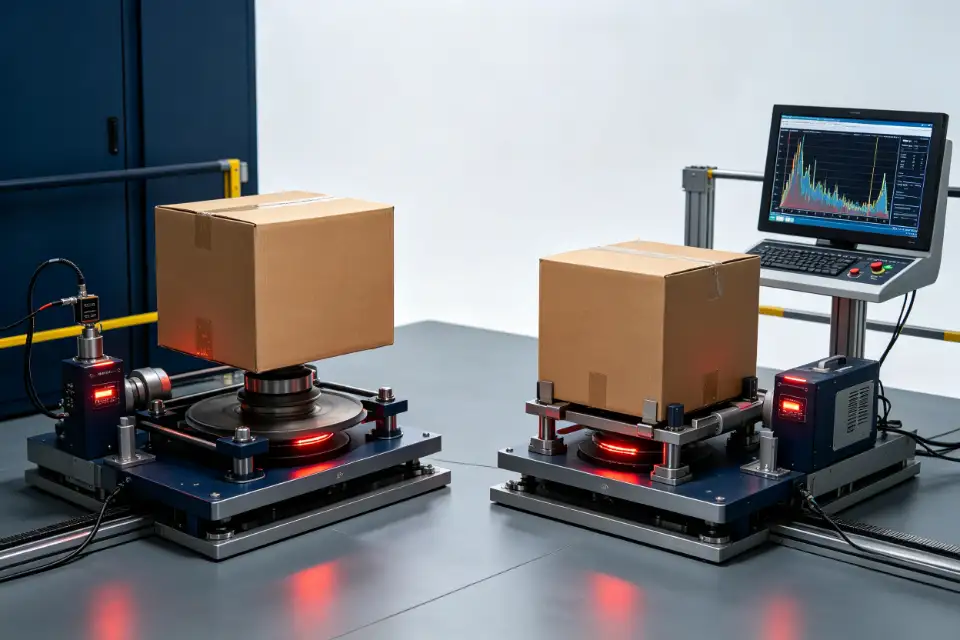
The Cornell method (also known as the hexagonal roller test) has been the mattress industry's durability workhorse for over 40 years. A 109 kg hexagonal roller — roughly the weight of an adult human distributed across six flat surfaces — rolls back and forth across the mattress surface 100,000 times. After the test, technicians measure the resulting indentation. The method is specified in ASTM F1566: Standard Test Methods for Evaluation of Innerspring, Boxspring, and Mattress Durability.
What It Actually Tests
| Parameter | Cornell Specification (ASTM F1566) | What It Reveals |
| Load | 109 ± 4 kg hexagonal roller | Compressive fatigue of the sleep surface |
| Stroke length | 915 mm (36 in) — 60% of mattress length | Middle-third durability (where sleepers concentrate pressure) |
| Cycle count | 100,000 cycles | ~10 years of simulated use |
| Frequency | 16 cycles/min (adjustable) | Controls heat buildup during testing |
| Measurement | Surface indentation post-test | Permanent foam collapse / layer delamination |
The Cornell method applies distributed rolling pressure — the roller moves, redistributing load across the surface. This is closer to how a restless sleeper behaves. But it dramatically under-tests concentrated load scenarios: someone sitting on the edge of the bed reading a book, a child jumping in one spot, or the long-term depression under a heavy torso. These are exactly the scenarios that generate the most customer complaints.
Standards That Require Cornell
- ASTM F1566 — Standard Test Methods for Evaluation of Innerspring, Boxspring, and Mattress Durability (primary Cornell standard)
- 16 CFR Part 1633 — Mattress flammability standard (pre-test conditioning often uses Cornell method)
- EN 1957 — European standard for beds and mattresses: functional characteristics (rolling load durability)
The Rollator Method: More Realistic, More Difficult
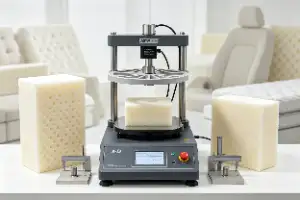
The rollator method is the technical response to Cornell's blind spots. Instead of a rolling hexagonal weight, a dome-shaped indenter (the "rollator") applies a concentrated vertical force directly into the mattress surface, cycling up and down at a fixed position. Think of it as a piston that repeatedly punches the same spot — mimicking the worst abuse a mattress sees in the real world. While not governed by a standalone ASTM mattress standard, the rollator method draws its principles from ASTM D3574 dynamic fatigue testing procedures.
How It Differs From Cornell
| Parameter | Rollator Specification | What It Reveals |
| Load | 1,000 N vertical concentrated force | Point-load foam breakdown |
| Indenter geometry | Dome-shaped, Ø 200 mm curved surface | Simulates hip/shoulder pressure concentration |
| Cycle count | 30,000–200,000 cycles (varies by manufacturer) | 30k ≈ screening; 100k–200k ≈ full lifetime simulation |
| Frequency | 0.5 Hz (30 cycles/min) | Matches natural body movement frequency |
| Measurement | Indentation depth, firmness loss % | Foam compression set under repeated point load |
The rollator is not a replacement for Cornell — it is a complementary stress test. A mattress that passes Cornell but fails rollator has a foam formulation problem: the material rebounds well under distributed load but permanently deforms under concentrated pressure. This is exactly what causes the "body impression valley" that customers complain about. Leading mattress manufacturers including Big Fig Mattress use 100,000 rollator cycles and report as little as 0.3" height loss with properly formulated foams — compared to the industry acceptance threshold of 1.75" under Cornell.
Standards That Reference Rollator Principles
- ASTM D3574 — Flexible cellular materials: dynamic fatigue by constant force pounding (I3 procedure informs rollator testing)
- EN 1957 — European mattress functional testing (references both rolling and point-load durability concepts)
- GB/T 26706 — Chinese national standard for soft furniture durability (incorporates rollator-type testing principles)
Head-to-Head: 7 Parameters Compared
Here is the direct comparison — not of brands, but of testing methodologies. This is what matters when you are building a QA program:
| Dimension | Cornell Method | Rollator Method | Winner For |
| Load Distribution | Rolling (dispersed) | Static (concentrated) | Cornell: sleep surface integrity Rollator: point failure detection |
| Test Duration | ~104 hours (100k cycles) | ~17–111 hours (30k–200k) | Rollator: faster at 30k screening Equivalent at 100k+ full test |
| Real-World Correlation | Good for distributed wear | Good for body impressions | Neither alone is sufficient |
| Equipment Cost Range | $8,000 – $25,000 | $12,000 – $35,000 | Cornell: lower entry cost |
| Standards Coverage | ASTM F1566 (direct) | ASTM D3574 (indirect) | Cornell: mandatory US market minimum |
| Maintenance Complexity | Roller bearings + drive motor | Servo actuator + load cell | Rollator: higher precision, higher maintenance |
| Data Output | Final indentation (single value) | Force-displacement curve (per cycle) | Rollator: richer data for R&D |
Technical Verdict
If you must pick one: Cornell — because it is the regulatory minimum for most markets under ASTM F1566 and covers broader failure modes. But if you are serious about product quality, the correct answer is both. Use Cornell for pass/fail certification. Use rollator for R&D optimization of foam formulations and layer stacking — catching the point-load failures that Cornell misses and that generate warranty claims.
Which Method Fits Your Application?
| If You Are A... | Primary Method | Why |
| Mattress manufacturer (consumer market) | Cornell + Rollator | Warranty claims driven by body impressions. Cornell for compliance, rollator to reduce returns. A fully automatic mattress testing system that covers both methods eliminates the need for two separate machines. |
| Hotel procurement team | Rollator first, Cornell second | Hotels see concentrated abuse (guests sitting on edges, luggage on beds). Rollator catches point-load failures that Cornell misses — exactly the failures driving hotel mattress replacement cycles. |
| Foam supplier | Rollator (ASTM D3574 dynamic fatigue) | You need to characterize foam performance before it becomes a mattress. Rollator data — combined with ASTM D3574 I3 fatigue testing — is upstream quality control that your customers will appreciate. |
| Third-party test lab | Both (different client needs) | Your revenue depends on offering both. Market the combination as "full-spectrum durability evaluation" — a service that no single-method lab can match. For labs expanding furniture testing capabilities, also consider chair stability testing equipment for a comprehensive furniture QA suite. |
| E-commerce D2C mattress brand | Both, with marketing emphasis on Rollator | Use rollator data in product pages: "Passes 100,000 concentrated-load cycles — 2× the standard Cornell minimum." Your customers are comparison-shopping; quantified durability claims based on both methods differentiate you from brands that test only the regulatory minimum. |
Equipment Selection: Three Paths to Durability Confidence
There are three equipment paths, depending on your budget and quality ambition. All three are supported by Derui's mattress testing equipment lineup, which covers the full spectrum from Cornell-only entry systems to dual-method automated platforms.
Path A: Cornell-Only Setup (~$8,000–$15,000)
Cornell tester with adjustable speed (0–20 cycles/min), digital cycle counter, and automatic stop at 100,000 cycles. Covers ASTM F1566 compliance. Best for manufacturers just entering regulated markets or those with limited QA budgets.
What you get: Regulatory minimum met. Pass/fail durability certification.
What you miss: Point-load failure detection. Foam formulation R&D data. Warranty claim reduction potential.
Path B: Rollator-Only Setup (~$12,000–$22,000)
Servo-electric rollator with integrated load cell and data acquisition software. Gives you force-displacement curves for every cycle — not just a pass/fail score. Programmable cycle count from 30,000 to 200,000. Best for R&D-focused teams and foam suppliers who need to characterize material behavior under ASTM D3574 dynamic fatigue conditions.
What you get: Rich fatigue data. Foam formulation optimization. Supplier grading with objective numbers.
What you miss: ASTM F1566 compliance (cannot replace Cornell for US market regulatory minimum).
Path C: Combined Dual-Function System (~$28,000–$42,000) ⭐ Recommended
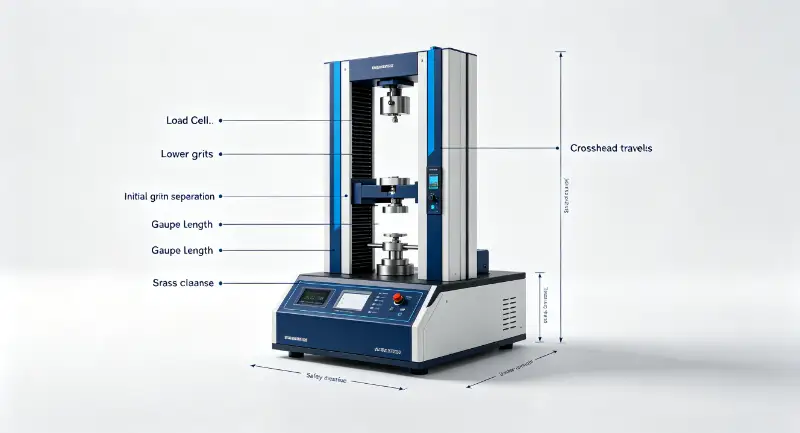
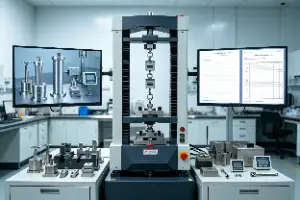
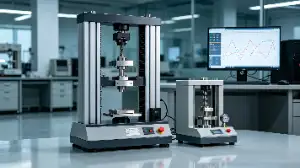
A single frame that accepts both hexagonal roller (Cornell) and dome indenter (Rollator) — switch methods in under 10 minutes. Saves floor space, reduces capital expenditure versus buying two separate machines, and gives you the full picture: regulatory compliance + R&D optimization. Derui's fully automatic mattress testing equipment is built for exactly this dual-method workflow.
What you get: Everything. ASTM F1566 compliance + foam formulation R&D + warranty claim reduction. One operator, one footprint, two methods.
The catch: Higher upfront cost — but the ROI calculation is straightforward: if a combined system prevents even one batch recall ($35,000–$150,000), it pays for itself.
When evaluating equipment, look for testers with programmable frequency profiles. The newest generation of mattress testing equipment can vary roller or indenter speed throughout the cycle — faster through the center third of the mattress (where body weight concentrates), slower at the edges. This is not required by any current standard, but it more accurately simulates real sleep patterns and is where the industry is heading. Equipment that supports this feature future-proofs your investment against the next revision of ASTM F1566 or EN 1957.
📷 Image Placeholder: Product photo of a dual-function Cornell + Rollator mattress testing machine
Alt text: "Cornell vs rollator mattress testing equipment dual-function system from Derui"
Recommended: Derui fully automatic mattress testing equipment — front/side angle showing both hexagonal roller and dome indenter attachments
Cornell tests whether your mattress meets the standard. Rollator tests whether it survives the customer. Invest in both — not in the warranty claims.
Explore Mattress Testing Equipment
Read next: Foam Fatigue Testing: Why It Matters — how ASTM D3574 dynamic fatigue predicts mattress foam failure.
Frequently Asked
| What is the difference between Cornell and rollator mattress testing? | The Cornell method uses a 109 kg hexagonal roller that rolls across the mattress surface 100,000 times under ASTM F1566, simulating ~10 years of distributed sleep wear. The rollator method uses a dome-shaped indenter applying 1,000 N of concentrated force at a fixed position for 30,000–200,000 cycles, testing point-load foam breakdown — the mechanism behind body impressions. Cornell tests distributed surface wear; rollator tests concentrated pressure failure. Neither test is sufficient alone for a complete durability evaluation. |
| Which mattress durability test is required by ASTM standards? | ASTM F1566 specifies the Cornell (hexagonal roller) method for evaluating mattress durability and is the regulatory minimum for the US market. The rollator method draws principles from ASTM D3574 dynamic fatigue testing but is not mandated by a standalone mattress standard. For US market compliance — and most international markets referencing ASTM — Cornell testing is the minimum requirement. |
| How much does mattress durability testing equipment cost? | Cornell testers range from $8,000 to $25,000 depending on automation features. Rollator testers range from $12,000 to $35,000. Combined dual-function systems that support both methods on a single frame range from $28,000 to $42,000. The ROI from a single avoided batch recall ($35,000–$150,000+) typically justifies the combined system immediately. |
| Can I use only the rollator method for mattress testing? | No. The rollator method alone is insufficient for regulatory compliance in most markets. ASTM F1566 requires the Cornell method for mattress durability certification. However, rollator testing provides critical complementary data about point-load failure modes that Cornell testing misses, making it highly valuable for R&D and internal quality assurance programs. The optimal approach is to use both: Cornell for compliance and certification, rollator for formulation optimization and warranty risk reduction. |
| How long does a mattress durability test take? | A Cornell test at standard speed (16 cycles/min) takes approximately 104 hours (4.3 days) to complete 100,000 cycles per ASTM F1566. A rollator test at 0.5 Hz takes approximately 17 hours for 30,000 cycles (screening) or 56 hours for 100,000 cycles (full simulation). High-speed Cornell testers can reduce testing time to under 72 hours. Combined systems that run both tests sequentially require 5–8 days for a complete evaluation. |
| What causes body impressions in mattresses that pass Cornell testing? | Body impressions occur when foam layers permanently deform under concentrated pressure — a failure mode that Cornell testing (which uses distributed rolling pressure) often misses. The rollator method specifically tests for this by applying 1,000 N of concentrated force at a fixed position. If a mattress passes Cornell but develops body impressions, the root cause is typically foam compression set under point load, which requires reformulation of the comfort layer foams — particularly increasing density above 50 kg/m³ or switching to higher-resilience polyol blends. This is the single most common failure mode that drives mattress warranty claims. |