
01
Package Mass, Dimensions and Support
Provide the actual package mass and L × W × H. Confirm that the lifting structure, support platform and impact area accommodate the specimen without unstable overhang or release interference.
Material testing equipment configured for your test method and specimen.
Free-Fall Package Test Equipment
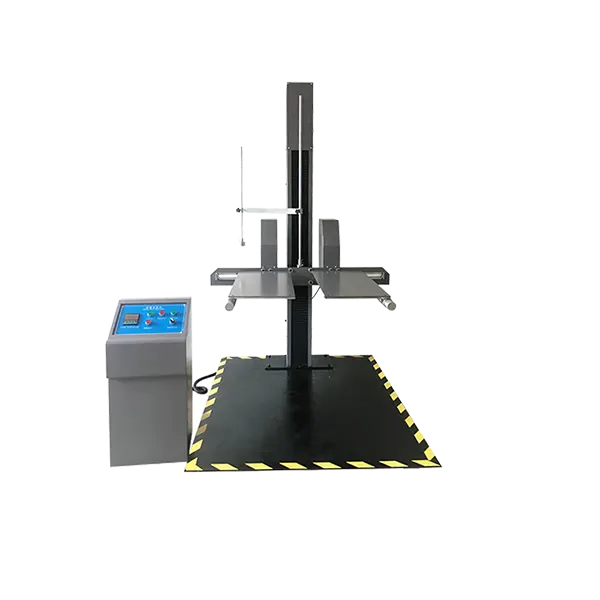
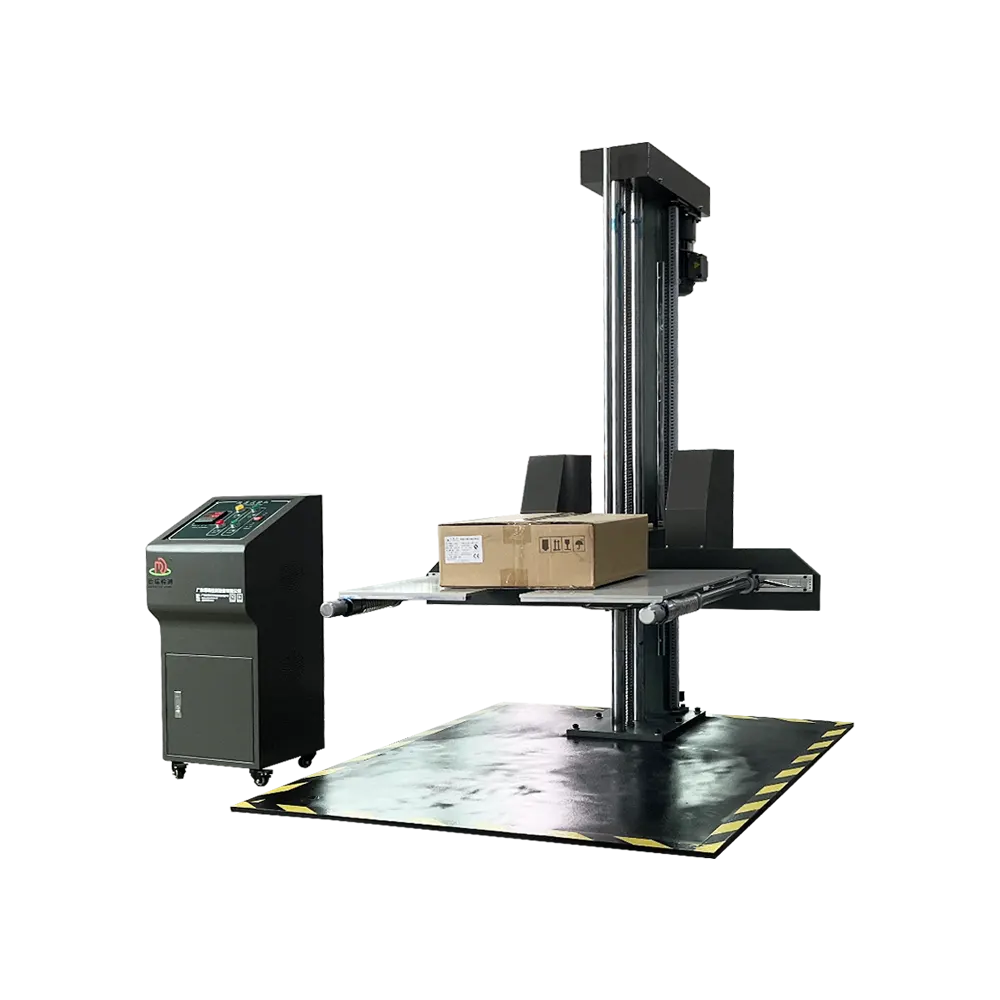
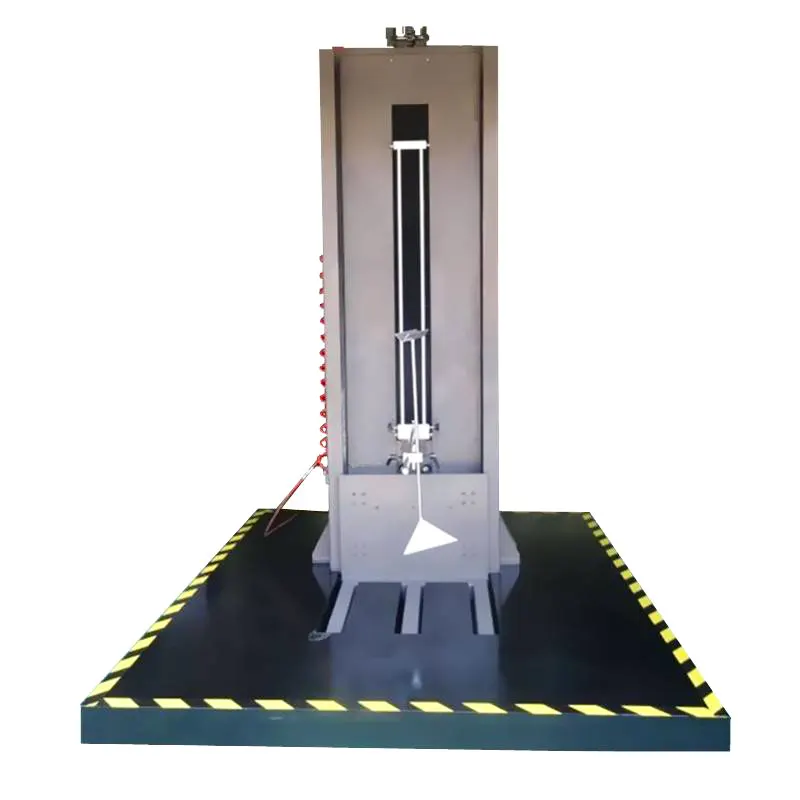
Configure a drop testing machine for controlled free-fall tests on loaded packages and shipping containers. Start with the specimen mass and dimensions, required drop height, impact orientation and test procedure—not with a generic machine name alone.
Define the test before selecting the machine
01 · SPECIMEN
Provide package weight, length × width × height, construction, contents and handling condition.
02 · DROP REQUIREMENT
Define the required drop height and whether face, edge or corner orientations must be supported.
03 · PROCEDURE AND SITE
Identify the current test procedure, drop sequence, available floor area, power supply and required safety provisions.
Send the application details for a configuration review.
Include specimen weight and dimensions, required drop height, face/edge/corner orientations, applicable procedure, test frequency, installation space and destination country.
Compare single-wing, double-wing and zero-drop configurations by package weight and dimensions, required drop height, face, edge or corner orientation, release structure and installation conditions. Open each product page for its current specification, then send your test procedure and specimen details for final configuration review.
Configuration Audit
A model name or maximum payload does not define the complete test setup. The machine must accommodate the package, create the required drop condition and allow the specified impact orientation to be prepared safely.
Use these four checks to compare single-wing, double-wing and zero-drop configurations before requesting a quotation.
01
Provide the actual package mass and L × W × H. Confirm that the lifting structure, support platform and impact area accommodate the specimen without unstable overhang or release interference.
02
Check the lowest and highest drop heights required by the current procedure together with package height. Confirm the usable range with the actual specimen installed.
03
List each required impact orientation and drop sequence. Review package positioning, support clearance after release and whether edge or corner setup needs an additional positioning aid.
04
Confirm impact surface, floor loading, machine footprint, ceiling height, power supply and exclusion area. Review guarding and controls for the package mass and site conditions.
Need help matching the package to the correct release structure?
Send specimen mass and dimensions, required height, face/edge/corner sequence, test procedure, installation space and destination country.
Choose the system from the loaded package, current test procedure, required drop height, impact orientations and installation conditions—not from payload alone. Use the five checks below to prepare a complete configuration and quotation request.
Start with the current test procedure—not with the machine model. Define the loaded package, required drop sequence and evaluation criteria before selecting a release system.
Provide the package type, actual test mass, outer dimensions, contents, internal supports, closure method and test condition.
State the applicable ASTM, ISTA, ISO, customer or internal procedure, including its current edition and any required conditioning.
List the required orientations, number of drops, inspection points and pass/fail criteria for the package and product.
A packaging drop tester supports a loaded package at a defined height and orientation, then releases it so the specimen falls onto a rigid impact surface. The equipment is used to prepare controlled face, edge and corner impacts under a documented test procedure.
The machine name alone does not establish compliance with a test method. Suitability depends on the package mass and dimensions, required height, impact orientations, release performance, impact surface, installation conditions and the complete current procedure.
| Reference or test context | Purpose | Configuration to confirm |
|---|---|---|
| ASTM D5276 | Free-fall drop testing of loaded containers | Loaded mass and dimensions, drop height, face/edge/corner orientations, release and impact surface |
| Selected ISTA procedure or project | Packaged-product distribution test sequence | Current procedure, package classification, conditioning, required heights, sequence and orientations |
| ASTM D5487 | Simulated drop of loaded containers by shock machines | Shock-machine motion, table or fixture arrangement and required pulse—not assumed from a free-fall tester |
| Instrumented impact measurement | Acceleration, shock pulse or product-response data | Sensors, mounting, sampling rate, data acquisition and analysis requirements |
Result boundary: A standard drop tester does not automatically provide impact acceleration or shock-pulse data. Without an instrumented measurement system, evaluation is normally based on the documented test conditions, package damage, closure and cushioning performance, content condition and defined acceptance criteria.
A packaging drop test converts a documented procedure into a controlled sequence of specimen preparation, positioning, release, impact and evaluation. The machine establishes the physical drop condition; the test procedure defines the sequence and acceptance criteria.
Record the loaded package mass, L × W × H, contents, internal protection, closure method and initial condition. Apply any conditioning required by the current test procedure before the drop sequence begins.
Confirm the applicable ASTM, ISTA, customer or internal procedure, then list the required drop heights, number of drops and order of the identified faces, edges and corners.
Place the loaded package on the support or release structure and prepare the specified face, edge or corner orientation. Any positioning aid must allow the support to clear without restraining the fall or changing the intended orientation.
The release mechanism disengages so the specimen falls under gravity and strikes the rigid impact surface. Release performance, usable height and orientation at impact affect repeatability and must be checked for the actual package.
After each required drop, inspect and record package deformation, corner or edge damage, closure integrity, cushioning condition, product movement and functional status as specified. Instrumented shock data is reported only when suitable sensors and data acquisition are included in the setup.
A controlled drop test is most useful when representative loaded packages are tested under the same documented conditions. The result supports comparison, failure investigation and packaging decisions; it is not by itself a guarantee of performance throughout an entire distribution system.
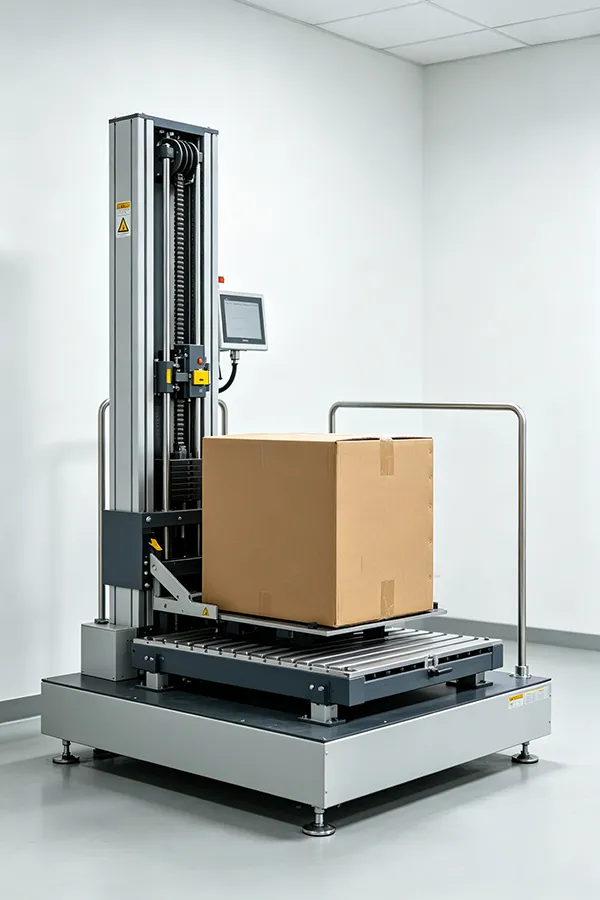
Test candidate cartons, closures, partitions and internal supports with the same product, loaded mass, conditioning, drop sequence and inspection criteria. Record which construction better controls package and product damage.
Inspect cushioning deformation, bottoming, cracking, displacement and product-to-package contact. Compare foam, molded pulp, corrugated inserts or other protection only when the remaining specimen and test variables are controlled.
Document corner and edge damage, panel deformation, seal or closure condition, product movement and visible damage. Perform the defined product functional checks after the required sequence—not only after the first drop.
Record the impact orientation, observed failure location and product condition before changing the design. Re-test the revised package with the same procedure so the result can support a controlled comparison.
Check the customer contract, retailer or carrier program, regulatory requirement and your internal validation plan. If a particular standard, procedure, project and edition are named, those authorized documents govern the test—not a supplier’s general claim of ASTM or ISTA compatibility.
ASTM D5276 addresses free-fall drop testing of loaded containers. Large shipping cases, crates or unitized loads may require an applicable rough-handling method such as ASTM D6179, while horizontal impacts, tip tests and other hazards use different apparatus. Confirm the method’s scope before selecting the machine.
An ISTA procedure or project may combine conditioning, vibration, compression and several shock events in a defined sequence. Confirm the package mass and dimensions, drop heights, face/edge/corner sequence, orientation tolerance, conditioning, acceptance criteria and report fields. A package drop tester covers only the compatible drop operations; it does not by itself perform the complete program.

Derui Test Equipment
We are a dedicated manufacturer of precision material testing equipment, committed to supporting global industries with reliable testing solutions.
Our Core Product Lines:
Universal Testing Machines (Tensile/Bend/Compression)
Environmental Simulation Chambers (Climatic, Thermal Shock)
Specialized Testing Equipment for Packaging, Furniture & Materials