Material testing equipment configured for your test method and specimen.

DERUI manufactures material testing equipment for quality control and R&D.
WhatsApp Consultation:+86 135 2795 8363
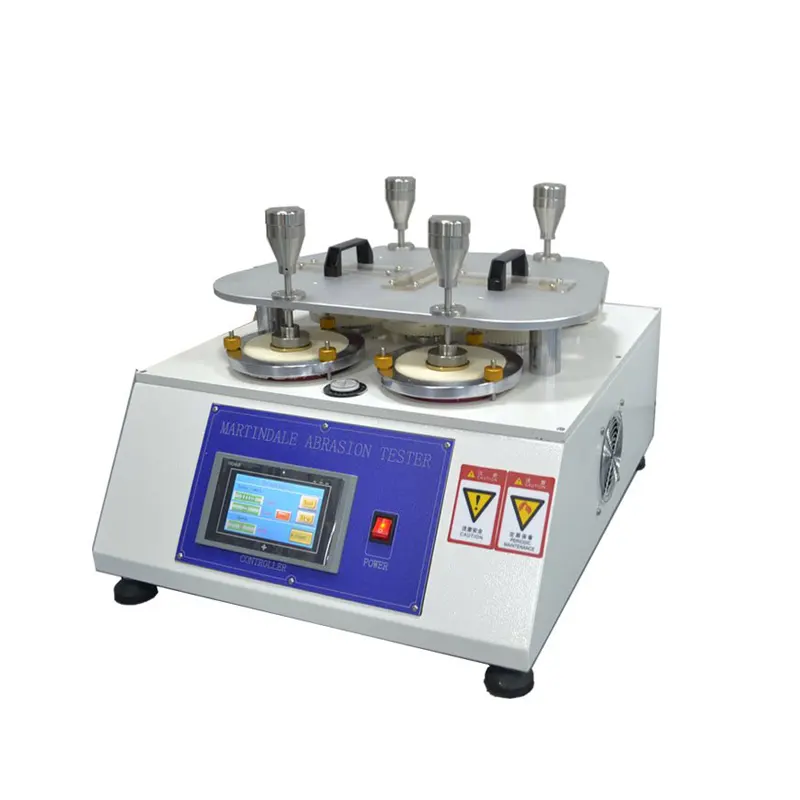
DR-T101 Digital Martindale Abrasion & Pilling Tester (4, 6, 8, 9 Stations)

DR-T101 Digital Martindale Abrasion & Pilling Tester (4, 6, 8, 9 Stations)

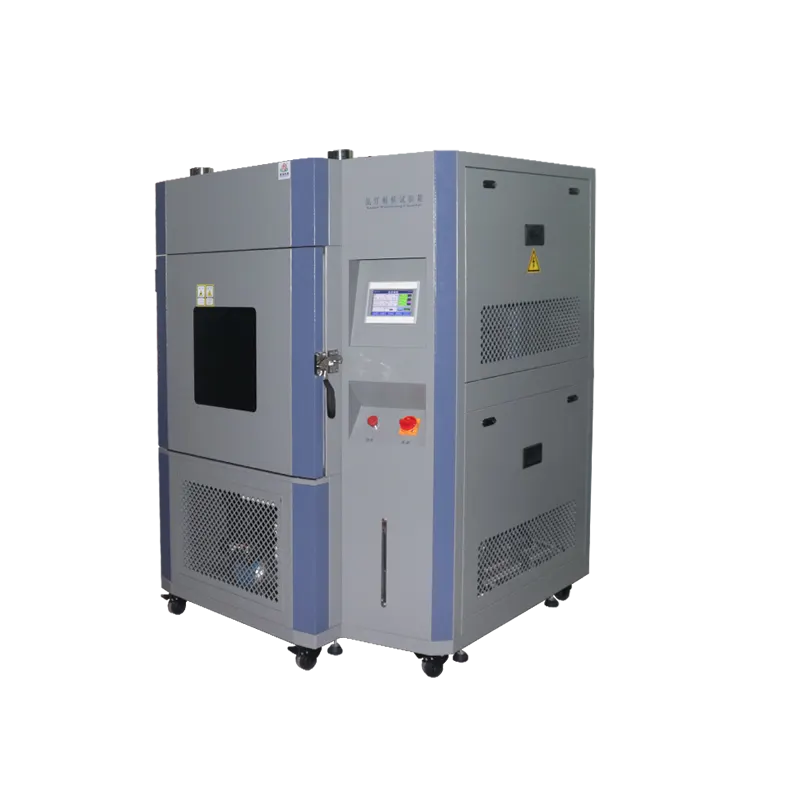
DR-H301 Xenon Arc Light Fastness Tester for Textiles (ISO 105-B02 & AATCC 16.3)

DR-H301 Xenon Arc Light Fastness Tester for Textiles (ISO 105-B02 & AATCC 16.3)

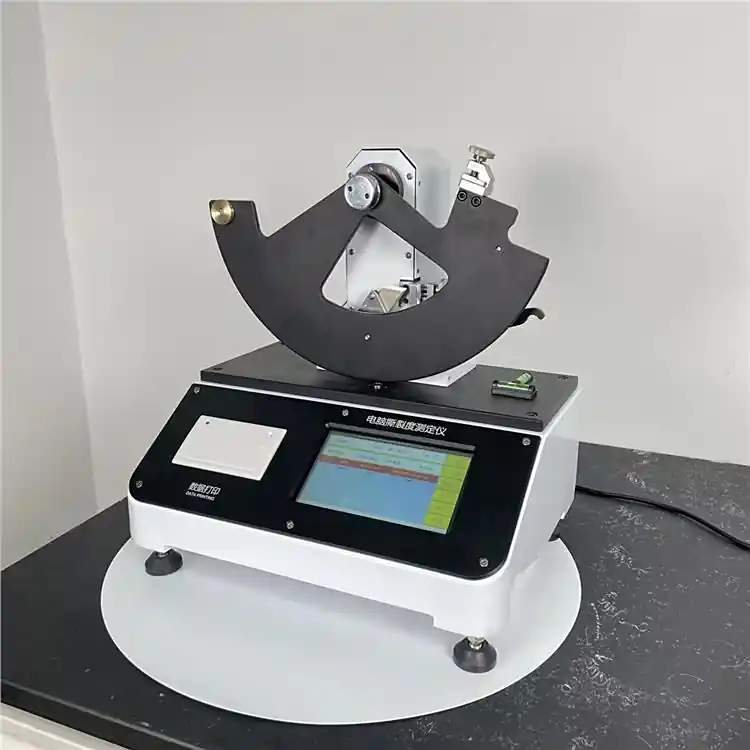
DR-T103 Digital Elmendorf Tearing Tester (ASTM D1424 & ISO 13937-1)

DR-T103 Digital Elmendorf Tearing Tester (ASTM D1424 & ISO 13937-1)

Select by fabric property and current method

Textile Testing Equipment for Abrasion, Light Fastness and Tear Evaluation

Build the test around the textile, end use and result your specification requires. Confirm the method revision, specimen direction, preparation, conditioning, test accessories and evaluation procedure before selecting the instrument or number of test stations.

01 · SURFACE DURABILITY

Martindale abrasion and pilling

Evaluate method-defined wear or pilling behaviour using the required specimen holder, abradant, loading arrangement, cycle sequence and visual or physical endpoint.

Confirm: fabric structure · method · stations · abradant · endpoint
02 · APPEARANCE RETENTION

Xenon arc light fastness

Assess colour or appearance change under the specified exposure program, optical filtering, chamber conditions and reference or rating procedure.

Confirm: textile/end use · exposure cycle · filter · assessment
03 · TEAR PROPAGATION

Elmendorf pendulum tearing

Measure propagation of an initiated tear using the applicable specimen geometry, direction, notch or slit preparation and valid pendulum range.

Confirm: woven/nonwoven · warp/weft or MD/CD · method · range
Prepare the test brief

Textile and end use · current method/revision · specimen dimensions and direction · conditioning · required result/rating · test volume · reports · destination

Request a Textile Test Configuration →
01

Surface wear or pilling?

Choose the Martindale path when the procedure evaluates abrasion damage, mass loss, appearance change or pilling under a prescribed motion and loading arrangement.

Confirm: test mode · stations · abradant · load · cycles · endpoint
02

Colour or appearance after light exposure?

Choose the xenon arc path when the requirement concerns method-defined light fastness or weathering exposure with specified optical filters and chamber conditions.

Confirm: exposure cycle · filter · irradiance control · rating method
03

Propagation of an initiated tear?

Choose the Elmendorf path when the applicable textile method uses a pendulum to propagate a prepared slit through a defined specimen.

Confirm: warp/weft or MD/CD · specimen · slit · pendulum range
Laboratory readiness

Six Inputs That Define the Textile Test Configuration

A machine can only reproduce the procedure its complete setup supports. Define the specimen, consumables, conditioning, evaluation and workload before choosing options.

01 · TEXTILE

Material and end use

Identify woven, knitted, nonwoven, coated or technical textile construction, composition, finish and intended application.

02 · PROCEDURE

Method and current revision

Provide the governing ISO, ASTM, AATCC, EN, customer or internal procedure and any authorized deviation.

03 · SPECIMEN

Geometry and direction

Confirm dimensions, cutting tool, warp/weft or MD/CD direction, notch or slit preparation, mounting and number of specimens.

04 · CONDITIONING

Atmosphere and pre-treatment

State conditioning requirements, washing or other pre-treatment, recovery time and environmental monitoring expected in the report.

05 · TEST SYSTEM

Accessories and consumables

Define stations, holders, weights, abradants, reference materials, filters, masks, pendulums and other method-specific items.

06 · OUTPUT

Evaluation and throughput

List cycles or exposure, endpoint, visual or instrumental rating, units, daily volume, raw-data retention and report fields.

Before quotation

Send the method, textile description, specimen details, expected result range, test volume, required accessories, reports, installation country and available utilities.

Quality workflow

Use Textile Test Results Where They Change a Decision

Use the same documented method from development through release so changes in material, finish or supplier can be interpreted against a controlled baseline.

01
Material and finish development

Compare constructions, fibres, coatings, dyes or finishes using the property relevant to end use.

02
Supplier and incoming control

Check agreed specifications with consistent sampling, conditioning and evaluation.

03
Process monitoring

Detect changes after weaving, knitting, coating, dyeing or finishing before final assembly.

04
Qualification and release

Record the required abrasion, pilling, light-fastness or tear evidence for the product specification.

APPLICATION GROUP A

Apparel, upholstery and home textiles

Surface durability, appearance retention and tear behaviour can affect comfort, aesthetics, warranty risk and supplier approval.

Review: wear mode · pilling grade · colour change · fabric direction
APPLICATION GROUP B

Automotive and technical textiles

Method selection may depend on the component location, construction, coating, light exposure, repeated contact and directional structure.

Review: end use · conditioning · exposure · acceptance criteria
Category-level answers

Textile Testing Equipment FAQs

These answers help define the laboratory requirement without replacing the current authorized test method or model-specific configuration review.

01Which textile testing instrument should I select first?

Begin with the property and procedure required by the product specification. Martindale abrasion or pilling, xenon arc light fastness and Elmendorf tear propagation use different apparatus, specimens and evaluation rules.

02Can a Martindale tester measure both abrasion and pilling?

A suitably configured system may support applicable Martindale abrasion and pilling procedures, but the holders, loading pieces, abradants, cycle sequence and evaluation differ. Confirm the exact methods before selecting accessories.

03Why must warp and weft or MD and CD be recorded?

Textile structure is directional, so tear and other mechanical results may differ with specimen orientation. Cut, label, condition and report each required direction according to the procedure.

04Is xenon exposure the same as every colour-fastness test?

No. Xenon arc equipment addresses specified light or weathering exposures. Rubbing, washing, perspiration and other colour-fastness methods use different apparatus and should not be claimed from a xenon test.

05Can an Elmendorf tester replace a universal tensile tester?

No. Elmendorf testing measures method-defined propagation of an initiated tear with a pendulum. Tensile, grab, strip, seam and other strength tests use different loading and measurement systems.

06Why are conditioning and pre-treatment important?

Moisture, temperature, washing, recovery time and material history can change textile behaviour. Comparable results require the same sampling, pre-treatment, conditioning atmosphere and timing.

07How do I choose the number of test stations?

Use the procedure duration, specimens per lot, daily batch count, changeover, operator availability and required turnaround time. More stations help only when accessories and workflow support the same throughput.

08What information is needed for a textile tester quotation?

Send the textile and end use, current method and revision, specimen and direction, preparation and conditioning, required result or rating, expected range, test volume, accessories, reports and destination-country utilities.

Technical configuration review

Configure the Textile Test Around Your Method

Send the complete requirement so the instrument, accessories, consumables, test sequence, evaluation and reporting scope can be reviewed together.

TextileConstruction · finish · end use
ProcedureMethod · revision · direction
WorkflowStations · volume · endpoint
Supply scopeAccessories · reports · utilities
WhatsAppWhatsApp
WhatsApp
MessageMessage

Send Inquiry