

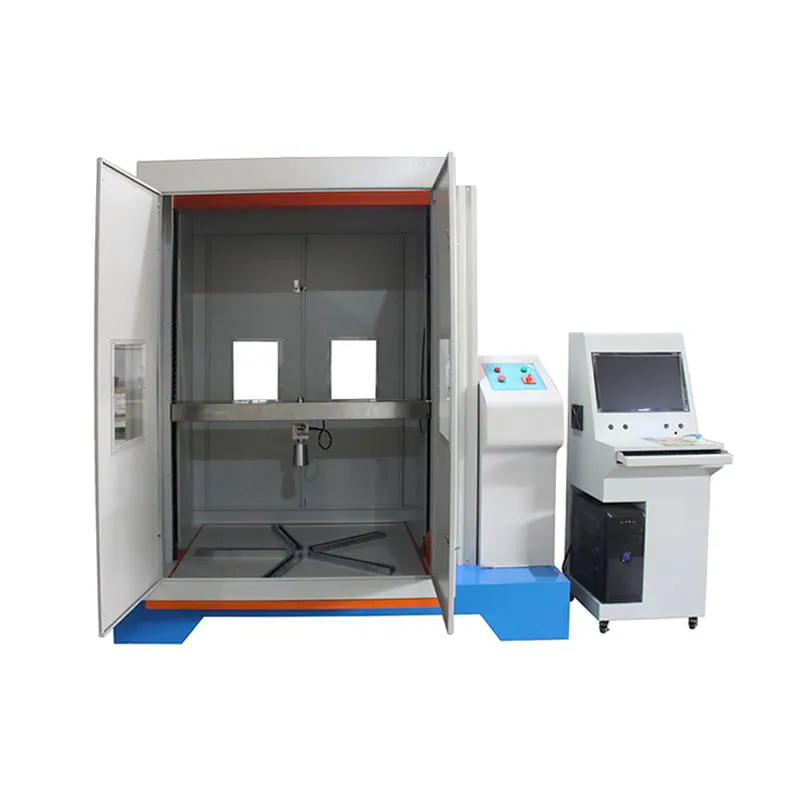
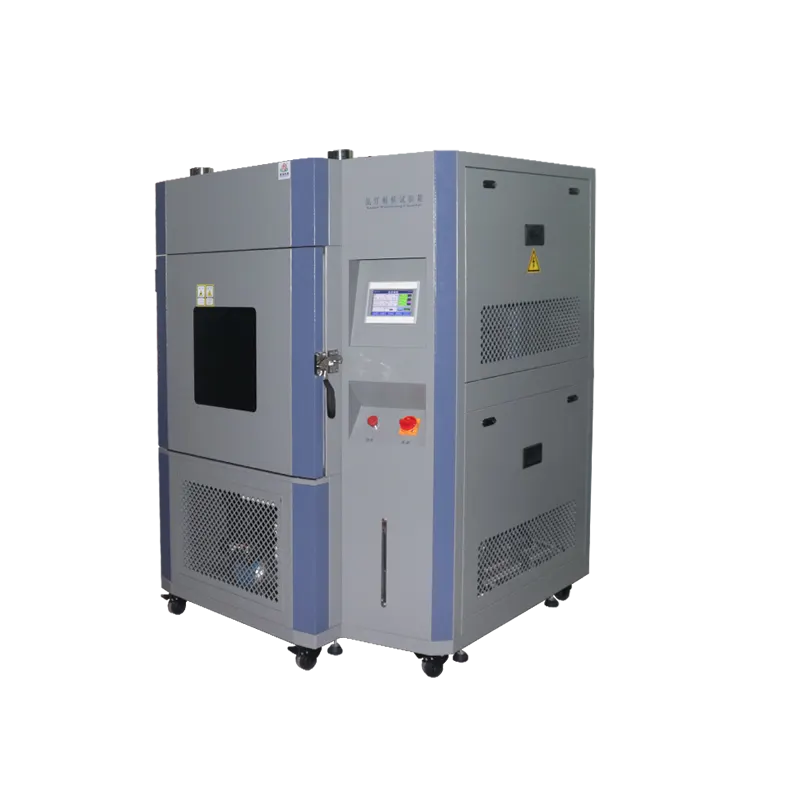
DR-H301 Xenon Arc Light Fastness Tester
The DR-H301 simulates full-spectrum sunlight, ambient temperature, and relative humidity to assess the color fading, photochemical degradation, and weather resistance of dyed textiles, printing fabrics, and automotive trims. Fully compliant with international standards ISO 105-B02, ISO 105-B04, and AATCC 16.3.
Quick answer: Choose a textile light fastness tester by irradiance control mode (narrowband 420 nm vs broadband 300–400 nm), carousel specimen capacity, and simultaneous BPT/BST and relative humidity control—not just lamp wattage. Verify closed-loop automatic lamp compensation and optical filter combinations before ordering.
What a Xenon Arc Light Exposure Test Evaluates
Blue Wool Scale Reference (1 to 8)
Specimens are co-exposed alongside standardized European Blue Wool references. The end-point color contrast is matched against fading stages, assigning an objective light fastness rating from 1 (very poor) to 8 (exceptional).
Grey Scale Color Change (Grade 1 to 5)
Exposed and unmasked fabric zones are visually assessed under standard D65 illumination against the ISO 105-A02 Grey Scale to quantify discoloration, shade shifting, and color hue degradation.
Instrumental ΔE*ab Colorimetry
Spectrophotometer evaluation logs spectrophotometric color difference (CIE L*a*b* coordinates), identifying subtle chromophore degradation and yellowish shift in bleached or white technical textiles.
Standard Operating Procedure for Light Fastness Testing
Reliable xenon arc aging requires synchronized management of optical filtration, target irradiance feedback, specimen carousel rotation, and black panel calibration.
Mounting & Partial Masking
Mount fabric test strips and Blue Wool references onto specimen clips. Apply standard opaque metal masking cards over 1/3 and 2/3 of the exposure area to allow progressive step-wise contrast evaluation.
Optical Filter Selection
Install Window Glass filter packs for indoor textiles and apparel (simulating sunlight filtered through 3mm window glass), or Daylight filter arrays for outdoor technical fabrics.
Closed-Loop Irradiance Set
Program target irradiance (e.g., 1.10 W/m² @ 420 nm or 42 W/m² @ 300–400 nm). The closed-loop controller automatically modulates lamp wattage, eliminating lamp aging decay.
Continuous Carousel Rotation
The motorized central carousel rotates specimen racks continuously at 5 rpm around the air-cooled xenon lamp, ensuring 100% uniform radiant exposure across all stations.
Effective Humidity Calibration Rule: Verify chamber effective humidity periodically using the dedicated red azoic dyed cotton calibration fabric (Humidity Control Fabric) according to ISO 105-B02 Annex B.
Standardized Test Protocols & DR-H301 Compliance
| Standard | Scope & Target Material | DR-H301 Machine Configuration |
|---|---|---|
| ISO 105-B02:2014 | Color fastness to artificial light: Xenon arc fading lamp test for textiles and apparel. | Window glass filter, BST 45°C–50°C, chamber humidity 40% RH, broadband 300–400 nm or 420 nm irradiance control. |
| ISO 105-B04:1994 | Color fastness to artificial weathering: Xenon arc fading lamp test (with water spray). | Equipped with programmable intermittent pure water specimen front-spray system for outdoor rain/weather simulation. |
| AATCC Test Method 16.3 | Colorfastness to Light: Xenon-Arc (Options 1, 2, and 3). | Narrowband 420 nm monitoring (1.10 W/m²), Black Panel Thermometer (BPT 63 ± 1°C), chamber air temperature 43 ± 2°C, 30 ± 5% RH. |
| Marks & Spencer P33A | Color fastness to artificial light for commercial retail supply chains. | Preset M&S standard test profiles, verified temperature recovery, and standard specimen masking frames. |
| GB/T 8427 | Textiles — Tests for color fastness — Color fastness to artificial light: Xenon arc. | Compatible with Chinese national standard Blue Wool reference scales 1–8 and automated energy dose accumulation (kJ/m²). |
Optical Filter Compatibility Notice: Testing indoor apparel with outdoor daylight filters creates excessive UV exposure below 310 nm, causing unrepresentative dye photodegradation. The DR-H301 features easy-swap filter modules to ensure strict standard compliance.
Choose Xenon Arc for True Solar Spectrum Testing
Xenon arc delivers the closest match to terrestrial sunlight (UV, Visible, and IR); other weathering instruments serve different screening tasks.
Xenon Arc · DR-H301
Simulates full-spectrum solar radiation including visible and infrared rays. Ideal for color fading, tint change, and textile light fastness.
Fluorescent UV Tester
Simulates damaging short-wave UV (UVB-313 / UVA-340) for polymer physical cracking and chalking—not suitable for subtle dye shade fading.
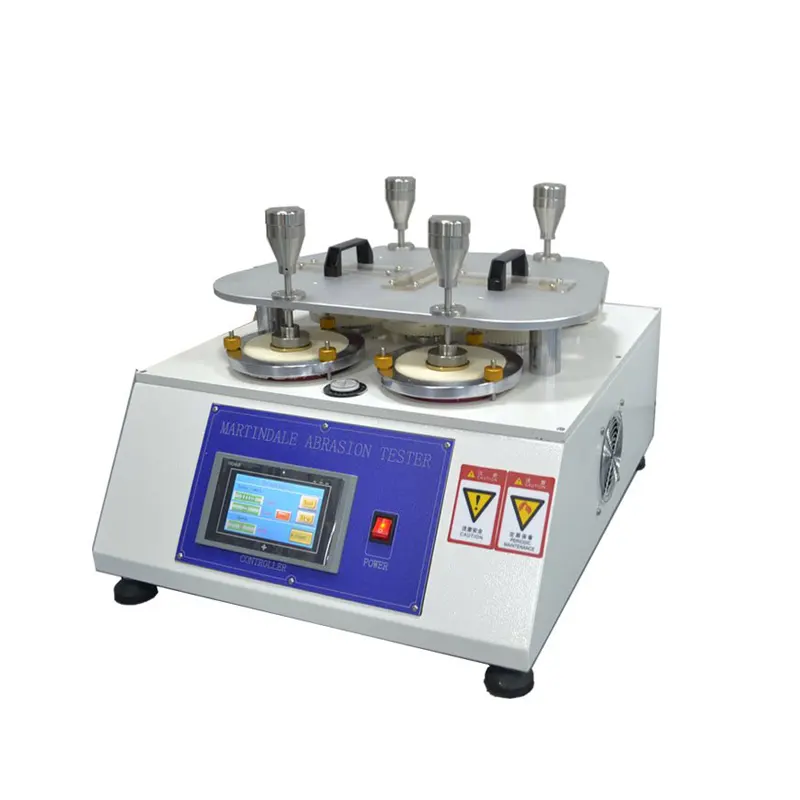
Martindale Abrasion Tester
Evaluates mechanical yarn breakdown, wear life, and pilling resistance under continuous multi-directional surface friction.
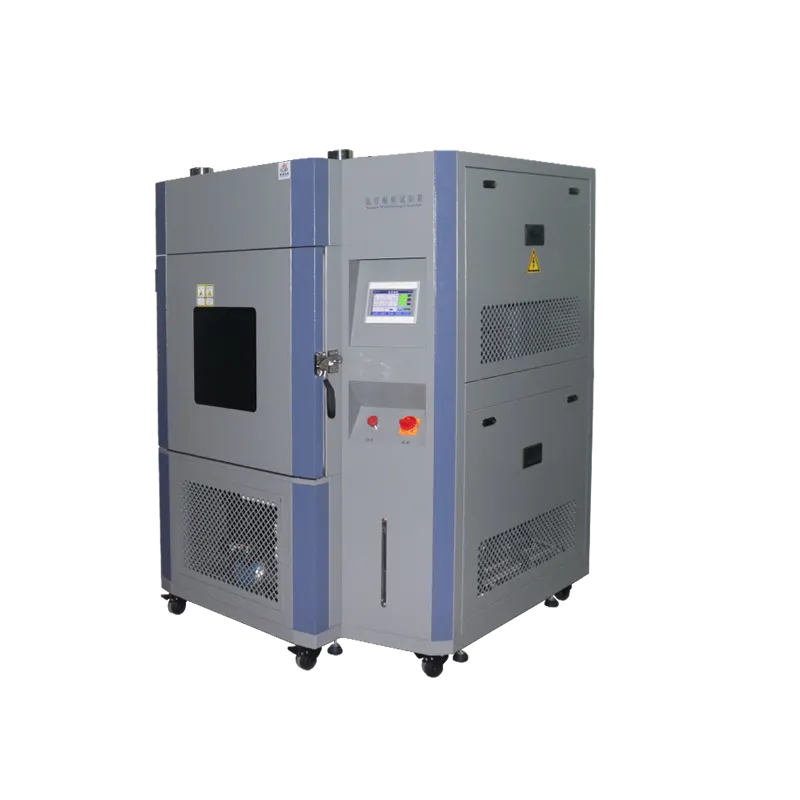
Temperature & Humidity Chamber
Tests thermal-moisture stability and cold-heat environmental storage without photolytic radiation exposure.
Control the 6 Major Causes of Invalid Light Fastness Data
Expired Xenon Lamp Output
Xenon burners experience tungsten electrode sputtering and quartz envelope solarization beyond 2,000 hours, shifting spectral power distribution.
Optical Filter Solarization
Glass filters gradually solarize and absorb critical radiation over prolonged runs; inspect transmission curves and replace filters periodically.
Uncalibrated BST/BPT Sensor
Black standard thermometers absorb radiant heat directly; a drift in black plate surface emissivity or thermal contact yields skewed chamber heating.
Impure Water Specimen Spray
Using tap water for weathering spray deposits silica and mineral scale on fabrics, masking exposure surfaces and invalidating ISO 105-B04 runs.
Inadequate Masking Sharpness
Flimsy or non-opaque paper masks allow radiant light bleeding along borders, blurring contrast boundaries necessary for Grey Scale visual grading.
Non-standard Viewing Light Booth
Grading exposed textiles under ordinary fluorescent office tubes skews metameric colors; evaluations must be made under certified D65 daylight cabinets.
Build a Verifiable DR-H301 RFQ
Provide your target textile classifications, standard test protocols, and lab power specifications to receive a complete quotation including lamps, filters, and reference standards.
Test Standards & Protocols
- Target standard: ISO 105-B02, ISO 105-B04, AATCC 16.3
- Target fabric: Apparel, Curtains, Automotive interior
- Test mode: Pure light fastness vs. Weathering spray
- Irradiance monitoring preference (420 nm or 300–400 nm)
Cooling & Optical Package
- 2.5 kW air-cooled long-arc xenon lamp system
- Optical filter combination: Window Glass vs. Daylight
- Rotating specimen carousel rack capacity
- Spare xenon burners and quartz filter sets
Climatic Control Options
- Black Standard (BST) and Black Panel (BPT) sensors
- Ultrasonic chamber humidification module
- Pure deionized water treatment system for spray
- Refrigeration system for low-temperature light cycles
Calibration & Reference Supplies
- European Blue Wool Reference cloth sets (1 to 8)
- ISO 105-A02 Grey Scale for color change assessment
- Traceable optical radiometer calibration sensor
- Factory Acceptance Test (FAT) & ISO 17025 certification
DR-H301 Xenon Arc Tester FAQs
01What is the core difference between ISO 105-B02 and AATCC 16.3?
02Why is air-cooled xenon preferred over water-cooled for textile testing?
03Why is precise relative humidity control critical for textile light fastness?
04How does the DR-H301 maintain stable irradiance as the lamp ages?
05What is the expected operating life of the 2.5 kW xenon lamp?
06What information is needed to receive a complete DR-H301 proposal?
Configure your textile light fastness lab: standard (ISO/AATCC) + optical filters + humidity control + consumables.