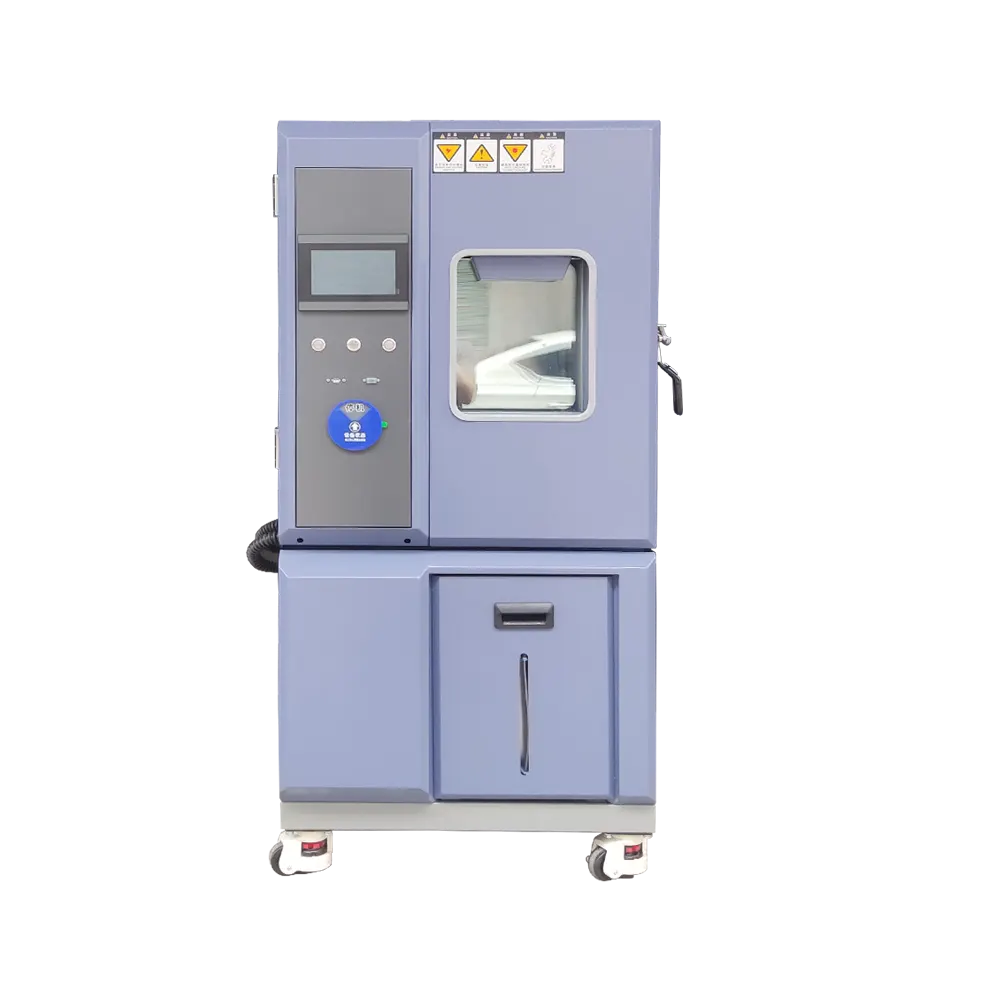




DR-H201 Temperature & Humidity Test Chamber
The DR-H201 is a programmable environmental chamber for exposing compatible materials, components and assemblies to controlled temperature and relative-humidity conditions. Configuration must be based on the complete test profile, specimen load and heat dissipation—not on two headline range values alone.
Quick answer: send the required temperature/RH steps, dwell times, transitions, specimen dimensions, quantity, power state and acceptance data before selecting the chamber.
When DR-H201 Is the Right Starting Point
Similar cabinet shapes can serve different test objectives. Select the chamber type from the required environment and specimen—not from the phrase “climate chamber.”
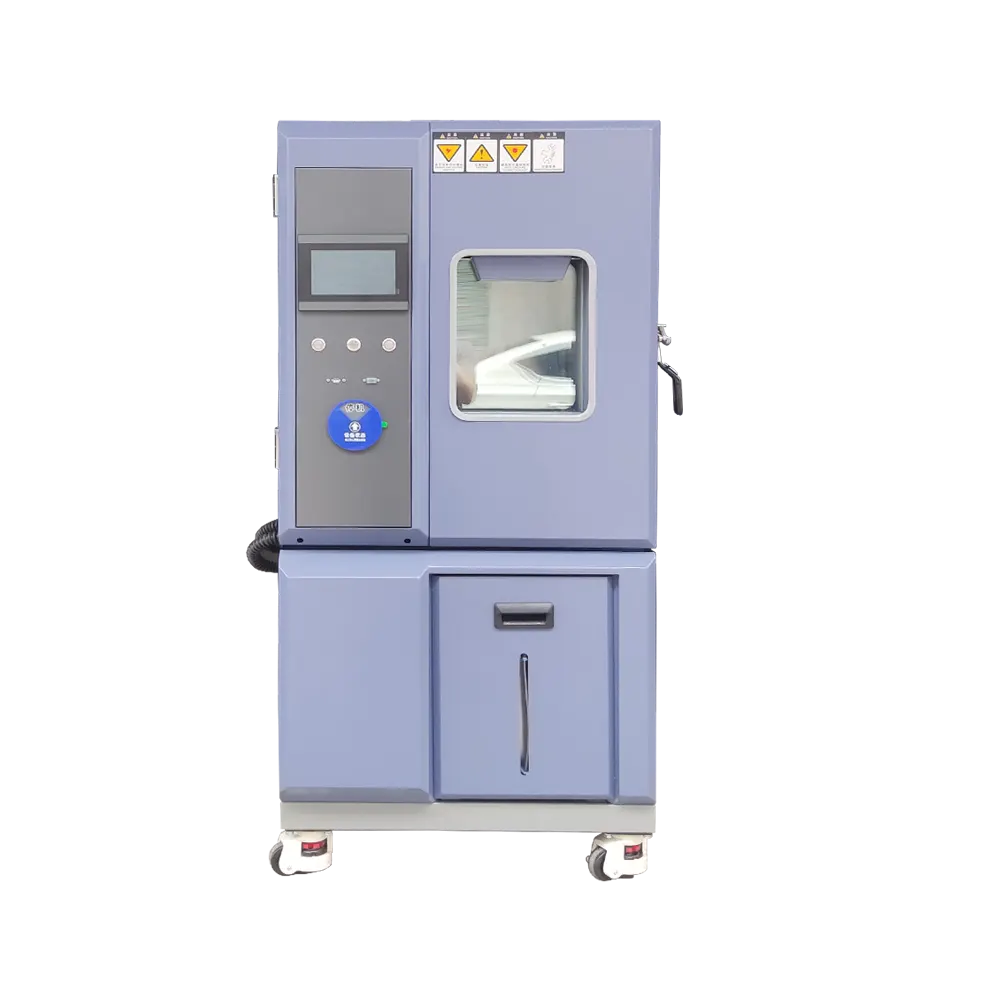
DR-H201
Use for programmable temperature-and-humidity exposure when the required profile lies inside the confirmed loaded operating envelope.
Temperature-only chamber
Use when relative humidity is not controlled and the procedure requires only hot/cold exposure.
Thermal shock
Use when the method requires rapid transfer between separate hot and cold zones rather than one conditioned workspace.
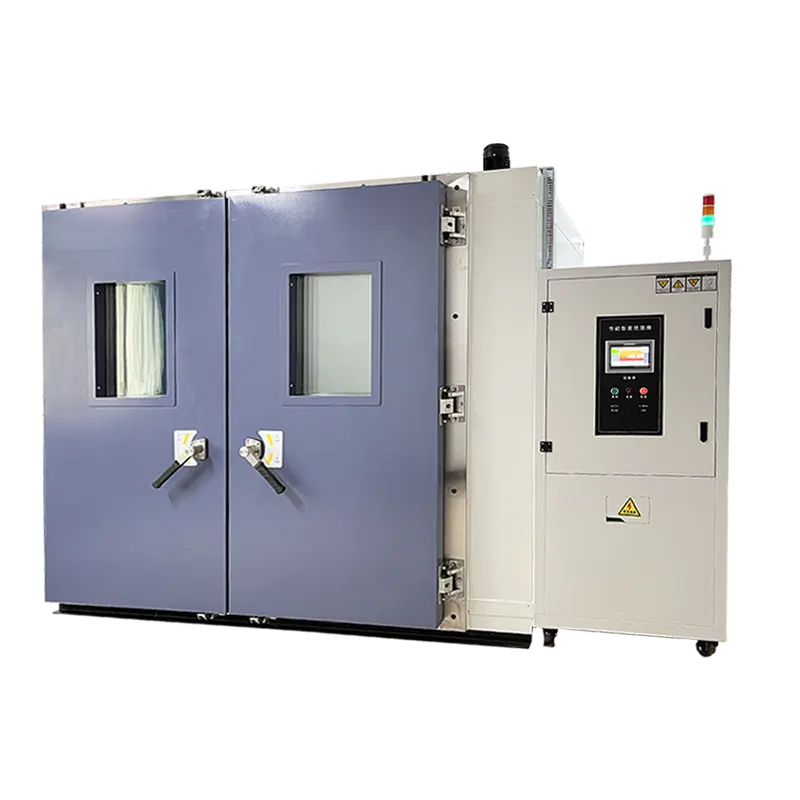
Walk-in system
Use when sample size, quantity, handling or powered assemblies exceed a cabinet chamber.
Confirm the Temperature–Humidity Operating Envelope
The published -40°C to +150°C and 20–98% RH values should not be read as a promise that every temperature and humidity combination is attainable. Condensation, dew point, refrigeration and humidification limits matter.
Setpoints and dwell
List every temperature/RH point, tolerance, dwell time and sequence rather than providing only minimum and maximum values.
Transition requirement
State whether ramp time is defined, whether it applies to air or specimen, and whether performance is required under load.
Condensation intent
Identify whether condensation must be avoided, tolerated or intentionally produced; this changes profile and chamber requirements.
Recovery condition
Define door-opening frequency, product loading, cable routing and the allowable recovery time after disturbance.
RFQ requirement: attach the actual curve or a table of steps. DERUI should confirm each requested temperature/RH combination and transition under the declared load before the model is approved.
Define the Real Load Inside the Workspace
Empty-chamber performance does not describe every loaded test. Sample mass, material, airflow obstruction and internal heat generation affect stability, uniformity and recovery.
Physical load
Provide maximum product dimensions, mass, quantity, rack layout and packaging. Maintain clear airflow paths around the actual load.
Heat-dissipating load
State normal and peak watts, operating mode, cables and duty cycle for powered electronics, batteries or assemblies.
Moisture and off-gassing
Identify wet products, volatile materials, corrosive vapours or substances that can contaminate sensors, coils or drainage.
Review the Complete Conditioning System
These published features are useful starting points. Confirm brands, ratings, quantities and included functions on the final quotation and technical agreement.
Workspace and enclosure
SUS304 inner liner, insulated enclosure, heated observation window, door seal, two published shelves and configurable cable-access ports.
Temperature and airflow
Refrigeration, heater and forced-air circulation work together. Ask for loaded stability, deviation/uniformity and sensor-location evidence.
Humidity and water
The page lists separated humidification piping and a 15 L tank. Confirm feed-water quality, automatic supply, drainage, cleaning and low-water protection.
Programming and data
Published 7-inch bilingual touchscreen, 120 programs/1200 segments, USB export and optional RS-485/RS-232. Confirm file format and remote-control scope.
Do not accept component-brand language as performance evidence. Purchase acceptance should be tied to the agreed chamber configuration, loaded test points, measurement method and documentation.
Plan Installation Before Shipment
A competitive chamber proposal must show that the equipment can be installed, ventilated, supplied and maintained at the destination—not merely fit through the door.
Room and access
Doorways, corridor turns, lifting route, floor loading, service clearance and ambient conditions.
Electrical supply
Voltage, frequency, phases, breaker, grounding and permitted power demand for the ordered model.
Heat rejection
Air-conditioning capacity, condenser clearance and whether air- or water-cooled heat rejection is selected.
Water and drainage
Feed-water specification, storage/supply arrangement, drain route and maintenance access.
Ports and wiring
Cable quantity, connector size, powered load wiring, feedthrough sealing and external monitoring.
Commissioning
Installation responsibilities, startup checks, operator training, spare parts and support channel.
Specify Performance and Documentation
Agree how chamber performance will be checked, under which load and at which test points. A catalogue value without an acceptance method is difficult to verify.
Technical agreement
Model, workspace, profile points, load, tolerances, utilities, options and exclusions.
Factory acceptance
Inspection scope, test points, duration, sensor locations, load state and pass/fail rules.
Calibration and mapping
Required certificates, traceability, number/location of sensors and whether mapping is empty or loaded.
Delivery package
Manuals, wiring/refrigeration diagrams, spare-parts list, reports, training and warranty terms.
For a useful quotation: attach the profile, specimen drawing, heat load, workspace need, utilities and required acceptance documents.
DR-H201 Temperature Humidity Chamber FAQs
01What range is currently published for DR-H201?
02Can the chamber control 20–98% RH at every temperature?
03How should chamber size be selected?
04Can powered electronics be tested?
05Does DR-H201 automatically comply with an IEC or ASTM method?
06What information is required for a quotation?
Quote the Real Test Profile—not Only a Chamber Size
Send the temperature/RH curve and specimen load so the operating envelope and configuration can be reviewed.