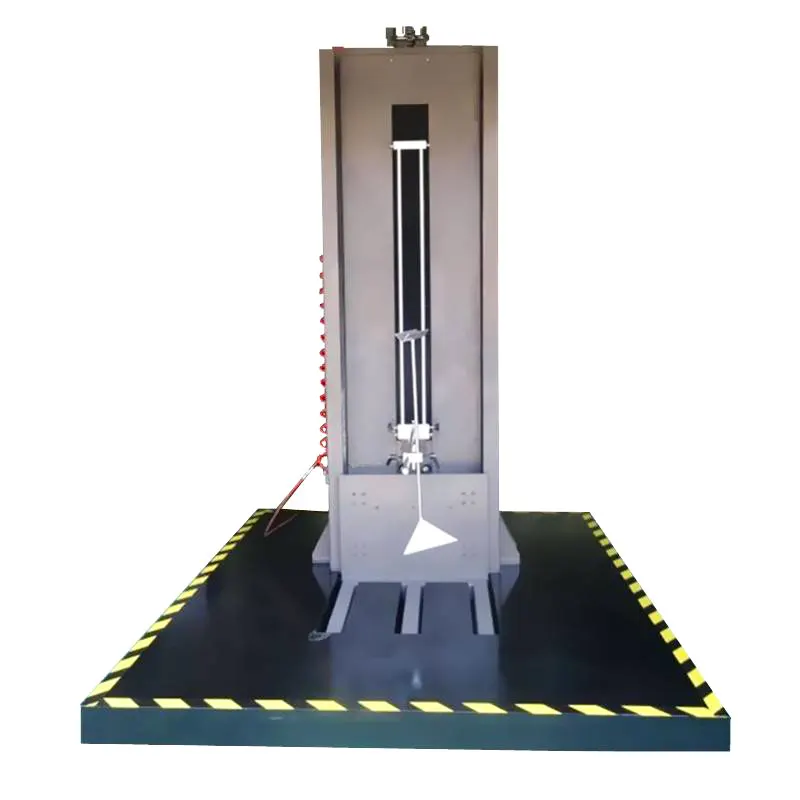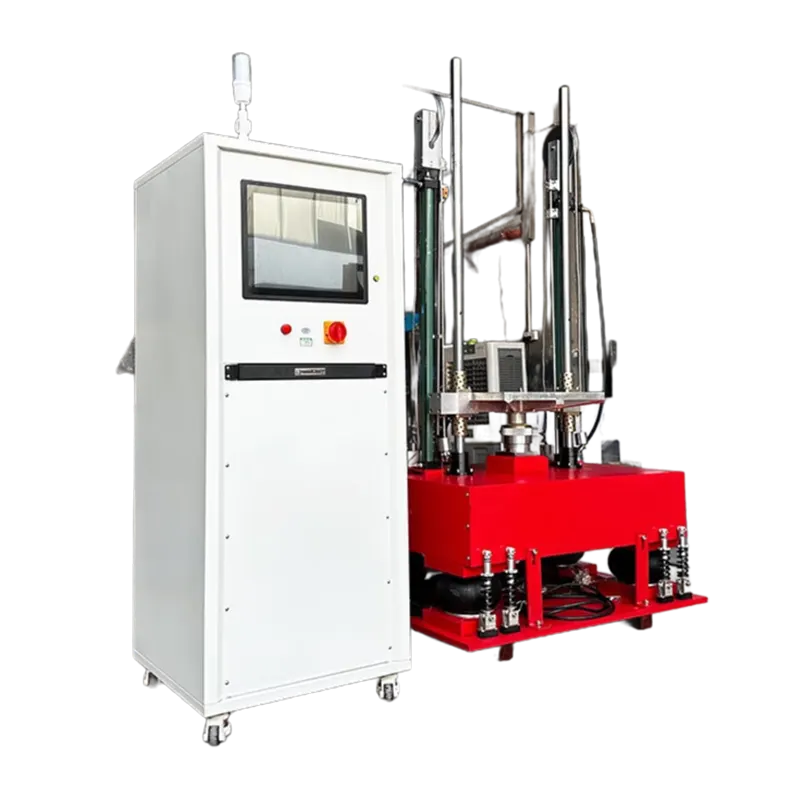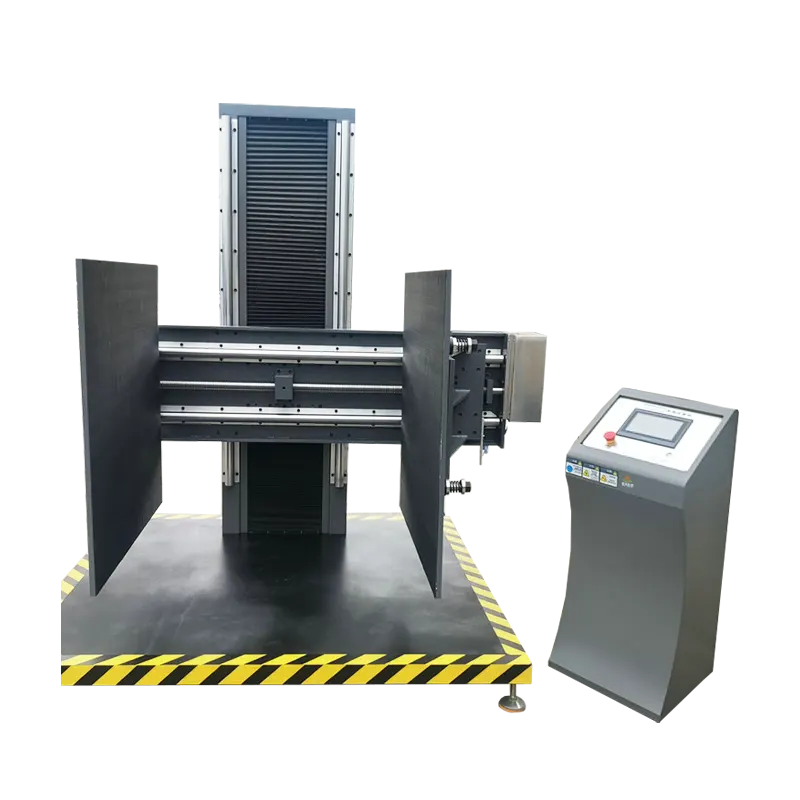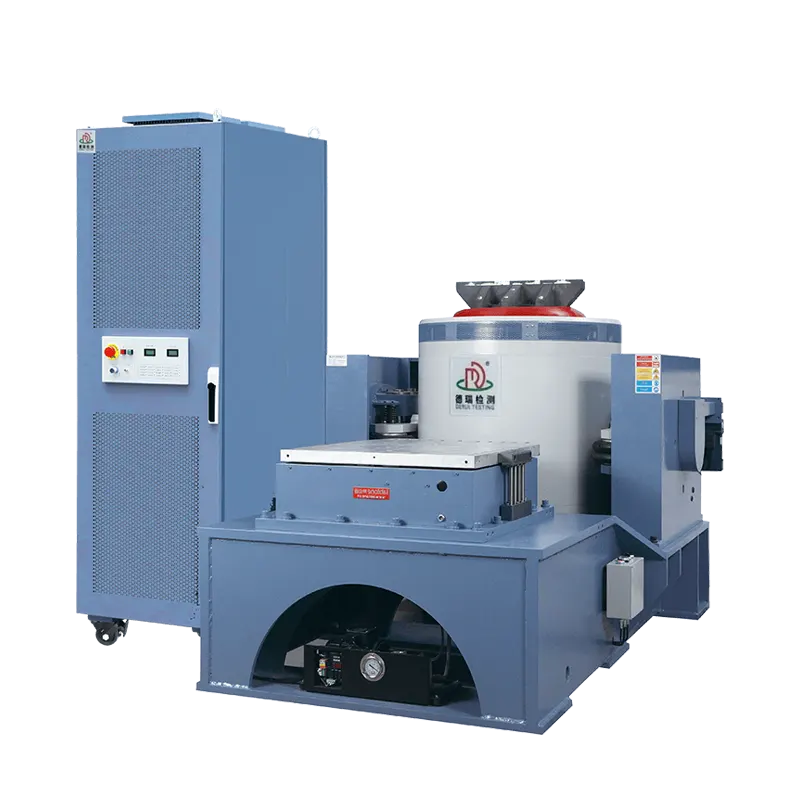


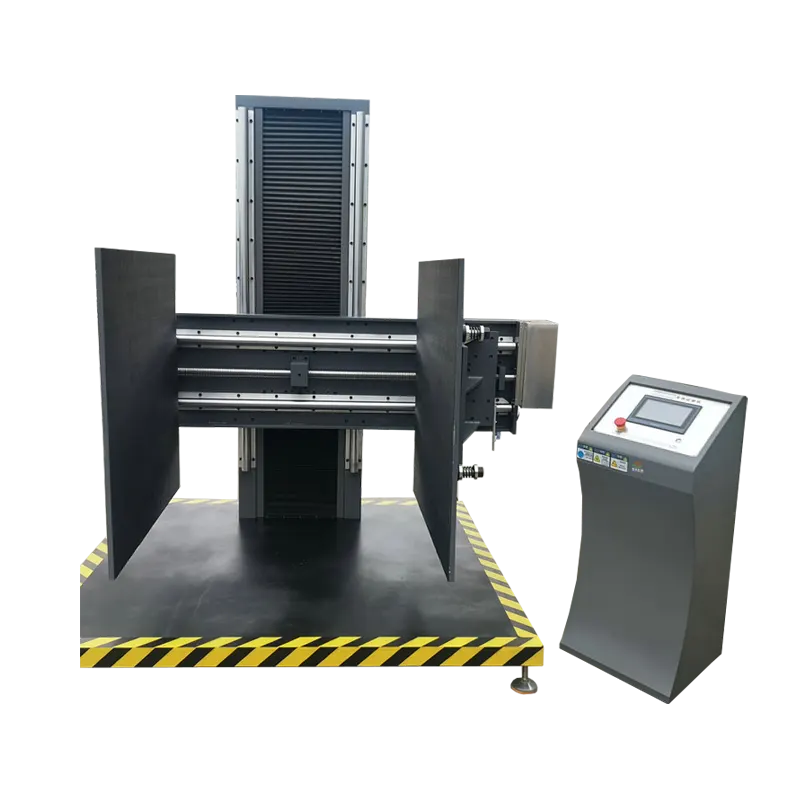

ISTA Inclined Impact Tester (ASTM D880 & ISO 2244)
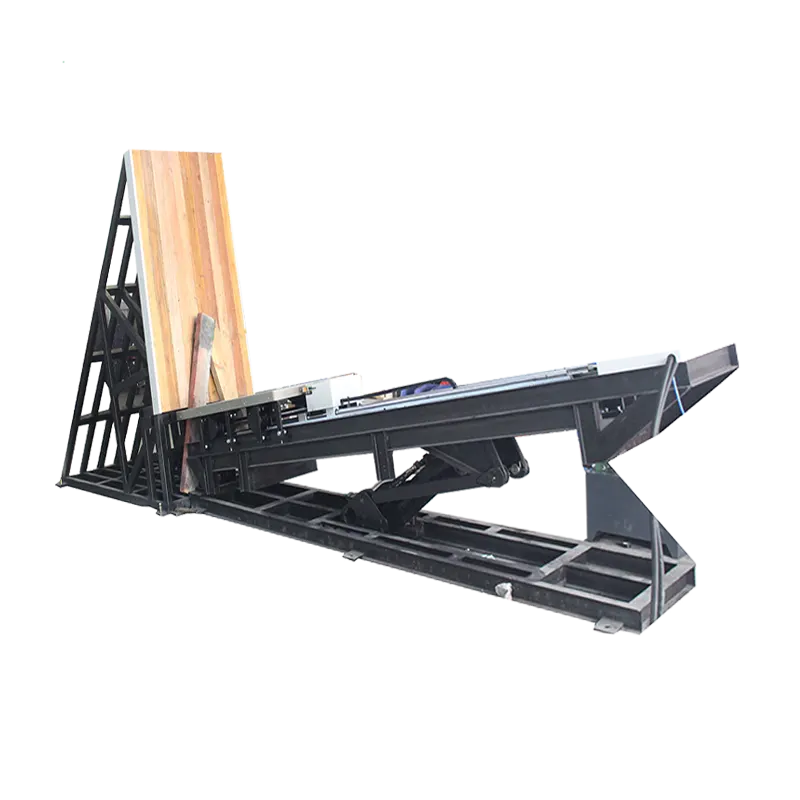
The DERUI Inclined Impact Tester simulates real-world dynamic horizontal shocks encountered during logistics transport—such as emergency truck braking, railway car coupling impacts, and rough forklift handling. Engineered with a precision 10-degree inclined track, a heavy-duty structural I-beam base, and an automated anti-secondary impact brake, it fully complies with ASTM D880, ISTA 1A/2A/3A/3E, ISO 2244, and TAPPI T 801.

Is the Inclined Impact Tester Right for Your Packaging?
Package size, pallet payload, and specific logistics handling hazards determine whether you require an inclined impact ramp or a vertical drop test tower.
Potentially Suitable
- Palletized Unit Loads: Full pallet loads up to 500 kg or 1000 kg evaluating stretch-wrap stability and stacking integrity.
- Heavy Shipping Containers: Wooden crates, heavy machinery shipping boxes, and bulk corrugated intermediate containers (IBCs).
- ISTA Transport Certification: Fulfilling mandatory horizontal impact requirements in ISTA 1A, 2A, 3A, and 3E programs.
- Warehouse Handling Simulation: Replicating forklift impact and rail shunting impacts under ASTM D880 and ISO 2244.
- Cushioning Material Verification: Assessing internal protective foam behavior under directional horizontal deceleration.
Select Another System When
- The test protocol requires purely vertical free-fall drops under ASTM D5276 (select our Drop Tester).
- The requirement is for package clamping compression simulating clamp-truck handling (select our Packaging Clamping Force Tester).
- Simulating road vehicle vibration over multi-hour journeys (select our Transportation Vibration Simulator).
- Evaluating the compressive stacking crush load of individual cartons (select our Box Compression Tester).
- Testing small individual parcels weighing under 10 kg without palletizing.
Six Steps to Execute ASTM D880 Inclined Impact Tests
Converting potential energy into precise kinetic velocity: following this standardized workflow guarantees accurate velocity acquisition and absolute operator safety.
Horizontal Pallet Loading
Tilt the carriage horizontal via pneumatic cylinders. Position the palletized load using a forklift and secure against lateral shift.
Track Inclination Setup
Lower the carriage back onto the precision 10° inclined track. Confirm wheel alignment and low-friction track guide clearance.
Motorized Height Elevation
Engage the electric hoist to pull the trolley up the track to the exact calibrated distance corresponding to required impact velocity.
Remote Pneumatic Release
Operators step clear of the perimeter. Press the wireless remote release button to pneumatically disengage the carriage instantly.
Velocity & Anti-Rebound
Photoelectric sensors measure impact speed at the baffle. The automatic pneumatic brake instantly locks the trolley to eliminate secondary hits.
Damage Audit & Data Logging
Inspect container deformation, seam separation, and product shock indicators. Record velocity (m/s) and export the compliance report.
ISTA and ASTM Standards: Transport Package Integrity
Horizontal impacts during transit account for over 40% of hidden product damages. Derui Inclined Impact Testers adhere strictly to globally mandated transit test programs.
Impact Testing for Shipping Containers & Systems
The core North American standard using a 10° inclined track. Defines Procedure A (container performance evaluation) and Procedure B (cushioning and interior protection durability assessment).
General Simulation for Parcel Delivery & Unitized Pallet Loads
ISTA 3A tests individual packaged products shipped through parcel delivery networks. ISTA 3E governs unitized pallet loads, verifying that pallet wrapping withstands severe vehicle shunting.
Complete, Filled Transport Packages — Horizontal Impact Tests
International standard specifying inclined plane and pendulum impact methods, ensuring cross-border packaging validation for European and Asian export shipments.
Impact Resistance of Fiberboard Shipping Containers
Directly evaluates the corner and edge impact resistance of corrugated and solid fiberboard shipping containers under standardized industrial velocities.
Secondary Impact Elimination Rule: Standard ASTM D880 protocols mandate that secondary recoil hits must not occur. Derui’s pneumatic track-locking brake activates in <0.05 seconds post-impact, ensuring 100% standard compliance.
Eight Inputs for an Inclined Impact Tester Specification
These essential details allow our packaging engineering team to tailor track length, carriage payload capacity, and safety barriers to your exact facility.
Why Choose Derui for Packaging Validation Testing
Derui testing systems deliver the structural stiffness, safety compliance, and metrology accuracy of premium international brands at approximately 25% to 35% lower Total Cost of Ownership (TCO).
| Evaluation Metric | Derui ISTA Inclined Impact Tester | Traditional Western Test Rigs |
|---|---|---|
| Capital Acquisition Cost | Direct factory pricing saves 25%–35% on equipment capital investment | High dealer markups and steep international freight premiums |
| Pneumatic Tilting Mechanism | Integrated dual-cylinder horizontal loading table included as standard | Often charged as an expensive optional hydraulic add-on |
| Anti-Secondary Brake | Instant pneumatic track-locking brake standard for zero secondary hits | Manual ratchet catch or mechanical rebound buffers prone to bounce |
| Manufacturing Lead Time | 20 to 30 days standard dispatch with pre-calibrated alignment | 16 to 24 weeks standard overseas fulfillment |
| Structural Build Quality | Heavy I-beam frame with multi-layer anti-corrosion industrial finish | Standard commercial build with costly replacement wheel bearings |
Technical Specifications: Inclined Impact Test Bench
High structural rigidity, low-friction pulley tracking, and precision velocity measurement.
| Specification Parameter | Standard Engineering Range & Details |
|---|---|
| Test Standards | ASTM D880, ISTA 1A, 2A, 3A, 3E, ISO 2244, TAPPI T 801 |
| Maximum Specimen Payload | 500 kg (~1100 lbs) standard; customizable up to 1000 kg (~2200 lbs) |
| Inclined Track Angle | 10° ± 0.5° fixed inclination |
| Trolley Surface Dimensions | 1200 × 1200 mm (customizable up to 1500 × 1500 mm for full pallets) |
| Impact Backstop Dimensions | 1500 × 1800 mm solid steel reinforced impact wall |
| Maximum Travel Distance | 2.0 m to 2.5 m (customizable for high-speed impact protocols) |
| Impact Velocity Range | 1.5 – 2.5 m/s (approx. 5.4 – 9.0 km/h) |
| Speed Measurement System | Dual photoelectric velocity gate with digital display (0.01 m/s resolution) |
| Trolley Return Drive | Electric motor winch with automated positioning clutch |
| Release Mechanism | Pneumatic quick-release jaw operated via wireless remote |
| Secondary Impact Prevention | Pneumatic high-friction track-locking brake |
| Carriage Tilting System | Dual pneumatic cylinders for horizontal specimen loading |
| Frame Construction | Heavy-duty structural tubular steel and reinforced I-beam chassis |
| Electrical Supply | AC 380V, 3-Phase, 50Hz (Customizable 220V/440V 60Hz) |
Inclined Impact Tester FAQs
Direct technical answers for velocity calculation, secondary impact prevention, and lab installation.
Why is an inclined impact test necessary if I already perform vertical drop testing?
Vertical drop tests evaluate package response to gravity drops during loading. However, over 40% of shipping damage occurs horizontally—such as vehicle emergency braking, railroad car coupling (humping), and automated conveyor collisions. Inclined impact testing accurately simulates these directional side impacts, especially for heavy, palletized, or tall loads that cannot be safely tested on free-fall drop towers.
How is impact velocity determined and controlled on the 10° track?
Impact velocity is governed by the gravitational conversion of potential energy into kinetic energy ($v = \sqrt{2g \cdot L \cdot \sin 10^\circ}$). By adjusting the slide length ($L$) along the track using the motorized positioning winch, operators can achieve exact impact velocities (typically 1.5 to 2.5 m/s) conforming to ASTM D880 and ISTA test requirements.
Why is an anti-secondary impact brake required by ASTM standards?
When a heavy package strikes the rigid impact wall, it rebounds backward along the track. Without an immediate brake, the carriage will roll back down and strike the wall a second or third time. These uncontrolled secondary hits introduce false damage data and invalidate compliance tests. Derui’s pneumatic brake locks the trolley within 0.05 seconds post-impact.
How does the pneumatic tilting system simplify heavy pallet loading?
Loading a 500 kg pallet onto a 10° inclined carriage is hazardous because the load wants to slide downward immediately. Derui integrates pneumatic tilting cylinders that rotate the carriage flat to horizontal (0°). Once the forklift positions and secures the load safely, the carriage tilts back to 10° ready for testing.
What floor space and facility requirements are needed for installation?
The standard system requires a level concrete floor area of approximately 8.0 meters in length by 2.5 meters in width, with at least 2.5 meters of vertical ceiling clearance. Concrete floor anchor bolts secure the I-beam chassis to prevent structural displacement during heavy impacts. Compressed air (0.6 MPa) is required for pneumatic release and braking.
How often should the velocity measurement system be calibrated?
Annual calibration is recommended under ISO 17025 protocols. The photoelectric timing gate and track inclination angle should be verified annually against certified metrology standards. Derui provides complete calibration certificates and verification tools with every machine.
Request an Inclined Impact Tester Proposal & Quotation
Submit your maximum pallet weight, package dimensions, target ISTA/ASTM standards, and laboratory floor layout. Our packaging test engineers will provide a formal engineering proposal, floor foundation plans, and factory-direct pricing within 24 hours.
24-Hour Quotation: Complete engineering proposal & specs
Anti-Rebound Brake: Instant track lock eliminates 2nd hits
Pneumatic Tilting: Safe horizontal forklift pallet loading
ISTA Compliance: ISO 17025 factory calibration included