We design and build a full range of universal testing machines (UTMs) and specialized lab equipment for rigorous quality control, research, and development.

Derui is a specialized manufacturer and supplier of material testing equipment.Our products serve quality control, research, and development needs
across industries like aerospace, automotive, and manufacturing.
Global Consultation Hotline:+86 15580327593

Physical Test Equipment for Paper, Paperboard and Corrugated Materials

Paper & Board Testing Equipment

Configure paper and board testing equipment for paper, linerboard, fluting, paperboard and corrugated materials. Start with the material, current test method, specimen preparation, conditioning atmosphere, required result and expected range—not with a generic “paper tester” name alone.

Define the measurement before selecting the instrument

01 · MATERIAL AND METHOD

Identify the material and grade, its role in the finished structure, the current standard or customer procedure, edition and required test direction.

02 · SPECIMEN AND CONDITIONING

Define sampling, specimen dimensions, cutting or creasing tools, machine and cross directions, preconditioning and the required temperature and humidity atmosphere.

03 · RANGE AND RECORDS

Provide expected minimum and maximum results, units, tests per shift, calculations, statistics, data export, verification documents and local power requirements.

Send the material and method for a configuration review.

Include material type and grade, test standard and edition, expected range, grammage or thickness, specimen direction and preparation, conditioning requirements, daily throughput, report fields, installation country and power supply.

Send Testing Requirements →

Test Equipment Selection

Choose Paper & Board Testing Equipment by Material Property and Test Method

Compare instruments by the property you need to measure—not by a generic paper tester label. Match the material and current test method to the required specimen preparation, conditioning, measurement range, fixtures or consumables, calculation and reporting workflow. Open each product page to review its verified configuration before requesting a quotation.

Test Property and Instrument Type

Match the Paper or Board Property to the Correct Test Instrument

Burst, compression, tear and folding tests answer different quality questions. Select the method and specimen configuration first; then confirm the instrument range, fixtures, consumables, preparation tools and reporting functions required by that method.

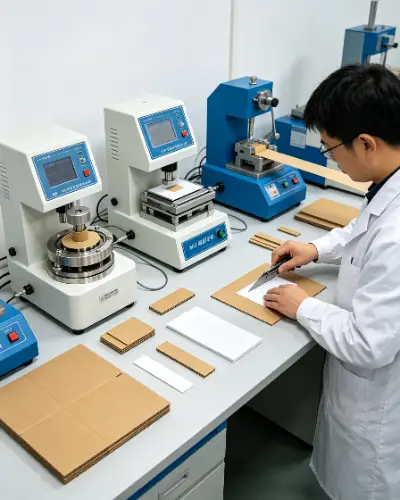
Keep the current real laboratory image here.
Recommended alt: Paper and board testing instruments in the DERUI laboratory
Paper and board testing instruments for burst, compression, tear and folding endurance tests
01

Rupture Resistance

Measure Bursting Strength

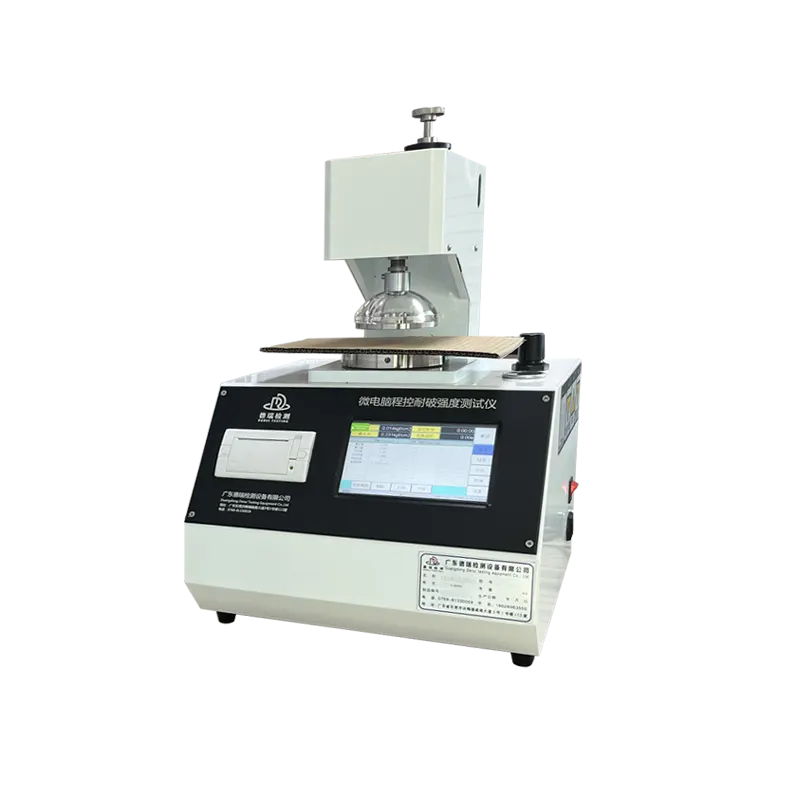
Use a bursting strength tester when the method requires the pressure at which a clamped sheet ruptures over a diaphragm. Paper and board methods can require different ranges, clamps and diaphragms; confirm the material and method before selecting a configuration.

02

Compression Behaviour

Evaluate RCT, ECT, FCT or SCT Requirements

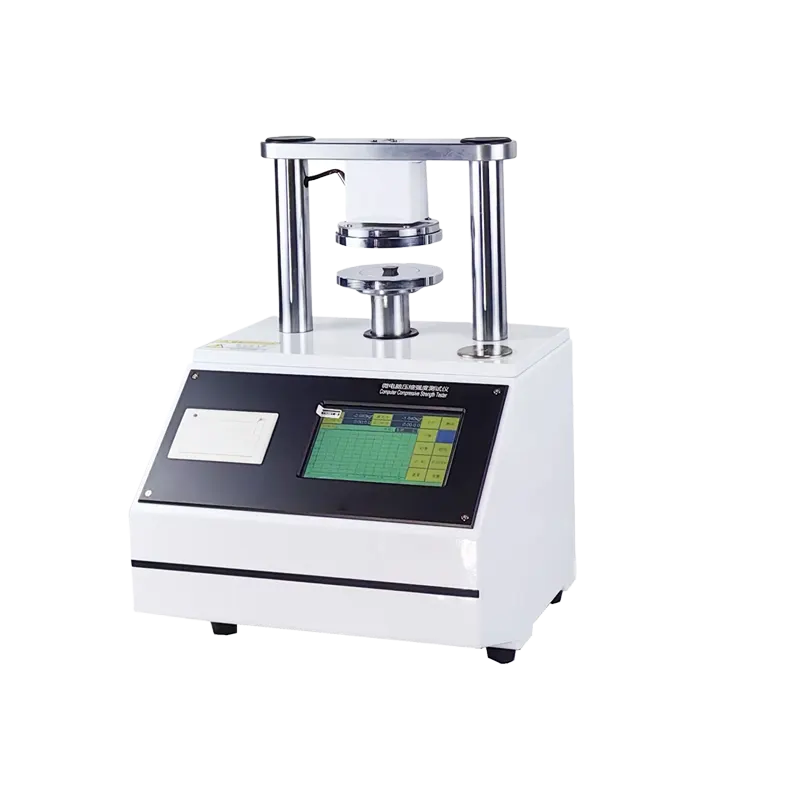
Compression methods evaluate different specimens and load paths. Confirm which result is required, then match the force range, platen or fixture, specimen cutter, loading rate and calculation to the governing procedure.

03

Tear Propagation

Determine Tear Resistance

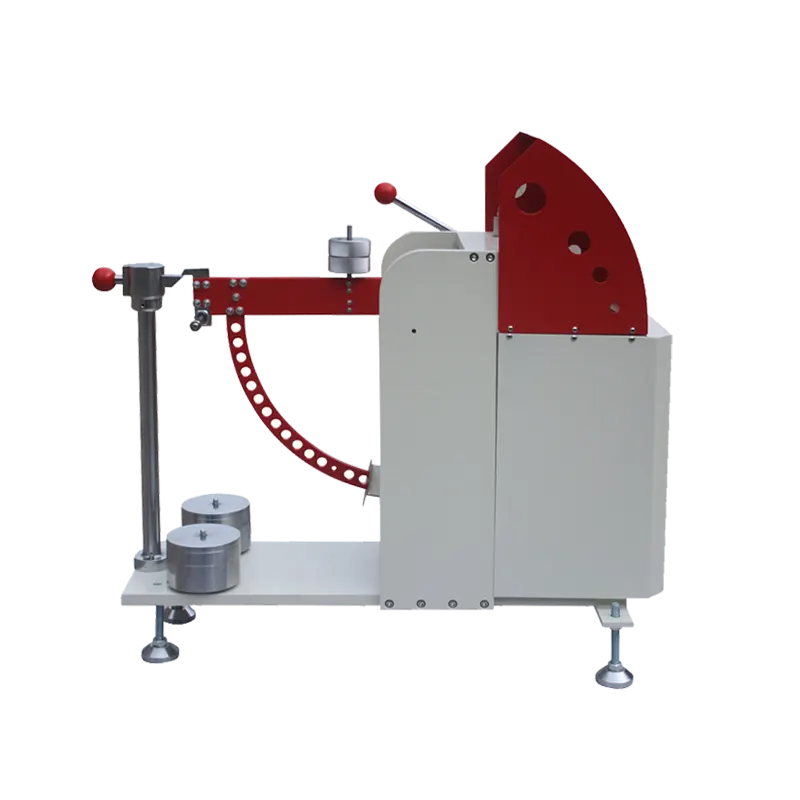
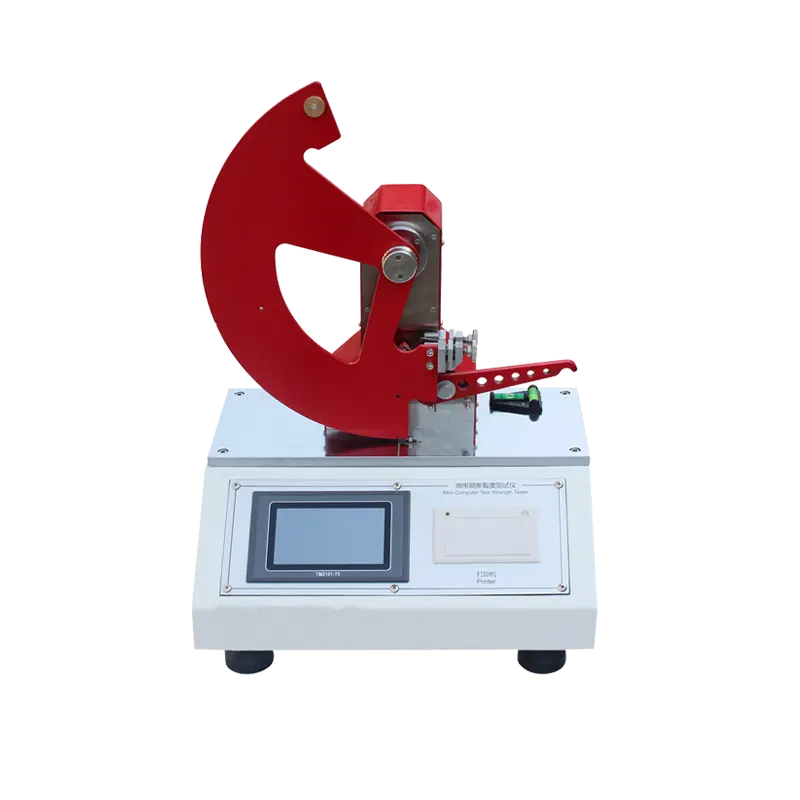
Select a tear tester by material, test principle, specimen geometry, machine or cross direction and expected range. A similar machine name does not make paper, textile and plastic-film tear procedures interchangeable.

04

Repeated Flexing

Assess MIT Folding Endurance

Use an MIT folding tester when the selected method repeatedly folds a prepared strip under specified tension until failure. Confirm specimen thickness, clamp clearance, applied tension and the method's counting and reporting rules.

Measurement boundary: Material-level results help compare grades, suppliers and process conditions, but they do not by themselves establish the compression, impact or distribution performance of a finished package. Use package-level tests when the finished construction is the test object.

Not sure which instrument and fixtures match your method?

Send the material, standard and edition, expected result range, specimen preparation, conditioning requirements and tests per day for a configuration review.

Send Material & Test Method →

Applications and Quality Decisions

Turn Paper & Board Test Results into Better Material and Packaging Decisions


Controlled physical tests help compare materials, monitor production and investigate variation. The useful test set depends on the material, conversion stage and decision being made; no single strength value describes the complete performance of a finished package.

01

Paper Mills and Material Suppliers

Control Grade and Batch Consistency

Use method-specific tensile, burst, compression, tear, folding, thickness or other applicable results to compare production lots and investigate changes in furnish, moisture, refining, forming, pressing, drying or coating. Acceptance limits should come from the governing specification—not from a generic instrument default.

02

Corrugators and Box Plants

Separate Component, Combined-Board and Box Performance

Use the method required for linerboard or fluting components, then evaluate combined board with the appropriate edge, flat or other board-level test. When finished-case compression or distribution performance is the decision, test the constructed box or package under the applicable procedure rather than treating RCT, SCT or ECT as a direct substitute.

03

Converters and Printers

Investigate Cutting, Folding and Runability Variation

Track the properties named by the material or customer specification—such as thickness, stiffness, tensile, tear or folding endurance—alongside moisture condition and machine direction. Use these results with process observations and controlled production trials; a laboratory value alone does not guarantee printing, creasing, gluing or converting performance.

04

Brand Owners and Packaging Laboratories

Compare Suppliers and Support Packaging Changes

Build a controlled baseline for incoming materials, supplier comparisons, lightweighting studies and failure investigations. Link material-level results to combined-board and finished-package tests before approving a construction change, especially when distribution loads, stacking, impact or environmental exposure are part of the risk.

Build Evidence at the Level of the Decision

LEVEL 1 · MATERIAL

Paper, Linerboard or Fluting

Compare the property required by the material specification under controlled sampling, direction, preparation and conditioning.

LEVEL 2 · STRUCTURE

Paperboard or Combined Board

Evaluate the assembled sheet or board property affected by flute, bonding, caliper, orientation and converting condition.

LEVEL 3 · PACKAGE

Finished Box or Loaded Package

Use the applicable box or distribution test when construction, contents, closure, stacking, handling or transport performance is the actual decision.

Define the decision before building the test equipment list.

Send the material, production stage, current method, expected range, conditioning requirement, daily throughput and the quality decision the result must support.

Discuss Your Test Program →

Equipment Selection Guide

How to Choose Paper & Board Testing Equipment


Choose the equipment from the material, current test method and required result—not from a generic instrument name. Use these five checks to define specimen preparation, conditioning, measurement range, workflow and verification requirements before requesting a configuration.

The same material can require different instruments depending on the property and procedure being reported. Start with the controlled document—not with the machine catalogue.

01 · MATERIAL

Identify the Material and Its Role

State paper, linerboard, fluting, paperboard or combined board; grade, grammage or thickness, coating or treatment, and whether it is a component or finished structure.

02 · METHOD

Provide the Governing Procedure

Identify the customer specification, standard or internal method, its edition, applicable section and any approved deviations. Market destination alone does not select the method.

03 · RESULT

Define the Reportable Property

List the required result, units, direction, index or normalized calculation, individual values, statistics, validity rules and acceptance limits.

Paper and board results are sensitive to sampling, direction, specimen quality and moisture condition. The test instrument cannot correct an uncontrolled specimen.

01 · SAMPLING

Define Source and Direction

Record roll, sheet, board or box location; lot and sampling plan; machine and cross direction; flute direction; and areas that must be excluded.

02 · PREPARATION

Specify Cutting and Preparation Tools

Confirm specimen geometry, cutter, crush-free cutting, slit or notch, crease, clamp clearance and the dimensional checks required before testing.

03 · CONDITIONING

Control Moisture History and Atmosphere

Provide preconditioning and conditioning requirements, atmosphere, duration or equilibrium criteria, handling time and whether testing must occur in the controlled atmosphere.

A headline capacity does not prove suitable performance across the values you need. Review the complete measurement system and method-specific accessories.

01 · WORKING RANGE

Define Expected Minimum and Maximum

Provide normal, low and high results plus the lowest value that must be reported. Confirm the usable verified range rather than relying only on maximum capacity.

02 · TEST INTERFACE

Match Clamps, Platens and Mechanism

Confirm the method-specific clamp, platen, specimen support, pendulum, folding head, pressure system and geometry that create the required load path.

03 · CONSUMABLES

List Method-Critical Consumables

Review diaphragms, blades, cutters, reference foils or blocks, clamps and other wear items, including supplied quantity, replacement criteria and availability.

Automation is useful only when it preserves the selected method and the laboratory can retrieve the records it actually needs.

01 · VOLUME

Quantify Daily Test Demand

State specimens per lot, lots per shift, retests, operator count, changeover frequency and the time spent on conditioning and preparation—not only machine cycle time.

02 · METHOD CONTROL

Define Operator and Program Controls

Review method selection, protected parameters, specimen identification, invalid-test handling, prompts, user access and any required approval workflow.

03 · RECORDS

Specify Outputs Before Ordering

List report fields, individual and summary results, curves where applicable, export format, printer, network or LIMS needs, retention and traceability. Confirm each interface in writing.

Define verification, laboratory conditions and the complete delivery scope before comparing quotations. These items affect whether the result remains defensible after installation.

01 · VERIFICATION

Agree on the Verified Range and Evidence

Define factory checks, reference devices, points or ranges, acceptance criteria, traceability, certificates and any intermediate check tools required by your quality system.

02 · LABORATORY

Confirm Site and Operating Conditions

Provide power and frequency, compressed air or water if required, bench space, room atmosphere, vibration control, drainage, ventilation, access and safety provisions.

03 · DELIVERY

Compare the Complete Supply Scope

Review instrument, preparation tools, accessories, consumables, installation, commissioning, training, manuals, spares, warranty and calibration or service support.

Prepare a configuration request that can be reviewed without guesswork.

Send the material, current method and edition, required result, expected range, specimen preparation, conditioning, daily throughput, data fields, verification scope and installation country.

Request a Configuration Review →

Definition and Scope

What Is Paper & Board Testing Equipment?

It is a method-specific measurement system—not simply one universal “paper tester.”

Paper and board testing equipment is the group of instruments, specimen-preparation tools, conditioning controls, fixtures, consumables and verification resources used to measure defined physical properties of paper, linerboard, fluting, paperboard and corrugated materials under a specified procedure.

The required apparatus depends on the property and method. Burst, pendulum tear and MIT folding endurance normally use dedicated mechanisms. Some tensile and compression procedures can use a suitable universal or compression platform when its force range, speed, fixtures, specimen geometry, controls and verification meet the selected method.

A Complete Paper-Test Measurement System Has Four Parts

01 · SPECIMEN

Sampling and Preparation

Sampling location, direction, cutter, geometry, edge quality, preconditioning, conditioning and handling.

02 · APPARATUS

Instrument and Test Interface

Frame or mechanism, sensor, clamp, platen, diaphragm, pendulum, folding head, support and safety devices.

03 · PROCEDURE

Controlled Method Execution

Current method and edition, test direction, rate or pressure delivery, preload, validity rules, repetitions and deviations.

04 · EVIDENCE

Verification and Reporting

Verified working range, reference devices, intermediate checks, units, individual results, calculations, statistics and traceable records.

What the System Can Report

Depending on the selected method and configuration, results may include bursting pressure, compression force or stress, tearing force, folding endurance, tensile force and elongation, thickness or other method-defined properties. Derived indices or normalized results are valid only when the required inputs, units and calculation rules are available.

What One Result Does Not Prove

A material result alone does not prove finished-box compression, package protection, distribution survival, printing runability, regulatory compliance or audit readiness. Those conclusions require the appropriate product-level procedure, controlled workflow and supporting evidence.

Selection implication: Define the material, current method, result and range first. Then specify preparation tools, conditioning, instrument configuration, verification and records as one complete system.

Testing Workflow

How Does the Paper & Board Testing Process Work?

A defensible result depends on the complete measurement process—not the test instrument alone. Use the governing method to control material identification, sampling, conditioning, specimen preparation, apparatus verification, test execution and reporting.

01

MATERIAL & METHOD

Confirm the Material and Governing Method

Identify paper, linerboard, fluting, paperboard or corrugated board; grade, grammage or thickness, coating, production stage and required test direction. Record the customer specification, internal procedure or current standard and edition before selecting the apparatus.

02

REPRESENTATIVE SAMPLING

Sample by Lot, Location and Direction

Follow the applicable sampling plan. Record lot or reel identity, sheet or board location, machine and cross directions, flute direction and any areas that must be excluded. Keep samples protected from damage and uncontrolled moisture changes.

03

MOISTURE CONTROL

Condition the Material as Required

Apply the preconditioning and conditioning atmosphere, duration or equilibrium criterion required by the governing document. Define specimen arrangement, air exposure, permitted handling time and whether preparation and testing must occur in the controlled atmosphere.

04

SPECIMEN PREPARATION

Prepare and Inspect the Specimen

Use the required cutter, die, slit, notch, crease or support tool. Check dimensions, parallelism, edge quality, orientation, flute condition and visible defects. Reject or document specimens that violate the method's preparation or validity rules.

05

VERIFICATION & EXECUTION

Verify the Instrument and Execute the Test

Confirm instrument status, selected method, working range, zero, sensor, clamps or platens, consumables, safety controls and required intermediate checks. Mount the specimen without unintended damage or slip and run the controlled procedure without changing parameters merely to shorten the test.

06

RESULT REVIEW & REPORTING

Validate, Calculate and Report the Result

Apply the method's validity rules before calculating the result. Retain individual values, approved statistics, units, direction, specimen and conditioning details, method and edition, instrument identification, verification status and any deviations needed to interpret or reproduce the test.

Configure the complete measurement process

Send the material, current method and edition, expected range, specimen preparation, conditioning, test volume, report requirements and installation details. The review should cover preparation tools, fixtures, consumables, verification and data outputs as well as the main instrument.

Request a Workflow & Configuration Review →

Method boundary: this workflow is a planning framework, not a substitute for the authorized test method, customer specification or laboratory quality procedure. Required specimen counts, atmospheres, rates, calculations and acceptance rules must come from the governing document.

Paper & Board Testing FAQ

Which paper or board testing instrument do I need for my material and quality requirement?

Choose the instrument from the material, quality decision and current test method—not from a generic “paper tester” name. Paper, linerboard, fluting, paperboard and corrugated board can require different specimen preparation, conditioning, fixtures, measurement ranges and calculations even when the equipment names appear similar.

01

MATERIAL AND DECISION

Define What You Are Testing and What the Result Must Decide

State whether the specimen is paper, linerboard, fluting, paperboard or combined corrugated board, together with its grade, grammage or thickness, coating and production stage. Then define the decision: incoming-material approval, process control, supplier comparison, product development or investigation of a quality problem.

02

PROPERTY AND TEST PRINCIPLE

Match the Required Property to the Correct Test

Use a bursting tester for a method-defined rupture-pressure result; a compression tester and the applicable fixtures for RCT, ECT, FCT or SCT; a tear tester for the specified tear method; and a folding endurance tester for repeated-folding resistance. Tensile strength, thickness, stiffness, absorption, smoothness and air-permeability require their own applicable methods and instrument configurations.

03

METHOD AND SPECIMEN

Confirm the Current Procedure Before Comparing Machines

Provide the customer specification, internal procedure or current TAPPI, ISO or ASTM method and edition. Check the required sampling location, machine or cross direction, specimen dimensions, cutting quality, preconditioning, conditioning atmosphere, test rate, repetitions, validity rules and reported units. Similar methods are not automatically interchangeable.

04

COMPLETE CONFIGURATION

Compare the Verified Working Range and the Full Supply Scope

Confirm the usable measurement range, sensor, clamps or platens, specimen cutters, method-critical consumables, verification resources, test volume, operator workflow and report outputs. A suitable configuration may include preparation and conditioning equipment as well as the main test instrument.

What should you send for an instrument-selection review?

Send the material and grade, production stage, current method and edition, required result and units, expected range, specimen direction and preparation, conditioning requirements, tests per day, report or data needs, installation country and power supply.

Request a Paper Testing Configuration Review →

What is the difference between RCT, ECT, FCT and SCT?

RCT, ECT, FCT and SCT are different compression methods with different specimens, load paths and reported properties. Select the method named by the material specification or customer requirement; do not treat the four results as interchangeable measures of “paper strength.”

01

SELECTION CHECK

RCT · Ring Crush Test

A prepared strip of paper or paperboard is formed into a ring and compressed edgewise. The cutter, ring holder, specimen dimensions, conditioning and loading procedure are part of the method.

02

SELECTION CHECK

ECT · Edge Crush Test

A corrugated-board specimen is compressed on its edge to evaluate edgewise compression resistance. Flute direction, specimen cutting, edge quality, support and geometry materially affect the result.

03

SELECTION CHECK

FCT · Flat Crush Test

A corrugated specimen is loaded perpendicular to its faces to evaluate resistance of the flute structure to flat crushing under the selected procedure.

04

DECISION CHECK

SCT · Short-Span Compression Test

A narrow strip is compressed over a short free span. It requires a short-span test interface and should not be inferred from an RCT fixture or generic parallel platens.

Configuration implication

Send the material, required method and edition, expected result range, specimen preparation and daily test volume so the compression configuration can be checked method by method.

Can one testing machine perform multiple paper tensile or compression methods?

Possibly—but only when the test frame, sensor, travel, speed control, clamps or platens, software and verification range satisfy every selected method. A machine that can move in tension and compression is not automatically a compliant paper-testing system.

01

SELECTION CHECK

Check the loading system

Compare the expected minimum and maximum results with the usable verified range—not only the machine's maximum capacity. Confirm speed, travel, alignment, data rate and overload protection.

02

SELECTION CHECK

Check every method-specific interface

Tensile clamps, compression platens, RCT holders, ECT supports and short-span fixtures create different specimen constraints and load paths. Each also has its own preparation and validation requirements.

03

DECISION CHECK

Compare a multi-method platform with dedicated instruments

A multi-method platform can reduce equipment count when changeovers, ranges and workflows are compatible. Dedicated instruments may be more efficient for high-volume routine tests. Base the choice on methods, tests per shift, changeover control and operator requirements.

Configuration implication

Provide every required tensile or compression method, expected range, specimen geometry and tests per shift. The review should confirm whether one platform or dedicated instruments provide the safer workflow.

How are paper testing instruments calibrated, verified and maintained?

Use a documented program that separates calibration, intermediate verification and preventive maintenance. The interval should be set by the governing method, laboratory quality system, manufacturer instructions, use intensity, stability history, environmental risk and consequences of an incorrect result—not by a universal calendar promise.

01

SELECTION CHECK

Calibration

Define measurands, points or ranges, acceptance criteria, traceability, uncertainty where required and the condition of the instrument before and after adjustment.

02

SELECTION CHECK

Intermediate verification

Use approved reference devices, check specimens or functional checks to detect drift between calibrations. Record control limits and action rules.

03

DECISION CHECK

Maintenance

Inspect clamps, platens, diaphragms, cutters, pendulums, folding heads, sensors, drive parts and safety devices. Recheck performance after repairs or changes that can affect the measurement.

Configuration implication

Agree on the calibration range, verification checks, maintenance tasks, evidence and recalibration triggers before purchase. A generic certificate does not cover every fixture or method automatically.

Can one instrument support TAPPI, ISO and ASTM test methods?

Sometimes. One instrument platform may support more than one published method when its apparatus, fixture, range, control, specimen preparation and calculations satisfy each selected method. Support must be confirmed method by method and edition by edition; a standards list or stored software name is not enough.

01

SELECTION CHECK

Start with the controlled document

Use the method required by the contract, customer specification or laboratory procedure. Record its complete designation and edition and identify any approved deviations.

02

SELECTION CHECK

Map requirements to the supplied configuration

Compare specimen geometry, clamp or platen, loading principle, working range, rate, validity rules, units, calculations and verification evidence for every requested method.

03

DECISION CHECK

Do not assume results are interchangeable

Related TAPPI, ISO and ASTM methods can differ in apparatus and procedure. Keep the method and configuration with every result set and obtain approval before combining historical data.

Configuration implication

List each required TAPPI, ISO or ASTM designation and edition. DERUI can then map the apparatus, fixture, range, program, calculation and verification evidence to the supplied configuration.

Review the ISO 2758 vs ISO 2759 method-selection example →

What test results, reports and data export options are available?

Available outputs depend on the instrument model, software and purchased configuration. Define the required result fields and workflow before ordering rather than assuming every paper tester includes the same report, export or network functions.

01

SELECTION CHECK

Method results

Specify individual values, average, spread or other required statistics, units, direction, specimen identity, validity status, index calculations and curves where applicable.

02

SELECTION CHECK

Report and export

Confirm print layout, electronic report format, editable data export, file naming, method and edition, operator, date, equipment identification and approved deviations.

03

DECISION CHECK

System integration

If network, database or LIMS integration is required, provide the interface, protocol, field map, user access, security, retention and validation requirements for written compatibility confirmation.

Configuration implication

Send the exact report fields, units, statistics, export format, interface, user-control and retention requirements. Confirm every requested output in the quotation rather than assuming universal compatibility.

Can you evaluate our samples before we select a test configuration?

A pre-purchase sample review can help confirm the test principle, expected range, fixture, specimen-preparation tools and workflow. Its scope must be agreed before samples are shipped; a demonstration result is not automatically a formal correlation, conformity or laboratory-accreditation study.

01

SELECTION CHECK

Before shipping samples

Provide the material and grade, lot, test method and edition, expected range, conditioning history, direction, required specimen count and any hazardous, confidential or customs information.

02

SELECTION CHECK

Agree on the evaluation plan

Define which configuration will be used, who prepares and conditions specimens, number of replicates, results and raw data to be returned, acceptance criteria and treatment of invalid tests.

03

DECISION CHECK

For correlation work

Use representative specimens tested under controlled conditions on both systems, an agreed statistical plan and documented instrument status. Differences should be investigated rather than hidden by comparing averages alone.

Configuration implication

Agree on the sample-evaluation objective, method, conditioning, configuration, replicate count, returned data and acceptance rule before samples are shipped.

Ask About a Sample Evaluation →

What information should I provide to request a paper testing equipment configuration?

Send enough information to match the complete measurement system—not only a machine name or maximum force. The checklist below helps DERUI review the method, working range, preparation tools, workflow and installation requirements without guessing.

01

SELECTION CHECK

Material and method

• Material, grade and production stage
• Grammage, thickness, coating or construction
• Standard or customer method and edition
• Required result, units and acceptance limits

02

SELECTION CHECK

Specimen and range

• Sampling position and test direction
• Specimen dimensions and preparation
• Conditioning atmosphere and handling
• Expected minimum, normal and maximum results

03

DECISION CHECK

Workflow and delivery

• Tests per lot, shift or day
• Report, export and integration needs
• Verification, training and service scope
• Destination country, power and utilities

Configuration implication

Send the available material, method, specimen, range, throughput, data and installation information. Unknown items can be identified for engineering review instead of being guessed.

Submit Paper Testing Requirements →

How should paper and board samples be conditioned before testing?

Follow the conditioning atmosphere, duration or equilibrium criterion specified by the governing method, customer specification or laboratory procedure. There is no single temperature, relative humidity or conditioning time that should be applied to every paper and board test.

01

SELECTION CHECK

Control moisture history

Record whether preconditioning is required, protect samples from uncontrolled moisture changes and separate lots that have different storage or transport histories.

02

SELECTION CHECK

Condition representative specimens

Allow air circulation as required and avoid arrangements that create local moisture gradients, crushing, curling or contamination.

03

DECISION CHECK

Control handling and test atmosphere

Define the permitted time outside the controlled atmosphere and whether specimen preparation and testing must occur under the same conditions. Record deviations with the result.

Configuration implication

Provide the governing method, material, storage history, required atmosphere, equilibrium or time criterion and permitted handling time. Do not substitute the room specification of the instrument for specimen conditioning.

What specimen preparation tools are required for reliable paper and board test results?

The required tools depend on the test method and specimen. Preparation is part of the measurement system: an incorrect width, damaged edge, crushed flute, wrong direction or uncontrolled crease can invalidate an otherwise accurate instrument result.

01

SELECTION CHECK

Cutting and geometry

Confirm the method-specific strip cutter, die, punch, slit or notch tool; specimen width, length and parallelism; clean edges; and any crush-free cutting requirement.

02

SELECTION CHECK

Direction and specimen identity

Mark machine and cross directions, flute direction, sampling position, coated side, lot and specimen number before cutting. Keep unlike orientations in separate result sets.

03

DECISION CHECK

Method-specific support

List ring holders, ECT guides, supports, crease or clamp-clearance gauges, reference thickness tools and replacement blades. Include preparation tools and wear items in the quotation and acceptance checklist.

Configuration implication

Include every cutter, die, holder, support, gauge, replacement blade and reference tool required by the selected method in the equipment and acceptance checklist.

telephonetelephone

hotline:
155 8032 7593

WhapsAppWhapsApp
WhapsApp
LinkedinLinkedin
Linkedin
messagemessage

Contact us to provide you with exclusive service!