


What Is a Board Puncture Resistance Tester?
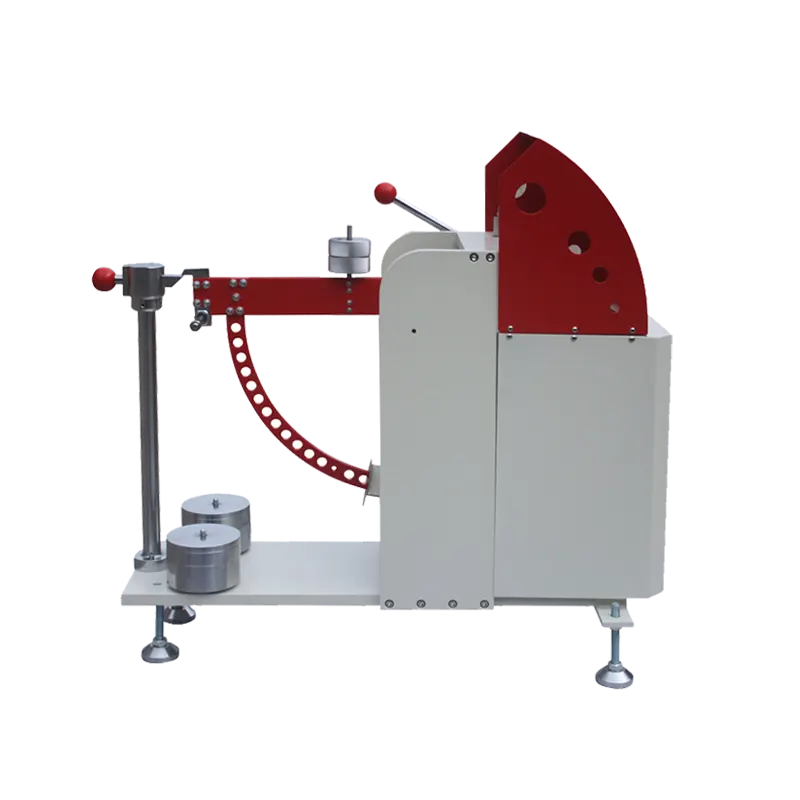
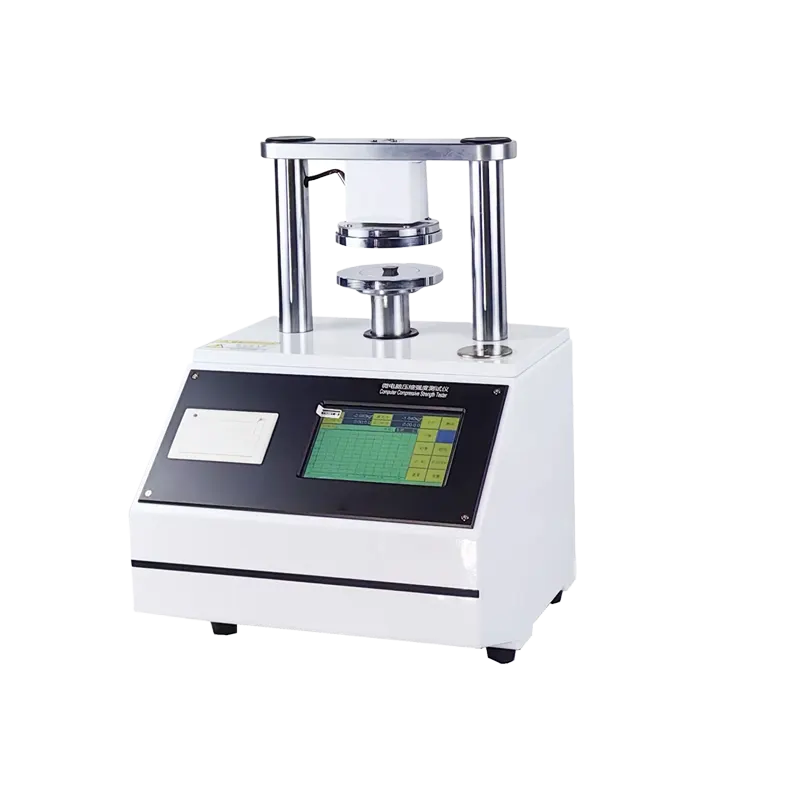
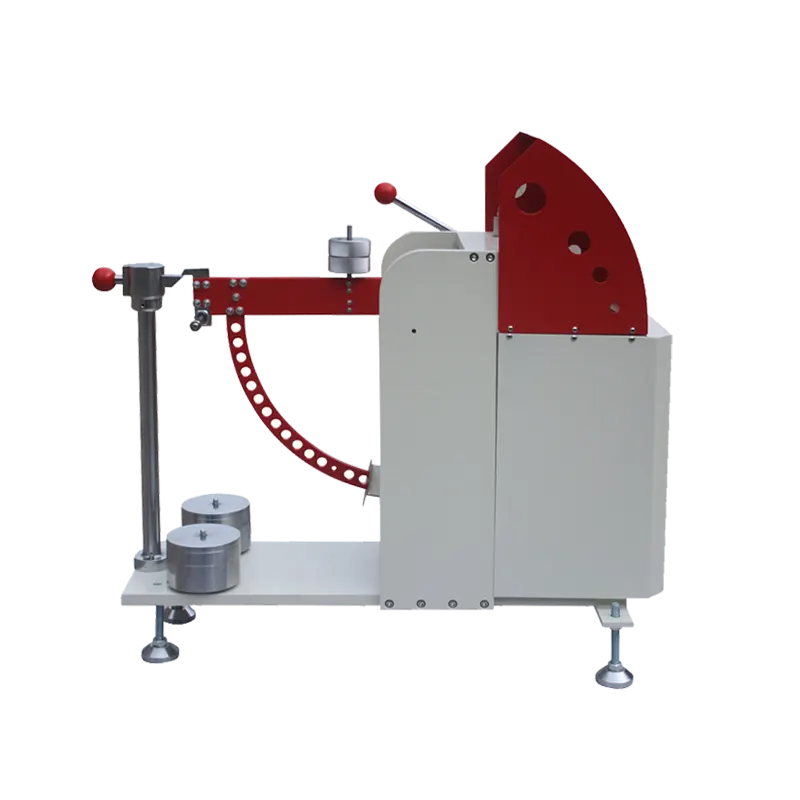
A board puncture resistance tester measures the energy required for a pyramidal point on a pendulum arm to puncture a clamped board specimen. DERUI DR-B237 reports the absorbed energy in joules and is intended as a configuration starting point for corrugated fibreboard, solid board and other board covered by the selected pendulum method.
Quick answer: use this tester when the requirement is pendulum puncture energy for board. Do not select it for slow-rate flexible-film probe testing, needle penetration, medical-package puncture or puncture force reported only in newtons.
Is DR-B237 the Right Puncture Tester?
“Puncture resistance” can mean energy, peak force, displacement or failure work. The required result unit and apparatus reveal which machine belongs in the method.
Potentially suitable
- Corrugated fibreboard and solid board tested with a pendulum device and pyramidal point.
- Packaging-case board qualification, incoming inspection and comparative material evaluation.
- Requirements referencing ISO 3036, TAPPI T 803 or a verified equivalent board method.
- Expected puncture energy that can remain within a suitable DR-B237 scale's valid reading region.
- Laboratories able to condition, cut, orient and clamp representative board specimens correctly.
Select another system when
- The specimen is flexible film or laminate tested by a slow-moving probe under ASTM F1306.
- The method requires force in newtons, probe travel, a force-displacement curve or puncture work from a universal tester.
- The requirement concerns a medical needle, glove, textile, geotextile, metal foil or another unrelated puncture method.
- The specimen, energy result or construction lies outside the method or verified machine range.
- You need finished-box compression, burst, tear or drop performance rather than board puncture energy.
Six Conditions That Control Puncture Energy
The pendulum releases in seconds, but sampling, atmosphere, board direction, range selection and mechanical checks determine whether the number is useful.
Identify and condition
Record board type, flute or solid construction, grade, batch, thickness, grammage and the atmosphere required by the method.
Prepare representative areas
Cut specimens to the current procedure and avoid creases, scores, joints, print defects and damaged edges unless specifically required.
Control orientation
Mark machine/cross direction and board faces. Balance or report orientations according to the selected sampling plan.
Verify the mechanism
Check level, zero, pointer friction, free swing, pyramidal point, collar and clamp condition before the test series.
Select a valid scale
Use a range that keeps the result within the permitted reading region. A high-capacity scale is not automatically suitable for weak board.
Puncture and report
Clamp securely, clear the pendulum path, release without interference and record valid individual energy results and statistics.

ISO 3036 and TAPPI T 803 Define Board Testing
The method controls much more than the point shape. Use the current authorized document for specimen preparation, test directions, pendulum ranges, friction compensation, validity and reporting.
Board puncture resistance using a pendulum
ISO's current second edition applies to board, including corrugated fibreboard and solid board, especially material used to manufacture packaging cases. It replaced the withdrawn 1975 edition in March 2025.
Containerboard puncture test
TAPPI describes a pyramidal point fixed to a pendulum arm. The result represents energy associated with tearing the board and bending it away from the penetrating point.
Not the same machine or result
ASTM F1306 uses a probe driven at a controlled slow rate through flexible barrier films and laminates. It typically requires force and displacement measurement, so it should not be claimed from DR-B237's pendulum specification.
Not a replacement for package testing
Board puncture energy may support material selection, but a complete distribution procedure can also require compression, vibration, drop, conditioning and finished-package evaluation.
Compatibility rule: a standard number in marketing copy is not enough. Ask for written mapping between the current edition and the supplied pendulum energy ranges, point, collar, clamp, specimen tools, calculations and verification procedure.
Eight Inputs for a DR-B237 Configuration Review
These details allow the energy range, specimen setup, method and supplied verification package to be reviewed together.
Board Puncture Resistance Tester FAQ
Direct answers for method selection, result interpretation and purchasing.
What does DR-B237 measure?
It measures the energy absorbed when a pyramidal point on a pendulum punctures a clamped board specimen. The current product page publishes a 1–48 J measuring range.
Can DR-B237 test flexible packaging film?
Not under the published configuration. Its joule range and pyramidal pendulum correspond to board puncture methods. Flexible-film methods such as ASTM F1306 use a different slow-rate probe and force/displacement measurement system.
Which materials does ISO 3036:2025 cover?
ISO states that the method applies to board, including corrugated fibreboard and solid board, especially board used to manufacture packaging cases.
Is puncture energy the same as bursting strength?
No. Puncture testing uses a pyramidal impact point and reports absorbed energy. Bursting testing applies hydraulic pressure through a diaphragm and reports rupture pressure. The results are not interchangeable.
Does a higher board puncture result guarantee a stronger finished box?
No. Finished-package performance also depends on board construction, converting, joints, box dimensions, moisture, compression, vibration and handling hazards. Use the complete packaging test plan required by the distribution decision.
What should be sent with a quotation request?
Provide the board type, flute or solid construction, method and edition, expected energy range, thickness/grammage, orientations, sample volume, reporting requirements and required verification documents.
Request a DR-B237 configuration review
Send your board construction, method, expected energy range, specimen requirements, workload and documentation list for a technical review.