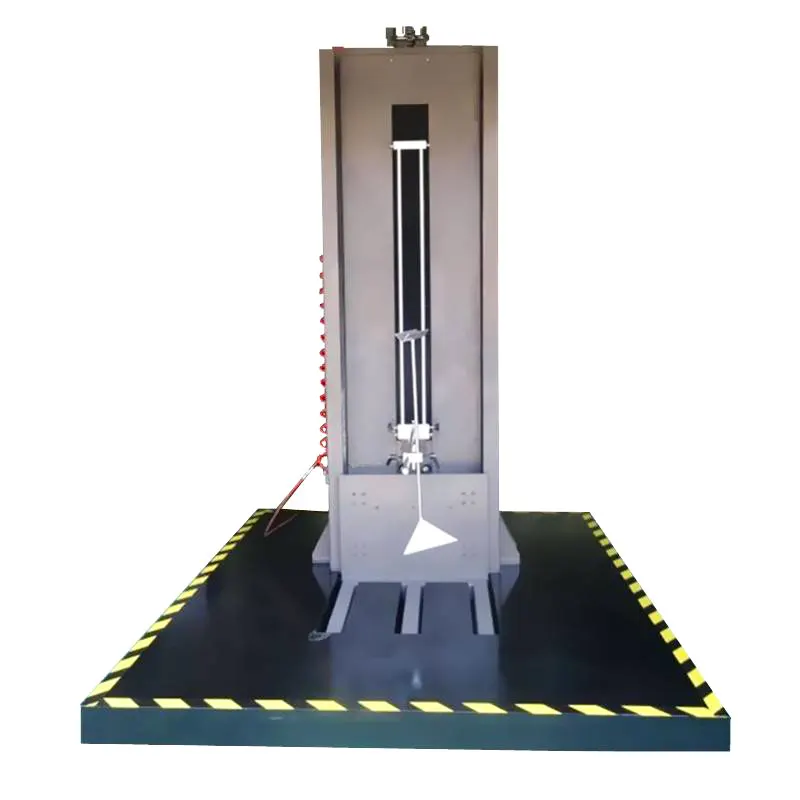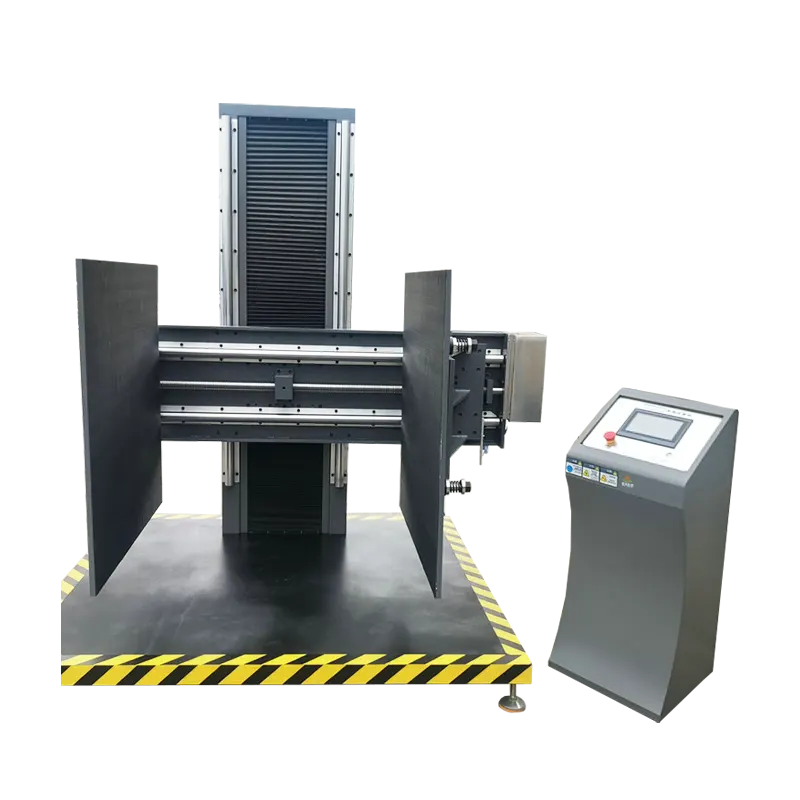
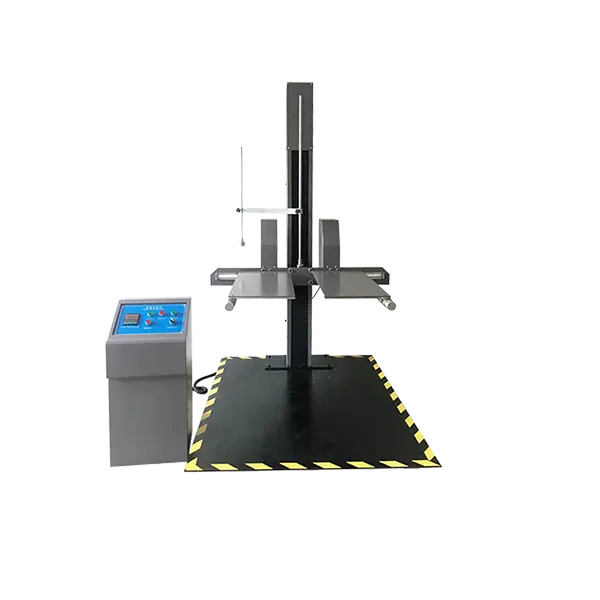



What Is Packaging Drop Test Equipment?
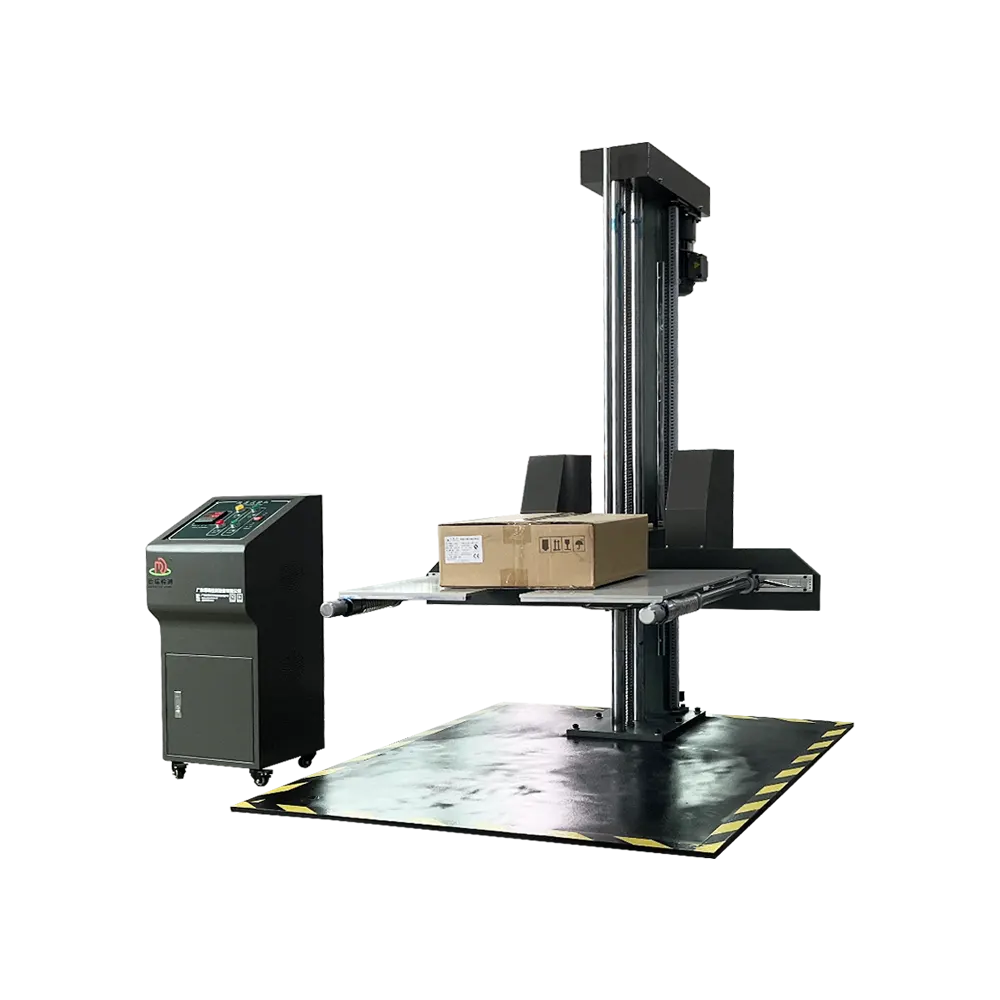
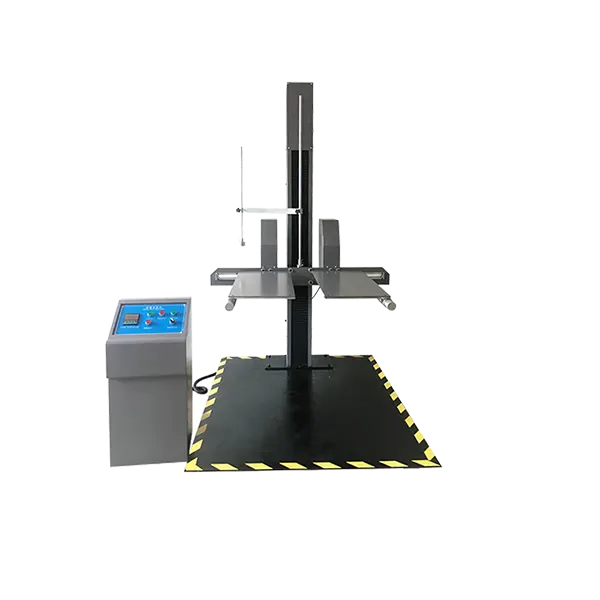
Packaging drop test equipment raises a complete packaged product to a controlled height, releases it with minimal interference and allows a selected face, edge or corner to strike a rigid impact surface. The test helps packaging engineers compare designs, identify product or cushioning damage and verify a defined distribution-test procedure.
Quick answer: choose the tester from the complete package—its mass, dimensions, center of gravity, required drop height and orientation—not from the carton material alone. The fixture must release the package cleanly without changing its intended attitude.
Select the Drop Range Around the Required Procedure
Both published models carry packages up to 60 kg and share the same listed specimen envelope. The primary published difference is maximum drop height; the laboratory must also confirm whether every required low and high drop point is physically achievable with the actual package and fixture.
300–1500 mm
- Maximum specimen mass
- 60 kg
- Published specimen size
- 200 × 800 × 1000 mm
- Tester dimensions
- 1600 × 1100 × 2230 mm
- Drop orientations
- Face / edge / corner
300–1800 mm
- Maximum specimen mass
- 60 kg
- Published specimen size
- 200 × 800 × 1000 mm
- Tester dimensions
- 1600 × 1100 × 2530 mm
- Drop orientations
- Face / edge / corner
Do not select by height alone: provide the package L × W × H, mass, center of gravity, required face/edge/corner sequence and target heights. The current source lists the size as 200 × 800 × 1000 mm; confirm the dimension order and actual clearance in the technical proposal.
Define the Package Attitude Before Release
A free-fall tester supplies height, support and release. A valid result also depends on the complete filled package, conditioning, drop sequence, impact surface, attitude tolerance, inspection criteria and current procedure.
ISO 2248 defines a vertical-impact test in which a complete filled transport package is raised and released to strike a rigid plane surface from a predetermined height and attitude. ASTM D5276 and ISTA procedures may specify different scopes, sequences and documentation.
Flat drop on a selected package face
Confirm face identification, package orientation, height reference point and whether contents or closures can shift before release.
Drop on a defined package edge
The support and release arrangement must establish the required attitude without interfering with free fall or changing the impact point.
Drop on a selected corner
Center-of-gravity location and package geometry affect setup stability. Confirm that the single-wing mechanism can position the actual specimen safely.
Damage is not one universal pass/fail rule
Record package deformation, closure failure, cushioning movement and product damage against the acceptance criteria defined by the customer or procedure.
Important: the product page currently publishes GB/T 2423.8. Treat ISO, ASTM and ISTA references as configuration-review inputs until the ordered apparatus and current procedure have been checked together.
Applications Across Parcel and Distribution Packaging
The business value is not simply proving that a box can be dropped. A controlled test helps teams locate the failure mode and decide whether the product, cushioning, carton, closure or handling specification needs to change.
E-commerce and parcel delivery
Compare complete packages exposed to repeated manual handling and last-mile transfer while documenting product movement, corner damage and closure failure.
Consumer electronics and appliances
Evaluate whether cushioning, internal supports and the outer carton protect products with sensitive corners, screens, connectors or housings.
Food, cosmetics and household products
Investigate leaking, cap or seal movement, container breakage and carton damage using the filled package and its actual orientation.
Packaging suppliers and test laboratories
Compare packaging constructions, run customer procedures and produce traceable observations under controlled height and orientation conditions.
Six Inputs for a Drop Tester Recommendation
Send these details together. They determine whether the package can be positioned safely, released at the required attitude and tested over the full height sequence.
Complete package
L × W × H, mass, center of gravity, filled condition, handles, protrusions and product fragility.
Method and revision
Current ISO, ASTM, ISTA, IEC, customer, retailer or internal procedure and the exact drop step required.
Height sequence
Lowest and highest height, how height is referenced and the number and order of drops.
Impact attitudes
Required face, edge and corner identifications plus any unusual package orientation or center-of-gravity issue.
Acceptance criteria
Permitted package damage, product function checks, leakage, seal integrity, photographs and report fields.
Site and workflow
Tests per day, operator access, guarding, floor and ceiling space, power, installation and required verification documents.
Condition, identify and inspect the complete filled package.
Set the required height and face, edge or corner attitude.
Clear the area and perform the controlled free-fall drop.
Record package and product damage against the defined criteria.
Best inquiry package: package photo or drawing + dimensions and mass + method + drop sequence + acceptance criteria.
Packaging Drop Test Equipment FAQs
01What does packaging drop test equipment evaluate?
02What is the published capacity of the DR-B217?
03Can it perform face, edge and corner drops?
04Does the machine comply with ASTM D5276, ISO 2248 or ISTA?
05When should I choose a zero-drop or double-wing tester?
06What information is needed for a quotation?
Match the Drop System to the Complete Package
Send package details, method, height sequence, impact attitudes and acceptance criteria for a model-specific review.