

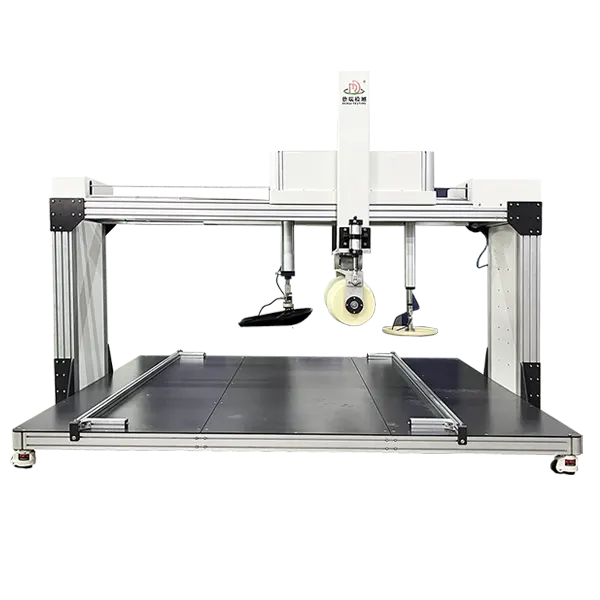
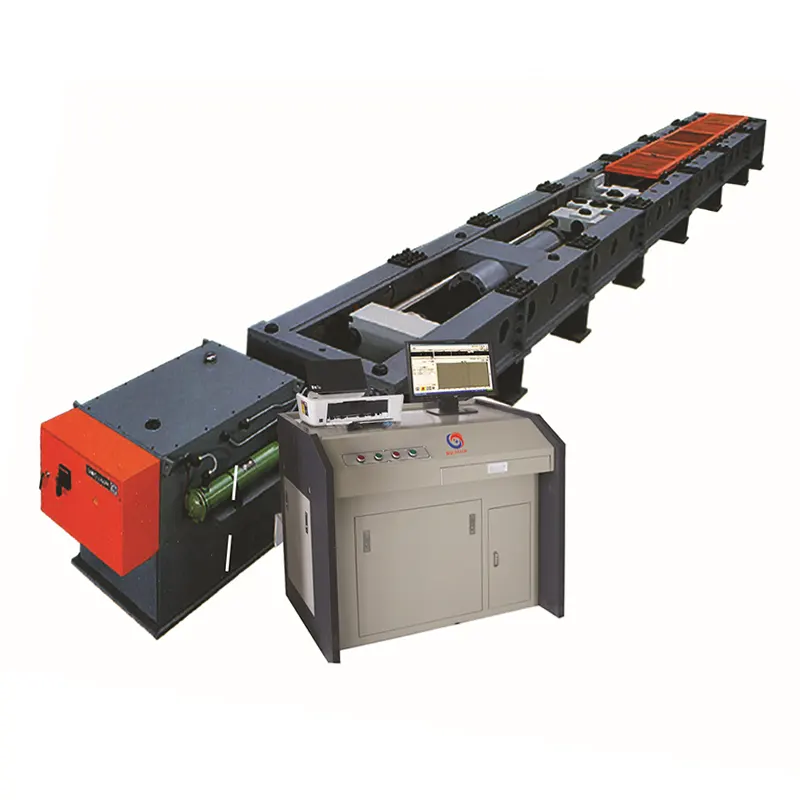
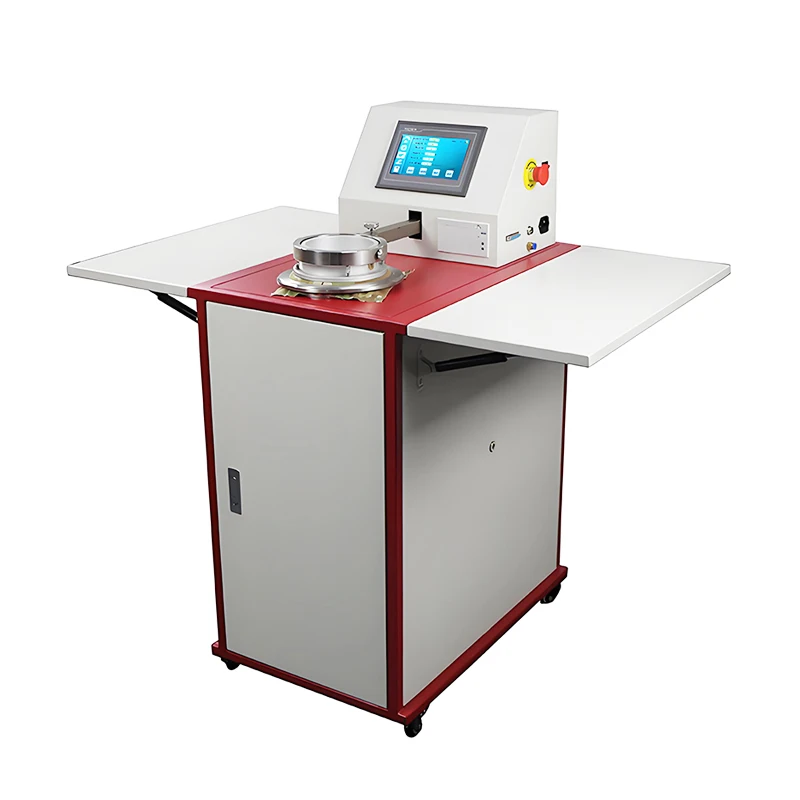
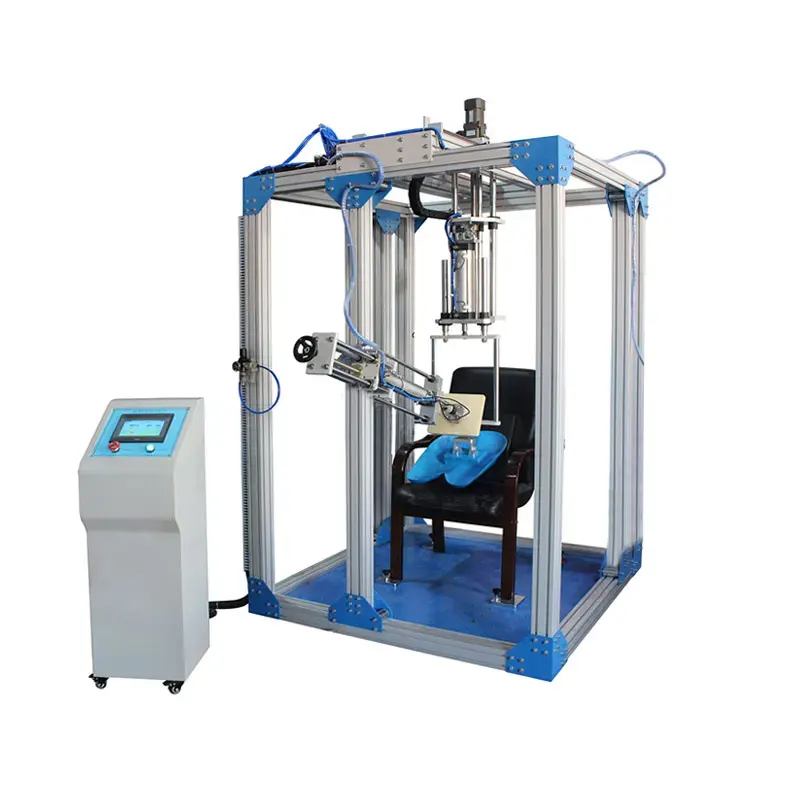
Dual-Function Foam Hardness and Tensile Tester (IFD & Tensile)
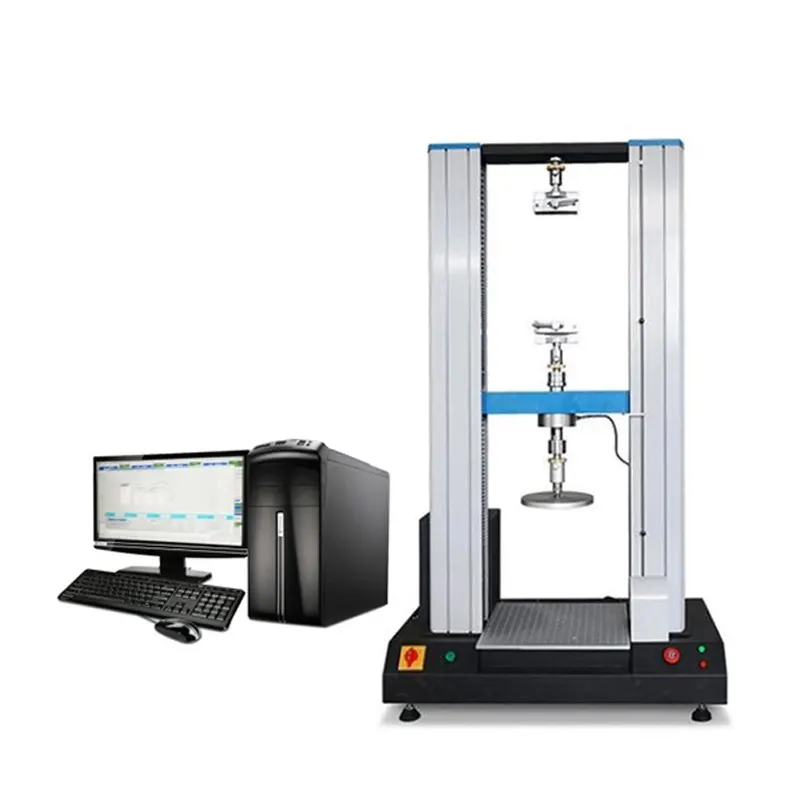
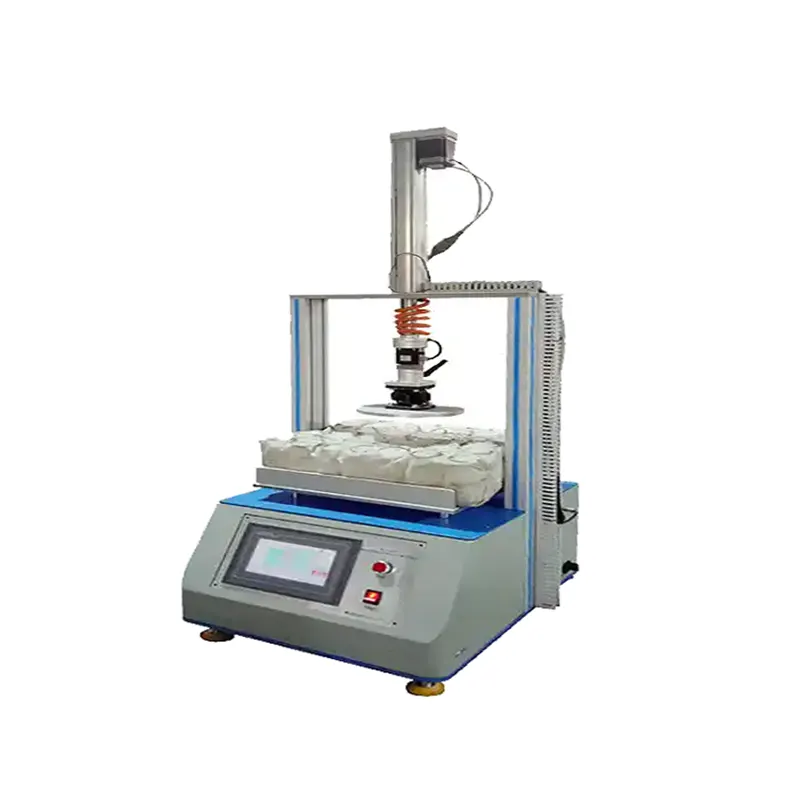
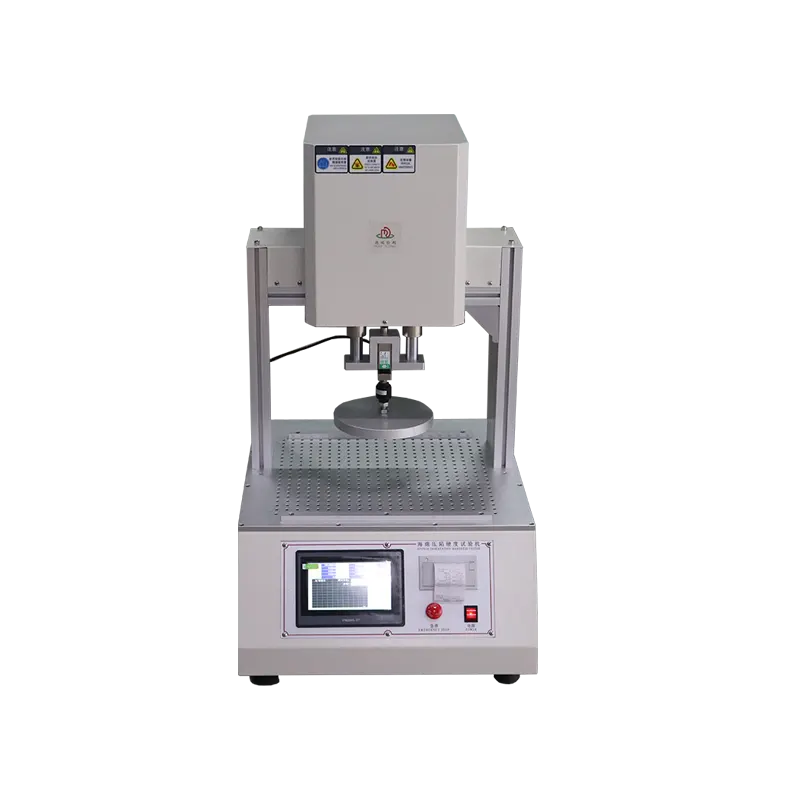
Evaluating flexible cellular materials traditionally requires switching between separate machines to measure squish and stretch. We engineered the DERUI DR-J202-3 Foam Hardness and Tensile Tester to eliminate this exact bottleneck. Combining Indentation Force Deflection (IFD/ILD/CFD) and high-elongation tensile/tear strength testing into a single microcomputer-controlled dual-column frame, it complies with ASTM D3574, ISO 2439, ISO 3386, and ISO 1798.

Is the DR-J202-3 the Right Foam Testing Rig?
Material density, viscoelastic recovery rates, and required test modes determine whether you need this dual-function benchtop analyzer or a heavy-capacity structural frame.
Potentially Suitable
- Flexible Polyurethane Foam: ASTM D3574 Test B (IFD) and Test C (CFD) firmness profiling for furniture, bedding, and automotive seating.
- Memory Foam (Viscoelastic): Captures slow recovery curves and hysteresis loss via programmable software dwell times.
- Foam Tensile & Tear Strength: ASTM D3574 Test E (tensile) and Test F (split tear) on low-density foam without specimen slippage.
- Automotive & Medical Cushions: Support factor (65% IFD / 25% IFD) calculation to evaluate passenger fatigue and ergonomics.
- Protective Packaging Foams: Compression stress-strain evaluations on expanded polyethylene (EPE) and cross-linked EVA foams.
Select Another System When
- The test requires continuous cyclic pounding over 80,000 cycles for fatigue life (select our Foam Dynamic Fatigue Tester).
- The primary focus is testing finished corrugated cartons or wooden packaging boxes (select our Box Compression Tester).
- Evaluating high-strength steel rebar or concrete specimens requiring >50 kN force (select our Hydraulic UTM series).
- Testing foam ball rebound resilience per ASTM D3574 Test H (select our Drop Ball Rebound Tester).
- Testing flame retardancy or horizontal burning characteristics of automotive foam.
Six Steps to High-Precision Foam IFD & Tensile Testing
Soft cellular foam compresses and stretches under minimal force. Following this automated workflow guarantees repeatable, audit-ready data without operator bias.
Specimen Conditioning
Condition foam blocks (typically 380×380×100 mm) at 23 ± 2°C and 50 ± 5% RH for 12+ hours per ASTM D3574 to stabilize cellular gas pressure.
Pre-Flexing Routine
Run automated pre-flexing: indent the specimen twice to 75% deflection at 250 mm/min to break temporary cellular bonds before measuring.
Zero-Thickness Contact
The system applies an automated 4.5 N pre-load to detect the true uncompressed top surface, establishing a rock-solid zero-thickness baseline.
25% & 65% IFD Indentation
Compress the sample to 25% thickness, dwell for 60 seconds, record force, then proceed directly to 65% indentation to calculate Support Factor.
Quick Fixture Swap
Disconnect circular platens and attach pneumatic scissor grips within 2 minutes to transition to ASTM D3574 Test E tensile pulls.
Automated Curve Reporting
Capture multi-cycle hysteresis loops, peak tensile strength, and elongation at break (%), exporting directly to Excel and lab LIMS networks.
ASTM D3574 and ISO 2439: The Global Quality Benchmarks
The physical characterization of flexible cellular plastics requires strict adherence to standardized indentation speeds, indentor dimensions, and rest periods.
Indentation Force Deflection (IFD / ILD)
The standard benchmark across the U.S. bedding and furniture industries. Measures the force required to compress a 380×380 mm block by 25% and 65% using a 200 mm diameter flat indentor with a 1 mm edge radius.
Tensile Strength & Elongation at Break
Evaluates the structural integrity of foam rubber. Pulls die-cut dogbone specimens at 500 mm/min until rupture, capturing maximum tensile stress (kPa/psi) and ultimate elongation percentage.
Flexible Cellular Polymeric Materials — Indentation Hardness
International standard specifying Methods A, B, and C for determining indentation hardness index, hardness characteristics, and check tests using a circular indentor and perforated support table.
Compression Stress-Strain Characteristics (CFD)
Measures the fourth-cycle compression force deflection (CFD) of low-density flexible cellular materials, providing essential data for cushioning comfort and automotive seat engineering.
Sag Factor (Support Factor) Capability: The Derui software automatically calculates the Sag Factor (65% IFD force ÷ 25% IFD force). A ratio between 2.0 and 3.0 indicates premium seating comfort without premature bottoming out.
Eight Inputs for a Foam Hardness & Tensile Tester Review
These key parameters ensure our engineers configure the exact load cell sensitivity, platen dimensions, and pneumatic clamping fixtures for your lab.
Custom Fixtures & Application Scope for Cellular Materials
By swapping out circular indentor platens, pneumatic scissor grips, and tear clamps, you can transition between compression tests and tensile pulls in minutes.
| Material Category | Core Physical Testing Application | Recommended Fixture & Accessory |
|---|---|---|
| Flexible Polyurethane Foam | Comfort & support assessment (25% & 65% IFD/ILD) | Ø200 mm circular flat indentor & perforated lower support platen (prevents air trapping) |
| Bedding & Cushions | Durability, fatigue profile, and height/hardness loss | Large-scale compression platens (accommodating samples up to 500×500 mm) |
| Technical Packaging (EPE/EPS) | Shock absorption and multi-cycle impact crush resistance | Standard flat square compression plates with automated pre-load thickness sensing |
| Elastomers & High-Density Gaskets | Tensile breaking strength, tear resistance, and elongation % | Pneumatic scissor-action grips or wedge-action clamps (self-tightening under load) |
Why Choose Derui for Cellular Foam Testing
Derui testing systems deliver the rigid precision and software flexibility of tier-1 Western brands at approximately 25% to 35% lower Total Cost of Ownership (TCO).
| Evaluation Feature | Derui DR-J202-3 Dual Foam Tester | Traditional Single-Purpose Foam Testers |
|---|---|---|
| Equipment Architecture | Dual-function: Runs IFD compression and tensile/tear on a single frame | Requires purchasing two separate frames (one for IFD, one for tensile) |
| Capital Investment | Direct factory pricing cuts equipment acquisition cost by ~35% | High dealer markups and duplicate hardware purchases |
| Anti-Air Trap Design | Perforated lower platen included as standard to eliminate air-trap errors | Often supplied with solid plates, requiring costly custom platen upgrades |
| Software Flexibility | Pre-loaded ASTM D3574, ISO 2439, and ISO 3386 templates with free updates | Expensive software add-on modules charged per test standard |
| Manufacturing Lead Time | 15 to 20 days standard dispatch with pre-calibrated setup | 12 to 18 weeks standard order fulfillment |
Technical Specifications: DR-J202-3 Foam Hardness & Tensile Tester
Dual-column structural rigidity, high-resolution load sensing, and broad specimen accommodation.
| Specification Parameter | Engineering Details & Capability Range |
|---|---|
| Model Number | DR-J202-3 |
| Load Capacity Options | 5 kN (standard flexible PU foam); 10 kN / 20 kN (high-density foam/elastomers) |
| Force Measurement Accuracy | Class 0.5 (±0.5% of indicated value from 1% to 100% FS) |
| Load Measurement Resolution | 1/500,000 FS (captures subtle cell wall collapse during initial indentation) |
| Displacement Resolution | 0.001 mm via high-resolution optical rotary encoder |
| Test Speed Range | 0.01 – 500 mm/min (stepless digital speed regulation) |
| Speed Accuracy | Better than ±0.5% of set speed |
| Effective Vertical Stroke | 1000 mm (excluding fixtures; allows up to 500% elongation) |
| Effective Column Clearance | 420 mm horizontal clearance |
| Upper Indentor Geometry | Ø200 mm flat circular plate with 1 mm edge radius per ASTM D3574 |
| Lower Compression Base | Perforated support platen (6.5 mm hole grid to prevent air trapping) |
| Tensile Clamping Fixtures | Pneumatic scissor-action grips or manual parallel wedge grips |
| Drive System | Panasonic AC servo motor + dual preloaded precision ball screws |
| Safety Systems | Electronic overload cutoff, physical travel limit switches, emergency stop |
| Data Communication | High-speed USB 2.0 / RS232 connection to Windows-based PC software |
| Electrical Power Supply | AC 110V / 220V, 50/60 Hz single phase (400 W) |
Foam Hardness & Tensile Testing FAQ
Direct technical answers for IFD/ILD differences, memory foam profiling, and calibration.
What is the difference between IFD and ILD testing?
While both terms describe how a flexible cellular material resists compression, they differ slightly in their naming conventions and historical standards:
| Comparison Metric | Indentation Force Deflection (IFD) | Indentation Load Deflection (ILD) |
|---|---|---|
| Standard Terminology | Defined under modern ASTM D3574 and ISO 2439 standards. | Older terminology, still widely used across the U.S. bedding industry. |
| Measurement Units | Expressed in Newtons (N) or Pounds-force (lbf). | Traditionally expressed in Pounds (lbs). |
| Physical Procedure | Measures force required to compress a 380×380 mm foam block by 25% or 65% of original thickness. The test method is physically identical. | |
Why is a perforated lower platen necessary for IFD testing?
Flexible polyurethane foam contains millions of open cells. When an indentor compresses a sample at 250 mm/min, air inside the cells must escape freely. A perforated lower table allows rapid air exhaust. Without perforations, compressed air becomes trapped, artificially increasing measured indentation hardness by 15% to 30% and producing invalid data.
Can this machine test viscoelastic memory foam and latex?
Yes. Viscoelastic memory foam exhibits significant time-dependent recovery (hysteresis). The Derui control software features programmable dwell times (e.g. holding at 25% indentation for exactly 60 seconds) to allow stress relaxation to stabilize before reading, ensuring full ASTM D3574 compliance.
How does the machine measure foam tensile strength without specimen slippage?
Soft foam easily crushes or slips in standard mechanical clamps. The DR-J202-3 utilizes specialized pneumatic scissor grips. As tensile load increases, the scissor geometry automatically increases clamping force proportionally, preventing both jaw breaks and slippage during high-elongation pulls up to 500%.
How is the Support Factor (Sag Factor) calculated?
The Support Factor (also called Sag Factor or Comfort Factor) is the ratio of the 65% IFD value to the 25% IFD value (65% IFD ÷ 25% IFD). A higher ratio (typically 2.2 to 2.8) indicates that the foam provides soft initial comfort while providing firm deep support, preventing bottoming out.
How often does the foam testing machine require calibration?
Annual calibration is recommended under ISO 17025 protocols. Derui supplies traceable calibration weights, verified software calibration routines, and step-by-step video procedures to verify load cells and displacement encoders.
Request a DR-J202-3 Technical Proposal & Quotation
Submit your foam material types, target ASTM/ISO standards, and sample block dimensions. Our cellular materials testing engineers will configure the ideal platen diameters, pneumatic grips, and factory-direct pricing within 24 hours.
24-Hour Quotation: Full technical proposal & platen specs
Anti-Air Trap Platen: Perforated lower table included
Traceable Calibration: ISO 17025 metrology certificate
15–20 Days Delivery: Quick international shipping & support