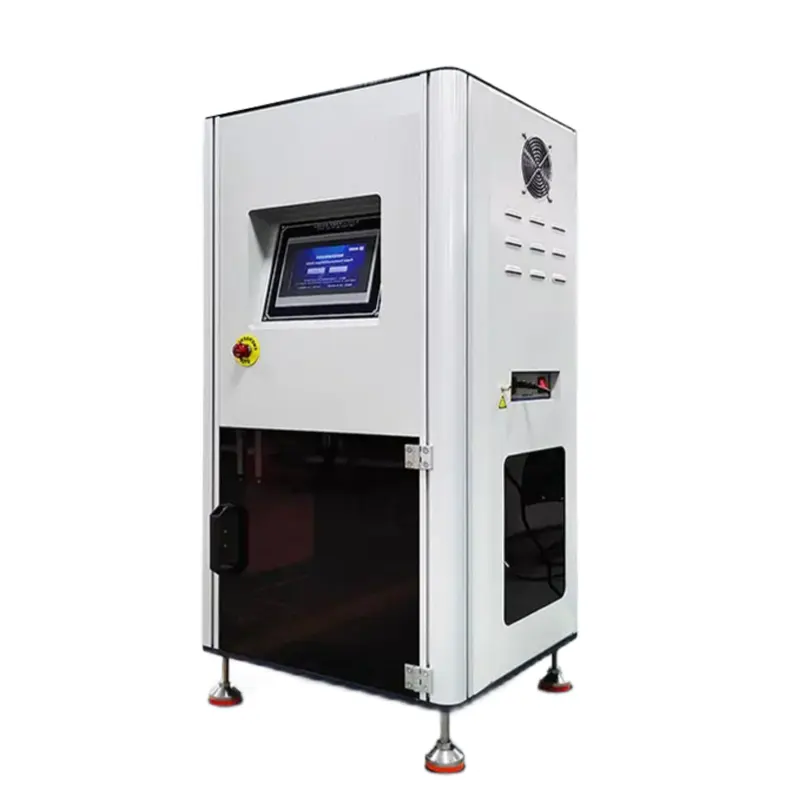




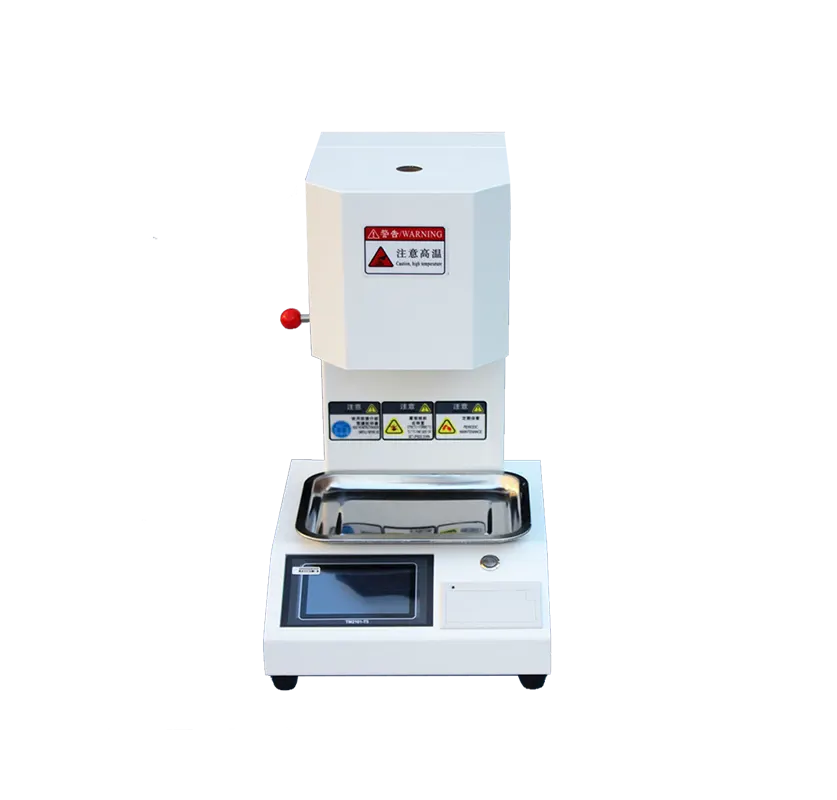

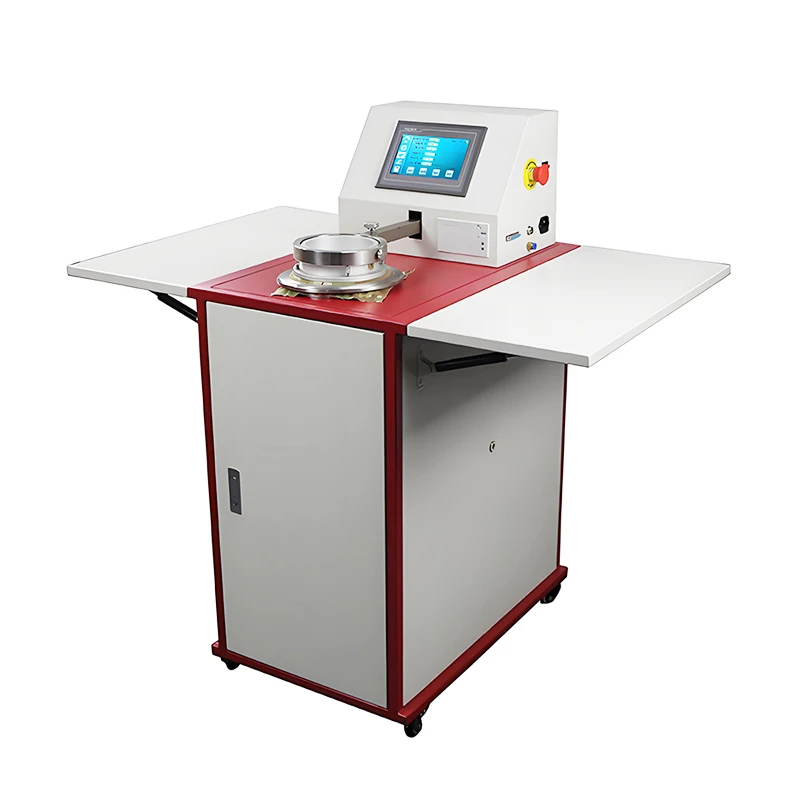
DR-J808 Foam Air Permeability Tester
The DR-J808 is a dedicated system for measuring the air-flow value of flexible cellular materials while a defined pressure differential is maintained across a sealed specimen area. It supports process control and material comparison when the specimen, method and reporting conditions are kept consistent.
Quick answer: the reported result is the volume flow required to maintain the specified pressure drop—not a universal “breathability score.” Confirm the current method, test area, edge seal, flow direction, pressure setpoint, measurement range and units before ordering.
How Foam Air-Flow Testing Works
The apparatus draws or supplies air through the exposed specimen area, controls the pressure difference and measures the corresponding volume flow.
Condition and orient
Prepare the foam to the current procedure and record thickness, surface/skin condition and flow direction.
Clamp and seal
Fit the specimen without unintended compression and prevent air bypass around its edges.
Establish pressure drop
Stabilize the differential pressure at the method-defined condition rather than comparing readings at changing pressure.
Measure and report
Record the stabilized flow, units, test area, direction, replicates and any method-specific calculation.
Measurement principle: air-flow value = the volume-flow rate needed to maintain the specified pressure differential across the defined specimen area.
Use DR-J808 Only for the Air-Flow Result
These foam measurements answer different engineering questions and should not be substituted for one another.
DR-J808 · air flow
Measures volume flow through a defined area at a controlled pressure differential.
Density
Relates conditioned specimen mass to measured volume; it does not quantify cell openness.
IFD / hardness
Measures support response under indentation; similar hardness can occur with different airflow.
Fatigue / recovery
Measures property change after cyclic loading or controlled compression and recovery.
ISO 7231 and ASTM D3574 Test G
| Procedure path | Best-fit intent | What must be confirmed |
|---|---|---|
| ISO 7231 Method A | Air-flow value of conventional flexible cellular polymeric materials. | Current edition, specimen, apparatus geometry, pressure condition, flow range and reporting. |
| ISO 7231 Method B1 | Manual measurement route for flexible cellular materials, especially lower-permeability material. | Manual control/readout workflow, stabilization, test area, sealing and units. |
| ISO 7231 Method B2 | Automatic measurement route for the same broader material scope. | Control sequence, sensors, software calculation, raw data and verification. |
| ASTM D3574 Test G | Air-flow evaluation within the flexible polyurethane foam test-method family. | Current ASTM edition, specimen conditioning, prescribed pressure, apparatus and report fields. |
| Customer method | Supplier, OEM or internal procedure with its own limits and workflow. | Provide the complete controlled method; do not assume equivalence from a similar test name. |
Standards note: ISO 7231:2023 is the current ISO edition. ASTM D3574-25 is the current ASTM umbrella standard. Final compliance depends on the ordered DR-J808 configuration and the laboratory following the authorized procedure.
Control the Main Sources of Invalid Results
Edge leakage
Air bypass around the specimen inflates the apparent flow and can hide low permeability.
Unintended compression
Excess clamping changes pore structure and the effective thickness during measurement.
Pressure instability
Compare results only after the target differential pressure has stabilized within the method condition.
Wrong flow range
Select the measurement channel around expected specimen flow, not only the largest available capacity.
Orientation changes
Record the direction relative to foam rise, skins, cutting plane or other cellular anisotropy.
Conditioning drift
Align specimen age, preparation, temperature, humidity and recovery time across comparisons.
Turn Air-Flow Data into Process Control
Formulation development
Compare how chemistry and cell-opening choices affect airflow when density, specimen and procedure are controlled.
Production monitoring
Track lot-to-lot shifts that may indicate changes in foaming, curing, crushing, reticulation or converting.
Incoming and release QC
Check material against an agreed method and acceptance band before downstream manufacture or shipment.
Build a Verifiable DR-J808 RFQ
Send the specimen and reporting requirement before DERUI selects pressure, flow and fixture ranges.
Method and decision
- ISO/ASTM/customer method and edition
- Method A, B1, B2 or Test G
- Acceptance limits and units
- Permitted deviations
Foam specimen
- Material, grade and end use
- Dimensions and thickness
- Skin/cut surface and flow direction
- Conditioning and daily volume
Measurement path
- Target pressure differential
- Expected minimum/maximum flow
- Effective test area and edge seal
- Manual or automatic operation
Evidence and site
- Raw data and report format
- Pressure/flow verification
- FAT samples and acceptance check
- Power, manuals, training and destination
DR-J808 Foam Air-Flow Tester FAQs
01What does the DR-J808 measure?
02Is air-flow value the same as foam density?
03Why is edge sealing important?
04Which ISO 7231 method should be selected?
05Can airflow results from different pressure drops be compared directly?
06What is needed for a DR-J808 proposal?
Define the complete airflow method: foam + specimen + area + seal + pressure + flow range + report.