

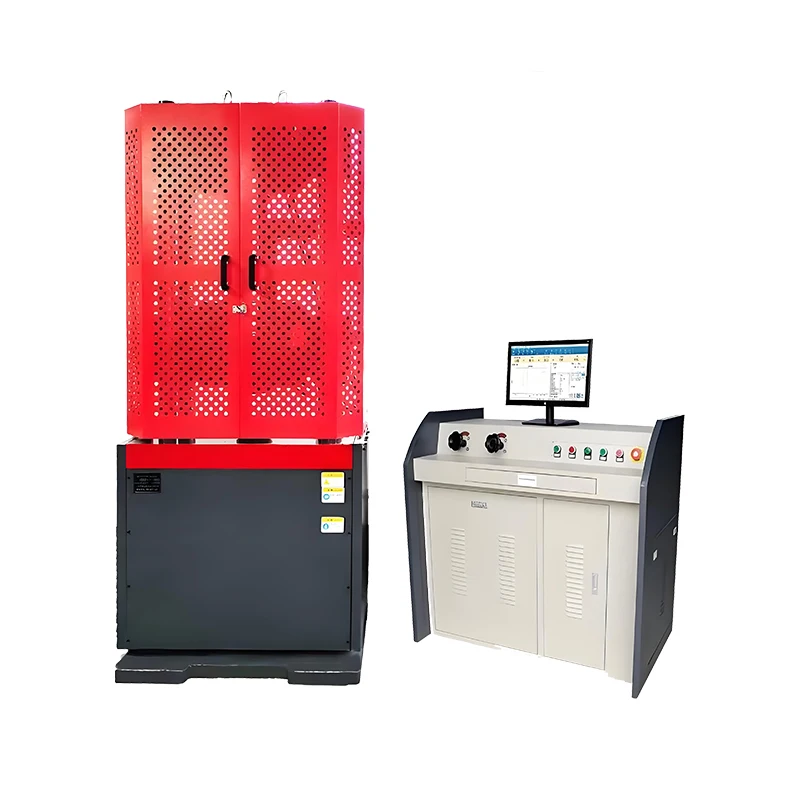
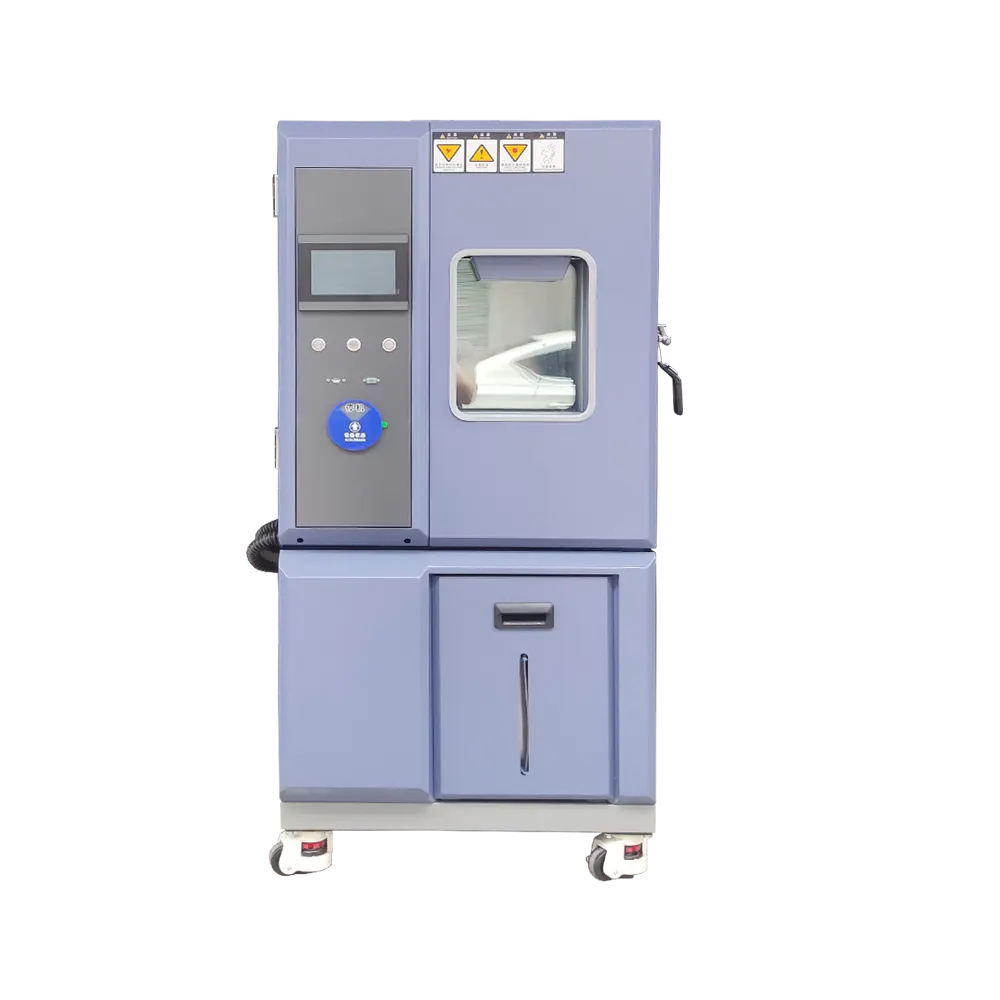
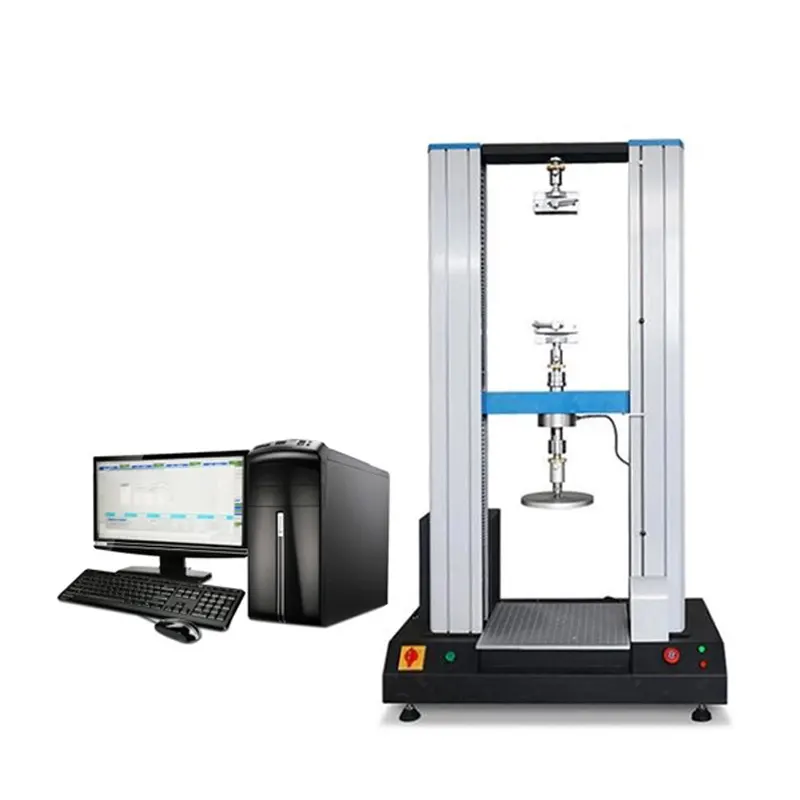
Material testing equipment configured for your test method and specimen.

DERUI manufactures material testing equipment for quality control and R&D.
WhatsApp Consultation:+86 135 2795 8363

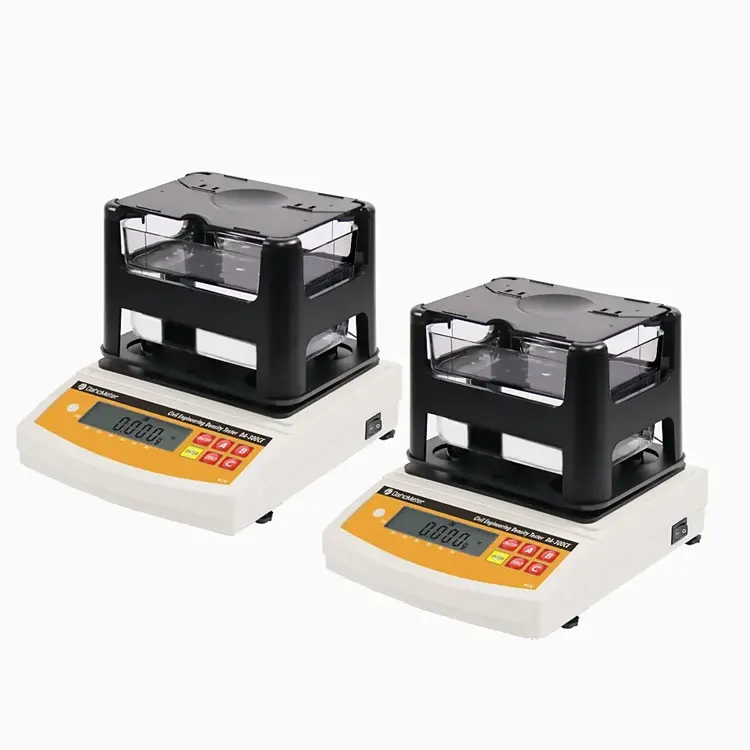
DR-J205 Foam Density Meter

Model:DR-J205 The Derui Foam Density Meter ensures precise foam quality control with ASTM D3574 compliance. Using hydrostatic weighing, it delivers fast, accurate density readings for polyurethane, sponge & packing foams. Essential for furniture, automotive & packaging industries.

  • Accuracy
  • Calibration
  • Real-time feedback
Safe and reliable
well-made
customization
Quality assurance
MessageWhatsApp
Hotline number +8615580327593
  • Product Details
  • FAQ
  • Contact us
Apparent density of cellular foam materials

DR-J205 Digital Foam Density Meter

The DR-J205 supports foam quality control by combining specimen mass with verified specimen volume to report apparent density. The test is useful for polyurethane foam, sponge, cushioning and other cellular materials when the selected method and specimen form are compatible.

Quick answer: density is mass divided by volume. Reliable results depend on conditioned specimens, representative sampling, a verified balance, accurate dimensions or an approved alternative volume method, correct units and clear treatment of moulded skins.
MODELDR-J205
PRIMARY RESULTApparent density
COMMON UNITSkg/m³ · g/cm³ · lb/ft³
METHOD ROUTESISO 845 · ASTM D3574
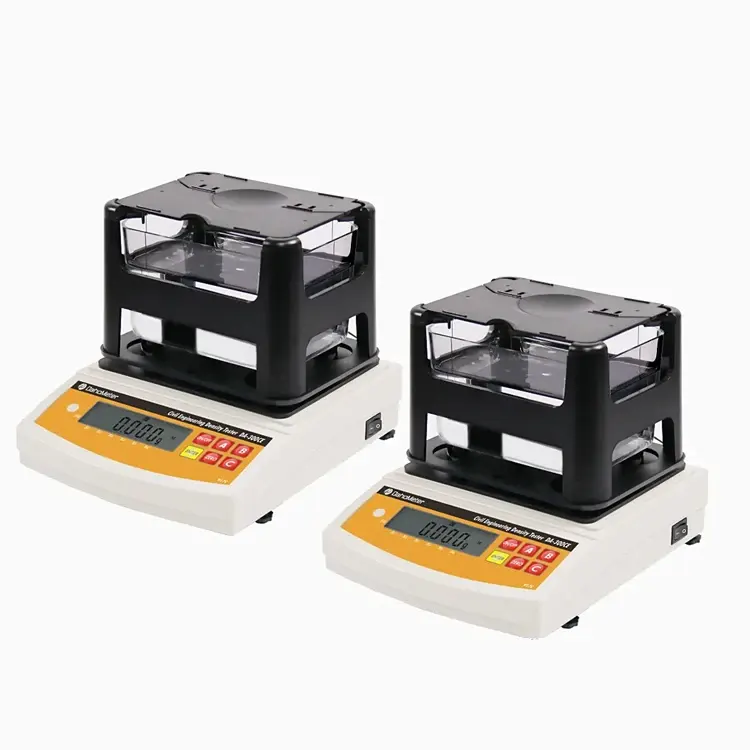
DERUI DR-J205 digital foam density meter for cellular materials
 Confirm balance capacity/readability, volume-input workflow, calculation units, specimen support and verification accessories before ordering.
A simple equation needs controlled inputs

How Foam Density Is Determined

The instrument can automate calculation and unit conversion, but it cannot correct an unrepresentative specimen, compressed edges or an incorrect volume.

Condition

Stabilize the material under the selected method’s temperature, humidity and time requirements.

Measure volume

For a regular specimen, measure each dimension without deforming its cellular structure and calculate volume.

Measure mass

Zero and verify the balance, then weigh the clean specimen at the required readability.

Calculate and report

Divide mass by volume, convert units and retain specimen location, skin condition and deviations.

Apparent density ρ = specimen mass m ÷ specimen volume V
Density is not a performance score

Separate Density From Other Foam Properties

Foams with the same density can have different cell structure, chemistry, firmness, airflow and durability.

DR-J205 density

Mass per unit volume for material identification, batch control and specification checks.

Recovery time

Seconds required for viscoelastic foam to return to a defined contact condition after compression.

Review recovery testing →

Standard, material and specimen must agree

Choose the Correct Density Method

Method route Scope What must be confirmed
ISO 845 Apparent overall and apparent core density of cellular plastics and rubbers. Regular or shaped specimen, dimensions, skin retained/removed, conditioning, mass and reporting.
ASTM D3574 Test A Density testing within the flexible polyurethane foam test-method family. Active edition, specimen preparation, conditioning, dimensional measurement, balance and unit.
ASTM D1622 Apparent density of rigid cellular plastics. Material rigidity, overall/core density, forming skins and current method edition.
Alternative volume method Irregular shapes that cannot be measured reliably by linear dimensions. Method approval, liquid interaction, air entrapment, wetting, buoyancy fixture and correction procedure.

Important boundary: do not use water displacement merely because a balance includes a tank. Open-cell foam can absorb liquid and trap or release air; the approved method must govern volume determination.

Density error usually comes from sampling and volume

Control the Six Largest Sources of Variation

Sampling location

Record where the piece came from; bun edge, core and moulded skin can differ.

Cut quality

Use clean, square cuts without crushed cells, missing corners or tapered faces.

Conditioning

Control moisture, temperature, humidity and time since manufacture or processing.

Dimension technique

Measure multiple locations with suitable contact pressure and avoid compressing soft foam.

Balance verification

Check zero, level, drafts, vibration, readability and reference mass before the batch.

Units and rounding

Lock mass and volume units, conversion factors, significant figures and report format.

Useful at incoming, process and final inspection

Turn Density Results Into a QC Decision

A density value becomes useful when sampling, limits and related properties are defined in the control plan.

Incoming material

Verify supplier grade and lot consistency before foam enters cutting, lamination or assembly.

Production monitoring

Track position and batch trends to identify mixing, expansion, curing or cutting variation.

Finished-product correlation

Combine density with hardness, airflow, recovery and durability results for mattresses, seating and packaging.

Higher density does not automatically mean firmer or better—interpret it against the material specification and application
Inputs for a verifiable proposal

Build a Complete DR-J205 RFQ

Balance capacity and readability should be selected from real specimen mass and the allowable uncertainty—not from density range alone.

Material and method

  • Foam type and rigidity
  • Standard, edition and section
  • Overall or core density
  • Skin retained or removed

Specimen

  • Shape and dimensions
  • Expected mass and density
  • Smallest specimen mass
  • Pieces tested per shift

Measurement workflow

  • Manual/connected dimensions
  • Required units and rounding
  • Automatic calculation fields
  • Data export/report format

Quality documents

  • Balance calibration scope
  • Reference masses
  • FAT and repeatability check
  • Manual and training language
BUYER AND AI-READY ANSWERS

DR-J205 Foam Density Meter FAQs

01What does a foam density meter measure?
It determines apparent density by dividing conditioned specimen mass by its verified volume and reports the result in a selected density unit such as kg/m³.
02Is foam density the same as firmness?
No. Density is mass per volume. Firmness is the force response during indentation. Two foams can have similar density but different hardness.
03What is the difference between overall and core density?
Overall density includes forming skins when present and retained. Core density is measured after those skins are removed. The specimen preparation and report must state which result is required.
04Should open-cell foam be measured by water displacement?
Not by default. Water can enter cells, trap air or alter buoyancy. For regular specimens, the specified dimensional-volume method is normally the safer starting point; use an alternative only when the controlled method permits it.
05Which standards cover foam density?
ISO 845 covers apparent overall/core density of cellular plastics and rubbers. ASTM D3574 includes density testing for flexible polyurethane foam, while ASTM D1622 addresses rigid cellular plastics.
06What should be confirmed before ordering DR-J205?
Confirm the method edition, material, specimen mass and dimensions, overall/core density, required units, balance uncertainty, dimension-input workflow, throughput and calibration documents.

Configure from real specimens: method + material + mass + dimensions + uncertainty + report.
Request a DR-J205 Proposal →

FacebookLinkedInXRedditWhatsApp

1. Q: What is a Foam Density Meter and why is it important?
A: A Foam Density Meter is a precision instrument used to measure the mass per unit volume of foam materials (e.g., polyurethane, memory foam). It is critical for quality control because density directly affects foam’s comfort, durability, support, and cost. Accurate testing ensures products like mattresses, automotive seats, and packaging meet performance and safety standards.

2. Q: How does a digital foam density meter work?
A: Most modern foam density meters use the hydrostatic weighing (water displacement) method based on Archimedes’ principle. The instrument weighs the foam sample in air, then submerged in water. The difference in weight is used to automatically calculate density, providing results in seconds on a digital display, eliminating manual calculations.

3. Q: What is the difference between foam density and foam firmness (IFD/ILD)?
A: Density measures mass per volume (e.g., kg/m³), indicating material quality and longevity. Firmness (IFD/ILD) measures the force required to compress foam to a certain degree, indicating softness or hardness. High-density foam can be either soft or firm; both properties are independent and essential for product specification.

4. Q: What are the key industry standards for foam density testing?
A: The primary international standards include ASTM D3574 (for flexible polyurethane), ISO 845 (for cellular plastics and rubbers), and JIS K 7222. Reputable foam density meters are calibrated to comply with these standards, ensuring test results are globally recognized for quality audits and certifications.

5. Q: How do you prepare a sample for accurate foam density testing?
A: For accurate results:

  • Cut a clean, regular-shaped sample (cube or cylinder) using a sharp die-cutter to avoid compressed edges.

  • Ensure sample volume is sufficient (typically >10 cm³).

  • Condition the sample at standard temperature and humidity before testing.

  • Avoid samples with visible voids or irregularities.

6. Q: Can one foam density meter test all types of foam?
A: High-quality meters are versatile and can test various foam types, including flexible polyurethane foam (FPF), memory foam, sponge, polystyrene (EPS), and polyethylene (PE) foams. However, it’s crucial to check the meter’s weighing range and ensure it supports the specific density range of your material (e.g., low-density packaging foam vs. high-density memory foam).

7. Q: How often should a foam density meter be calibrated?
A: For consistent accuracy, professional calibration is recommended annually or according to your lab’s quality protocol (e.g., ISO 17025). Daily or weekly verification using a known standard weight is also advised. Factors like frequency of use, environmental conditions, and regulatory requirements can affect calibration schedules.

8. Q: What are the advantages of a digital meter over manual water displacement methods?
A: Digital foam density meters offer:

  • Speed: Results in seconds vs. minutes of manual calculation.

  • Accuracy: Eliminates human error in reading water levels and performing calculations.

  • Multi-parameter output: Often measures water absorption, closed cell content, and expansion rate simultaneously.

  • Data management: Direct USB/Bluetooth export for records and reports.

9. Q: What is a good density for mattress foam?
A: For durable, high-quality mattresses:

  • Memory foam: Density should be ≥ 4.0 PCF (pounds per cubic foot) for longevity; premium options are 5.0-6.0 PCF.

  • Polyurethane foam: ≥ 1.8 PCF is standard for support layers; higher density (≥2.5 PCF) indicates better quality and resistance to sagging. Always refer to manufacturer specifications and warranty requirements.

10. Q: How do I choose the right foam density meter for my business?
A: Consider these factors:

  • Standards Compliance: Ensure it meets ASTM, ISO, or relevant industry standards.

  • Accuracy & Range: Check resolution (e.g., ±0.001 g/cm³) and ensure it covers your foam’s density spectrum.

  • Ease of Use: Look for features like automatic calculation, touchscreen interface, and anti-float sample holders.

  • Data Connectivity: USB/Bluetooth for data export and integration with Lab Management Systems.

  • Supplier Support: Choose a reputable supplier offering calibration services, warranty, and technical support.

WhatsAppWhatsApp
WhatsApp
MessageMessage

Send Inquiry