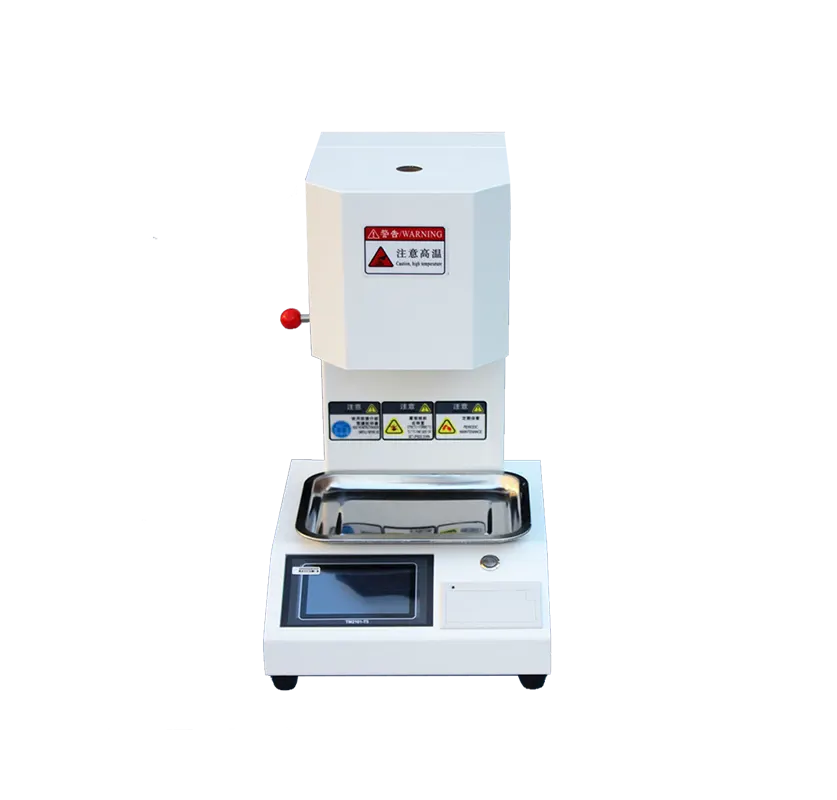


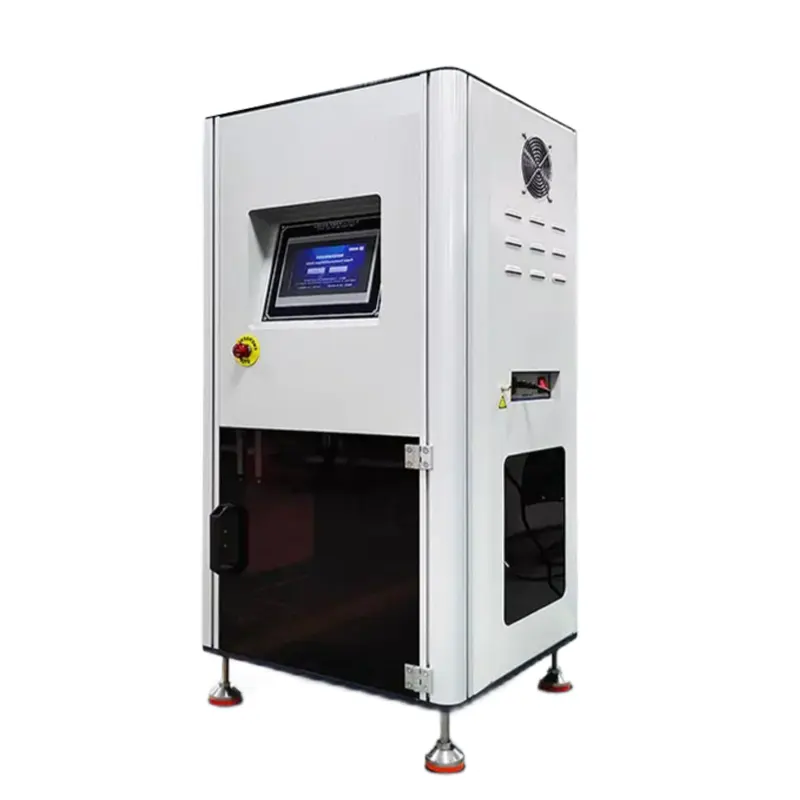
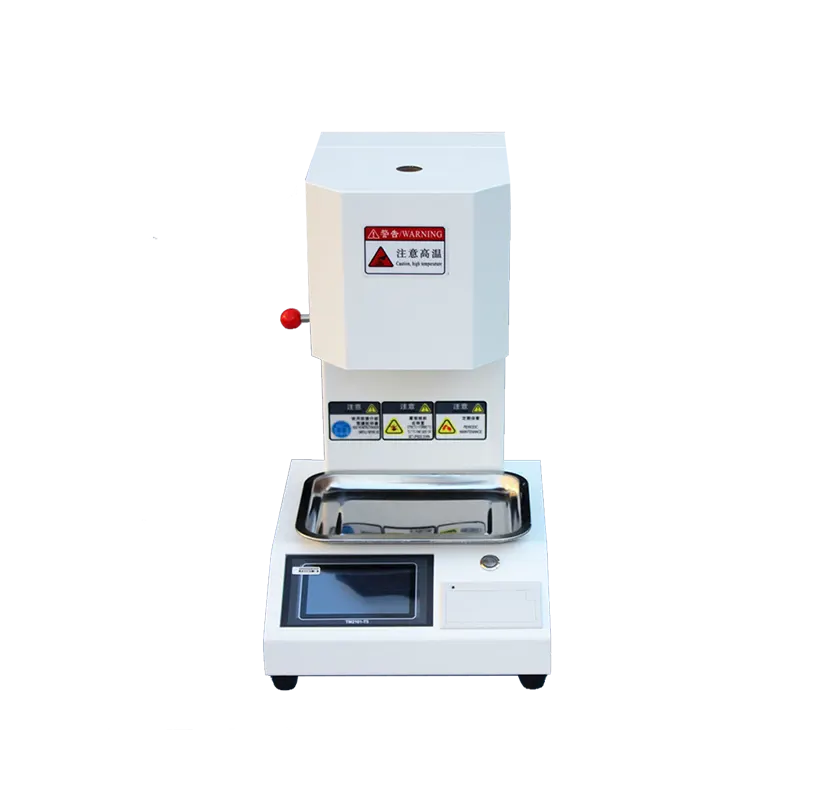
DR-C307 Melt Flow Index Tester (MFR / MVR)
The DR-C307 extrusion plastometer determines the Melt Flow Rate (MFR) and Melt Volume-Flow Rate (MVR) of thermoplastics under defined temperature and load conditions. Engineered for rigorous laboratory quality control and raw material incoming inspection according to ISO 1133 and ASTM D1238.
Quick answer: Specify your melt indexer by required test method (Method A mass-cut vs. Method B optical encoder/displacement), target resin grade, temperature uniformity, and load combination—not bare heating capacity. Confirm barrel wear resistance, automated cutting, and motorized weight lifting before ordering.
MFR (Mass) vs. MVR (Volume): What the Test Delivers
Method A: Gravimetric MFR (g/10 min)
Extrudates are cut at precisely timed intervals and weighed on an analytical balance. Ideal for standard pellets, QC incoming batch screening, and materials with MFR between 0.15 and 50 g/10 min.
Method B: Volumetric MVR (cm³/10 min)
Uses an optical displacement encoder to record piston travel over calibrated time. No manual cut-and-weigh needed; essential for automated runs, high-flow resins (>50 g/10 min), and melt density calculation.
Flow Rate Ratio (FRR / Polydispersity)
Conducting consecutive runs under alternating loads (e.g., 2.16 kg vs. 21.6 kg) evaluates molecular weight distribution and shear thinning behavior in broad-MWD polyethylene grades.
Standard Operating Procedure for Reliable MFI
Melt index repeatability is governed by pre-heating timing, packing density, air evacuation, and barrel cleanliness—not just heater temperature stability.
Drying and Sample Prep
Hygroscopic polymers (PET, PA, PBT, PC) undergo hydrolytic degradation in seconds under heat. Dry resin to below threshold moisture prior to barrel charging.
Uniform Packing & Air Purge
Charge sample within 1 minute using the funnel; pack progressively with the packing tool to displace air voids that cause intermittent premature extrusion spurts.
Controlled Pre-Heat Soak
Maintain standard preheat time (typically 5 min ± 0.5 min or according to ISO 1133-1) without load or with minimal nominal load to ensure complete isothermal melting.
Extrusion & Rapid Clean
Trigger automatic rotary cutter or encoder capture. Purge residual resin immediately while hot; swab the barrel with cotton patches and clean the tungsten carbide die.
Die Maintenance Rule: A 0.01 mm wear or polymer buildup inside the standard 2.095 mm die bore causes up to a 5% error in MFR. Always inspect with the certified Go/No-Go plug gauge.
International Standards & DR-C307 Compliance
| Standard | Scope & Procedure | DR-C307 Machine Requirement |
|---|---|---|
| ISO 1133-1:2022 | Standard industrial procedure for thermoplastics using manual/timed cut (Procedure A) and displacement measurement (Procedure B). | Dual temperature sensors, standard tungsten carbide die (Ø2.095 mm ±0.005 mm), precision timer within ±0.01 s. |
| ISO 1133-2:2020 | Strict testing for moisture-sensitive and rheologically unstable polymers (e.g., PET, PBT, TPU). | Strict temperature tolerance (±0.2°C at 10–70 mm above die), tight time-temperature profile control, and quick charging tooling. |
| ASTM D1238-23 | Standard Test Method for Melt Flow Rates of Thermoplastics by Extrusion Plastometer (Procedures A, B, C, and D). | Procedure A timed manual cut; Procedure B automatic piston displacement; optional half-die geometry for high-flow resins (Procedure C). |
| ASTM D3364 | Flow rates for Poly(Vinyl Chloride) (PVC) and rheologically unstable components. | Corrosion-resistant Hastelloy/special alloy barrel and die package to withstand acidic HCl gas generation. |
| GB/T 3682.1 / .2 | Determination of the melt mass-flow rate (MFR) and melt volume-flow rate (MVR) of thermoplastics. | Complete set of certified calibration weights (0.325 kg, 1.2 kg, 2.16 kg, 3.8 kg, 5.0 kg, 10.0 kg, 21.6 kg). |
Equipment Verification Notice: Operating according to ASTM D1238 vs ISO 1133 requires verifying piston land length (6.35 mm), die length (8.000 mm), and barrel inner diameter (9.550 mm). The DR-C307 includes verified dimensional inspection reports.
Select MFI for Single-Point Quality Control
A single MFI value describes flow at one shear rate; it cannot characterize full shear-thinning curves or thermal degradation profiles.
Melt Flow Index · DR-C307
Single-point shear flow rate for incoming resin verification, batch-to-batch grading, and masterbatch quality control.
Capillary Rheometer
Measures viscosity across a wide span of shear rates (10 to 100,000 s⁻¹) to simulate injection molding and extrusion screw dynamics.
DSC (Calorimeter)
Measures glass transition (Tg), melting point (Tm), crystallization enthalpy, and oxidation induction time (OIT).
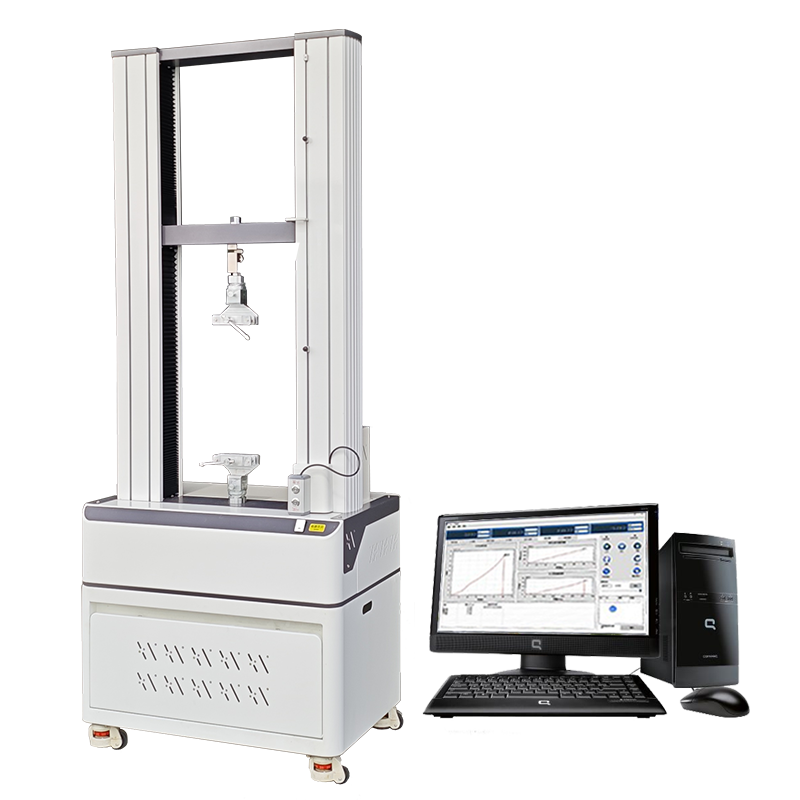
Universal Testing Machine
Measures physical solid-state tensile strength, elongation at break, and flexural modulus of molded specimens.
Control the 6 Major Sources of Invalid MFI Data
Moisture Induced Hydrolysis
Trace moisture in polyamides or polyesters causes molecular chain scission during heating, producing artificially high flow rates.
Trapped Air Bubbles
Improper tamping allows micro-voids in the melt column, creating irregular piston acceleration and non-repeatable volumetric curves.
Die Wear & Carbon Deposition
Degraded polymer films on the die wall restrict extrusion diameter; clean dies hot using bronze brushes, never hardened steel drills.
Vertical Alignment Error
If the instrument is not leveled, the piston experiences friction against the barrel wall, causing significant load dampening.
Temperature Recovery Lag
Cold sample addition cools the barrel zone; ensure temperature recovers to setpoint within the standard pre-heat interval before loading weights.
Manual Cut Timing Variation
Human reaction time variation (±0.5 s) introduces unacceptable percentage errors on fast flows; use the automated motorized cutter.
Build a Verifiable DR-C307 RFQ
Submit your polymer grades and laboratory testing volume to receive a tailored configuration covering barrel materials, automation, and calibration packages.
Polymers & Test Standard
- Target resin (PE, PP, ABS, PA, PC, POM, etc.)
- Governing standard (ISO 1133 or ASTM D1238)
- Corrosive gases (e.g., PVC / Fluoropolymers)
- Expected MFR range (g/10 min)
Automation & Configuration
- Method A only or Combined Method A + B
- Manual knife vs. Motorized rotary cutter
- Motorized weight lifting system (for 10+ kg)
- Displacement encoder resolution
Weights & Tooling Package
- Required test loads (0.325 kg up to 21.6 kg)
- Standard die (2.095 mm) or Half-die (1.050 mm)
- Barrel cleaning & packing tools kit
- Certified Go/No-Go inspection plug gauge
Data Integration & Compliance
- Standalone touchscreen vs. Lab PC software
- Density at test temperature calculation tool
- Factory Acceptance Testing (FAT) records
- Calibration certificate & ISO 17025 traceability
DR-C307 Melt Flow Indexer FAQs
01What is the difference between MFR and MVR?
02Can the DR-C307 perform both ASTM D1238 and ISO 1133 tests?
03When should I choose automated Method B instead of manual Method A?
04Does the DR-C307 support corrosive polymers like PVC or fluoroplastics?
05How often must the MFI test die and barrel be calibrated?
06What information is required to get a quote for the DR-C307?
Configure your extrusion plastometer: polymer type + standard + method (A/B) + load range + die package.