
Benchtop Tensile Testing Machine: The Ultimate Buyer's Guide (2026)
Date: June 13, 2026 Categories: Technical Guides & Blog Views: 4167
Benchtop Tensile Testing Machine: The Ultimate Buyer's Guide (2026)
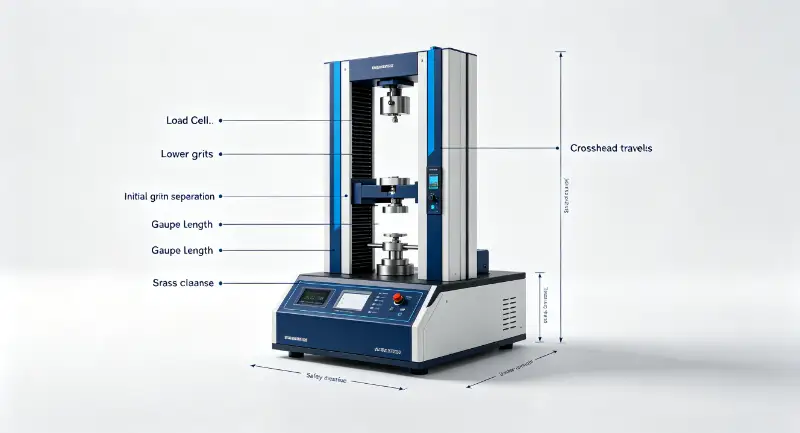
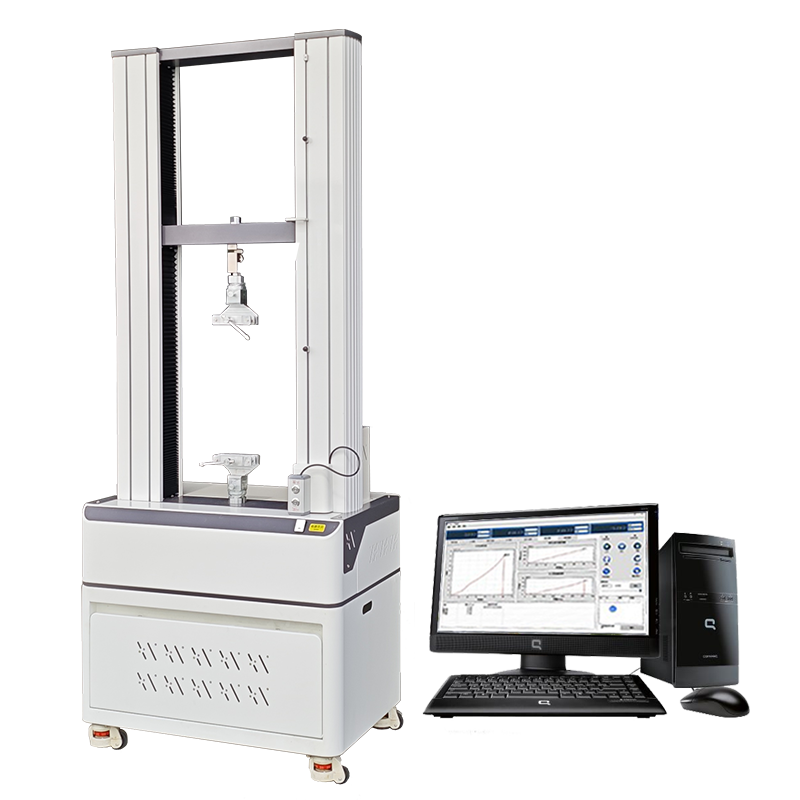
- A benchtop tensile testing machine is a compact universal testing machine (UTM) that fits on a lab bench, performing tensile, compression, flexure, peel, and shear tests on materials from films and polymers to light metals — typically rated from 100 N to 50 kN.
- Entry-level benchtop testers start around $3,000–$8,000, mid-range models run $8,000–$20,000, and professional multi-purpose systems cost $20,000–$50,000+ depending on capacity, accuracy class, grips, and software.
- The single most important specification is maximum force capacity — choosing too low a capacity is the #1 purchasing mistake. Rule: expected max test force × 1.5 = minimum rated capacity.
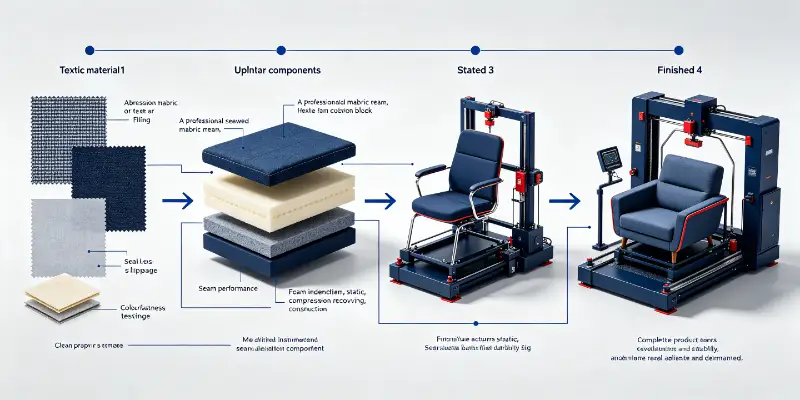
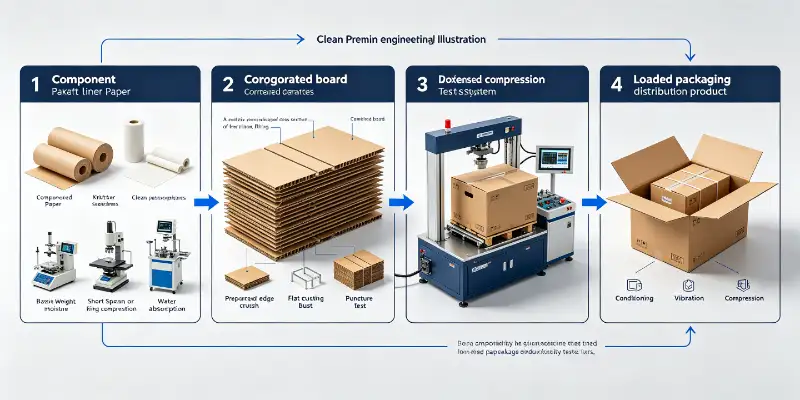
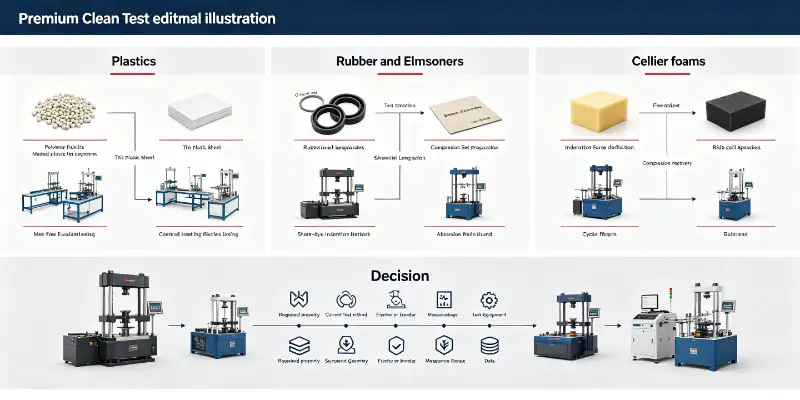
- Modern benchtop testers support ASTM, ISO, EN, and GB standards across plastics, metals, rubber, composites, packaging, textiles, and medical devices — making them the most versatile piece of equipment in any materials lab.
- When comparing suppliers, evaluate total cost of ownership (not just sticker price): software licensing, grips and fixtures, calibration services, technical support, and warranty terms all impact long-term value.
1. What Is a Benchtop Tensile Testing Machine?
2. Benchtop vs Floor Model: Which to Choose?
3. Key Specifications Explained
4. How Much Does It Cost?
5. What Drives the Price?
6. Top Applications by Industry
7. Standards Reference Table
8. How to Choose: Step-by-Step
9. 7 Buying Mistakes to Avoid
10. FAQ · Frequently Asked Questions
What Is a Benchtop Tensile Testing Machine?
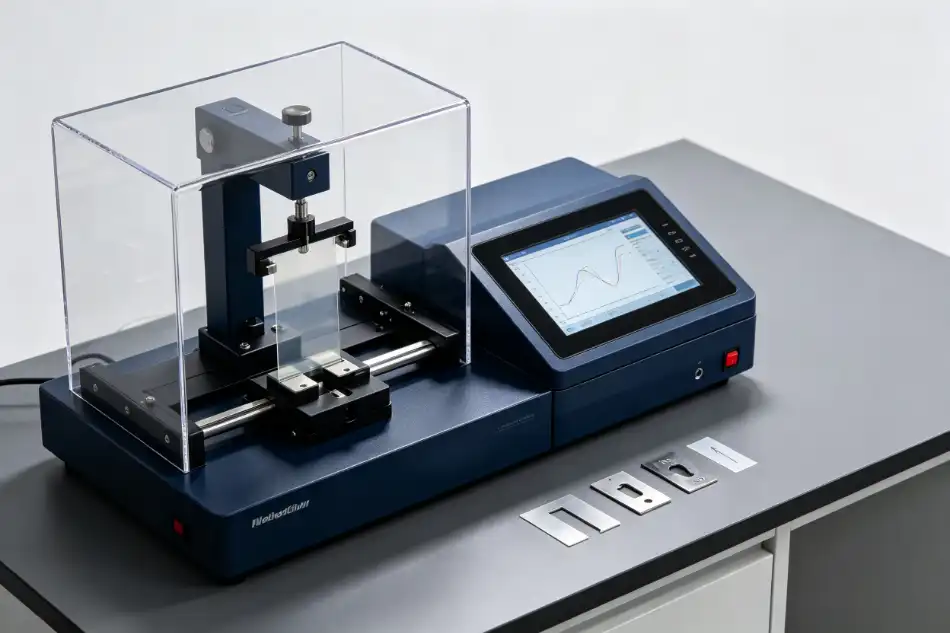
A benchtop tensile testing machine — also called a tabletop tensile tester or desktop universal testing machine — is one of the most essential instruments found in modern materials testing laboratories. At Derui Testing Equipment, a material testing equipment manufacturer, we design benchtop tensile testers that deliver precision, versatility, and space efficiency for labs across aerospace, automotive, medical devices, and consumer goods.
Unlike massive floor-standing frames used for structural steel, benchtop models are compact, electrically driven via precision ball screws and servo motors, and optimized for forces up to approximately 50 kN. A well-chosen benchtop tensile tester can serve your lab for 10–15 years or more, making the purchase decision critical.
Five Core Components of Every Benchtop UTM
Single-column (≤5 kN) or dual-column (up to 50 kN). Frame rigidity determines long-term accuracy.
Strain-gauge force transducer. Interchangeable cells from 10 N to 50 kN. Accuracy Class 0.5 or Class 1.
Wedge-action, pneumatic, vise, or specialty. Grip selection directly impacts test repeatability.
Digital servo closed-loop control. Speed accuracy within ±0.1% of setpoint for strain-rate testing.
Pre-configured ASTM/ISO methods, real-time stress-strain curves, SPC integration, report generation.
Benchtop vs Floor Model: Which Do You Need?
One of the first decisions every lab faces is whether a benchtop or floor-standing UTM is the right choice. While both measure force and material response, they serve different niches. Here is a side-by-side comparison:
| Feature | Benchtop Tensile Tester | Floor-Standing UTM |
| Capacity | 100 N – 50 kN | 50 kN – 2,000 kN+ |
| Footprint | Fits on standard lab bench | Requires dedicated floor space |
| Drive | Electromechanical | Electromechanical or hydraulic |
| Price (USD) | $3,000 – $50,000+ | $15,000 – $200,000+ |
| Installation | Plug-and-play | May need reinforced flooring |
| Best For | Plastics, films, rubber, textiles, foams, light metals | Structural metals, concrete, heavy composites, fasteners |
You test plastics, elastomers, packaging films, textiles, foams, electronic components, or biomedical materials. 80–90% of ASTM/ISO tests for polymers and light metals fall within 50 kN.
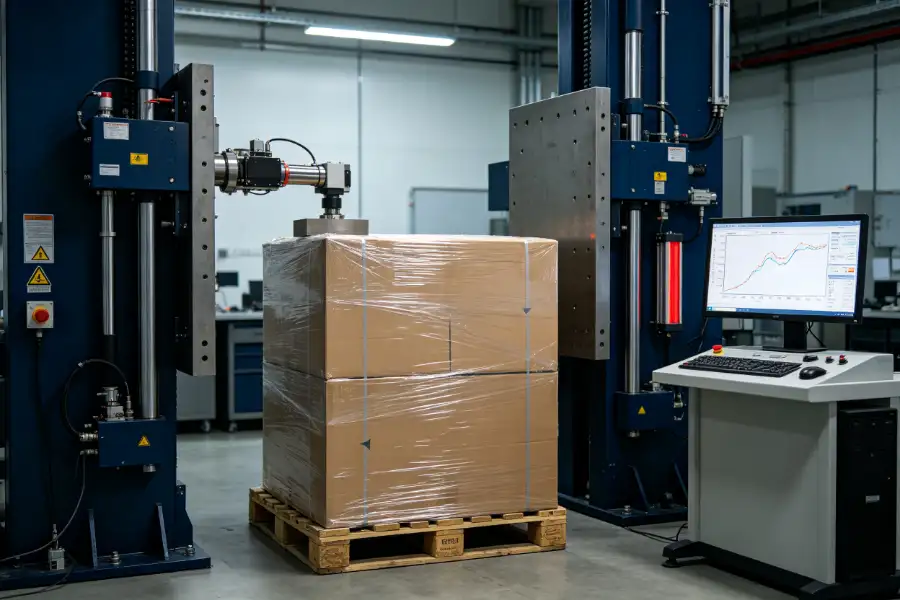
You need sustained high-force testing beyond 50 kN — structural metals, high-strength composites, or fatigue testing. Consider a universal tensile testing machine for heavy-duty applications.
Key Specifications Explained
1. Maximum Force Capacity — The Single Most Important Spec
Choose a capacity where your expected maximum test force falls between 20% and 80% of rated capacity. Below 20% = accuracy drops. Above 80% = no safety margin.
| 500 N | Films, thin textiles, medical sutures, delicate fibers |
| 1–5 kN | Packaging films, elastomers, thin plastics, foam specimens |
| 10–20 kN | Rigid plastics, rubber, light metals, composites, textiles |
| 30–50 kN | Engineering plastics, aluminum alloys, wire, fasteners |
0.001–500 mm/min minimum. Speed accuracy ±0.1%. ASTM D638: 5/50/500 mm/min. ISO 527 modulus: 1 mm/min. ⚠ Strain-rate closed-loop control recommended for research.
600–1,200 mm typical. High-elongation elastomers (500%+ strain) demand the longer end. Determines max specimen extension and fixture clearance.
Class 1 (±1%): adequate for industrial QC. Class 0.5 (±0.5%): calibration labs, aerospace, highest confidence.
Wedge-action for metals/plastics. Pneumatic for high-volume polymers. Manual screw-action for low-force/low-throughput. Don't forget compression platens, 3-point bend, peel fixtures.
Contact (clip-on): $1,500–$3,000. Video (non-contact): $10,000–$25,000 — ideal for films, biomaterials, high-elongation. Laser: highest precision R&D.
Pre-configured ASTM/ISO templates, real-time stress-strain curves, CSV/PDF export, ≥10 Hz sampling. Advanced: SPC, LIMS, 21 CFR Part 11.
How Much Does a Benchtop Tensile Tester Cost?
Pricing is one of the most searched questions — and for good reason. The range is broad, and what looks like a bargain on paper can cost far more in downtime, recalibration, and limited capability. Here is a realistic breakdown:
| Tier | Price | Capacity | Best For | What You Get |
| Entry | $3K–$8K | 100 N–5 kN | Teaching, basic QC | Single-column, basic load cell, manual grips, entry-level software |
| Mid-Range ★ | $8K–$20K | 500 N–20 kN | Industrial QC, R&D | Single/dual-column, interchangeable load cells, pneumatic grips, SPC |
| Professional | $20K–$50K+ | 1–50 kN+ | Accredited labs, multi-material | Dual-column, multiple load cells, video extensometer, full standards, 21 CFR Part 11 |
What Drives the Price?
Beyond the base frame and load cell, these factors significantly influence your total investment:
Top Applications by Industry
A benchtop tensile testing machine is the Swiss Army knife of the materials testing world. Here is how different industries leverage benchtop tensile testers, along with the governing standards:
Virtually every industry that evaluates mechanical material properties uses a benchtop UTM. For material strength testing across multiple material types, the benchtop platform is unmatched in versatility. Our complete range of testing systems covers everything from single-purpose QC instruments to fully automated multi-material testing stations.
Standards Reference Table
Standards compliance is non-negotiable. This reference maps common standards to the machine specs needed to run them:
| Standard | Material | Typical Force | Speed | Extensometer? |
| ASTM D638 | Plastics | 0.5–20 kN | 5/50/500 mm/min | Recommended |
| ISO 527-1 | Plastics (General) | 0.5–20 kN | 1 mm/min (modulus) | Required (Class 0.5) |
| ASTM E8/E8M | Metals | 1–50 kN | 0.015–0.5 /min strain | Required |
| ISO 6892-1 | Metals (General) | 1–50 kN | Strain-rate controlled | Required |
| ASTM D412 | Rubber | 100 N–5 kN | 500±50 mm/min | Recommended |
| ASTM D882 | Thin Films | 50–500 N | 12.5–500 mm/min | Video preferred |
| ASTM D3574 | Foam (Tensile/Tear) | 100–500 N | 500±50 mm/min | Optional |
| ISO 37 | Rubber/Elastomers | 100 N–5 kN | 500 mm/min | Recommended |
Most modern benchtop tensile testers are designed to accommodate all these standards on a single frame — the key is selecting the right load cell, grips, and extensometer for your specific test methods.
How to Choose the Right Machine: Step-by-Step
- List your materials and standards. Write down every material you test and the standards you follow (ASTM, ISO, etc.). This determines your force range, speed range, and accessories.
- Calculate maximum force. Find the highest expected breaking force across all your materials. Multiply by 1.5 for safety margin. That is your minimum frame capacity.
- Check elongation requirements. High-elongation materials (rubber, elastomers, films) need 800–1,200 mm crosshead travel. Rigid materials need less.
- Identify grip types. Wedge-action for metals/rigid plastics. Pneumatic for high-volume polymer labs. Manual for low-throughput teaching labs. List all fixtures needed (compression platens, 3-point bend, peel).
- Decide on extensometer. Contact for standard polymer/metal testing. Video for films, biomedical, or high-elongation. Laser for highest-precision R&D.
- Define software needs. Pre-configured ASTM/ISO methods? SPC? LIMS integration? 21 CFR Part 11 for pharma? Multi-user with audit trail?
- Request quotes with full configuration. Demand line-item breakdown: frame, each load cell, each grip set, software modules, extensometer, calibration, installation, training, and warranty terms.
- Ask about after-sales support. Calibration turnaround time? Spare parts availability? Remote vs on-site service? Manufacturer or reseller? Can you visit the factory?
7 Buying Mistakes That Cost Labs Time & Money
- Under-budgeting force capacity — need 10 kN, bought 5 kN. Buying twice costs more than buying right once. Apply the 1.5× safety factor.
- Ignoring grip requirements — wrong grips produce slipping, jaw breaks, and non-repeatable data. Match grip type to material modulus and surface texture.
- Skipping the extensometer — crosshead displacement ≠ specimen strain. For modulus measurements (ISO 527, ASTM E8), an extensometer is mandatory.
- Overlooking software capabilities — basic peak-hold software cannot perform modulus calculations, SPC, or multi-step test programming. Feature-locked software limits your lab's growth.
- Assuming "frame-only" pricing includes everything — many quotes exclude load cells, grips, and software. Always request a complete, line-item configuration.
- Not planning for calibration — annual calibration is mandatory. Budget for ISO 7500-1 calibration (semi-annual for ISO 17025 accredited labs).
- Choosing on price alone — a $3,500 machine with no support, no spares, and inaccurate data costs far more than a $12,000 system backed by a material testing equipment manufacturer with factory-direct support, training, and a real warranty.
Frequently Asked Questions
What is a benchtop tensile testing machine?
A benchtop tensile testing machine is a compact universal testing machine (UTM) designed to sit on a laboratory bench. It uses an electromechanical drive system (ball screw + servo motor) to apply controlled tension, compression, flexure, peel, or shear loads to material specimens, measuring force and displacement with high precision. Typical capacities range from 100 N to 50 kN, covering plastics, rubber, textiles, films, foams, light metals, and biomedical materials. The five core components are: load frame, load cell, grips and fixtures, digital controller, and testing software.
What is the difference between benchtop and floor-standing UTM?
Benchtop UTMs are compact (fits on a lab bench), electromechanically driven, and rated for 100 N to 50 kN — ideal for plastics, films, rubber, textiles, foams, and light metals. Floor-standing UTMs are larger, may be electromechanical or hydraulic, and handle 50 kN to 2,000 kN+ — required for structural metals, concrete, and heavy composites. Benchtop models cost $3,000–$50,000+. Floor-standing systems start around $15,000 and can exceed $200,000. For 80–90% of materials testing labs, a benchtop system is the right choice.
What force capacity do I need?
Use this rule: your expected maximum test force × 1.5 = minimum rated capacity. For example, if your strongest material breaks at 3 kN, choose a machine rated for ≥5 kN. Always operate between 20% and 80% of rated capacity for best accuracy. If your materials span a wide force range (e.g., 50 N sutures to 10 kN plastics), choose a frame with interchangeable load cells — one frame, multiple cells, no compromise on accuracy.
How much does a benchtop tensile tester cost?
Entry-level benchtop testers start at $3,000–$8,000 (single-column, basic load cell, manual grips, essential software). Mid-range models run $8,000–$20,000 (interchangeable load cells, pneumatic grips, SPC software, extensometer-ready). Professional multi-purpose systems cost $20,000–$50,000+ (dual-column, video extensometer, full standards library, 21 CFR Part 11, automation). Factor in grips ($300–$5,000), extensometer ($1,500–$25,000), software modules ($1,000–$5,000+/year), and calibration ($1,000–$3,000 initially). Factory-direct from a manufacturer typically saves 30–50% versus buying through a reseller.
Can one machine test multiple materials?
Yes — this is the defining advantage of a universal testing machine. A single benchtop UTM can test plastics, rubber, films, textiles, foams, metals, composites, adhesives, and biomedical materials — provided you equip it with the right load cells, grips, and fixtures for each material type. For labs that test across diverse materials, the investment in interchangeable accessories (load cells, grip sets, extensometers) pays for itself by eliminating the need for multiple single-purpose instruments.
What standards should I look for?
The standards that matter depend on your industry and materials. Key ones include: ASTM D638 / ISO 527-1 for plastics tensile properties; ASTM E8 / ISO 6892-1 for metals; ASTM D412 / ISO 37 for rubber and elastomers; ASTM D882 for thin plastic films; ASTM D3574 for flexible cellular materials (foam); ASTM D3039 for polymer matrix composites; and ASTM D5034 / ISO 13934 for textiles. Verify that any benchtop tensile tester under consideration has the speed range, accuracy class, and extensometer compatibility your standards demand. Ask the manufacturer for a pre-configured standards library.
A well-chosen benchtop tensile testing machine serves your lab for 10–15 years. Get it right the first time. Start with a conversation — no pressure, just expert guidance.
Explore Benchtop Tensile Testers
Related: UTM Selection Guide: Servo-Hydraulic vs Electromechanical