
Foam Durability and Fatigue Testing: Methods, Standards, and Best Practices
Date: July 28, 2026 Categories: Technical Guides & Blog Views: 3629
- Foam fatigue testing simulates years of use in a controlled laboratory environment
- ASTM D3574 and ISO standards define standardized fatigue test procedures
- Compression set and height loss are the primary durability metrics
- Proper specimen preparation and conditioning are critical for accurate results
- Fatigue data helps manufacturers predict product lifespan and warranty costs
What Is Foam Fatigue Testing?
Foam fatigue testing is a critical quality control procedure that simulates the repeated loading and unloading a foam product experiences during its service life. By subjecting foam specimens to thousands of compression cycles in a controlled laboratory environment, engineers can predict how a material will perform after years of real-world use—compressing a testing timeline from years to hours or days.
The fundamental principle behind fatigue testing is straightforward: apply cyclic mechanical stress to a foam specimen and measure how its properties change over time. What makes fatigue testing particularly valuable is its ability to reveal failure modes that would be impossible to detect through static testing alone. A foam that shows excellent initial firmness and recovery may exhibit progressive softening, permanent deformation, or structural breakdown after thousands of compression cycles.
In practical terms, fatigue testing answers the question every manufacturer and consumer asks: How long will this product last? The answer isn't just about meeting warranty obligations—it's about protecting brand reputation, reducing return rates, and ensuring customer satisfaction over the product's entire lifecycle.
Industry Standards and Test Methods
Several key standards govern foam fatigue testing procedures. The most widely referenced is ASTM D3574 Test I6, which specifies the procedure for dynamic fatigue testing of flexible polyurethane foam. This test involves compressing a foam specimen to a specified deflection repeatedly and measuring the resulting loss in height and firmness.
Key standards include:
- ASTM D3574 Test I6: Dynamic fatigue by constant-deflection pounding—compresses specimen to 75% of original height for 8,000 cycles
- ASTM D3574 Test J: Static fatigue test—measures compression set after prolonged static loading
- ISO 3385: International standard for fatigue testing of flexible polymeric materials
- BS EN ISO 3385: European adoption of the ISO standard
- OEM-specific specifications: Automotive and furniture manufacturers often define their own fatigue test protocols
The choice of standard depends on your target market and customer requirements. Automotive suppliers typically test to OEM specifications that may be more stringent than the base ASTM standards, while furniture manufacturers may focus on ASTM D3574 Test I6 or equivalent.
Test Equipment and Setup
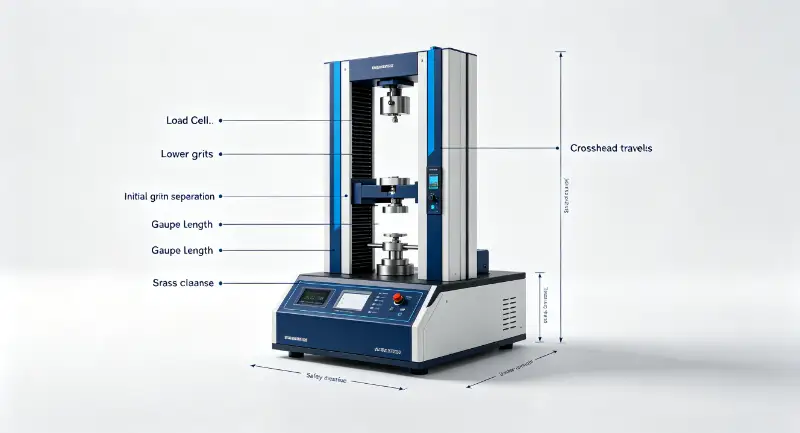
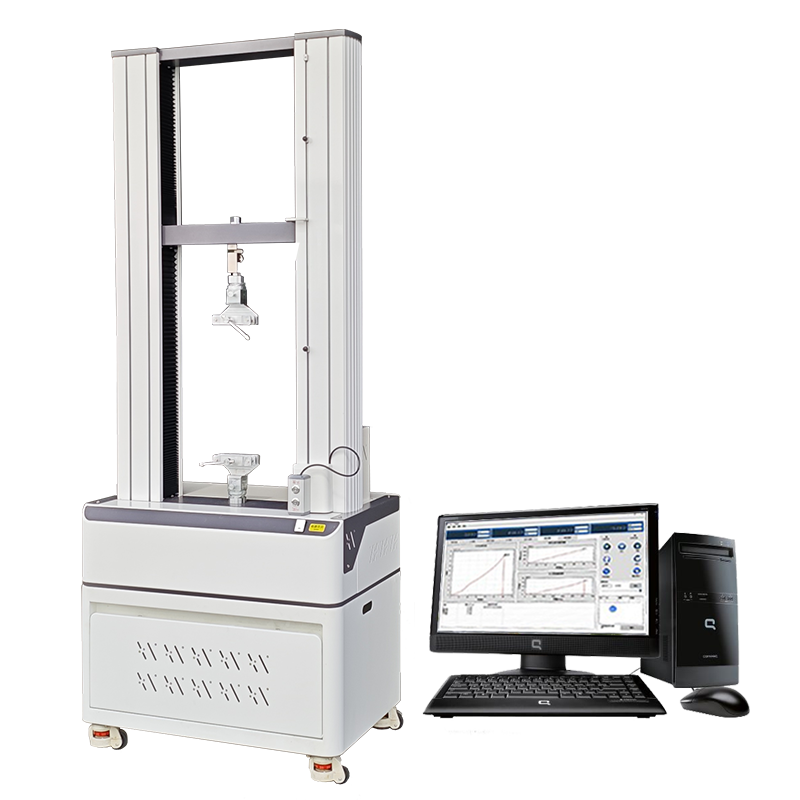
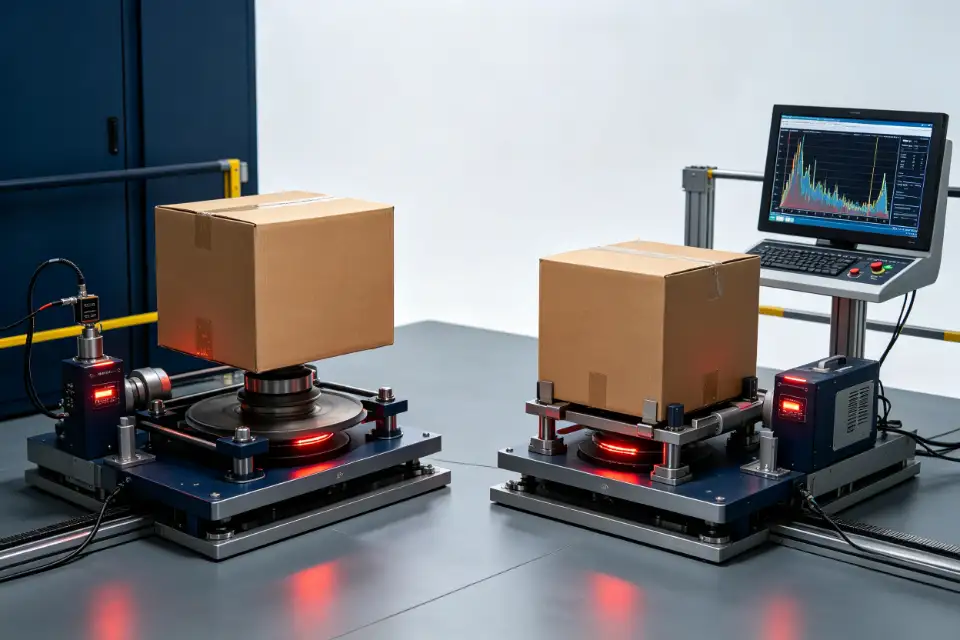
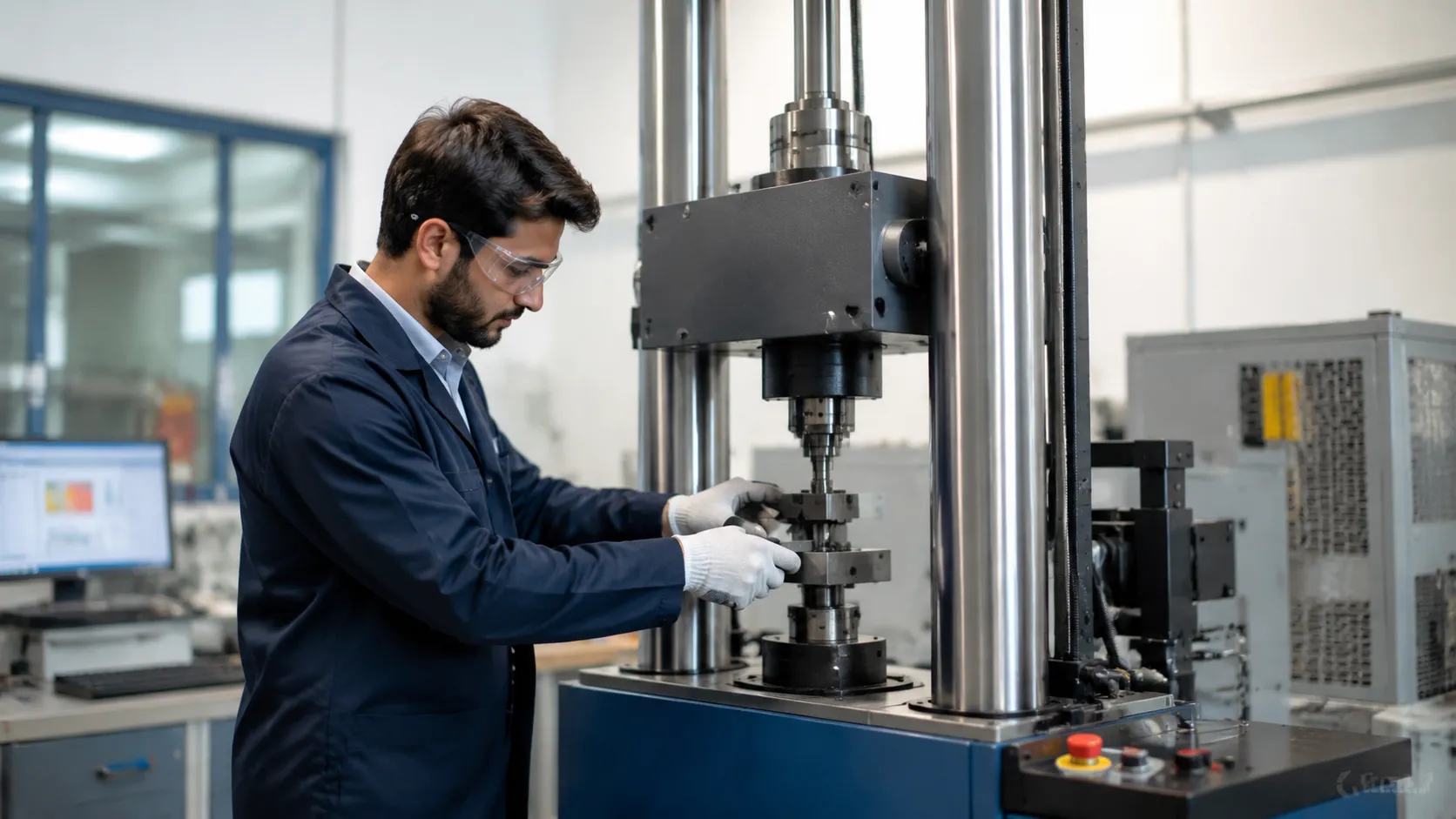
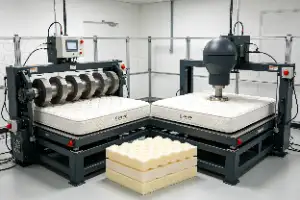
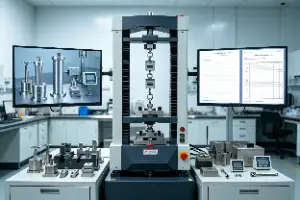
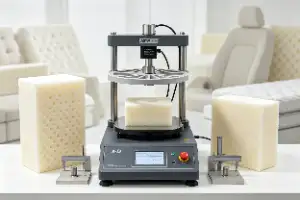
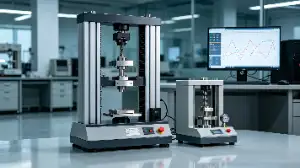
Foam fatigue testing requires specialized equipment capable of applying consistent, repeatable compression cycles over extended periods. Modern fatigue testers are typically electromechanical systems with the following key components:
Core Equipment Components
- Compression mechanism: Typically a motor-driven platen that descends to compress the foam specimen to a precise deflection
- Load cell: Measures the force required to compress the specimen at each cycle
- Position sensor: Tracks platen position with sub-millimeter accuracy
- Environmental chamber (optional): Maintains constant temperature and humidity during long-duration tests
- Control software: Programs test parameters, records data, and calculates results automatically
Equipment Specifications to Consider
When selecting fatigue testing equipment, consider these critical specifications:
| Specification | Typical Range | Application Notes |
|---|---|---|
| Maximum Load | 500-5000 N | Higher loads needed for high-density foams |
| Stroke Length | 100-300 mm | Must accommodate thickest specimens |
| Compression Rate | 1-100 cycles/min | Standard rate: 70 cycles/min |
| Cycle Count | Up to 100,000+ | Standard test: 8,000 cycles |
| Data Resolution | 0.1 N / 0.01 mm | Higher resolution for research applications |
Test Procedure: Step-by-Step
Step 1: Specimen Preparation
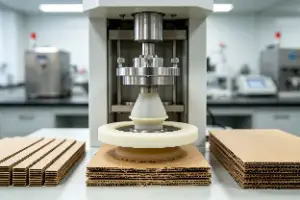
Proper specimen preparation is the foundation of reliable fatigue data. For ASTM D3574 Test I6:
- Cut specimens to dimensions specified by the standard (typically 100 mm × 100 mm × 50 mm thick)
- Use a sharp, non-compressing cutting tool to avoid distorting the foam structure
- Measure initial thickness at 5 defined points and calculate the average
- Condition specimens at 23°C ± 2°C and 50% ± 5% RH for minimum 16 hours
Never use specimens cut from areas near the foam block edges, as these areas may have different density characteristics due to mold edge effects during manufacturing.
Step 2: Initial Measurements
Before starting the fatigue test, record baseline measurements:
- Initial height (H0): Measure specimen thickness under a light preload (typically 50 Pa)
- Initial IFD (IFD0): Measure force required to compress specimen to 25% deflection
- Initial density: Calculate from mass and volume measurements
These baseline values serve as the reference point for calculating property losses after fatigue cycling.
Step 3: Fatigue Cycling
The standard ASTM D3574 Test I6 procedure involves:
- Placing the specimen on the tester base
- Setting the compression depth to 75% of the specimen's initial height
- Running 8,000 compression cycles at approximately 70 cycles per minute
- Allowing the specimen to rest for 10-15 minutes after cycling completes
For more aggressive durability testing, some manufacturers extend the cycle count to 25,000 or even 100,000 cycles—simulating 10+ years of service life in demanding applications.
Step 4: Post-Test Measurements
After fatigue cycling, repeat the measurements taken in Step 2:
- Final height (Hf): Measure under the same light preload used for H0
- Final IFD (IFDf): Measure at 25% deflection using the same procedure
The difference between initial and final values quantifies the material's fatigue resistance.
Step 5: Calculate Results
Key calculated metrics include:
- Height loss (%): [(H0 - Hf) / H0] × 100
- IFD loss (%): [(IFD0 - IFDf) / IFD0] × 100
- Compression set (%): Same calculation as height loss for this test
Lower values indicate better fatigue resistance. Industry benchmarks vary by application, but high-quality furniture foam typically shows height loss under 10% and IFD loss under 20% after 8,000 cycles.
Industry Applications
Furniture and Bedding
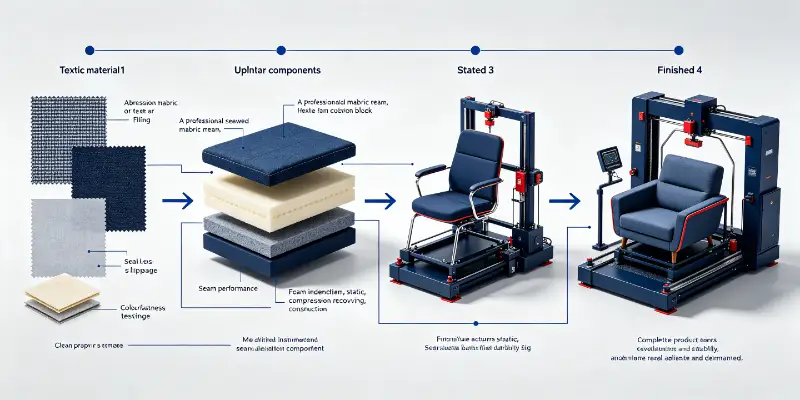
In the furniture industry, foam fatigue testing directly correlates with consumer experience. A sofa cushion that loses 30% of its firmness in the first year of use will generate complaints, returns, and negative reviews. Fatigue testing during product development helps manufacturers select foam grades that maintain their comfort characteristics throughout the expected product lifespan.
For mattresses, fatigue testing is particularly critical because the product's primary function—providing support and comfort—depends entirely on the foam's ability to resist permanent deformation. Mattress manufacturers often test multiple foam layers individually and as an assembly to understand how the complete mattress system performs under simulated use.
Automotive Seating
Automotive seating foam must withstand far more demanding conditions than residential furniture. Temperature extremes, vibration, and moisture exposure all accelerate foam degradation. OEM specifications typically require fatigue testing under a range of environmental conditions, with acceptance criteria that ensure seat comfort and safety throughout the vehicle's warranty period.
Automotive fatigue tests may include:
- Standard fatigue at 23°C
- Fatigue at elevated temperature (70°C) to simulate hot climate exposure
- Humidity cycling combined with mechanical fatigue
- Flame resistance testing after fatigue exposure
Medical and Healthcare
Medical foam applications—hospital bed mattresses, wheelchair cushions, prosthetic padding—face unique fatigue challenges. These products must maintain their pressure-redistribution properties over thousands of loading cycles while also meeting stringent hygiene and biocompatibility requirements. Fatigue testing protocols for medical foams often include additional measurements related to pressure mapping and skin contact safety.
Interpreting Fatigue Test Results
Understanding what fatigue data means for product performance requires more than simply comparing numbers to specification limits. Here are key considerations for interpreting results:
Height Loss vs. IFD Loss
Height loss (compression set) and IFD loss measure different aspects of fatigue performance:
- Height loss indicates permanent structural change—the foam has physically collapsed
- IFD loss indicates softening—the foam still recovers height but feels softer
Both metrics matter for product quality, but their relative importance depends on application. For a sofa cushion, IFD loss may be more noticeable to the consumer. For a precision packaging insert, height loss could compromise the product's protective function.
Failure Mode Analysis
Beyond the numerical results, examine fatigued specimens for physical signs of degradation:
- Surface cracking: Indicates foam is too stiff for the application
- Cell wall collapse: Suggests foam density is inadequate
- Uneven deformation: May indicate specimen preparation issues or material inconsistency
- Delamination: For laminated foam assemblies, indicates adhesive or bonding failure
Best Practices for Fatigue Testing Programs
- Test representative samples: Sample from multiple production lots to capture manufacturing variability
- Control environmental conditions: Temperature and humidity significantly affect foam properties
- Use calibrated equipment: Verify load cell and position sensor calibration before each test series
- Document specimen history: Record foam lot, production date, storage conditions, and any pre-test handling
- Compare to baseline materials: Include control specimens with known performance for comparison
- Analyze trends over time: Track fatigue results across production lots to identify process drift
Common Problems and Troubleshooting
Why do my fatigue results show high variability between specimens?
High variability typically indicates inconsistent specimen preparation, inadequate conditioning, or inherent material non-uniformity. Review your cutting procedure, verify conditioning time and conditions, and check whether the foam block shows density variation across different areas.
What if my specimen fails (breaks) during testing?
Specimen failure during fatigue testing indicates either a material defect, improper specimen preparation, or test parameters that are too aggressive for the material grade. Document the failure mode and cycle count at failure, then adjust the test protocol or investigate the material quality.
How do I correlate fatigue test results to real-world product lifespan?
Correlation between laboratory fatigue cycles and years of service life requires field data collection and statistical analysis. Many manufacturers develop correlation factors based on warranty return data, customer feedback studies, and accelerated aging protocols. There is no universal conversion factor—each product and application requires its own correlation study.
Can I predict fatigue performance from static test data?
While static properties (initial IFD, density, compression set) provide some indication of fatigue resistance, the correlation is imperfect. Two foams with identical static properties may show significantly different fatigue performance due to differences in polymer formulation, cell structure, and manufacturing process. Fatigue testing remains essential for accurate durability prediction.
Equipment Selection Guide
Choosing the right fatigue testing equipment depends on your specific application and testing volume:
| Equipment Type | Typical Cost | Throughput | Best For |
|---|---|---|---|
| Single-station mechanical | $15,000-30,000 | 1 specimen/test | QC labs, small manufacturers |
| Multi-station automated | $50,000-100,000 | 4-8 specimens/test | High-volume production QC |
| Environmental chamber integrated | $80,000-150,000 | 2-4 specimens/test | Automotive, aerospace, research |
| Universal testing machine with fatigue module | $25,000-60,000 | 1 specimen/test | Versatile labs, multiple test types |
Conclusion
Foam fatigue testing provides manufacturers with the data needed to predict product durability, reduce warranty costs, and improve customer satisfaction. By understanding the relevant standards, following proper test procedures, and interpreting results in the context of real-world applications, quality teams can make informed decisions that drive genuine product improvements.
Whether you are establishing a new fatigue testing program, upgrading existing capabilities, or selecting a testing service provider, the principles covered in this guide will help you generate reliable data that supports better product decisions.