

Packaging Tape Testing: Peel Equipment for Production QC
Date: October 21, 2026 Categories: Plastics, Rubber & Foam Testing Solutions Views: 5508
APPLICATION FOCUS
A Peel Test Setup for Tape QC
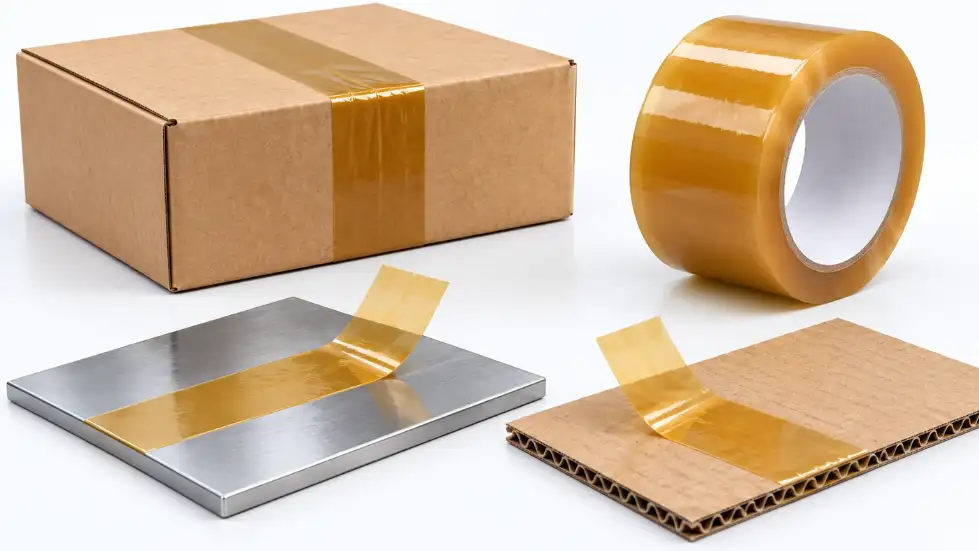
Tape producers, converters and packaging-material laboratories use a defined peel setup to monitor a specified tape and investigate variation. The equipment purchase needs to cover the tape, contact surface, separation geometry, force measurement and result calculation—not just the test frame.
DERUI’s DR-L201-5 is the peel-equipment starting point for this application. This page connects production-QC work to that configuration while keeping a tape-coupon result separate from complete-carton sealing performance. Send the tape and the decision you need to make, even if the force range or fixture has not yet been selected.
02 / APPLICATION GUIDE
Treat Adhesion as a System
Tape construction
Identify backing, adhesive type as supplied, width, lot and storage history. A change in backing can change peel behaviour.
Contact surface
Record panel or carton grade, coating, print, texture and cleanliness. A reference panel is not the same surface as a production carton.
Application process
Control the specified application pressure, contact time, temperature and preparation. Keep these conditions in the result record.
A useful incoming-inspection specification states the test method and surface, not only “strong adhesive”. If cartons or application settings change, investigate those variables as well as the tape lot. Do not assign a specific adhesive formulation fault from one force trace.
03 / APPLICATION GUIDE
Separate the QC Questions
| Question | Assessment route | What it does not establish |
|---|---|---|
| Is this defined tape consistent? | Specified peel test with controlled preparation and acceptance criteria. | A universal ranking of different tape constructions or manufacturers for sealing performance. |
| Why does the edge lift? | Review actual substrate, contact, application and exposure, supported by suitable tests. | That a higher reference-panel peel result alone will solve the problem. |
| How does the tape hold under sustained load? | A specified holding-power / shear evaluation with appropriate apparatus. | A result already supplied by a simple peel test. |
| Does the packed carton stay closed? | Application-level closure and relevant distribution evaluation. | A guarantee from a tape coupon measurement alone. |
ASTM D3330 addresses peel adhesion with several configurations. Its result has a defined scope and limitations; it should not be used as a standalone supplier-ranking or design-performance score. A minimum and, where relevant, maximum requirement needs to belong to a specified tape and method.
04 / APPLICATION GUIDE
Make the Peel Result Reproducible
01Identify the configuration
Choose the applicable tape and substrate arrangement, peel geometry and specimen preparation from the authorized method.
02Control the preparation
Record specimen width, surface preparation, application and dwell. Use the required panel condition and preparation equipment.
03Record the measurement definition
Identify speed, force units, calculation interval and treatment of irregular behaviour. Keep the trace and individual results with the specimen identity.
04Describe what separated
Record adhesive separation, cohesive residue, backing damage or paper fibre removal where observed. These are not all equivalent peel events.
A carton surface that tears may reveal failure of the paper surface rather than clean adhesive separation. Keep that observation in the report; do not silently compare it with a clean peel from a steel panel as though both measured the same interface.
05 / APPLICATION GUIDE
Investigate the Sealed Carton
When tape lifts on the line or after storage, compare the actual carton surface and application process with the approved setup. Examine whether the tape makes consistent contact across the joint and whether flaps, overfilled contents or handling are placing the closure under a different demand.
Use a documented application trial for the specified tape and packed carton. Preserve the surface, tape lot, closure arrangement and exposure conditions. If the objective is transport protection, include the relevant package-level evaluation rather than replacing it with a material test.
This investigation should distinguish what was observed from its possible causes. A photograph of a lifted edge is useful input, but it does not identify the chemistry or prove that all cartons in a batch will behave the same way.
06 / APPLICATION GUIDE
Configure the DR-L201-5 for Your Tape
| Published product item | How it relates to the application | Configuration decision |
|---|---|---|
| DR-L201-5 peel frame | The product is positioned for controlled peel-force testing. | Specify tape construction, substrate and the separation path before selecting grips. |
| 50–300 mm/min listed speed | Provides a published movement range for initial method review. | The required method speed must fall within the ordered and verified capability. |
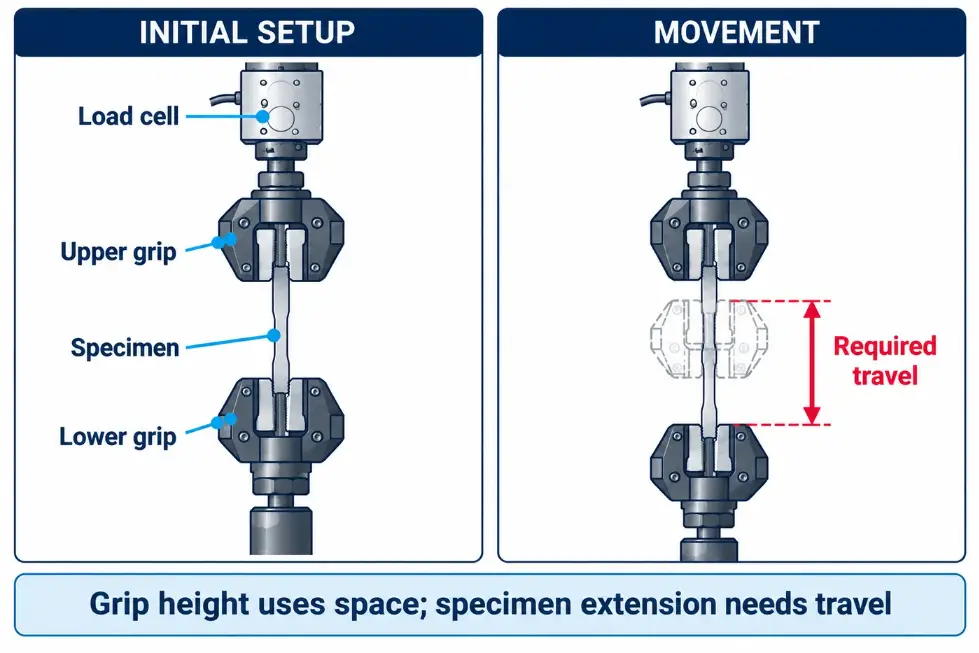
| 900 mm listed stroke, including fixture | Fixtures and the mounted specimen occupy part of the available arrangement. | Review starting position, travel needed for the calculation interval and end clearance. |
| TM2101 listed software | The product lists a software route for control / results. | Request the actual peel calculation, trace, units and export example required for the order. |
For a DR-L201-5 tape peel tester, the useful force interval must cover the expected peel signal. Do not use the frame’s maximum load or display resolution as proof that a low-force tape is measured adequately.
A 180° arrangement, a 90° moving-fixture arrangement and a liner-release setup have different interfaces. Identify the method and required accessories in the quotation. A specialized angle-maintaining fixture is not assumed to be included with a basic frame.
07 / APPLICATION GUIDE
Separate Frame, Preparation and Options
Test frame package
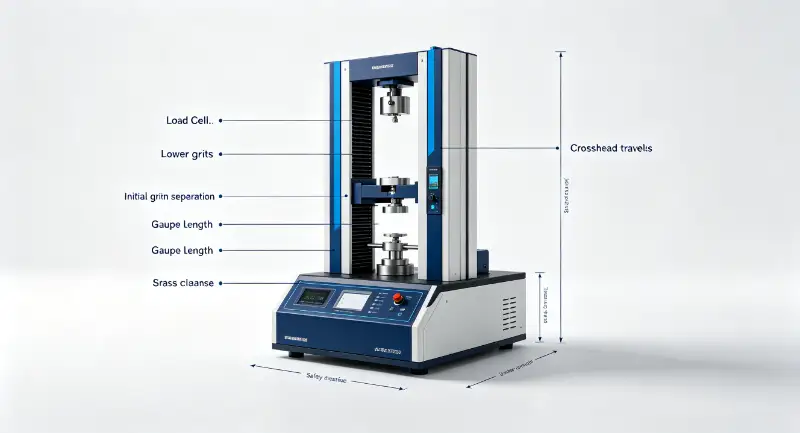
Identify the force sensor, grips, controls, software functions and supplied verification records.
Specimen preparation
List the required panels, application roller, cutting tools and conditioning arrangement; show who supplies each item.
Additional tests
Keep tack, holding power / shear and unwind tests separate unless an individually documented configuration is quoted.
Ask for an example output that identifies specimen width, method, speed, calculation region and failure observation. Agree how a representative specimen demonstration will be recorded. This helps compare quotations for the same test rather than two frames with different accessory packages.
For an actual carton problem, include the carton surface and closure photograph. The application evidence supports the investigation; a reference-panel peel value alone does not establish a finished-package performance guarantee.
08 / APPLICATION GUIDE
Request the Correct Peel Setup
Do I need the largest load cell?
No. Select a measurement range supported by verification evidence for the expected peel forces and suitable overload margin.
Are 90° and 180° fixtures automatically included?
Do not assume so. Put the method, fixture and supplied accessories into the ordered configuration.
Can one peel tester replace tack and holding-power tests?
Not automatically. Those are different test requirements and must be separately specified.
EQUIPMENT CONFIGURATION & QUOTATION
Send a Tape Sample Requirement
Tell us tape type, width, substrate and required peel method or QC result. An existing trace or customer specification helps define the sensor and fixture package.