



Corrugated Box Quality Control: From Board to Finished Cartons
Date: October 21, 2026 Categories: Paper, Board & Corrugated Testing Solutions Views: 9517
APPLICATION FOCUS
Keep Board Results and Carton Results Separate
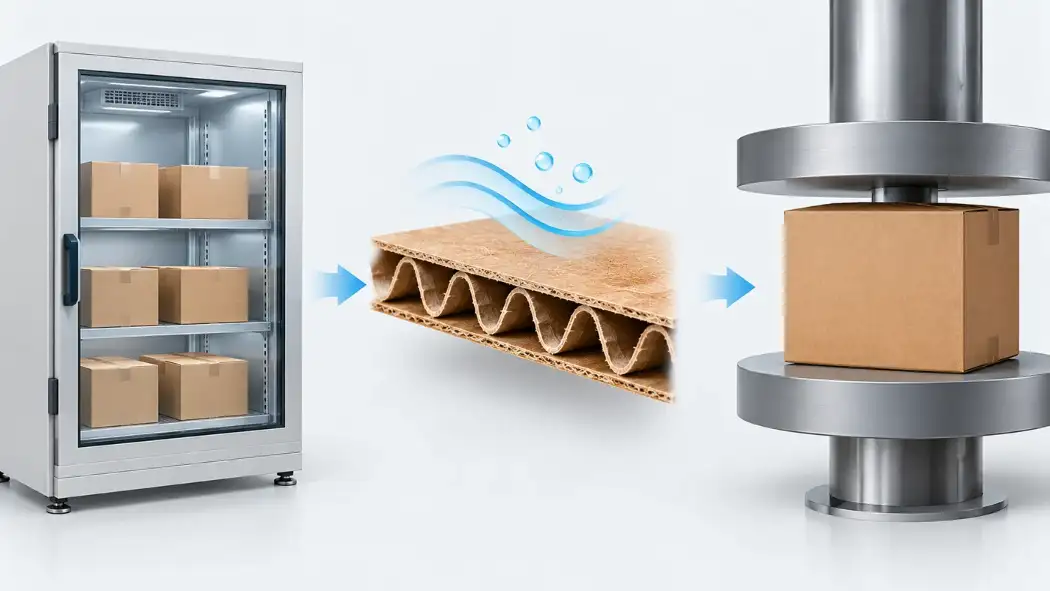
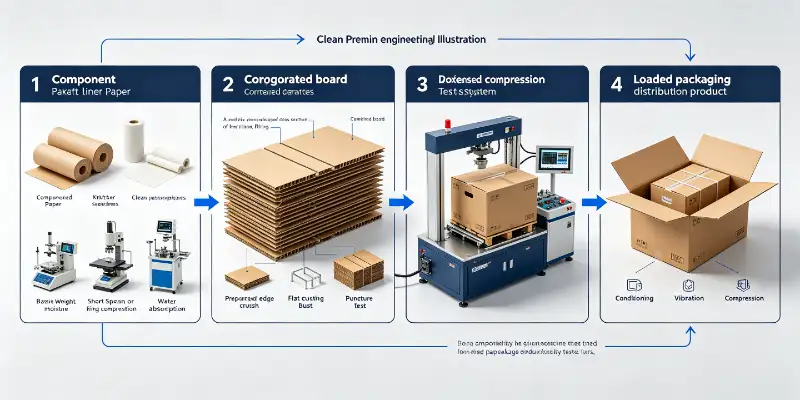
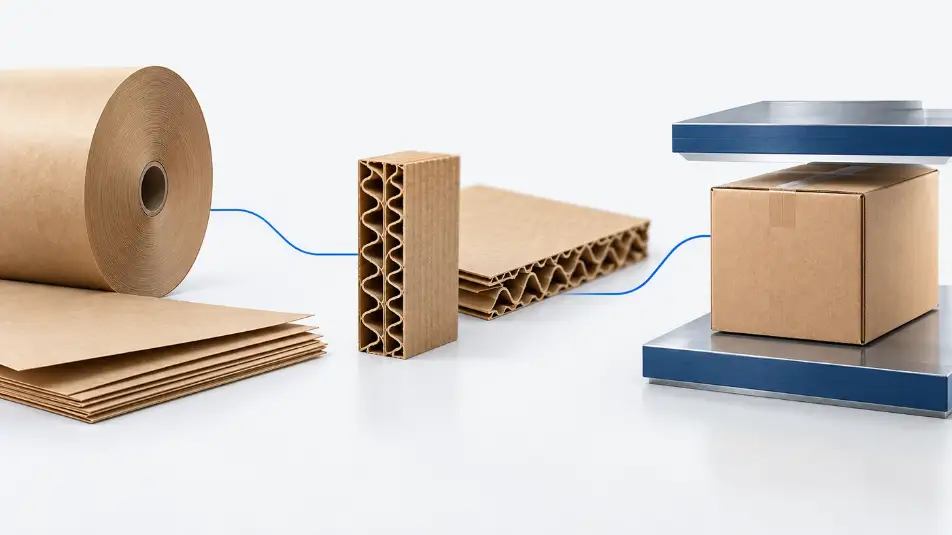
Corrugated packaging quality control starts with knowing what was tested. A board specimen, an empty converted carton and a loaded shipping package are different test objects. Their results answer different questions and should not share an undefined “strength passed” label.
For a box plant, the immediate need may be incoming-board consistency or damage introduced during conversion. For a brand owner, it may be whether the finished carton meets the specified compression requirement. Build the inspection plan around those decisions rather than buying a list of instruments first.
02 / APPLICATION GUIDE
Give Each Team a Clear Checkpoint
Incoming inspection
Identify the supplier lot, board construction and required material results before releasing stock.
Converting and production
Track relevant machine settings, scoring, folding, joints and any visible flute damage.
Finished-carton release
Evaluate the specified box construction and retain its dimensional, closure and test records.
The same batch identifier should connect the board, converted carton and any complaint sample. This makes a supplier discussion more useful than comparing unrelated certificates or a laboratory average with no specimen history.
03 / APPLICATION GUIDE
Use the Result That Fits the Decision
| Test family | Test object and result | Do not interpret it as |
|---|---|---|
| Edge crush (ECT) | Prepared corrugated board loaded edgewise; edgewise compression resistance. | A direct measurement of the complete carton or its long-term stacking life. |
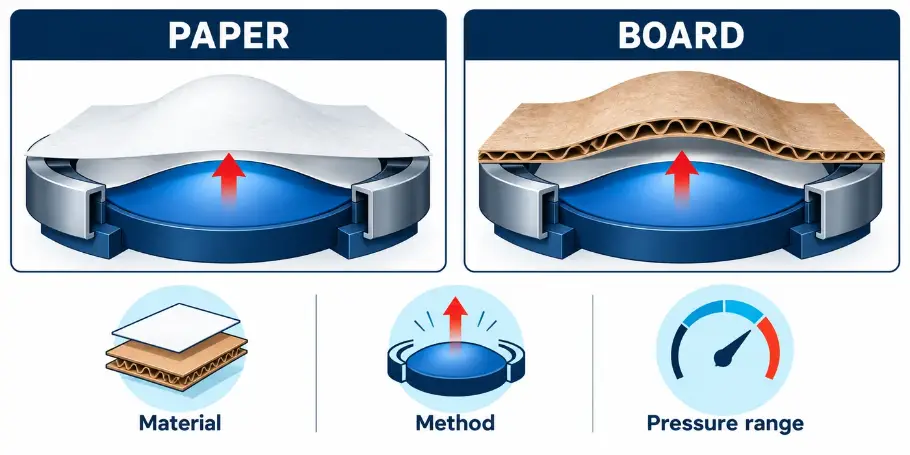
| Burst | A sheet specimen ruptured under the defined diaphragm pressure. | Box compression capacity or a direct equivalent of ECT. |
| Flat crush / other board compression | Prepared board or paper with method-specific geometry and fixtures. | An interchangeable result across all specimen types. |
| Pendulum puncture | Prepared board evaluated through the specified puncture-energy method. | Flexible-film puncture force from a different apparatus. |
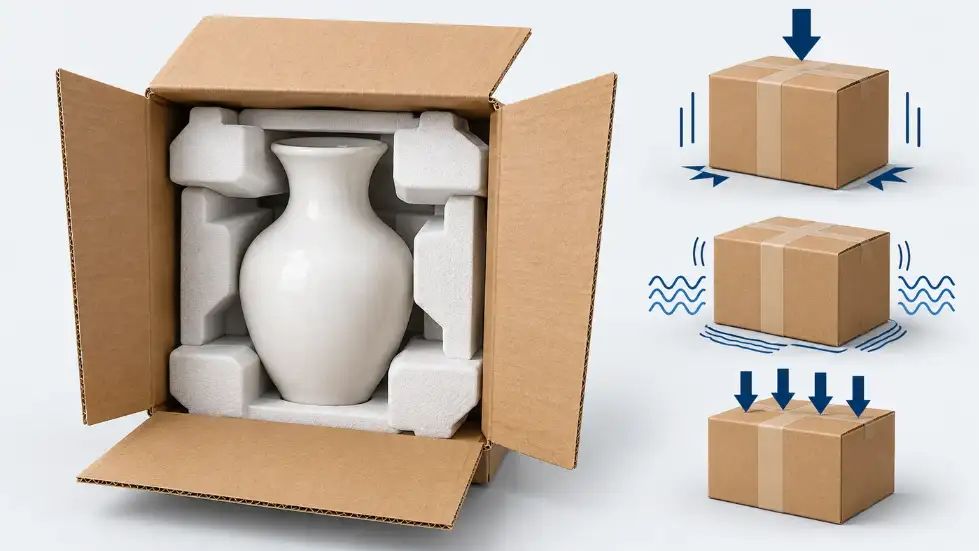
| Box compression | A complete carton under a defined platen loading arrangement. | A universal guarantee for every storage climate, duration or loaded distribution route. |
Keep units, specimen definition and method on every result. Material-strength correlations can support engineering work, but they are not permission to replace a required finished-box test with one material number.
04 / APPLICATION GUIDE
Control the Specimen Before Blaming the Board
For board compression checks, specimen cutting and loading alignment are part of the measurement. Damaged edges, poor squareness or unintended pre-crushing can change the response. Record flute direction and the preparation method so that comparisons describe equivalent specimens.
For finished-carton checks, identify dimensions, joints, closure, contents where required, orientation and conditioning. A changed score or joint may matter even when the board specification is unchanged. Keep these observations alongside the measured result.
Use the conditioning and sample count required by the selected procedure. When a customer report and an internal report disagree, first reconcile the specimen and method before concluding that one instrument is wrong.
05 / APPLICATION GUIDE
Create a Traceable Release Workflow
01Receive and identify
Record lot, supplier and agreed construction. Link inspection samples to the material actually received.
02Check the relevant material properties
Select the required board or paper tests. Use method-specific accessories rather than assuming one compression fixture covers every test.
03Assess the converted carton
Verify dimensions and workmanship, then perform the required complete-carton evaluation. Preserve observations of the failure location.
04Handle a failed result
Follow the agreed hold, retest and disposition rules. Do not average away a known preparation error without documenting its treatment.
Supplier limits and release rules should be agreed in advance. This page does not impose one ECT, burst or compression threshold across different carton sizes and applications.
06 / APPLICATION GUIDE
Match the Laboratory to the Inspection Plan
Board compression
Microcomputer compression strength equipment for the selected paper/board tests and their specific accessories.
Sheet rupture
DR-B201 bursting strength tester with the appropriate material configuration.
Finished boxes
Box compression equipment matched to carton dimensions, force and control requirements.
Where puncture resistance is part of the specification, review the pendulum board puncture tester as a board-energy instrument, despite its legacy URL wording. Do not substitute a film test on the basis of that URL.
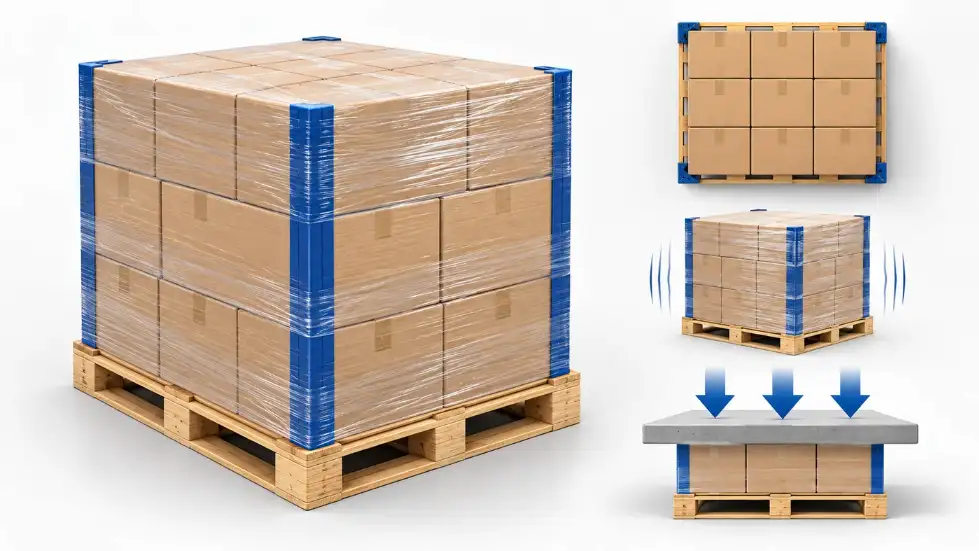
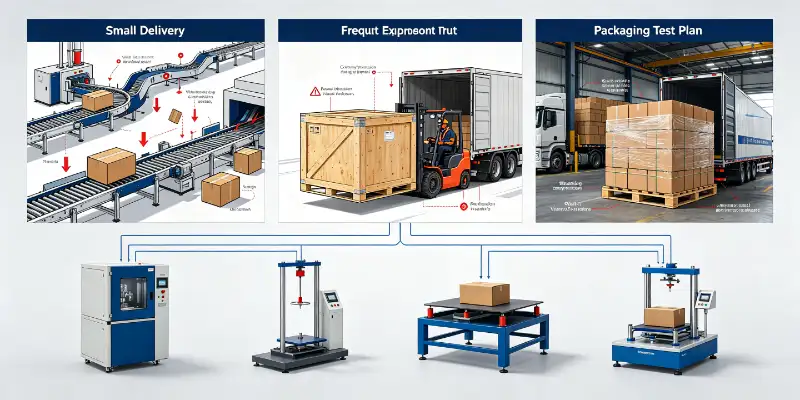
For the wider material-to-package framework, see the paper and corrugated packaging test plan. For loaded transport hazards, use a separate distribution evaluation.
07 / APPLICATION GUIDE
Questions from Carton Quality Teams
Can ECT replace a box compression test?
Not when the requirement calls for the complete carton. ECT measures a prepared board specimen; carton geometry and conversion also affect the finished-box result.
Is burst pressure the same as stacking strength?
No. They use different test objects, loading modes and result definitions. Choose the test required by the specification.
What helps DERUI prepare a useful proposal?
Send the board construction or carton size, the property you need to assess and your customer method if available. Existing reports help identify the required range and accessories.
YOUR APPLICATION, YOUR TEST REQUIREMENT
Build the QC Setup Around Your Cartons
Tell us whether you need incoming-board checks, finished-carton checks or both. Send the specimen dimensions and the quality issue first.