



How to Build a Packaging Test Plan for Parcel, Freight and Palletized Distribution
Date: September 7, 2026 Categories: Applications、Packaging & Logistics Testing Solutions Views: 4603
How to Build a Packaging Test Plan for Parcel, Freight and Palletized Distribution
A useful packaging test plan starts with the shipment—not with a familiar standard number or a machine catalogue. Define the route, packaged product, hazards and acceptance criteria first. Then select the current authorized procedure and confirm that each required test element can be produced, measured and documented by the laboratory.
Why the distribution route must come before the test equipment
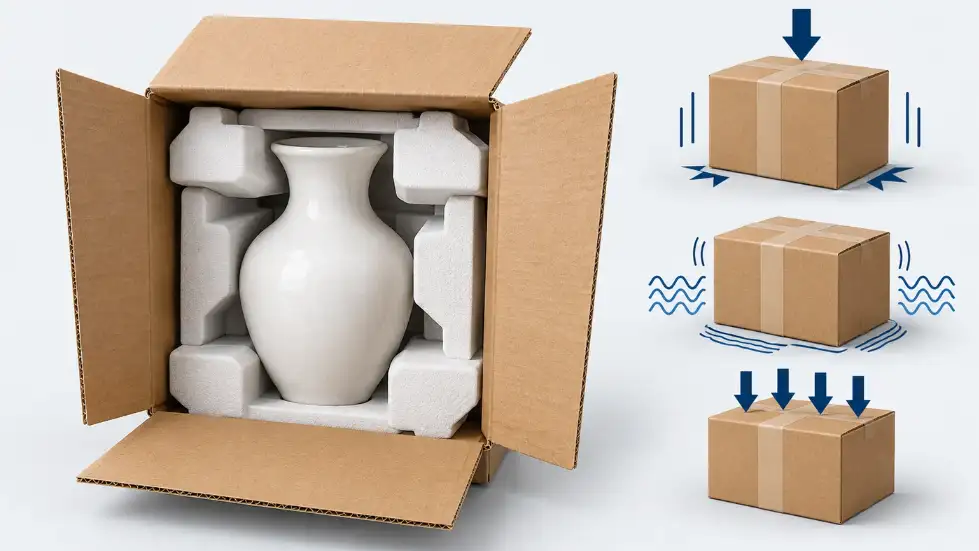
A parcel moving through automated sorting is not exposed in the same way as an individual freight package or a stable unit load moving by truck. Handling frequency, stacking duration, vehicle vibration, transfer points, climate and the possibility of a pallet being broken down can all change the relevant hazards.
That is why a packaging test plan should describe the complete journey from the packing line to the receiver. Include warehouse storage, carrier handovers, transport modes, loading methods and any known temperature, humidity or altitude exposure. When routes vary, document the important alternatives instead of designing the laboratory around only the easiest shipment.
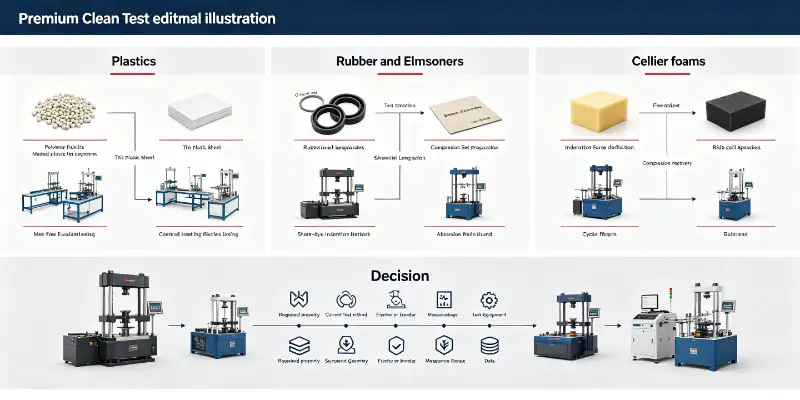
Frequent handling
Review manual and automated handling, repeated impacts, mixed stacking, vibration and package orientation changes.
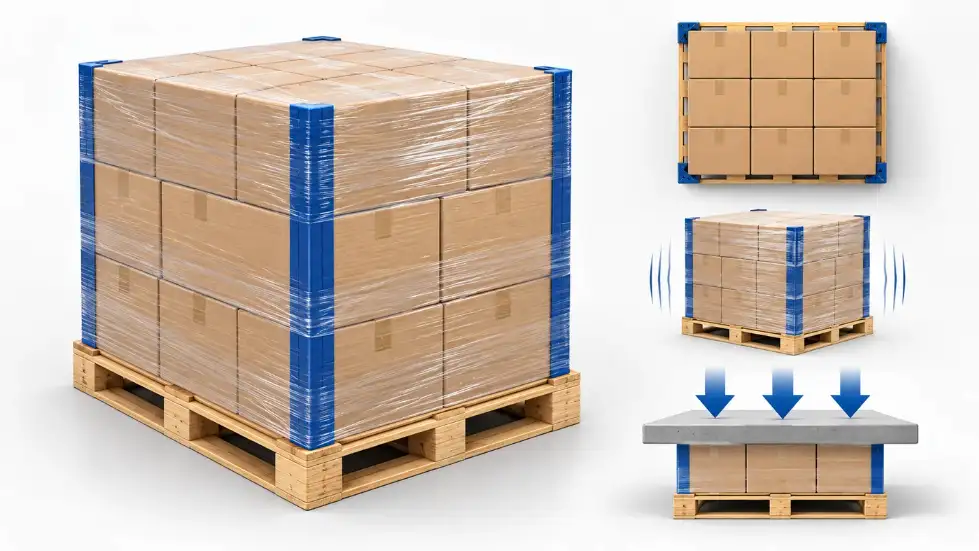
Larger shipping units
Define whether the shipment is palletized, crated or handled individually, plus the loading, restraint and transfer conditions.
Stack and load stability
Record pallet pattern, containment, total mass, load height, handling access and whether cases remain unitized throughout the route.
 Seven steps for building a packaging test plan
01Define the decision the test must support
State whether the work is for early screening, comparison between package designs, distribution-performance evaluation, process control or a customer/carrier requirement. The objective controls the level of simulation, inspection points and documentation. Do not use “pass the test” as the only objective.
02Set product and package acceptance criteria
Define unacceptable product damage, functional change, leakage, closure failure, cosmetic damage and allowable package degradation before testing. Use measurable limits where possible and identify who approves the final disposition.
03Document the complete packaged-product specimen
Record loaded L × W × H, gross mass, center of gravity, contents, quantity, cushioning, dividers, closures, pallet pattern, stretch wrap, straps and other restraints. Test production-intent samples in the configuration actually shipped; a nominal empty carton is not an equivalent specimen.
04Select the governing procedure and revision
Confirm whether the requirement comes from ISTA, ASTM, a retailer, a carrier, a regulator, a customer or an internal method. ISTA procedures include screening, general simulation, enhanced simulation and other program types; ASTM D4169 uses anticipated hazard elements in distribution cycles, while ASTM identifies D7386 for single-parcel shipment testing. The applicable procedure must be selected by the responsible parties using its current authorized text.
05Transcribe the full sequence and severity
List every required conditioning, compression, vibration, shock, impact, handling and inspection element in the prescribed order. Record orientation, level, duration, number of repetitions, tolerances and any special fixtures. Do not assemble a universal sequence from memory: the governing procedure controls both inclusion and order.
06Match every element to measurable equipment capability
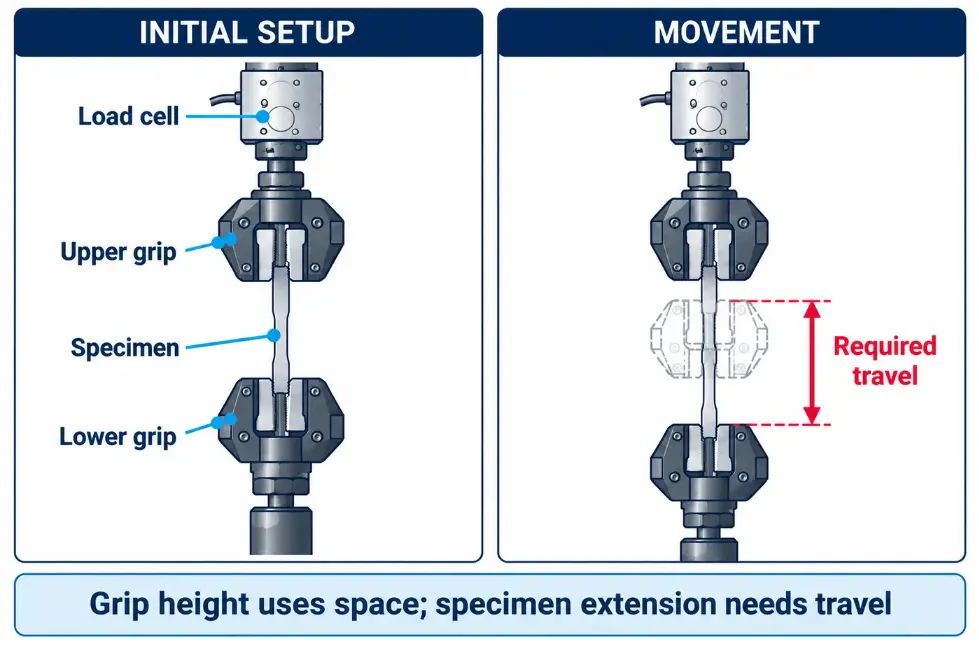
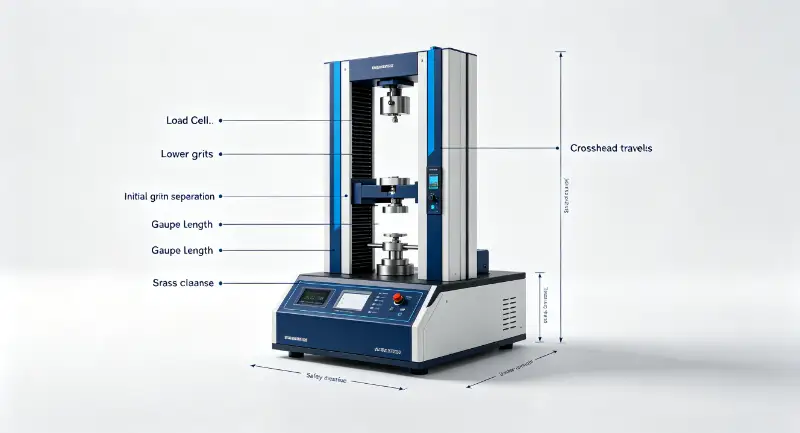
For each step, compare specimen envelope and mass with the equipment range, then verify motion, force, displacement, frequency, acceleration, platen travel, drop height, orientation, chamber range, sensors, control tolerances and data output as applicable. A model name alone is not evidence of method compatibility.
07Plan workflow, records and review
Define sample count, changeover time, daily throughput, calibration status, raw data, photographs, observations, pass/fail authority and report retention. After testing, compare laboratory findings with real shipment feedback and revise the plan when the package, product, supplier or route changes.
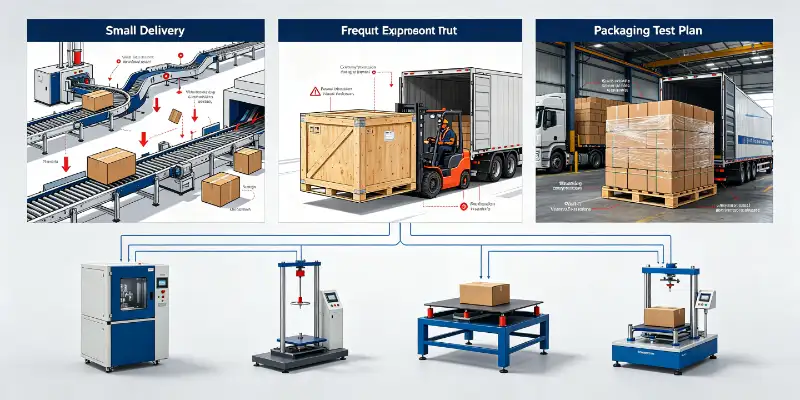
Map the test sequence to the equipment—not one machine
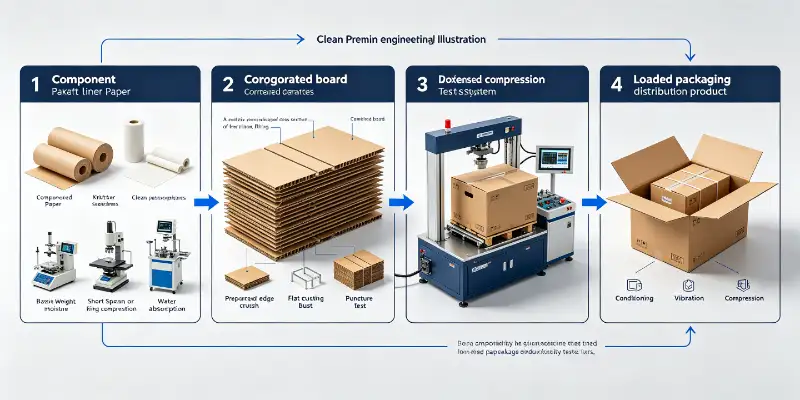
Distribution testing normally requires several distinct capabilities. The exact set depends on the selected procedure; not every plan contains every element.
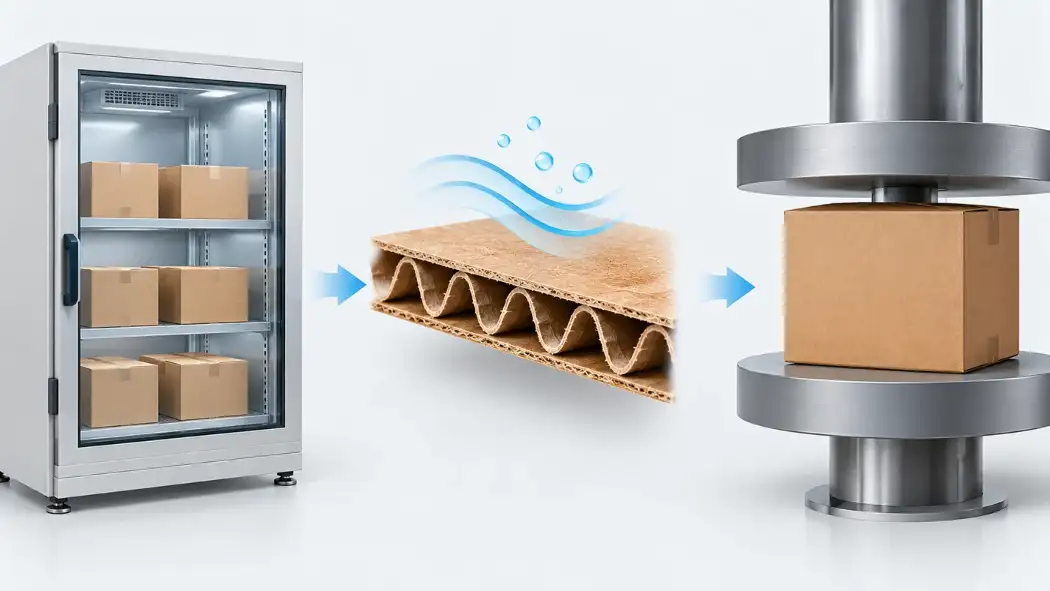
Conditioning
Control the required temperature and humidity exposure before or during relevant tests.
Drop and shock
Reproduce specified free-fall heights, orientations or other impact conditions for the loaded specimen.
Vibration
Verify payload, table size, frequency, displacement, acceleration, control method and required profile.
Compression
Match platen area, capacity, travel, control mode and specimen stability to stacking or compression requirements.
Handling and impact
Identify any incline impact, horizontal impact, rotational edge drop, bridge impact or unit-load handling requirement separately.
Measurement and records
Define sensors, sampling, tolerances, calibration evidence, raw data, images and report format before purchase.
Common planning mistakes that create weak or unusable results
- Choosing a standard by familiarity: the route, package type, mass and test objective may point to a different procedure.
- Testing an incomplete specimen: changes in contents, closures, cushioning or pallet restraint can change performance.
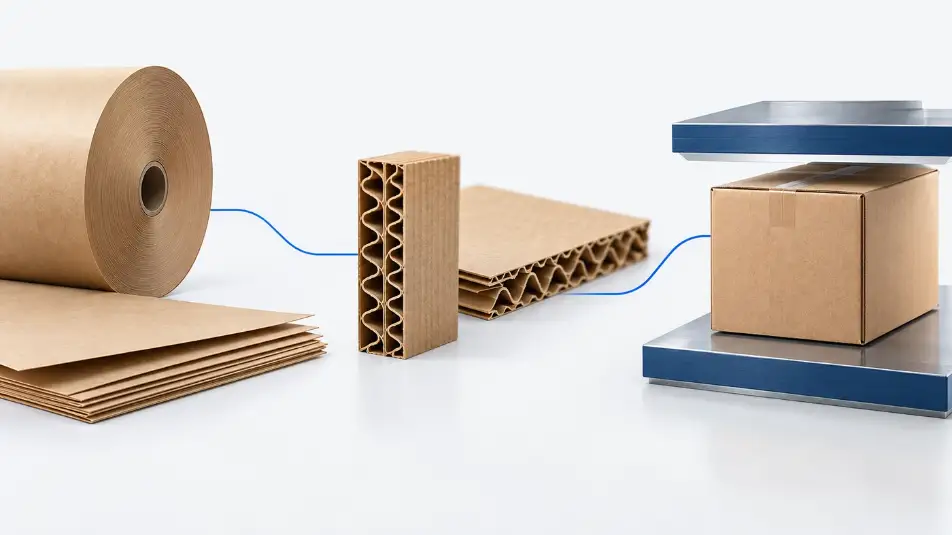
- Mixing material tests with distribution tests: ECT, film tensile or cushioning characterization can support package design, but they do not replace a packaged-product distribution sequence.
- Ignoring equipment margins: maximum payload or chamber dimensions alone do not confirm usable performance across the required range.
- Leaving acceptance criteria until the end: this makes pass/fail decisions subjective and difficult to reproduce.
- Buying isolated machines without workflow planning: loading access, fixtures, changeover, conditioning transfer and reporting affect real throughput.
Packaging test plan worksheet for an equipment review
| Planning field | Information to provide | Why it affects configuration |
|---|---|---|
| Shipment route | Parcel, LTL, air freight, truckload, ocean, unit load; transfers and storage | Identifies relevant hazards and procedure family |
| Specimen | Loaded dimensions, gross mass, center of gravity, package construction and restraints | Sets usable equipment envelope, payload and fixtures |
| Procedure | Organization, procedure number, current revision and customer deviations | Controls sequence, levels, tolerances and apparatus |
| Required results | Screening, comparison, distribution performance; damage limits and inspections | Defines measurement, repeatability and records |
| Workload | Samples per batch, batches per day, changeover and reporting time | Determines automation, access and capacity needs |
| Facility | Available area, floor/loading limits, door access, power, air, climate and safety controls | Prevents installation and operation conflicts |
| Data | Raw data, report, user permissions, traceability and export format | Defines controller, software and integration scope |
Turn your test plan into an equipment requirement
Send the current procedure, loaded package dimensions and mass, required sequence, target throughput, destination country and available site conditions. DERUI can review the required capabilities and identify the configuration questions that must be resolved before quotation.
Packaging Test Plan FAQs
Should I choose an ISTA procedure or ASTM D4169 first?
Start with the requirement owner and the real distribution system. A customer, carrier or regulator may mandate a specific procedure. Where selection is open, compare the packaged product, shipment mode, objective and hazards with the current official scope of the candidate procedures. Do not treat ISTA and ASTM numbers as interchangeable.
Can one packaging test plan cover parcel and palletized shipments?
Only when the governing plan explicitly represents both relevant distribution stages. If a unit load is broken down and individual packages continue through parcel handling, the two stages may require different evaluation. Document each route and have the responsible parties approve the coverage.
Which information is needed before selecting packaging test equipment?
At minimum, provide the current procedure and revision, complete sequence, loaded specimen dimensions and mass, orientation, severity and tolerances, target throughput, required records, utilities and installation limits. Fixtures and optional capabilities should be identified separately.
Does a passed distribution test guarantee damage-free shipment?
No. A test evaluates the specimen against the hazards, levels and acceptance criteria represented in that procedure. Unrepresented routes, extreme events, package changes and process variation can still affect field performance. Shipment monitoring and change-controlled retesting remain important.