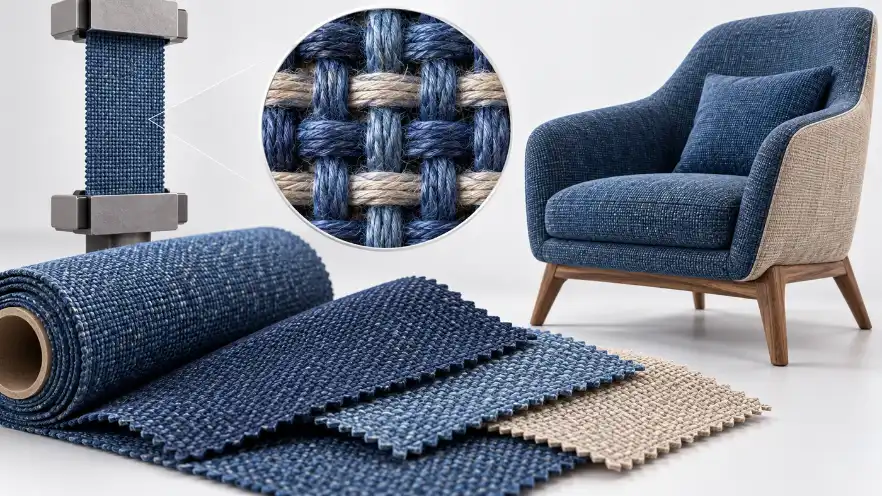
Woven Fabric Quality Control for Upholstery and Home Textiles
Date: October 21, 2026 Categories: Textile & Furniture Testing Solutions Views: 1305
APPLICATION FOCUS
Start with Where the Fabric Will Be Used
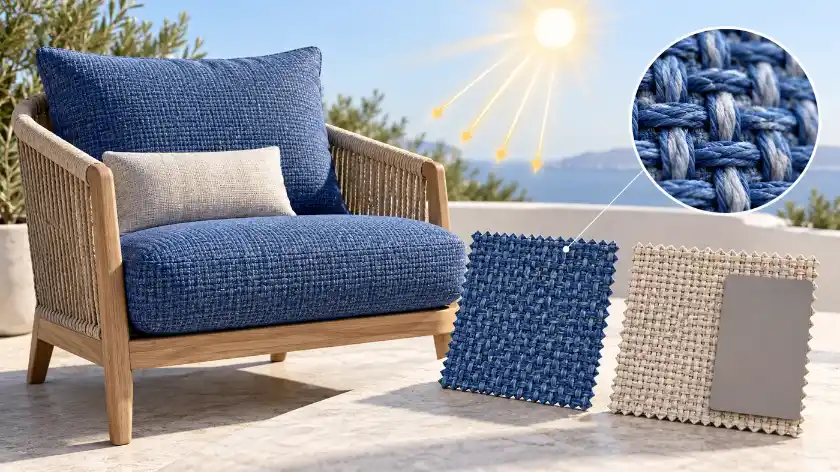
A woven fabric selected for a chair seat, a decorative cushion and a curtain is not necessarily judged by the same set of requirements. The useful starting point is the end use, the customer specification and the failure or appearance change that would make the material unacceptable.
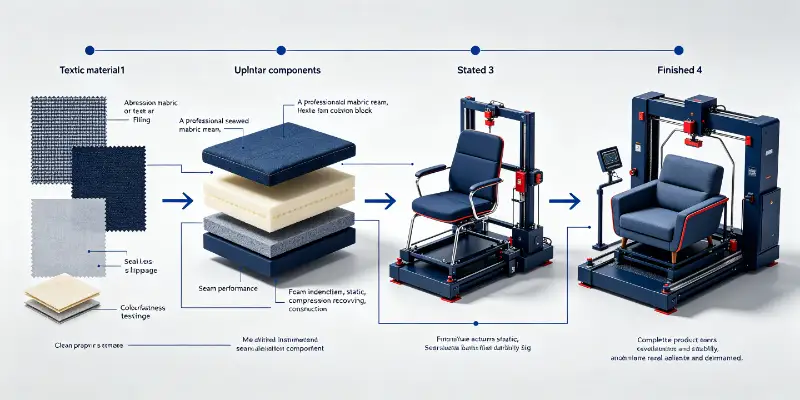
This guide is for woven-fabric suppliers, upholstery and home-textile buyers, and laboratories planning incoming or development checks. It addresses material performance. Complete furniture strength, foam performance, fire requirements and finished-product certification are separate scopes.
02 / APPLICATION GUIDE
Connect Buying, Sewing and Testing
Purchasing
Needs evidence that the supplied construction and lot match the agreed material specification.
Production
Needs to understand handling, seams and any change introduced by cutting, sewing or finishing.
Quality laboratory
Needs defined specimen direction, preparation, method and result criteria to compare materials fairly.
Capture the construction, fibre information provided by the supplier, finish, backing, roll and lot identity. Mark the warp and weft directions before preparing specimens. Where the final application includes seams, retain the relevant seam construction as part of the specification.
03 / APPLICATION GUIDE
Build a Purposeful Test Matrix
| Concern | Assessment route | Important distinction |
|---|---|---|
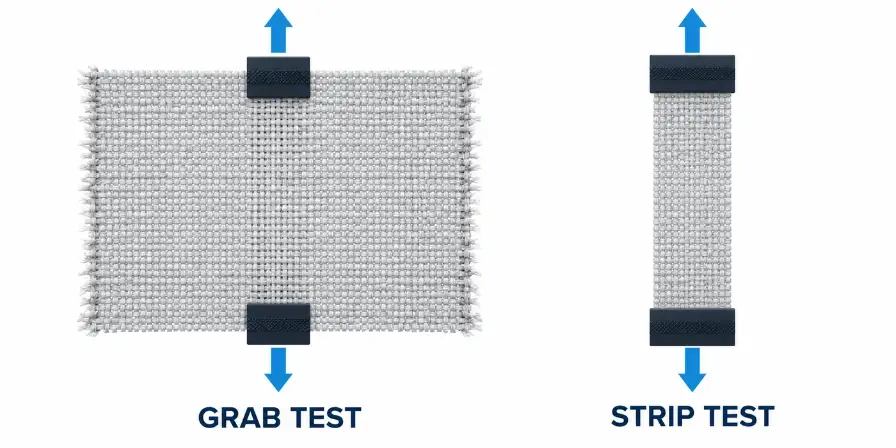
| Fabric breaks under tension | Specified tensile breaking force and extension evaluation. | Warp and weft, grab and strip methods are not interchangeable labels. |
| Yarns move at a seam | A seam-slippage or seam-related method appropriate to the construction. | Fabric tensile strength alone does not establish seam behaviour. |
| A small cut grows | A textile-appropriate tear method selected for the material. | Tear propagation is not the same result as tensile breaking force. |
| Surface wears or forms pills | Required abrasion and/or pilling evaluation. | A wear count is not a direct prediction of years in service. |
| Appearance changes in use | Relevant colourfastness or other appearance assessment. | One mechanical test cannot cover all light, rubbing, cleaning or finish effects. |
ACT identifies multiple physical properties for woven interior fabrics. Customer or market requirements still determine the applicable methods and acceptance limits. Do not transfer a voluntary upholstery value to every home-textile application.
04 / APPLICATION GUIDE
Keep Direction and Preparation in the Report
A comparison is useful only when it describes equivalent tests. Record fabric direction, specimen dimensions, conditioning, grip geometry, speed and the result definition required by the chosen tensile method. Identify backing or coating where it changes specimen preparation or behaviour.
Observe failure location and any visible slip or jaw damage. Do not treat every low result as a material defect without considering the validity rules of the method. Equally, a smooth-looking curve is not proof that gripping was correct.
For the method and configuration differences, see the fabric grab-versus-strip guide. This application page uses those choices to build an end-use QC plan rather than repeating the complete method comparison.
05 / APPLICATION GUIDE
Use a Change-Controlled Inspection Routine
01Define the application
Identify seating, decorative furnishing, drapery or another specific use, and obtain the customer requirements.
02Select representative samples
Preserve roll and lot traceability and prepare the required directions and specimen types.
03Evaluate the specified properties
Keep tensile, seam, tear and appearance outcomes separate. Use appropriate equipment and trained assessment for each method.
04Review changes before approval
Assess a new supplier, backing, finish or construction against the agreed plan. Retain reference samples and explain any test deviation.
For example, if a seam opens while intact fabric appears acceptable, a seam-related evaluation may be more informative than simply increasing the tensile acceptance limit. This is an investigation route, not a diagnosis of a particular customer defect.
06 / APPLICATION GUIDE
Match Equipment to the Fabric Requirement
Tensile response
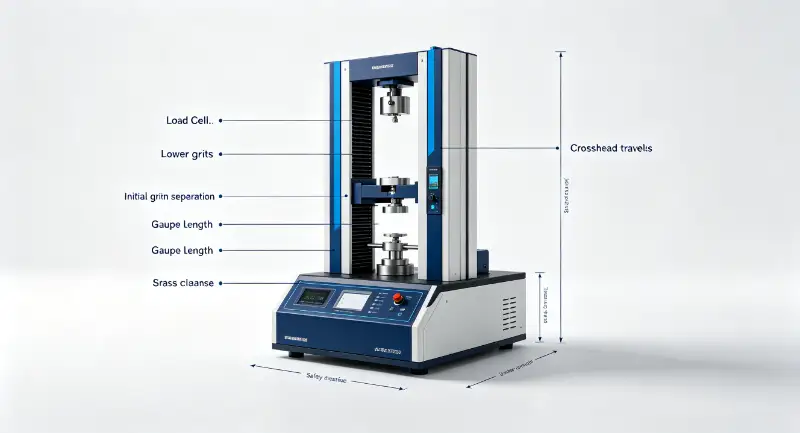
DR-L201-8 fabric tensile tester for the selected material direction, grips, force interval and method setup.
Abrasion and pilling
Martindale testing equipment with the correct holders, load, consumables and assessment procedure.
Wider laboratory scope
Textile testing equipment for other method-specific needs; each apparatus must fit the intended material and result.
Seam testing or a particular textile tear procedure may need additional fixtures or a different instrument. Ask for those functions explicitly; do not assume they are included in a basic tensile quotation. Likewise, do not select a paper tear instrument solely because its name includes Elmendorf.
The existing textile and furniture test plan explains the broader distinction between material and finished-product evaluation.
07 / APPLICATION GUIDE
Questions from Fabric Buyers
Is one tensile value enough to approve upholstery fabric?
Not usually as a complete performance specification. The relevant mix of tensile, seam, tear, abrasion, appearance and other requirements depends on construction and end use.
Can I compare a grab result directly with a strip result?
Not as if they were the same measurement. They use different gripping and specimen arrangements. Compare using the method required by the specification.
Can a material test certify the finished chair?
No. Fabric results do not establish complete-chair strength, stability or all regulatory requirements. Keep these scopes separate.
YOUR APPLICATION, YOUR TEST REQUIREMENT
Send the Fabric and Its Intended Use
A sample photograph, woven construction, end use and customer requirement are enough to start. Add an existing report if available.