
Fabric Tensile Testing: Grab vs Strip Methods and Equipment Selection
Date: October 21, 2026 Categories: Buying Guides Views: 1170
Grab and Strip Tests Answer Different Questions
Grab and strip tensile tests both load fabric to assess breaking behaviour, but they grip the specimen differently. Their results should not be exchanged or converted using a universal factor.
Start with the customer’s required procedure, fabric construction and result definition. Equipment selection follows that decision: jaws, force measurement, movement and reporting need to reproduce the selected method.
What Changes Between the Two Tests?
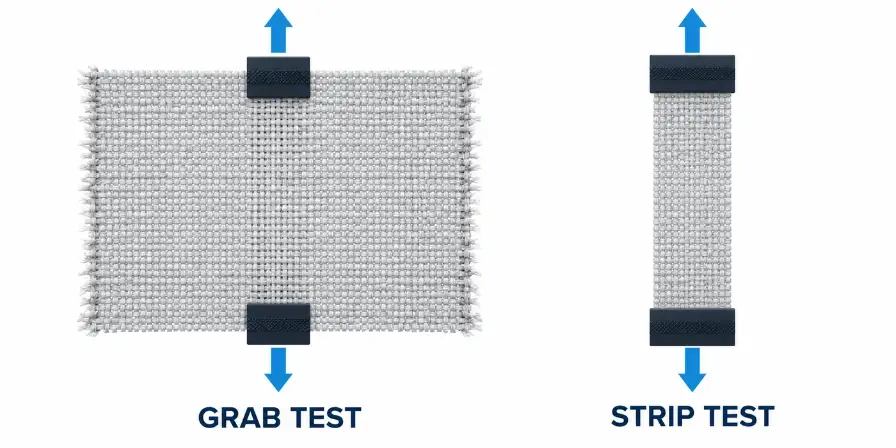
| Grab method | Part of the width is gripped, with adjacent fabric contributing to the response. |
|---|---|
| Strip method | The entire prepared strip width is gripped. |
| ASTM method families | D5034 for grab/modified grab; D5035 for raveled/cut strip. |
| Practical consequence | Specimen preparation and jaw geometry differ; identical numbers do not establish equivalent fabric behaviour. |
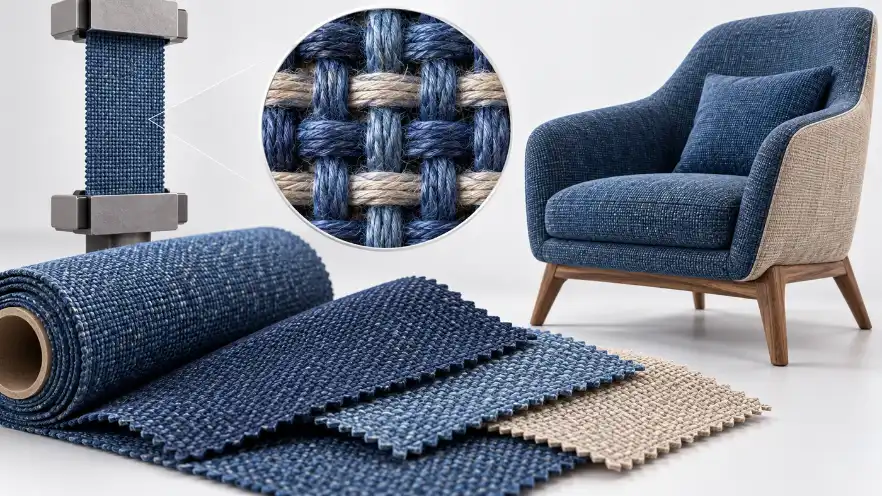
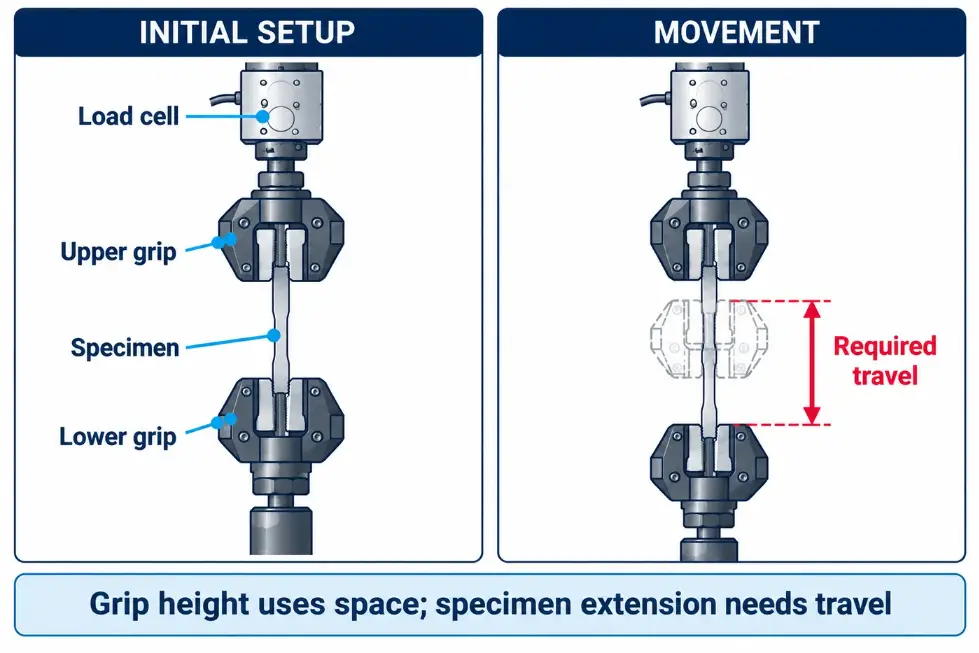
The illustration deliberately omits dimensions. Use the authorized method for the actual sample, contact geometry, gauge length and rate. A generic drawing should not become a cutting template.
Check Material Applicability First
A fabric name such as “polyester” does not describe its full test behaviour. Construction, finishing, coating and extension can change whether a procedure is appropriate.
ASTM D5035 identifies different strip preparation routes and states that it is not recommended for knitted or high-stretch fabrics. If your sample falls outside its scope, do not solve the issue by merely reducing the machine speed. Find the applicable method or customer procedure.
ISO 13934 has separate strip and grab parts. A retailer may instead specify a particular internal protocol. Record the required document and revision before comparing equipment. The method name on a software screen alone does not validate specimen preparation or the full measuring system.
Choose Grips That Control the Actual Failure
Select jaw width and contact geometry from the procedure, then assess the contact surface and clamping action for the fabric. Pneumatic gripping can help control operation, but it is not a guarantee against slip or damage.
Slippage
Look for movement relative to the contact region and consider whether the force–extension record includes pull-out.
Jaw-line failure
Review contact edges, alignment and pressure. More force at the jaws may worsen local damage.
Valid specimen failure
Assess failure observations and exclusions using the selected method, keeping a record of rejected tests.
For a trial, identify the fabric, direction, settings and grips. A supplier demonstration is most useful when it represents the material you intend to test, not simply a sample that happens to break.
Match the Load Cell and Available Movement
Estimate minimum and maximum force from an existing report or a justified test plan. Choose the load cell by its verified performance at those forces as well as its maximum capacity.
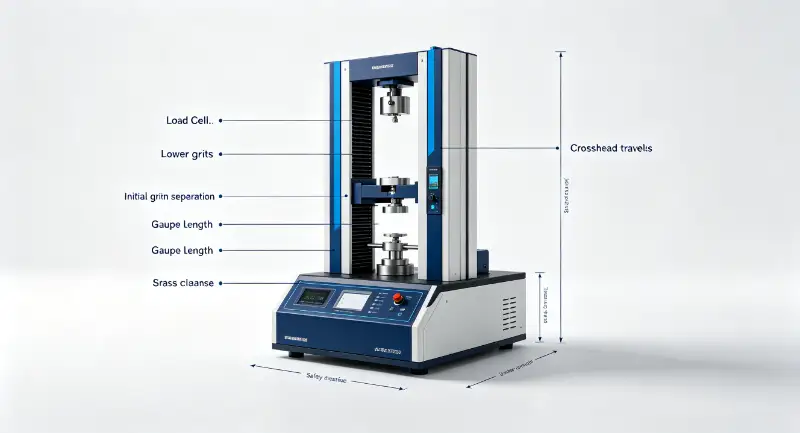
Check initial gauge length, expected extension, grip height and available travel. The installed assembly can have less usable room than the headline stroke suggests. High stretch requires both method applicability and adequate movement.
Define how extension is measured. Depending on the procedure, grip separation or another measurement may be used. Do not quietly replace the specified method with an unrelated measurement and assume that the reported percentage is equivalent.
Keep Reports Comparable
Record material identity, direction, conditioning, specimen preparation, method, jaw setup, rate and result definition. Distinguish the extension at maximum force from extension at rupture when the procedure calls for that distinction.
When two laboratories disagree, compare their setup and exclusions before attributing the difference to material quality. The grab/strip choice, sampling direction and preparation can all change what the test represents.
Agree the required individual values, summary statistics and exports with the equipment supplier. A generic claim of “automatic reporting” does not show that the output matches your customer’s acceptance document.
Choose the Product Setup, Then the Purchasing Scope
A fabric-focused system should identify its force options, jaws, usable movement and control arrangement. Request a clear list of included and optional items, plus installation, measurement verification and operator guidance.
Review the DR-L201-8 fabric tensile tester for the product configuration. Use the benchtop tester category if the force or fixture envelope calls for a different system.
Describe Your Fabric and Required Test
Send the fabric construction and the customer’s method. Add a report or expected force if available so the grip and measurement requirements can be reviewed.