
Xenon Lightfastness Testing for Outdoor Upholstery Fabrics
Date: October 21, 2026 Categories: Textile & Furniture Testing Solutions Views: 6158
APPLICATION FOCUS
A Lightfastness Setup for Your Fabric
Outdoor-fabric producers and furniture-material laboratories need a defined exposure setup to evaluate colour change on a specified woven material. For an equipment purchase, the useful inputs are the customer method and option, specimen construction, exposure controls, capacity and assessment process—not a lamp wattage or promised number of outdoor years.
DERUI’s DR-H301 textile xenon-arc lightfastness tester is the equipment route to review for compatible requirements. This page connects that instrument to an outdoor-upholstery application. Weathering, abrasion, strength retention and water-related assessments remain separate scopes unless each is explicitly included and supported in the ordered setup.
02 / APPLICATION GUIDE
Turn the Concern into a Test Question
Colour and appearance
Identify fading, shade change or a difference between production lots. State how the change will be assessed.
Mechanical wear
Identify rubbing, pilling, yarn damage or a required strength result. Use the appropriate material method.
Other outdoor demands
List wetting, cleaning, mildew or other customer requirements separately. A light result does not answer all of them.
Record the fabric construction, colour, finish, backing and lot. Include whether the application is normally covered, exposed or maintained in a particular way. These details help define the evaluation; they should not be turned into a service-life promise from one accelerated test.
03 / APPLICATION GUIDE
Separate Lightfastness and Weathering
| Assessment | Main question | Scope boundary |
|---|---|---|
| Lightfastness | How does the defined specimen change colour under the selected light-exposure method? | Requires the specified lamp, filters, controls and evaluation; not automatic coverage of every weathering demand. |
| Weathering | How does the material respond to the chosen environmental exposure procedure? | The selected method may include specified wetting or other conditions and different outcome measurements. |
| Abrasion / pilling | How does the surface respond under a defined rubbing assessment? | A cycle count does not establish outdoor colour retention or years of use. |
| Residual mechanical properties | What specified property remains after the agreed exposure? | Needs a defined before/after measurement and conditioning plan. |
AATCC lists xenon-arc lightfastness and textile weather-resistance methods separately. ACT also provides a woven outdoor lightfastness guideline. Use the customer-selected method and option rather than treating every xenon lamp exposure as the same test.
04 / APPLICATION GUIDE
Define the Exposure and Evaluation
01Identify the requirement
Record method, revision, option, material construction and acceptance criterion. Avoid borrowing an indoor or coated-fabric limit without checking scope.
02Prepare the specimen and reference
Use the required sampling, mounting, masking and comparison materials. Preserve the sample identity and original condition.
03Control the exposure
Document the specified filters, light control, specimen temperature and any required humidity or wetting arrangement. A timer alone does not define exposure equivalence.
04Evaluate the agreed outcome
Record the colour assessment and any required mechanical outcome with the correct conditioning and comparison procedure. Identify deviations.
This is a specification workflow, not an execution substitute for the authorized method. Settings and assessment limits should come from the selected requirement, not from a universal article recipe.
05 / APPLICATION GUIDE
Do Not Translate Hours into Years
Laboratory exposure time is a test parameter. It is not a direct conversion to hours or years on a patio. Field sunlight, climate, use, geometry and care vary, and different apparatus conditions can produce different exposure histories.
Use a report to support the defined material comparison or acceptance decision. Keep the method, exposure controls, outcome and specimen construction together. If a customer needs a durability claim, define the evidence and validation needed for that claim rather than relabelling a laboratory timer value as a warranty.
Likewise, a fabric can retain colour while another property changes. If retained tensile or tear performance matters, specify that measurement separately after the agreed exposure. Do not infer mechanical retention from an acceptable colour grade.
06 / APPLICATION GUIDE
Configure the DR-H301 Exposure Route
| Equipment item | Role in the application | Order definition |
|---|---|---|
| DR-H301 xenon lightfastness tester | The current product lists a 2.5 kW air-cooled xenon source and a rotating specimen arrangement. | Define method and option, compatible filters, irradiance monitoring/control, specimen-temperature measurement and required humidity or wetting functions. |
| References and evaluation | Exposure alone does not assign a defensible colour grade. | List applicable comparison/reference materials, masks, evaluation arrangement and who supplies each item. A spectrophotometer or viewing cabinet is not assumed to be included. |
| Martindale abrasion / pilling route | Mechanical surface assessment is different from light exposure. | Specify holders, applied load, consumables, endpoint and assessment for the selected textile method. |
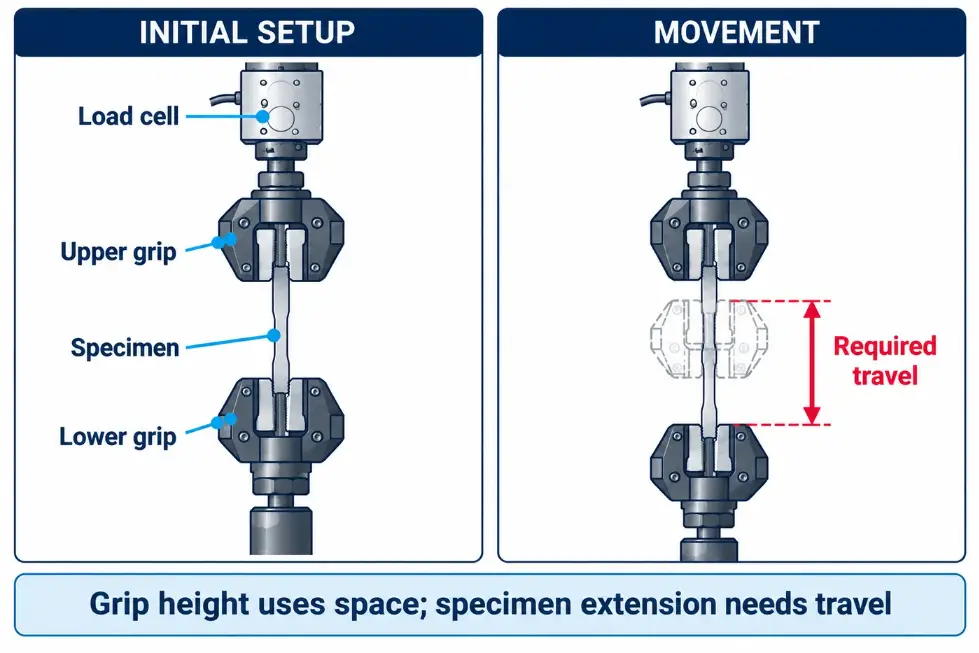
| DR-L201-8 fabric tensile route | A compatible mechanical test can be specified when strength measurement is part of the plan. | Define direction, grips, force interval and before/after conditioning; retained strength cannot be inferred from colour alone. |
An ISO 105-B02 lightfastness request and a weathering request must not receive an assumed identical configuration. If the requirement includes wetting or a different exposure option, have the complete setup reviewed against that requirement. Do not infer method coverage from the word “xenon”.
For a material laboratory building only lightfastness capacity, start with the exposure system and its evaluation route. Add mechanical instruments only where the customer specification requires those independent results.
07 / APPLICATION GUIDE
Define a Complete Exposure Package
Exposure and throughput
List specimen dimensions, number per run, mounting, reference specimens and the required exposure controls.
Consumables and assessment
Identify lamps, filters, masks, references and the actual colour-evaluation route; separate included items from options.
Installation and acceptance
Define utilities, cooling/ventilation, any water requirements, data records and the agreed demonstration or verification evidence.
Ask for a sample equipment log and a description of the assessment records that accompany the test. Review the proposed method configuration before ordering, rather than receiving a general outdoor-weathering claim after delivery.
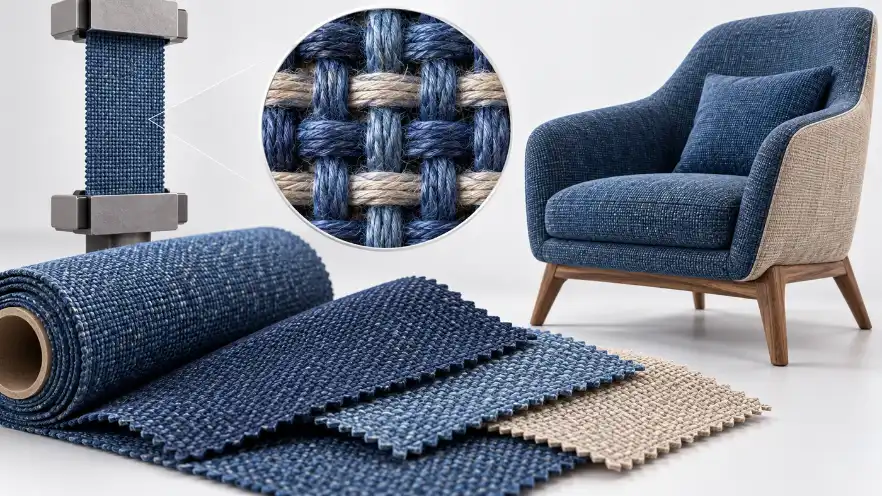
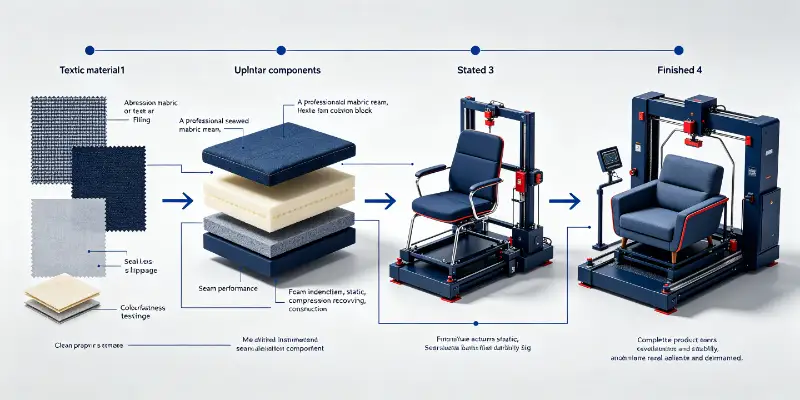
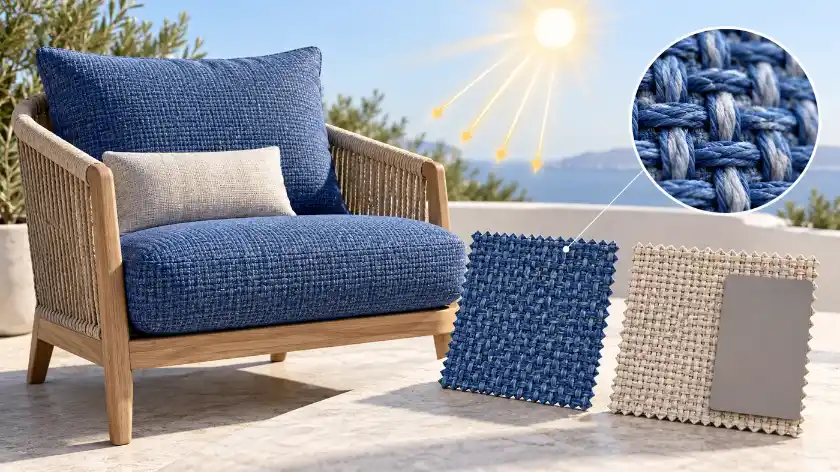
The outdoor chair illustration shows an application only. It is not a DERUI customer installation, test result or evidence of material lifetime. Actual apparatus photographs and ordered configuration records serve a different purpose and should be supplied as equipment evidence.
08 / APPLICATION GUIDE
Start with the Fabric Requirement
Does ordering DR-H301 include every xenon method?
No such assumption should be made. The method and option, filters, control and specimen arrangement must be defined in the order.
Is colour-evaluation equipment part of every quotation?
Do not assume so. Specify reference materials and any viewing or instrumental assessment equipment, showing what is supplied and what the laboratory provides.
Can the result promise several years outdoors?
Not from exposure time alone. Laboratory exposure and material assessment do not directly establish a fixed outdoor lifetime.
EQUIPMENT CONFIGURATION & QUOTATION
Request a DR-H301 Application Review
Send the woven fabric, customer method or appearance concern, specimen size and batch quantity. Ask for the exposure, reference and assessment package to be defined in the quotation.