

Corrugated Box Conditioning and Compression Test Equipment
Date: October 21, 2026 Categories: Paper, Board & Corrugated Testing Solutions Views: 1086
APPLICATION FOCUS
Two Instruments, One Carton Workflow
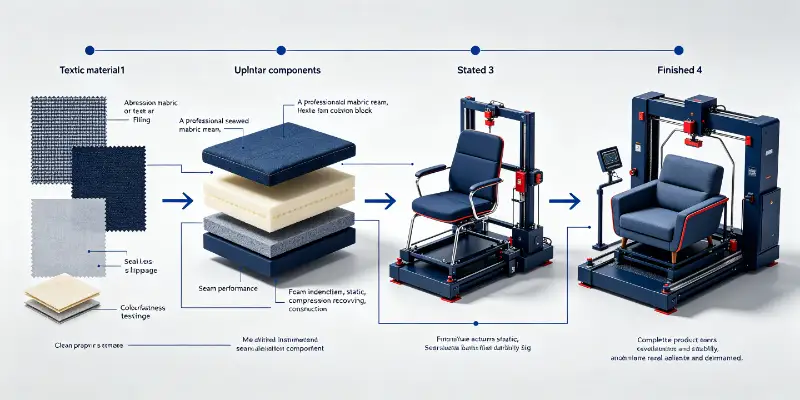
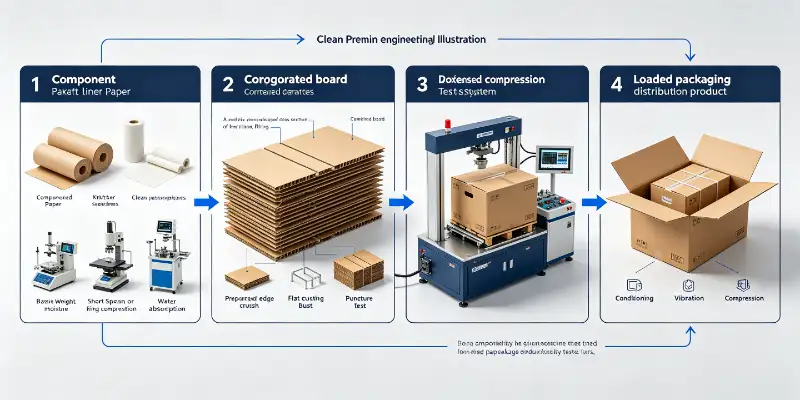
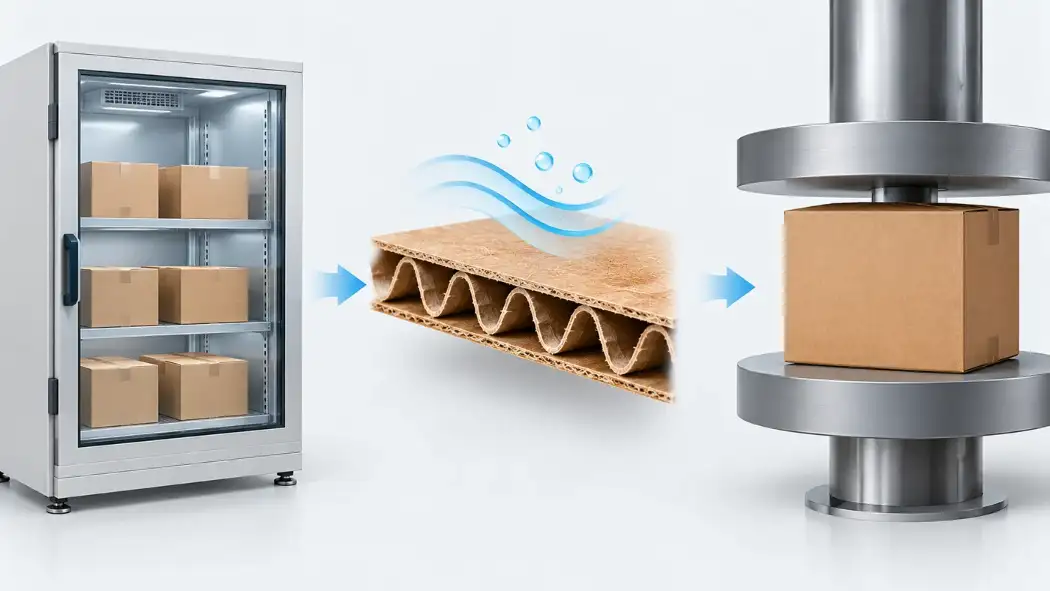
Carton plants, packaging-development teams and in-house laboratories may need to condition corrugated specimens and then measure their compression response. The equipment decision involves both machines and the route between them: specimen size, loaded chamber arrangement, transfer timing and the required mechanical test.
DERUI’s DR-H201 temperature-and-humidity chamber and DR-B211 box-compression family provide equipment routes to review for this workflow. They are separate systems. This application does not imply that compression occurs inside the chamber or that a generic chamber setting certifies packaging for humid storage.
02 / APPLICATION GUIDE
Define the Storage Question
Routine comparison
Are incoming or production cartons being compared under the same specified reference conditions?
Distribution exposure
Is a particular storage or transport atmosphere part of the agreed evaluation?
Complaint investigation
Do report differences or field observations suggest that specimen history needs to be examined?
Record the carton construction, dimensions, joint, closure and any contents required by the method. Distinguish exposure to humid air from direct wetting, condensation or liquid contamination. Those situations are not equivalent and should not be combined under an undefined “humidity test”.
03 / APPLICATION GUIDE
Keep the Test Scopes Separate
| Scope | What it addresses | Equipment implication |
|---|---|---|
| Standard-atmosphere comparison | A defined reference condition for comparable measurement. | Use the conditioning practice required by the governing compression method. |
| Special conditioning | A selected atmosphere representing an evaluation need. | Specify temperature, RH, duration or equilibrium criterion, and loaded chamber arrangement. |
| Compression after conditioning | A mechanical test following a controlled exposure. | Define transfer, waiting period and test atmosphere; the specimen can change after removal. |
| Compression during exposure | Mechanical behaviour measured within controlled conditions. | Requires a compatible integrated arrangement; separate machines do not automatically provide it. |
ASTM D4332 covers conditioning environments for packages and components and points to ASTM D685 for standard-atmosphere box-compression quantification. Select the relevant practice through the actual test specification. Do not replace it with a generic chamber setting from an article.
04 / APPLICATION GUIDE
Design a Controlled Comparison
01Define the decision
State whether the work is a reference QC comparison, a customer exposure or a study of environmental sensitivity.
02Hold relevant variables consistent
Use comparable carton construction and preparation. Identify sample count, method and conditioning requirements before testing.
03Document the loaded exposure
Record atmosphere, specimen arrangement and the basis for conditioning completion. A chamber display alone does not document the full specimen history.
04Control transfer and testing
Record removal time, transfer protection where specified, waiting time and the test environment. Keep deviations visible.
If a study compares several atmospheres, identify which specimens belong to each condition. Do not merge results into one average that hides the comparison. The study design and its interpretation should be approved by the responsible laboratory or customer.
05 / APPLICATION GUIDE
Interpret the Difference Carefully
Report the compression result together with conditioning, test atmosphere and failure observations. If reporting a relative change against a reference group, state the reference, sample counts and calculation. Avoid attributing every change to one environmental variable when construction or preparation also changed.
Short-duration compression capacity and long-duration stacking behaviour are not the same measurement. A warehouse problem involving sustained load may require a separate creep or constant-load assessment. A peak-force result alone does not determine a safe storage height or duration.
The application also does not justify one universal humidity correction factor. Board furnish, carton geometry, loading and environmental history can differ. Use the agreed specification and representative evidence for the decision being made.
06 / APPLICATION GUIDE
Match the Two Equipment Routes
| DERUI route | Published starting information | What the carton requires |
|---|---|---|
| DR-H201 conditioning chamber | The live product page lists programmable temperature / relative-humidity exposure and a touchscreen controller. | Review each requested temperature/RH point, the loaded specimen arrangement, airflow space and conditioning completion requirement. Separate headline ranges do not define every attainable combination. |
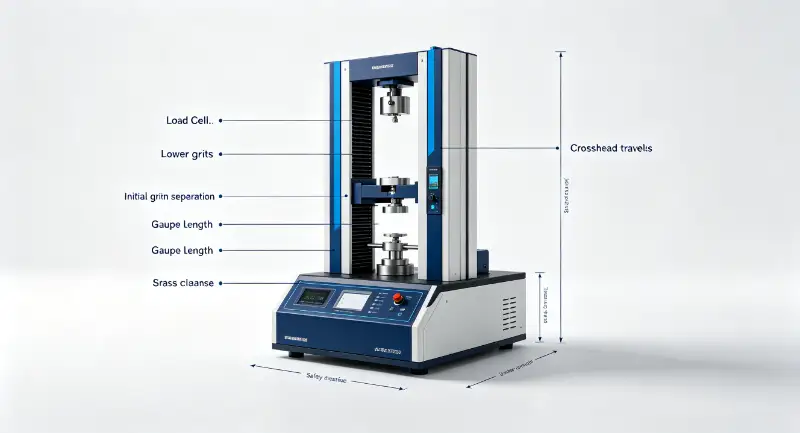
| DR-B211 compression family | The page lists DR-B211-900 at 10 kN, DR-B211-1200 at 20 kN and DR-B211-1500 at 50 kN. | Select from the carton footprint, height, deformation and reportable force interval together; confirm platen arrangement and the ordered test method. |
| DR-H202 walk-in route | A larger-workspace architecture for a different load and access requirement. | Review the complete loaded volume, door access, circulation, floor loading and the actual exposure profile rather than assuming the largest unit is always needed. |
A small material specimen and a full-sized closed carton can require different conditioning arrangements. Send a specimen drawing or photograph and a layout of the intended batch. Keep material-level checks separate from complete-box compression.
These product routes are for equipment selection. Whether a particular carton, conditioning step and compression method are supported belongs in the technical agreement and acceptance scope, not in an unqualified application claim.
07 / APPLICATION GUIDE
Specify the Interface Between Machines
Physical fit
Record carton L × W × H, quantity, loaded chamber layout, door access and the compression platen / clear-height requirement.
Environmental history
Define exposure conditions and record transfer, waiting time and mechanical-test atmosphere.
Results and acceptance
Specify the environmental log, compression record, specimen identity and verification or demonstration documents needed.
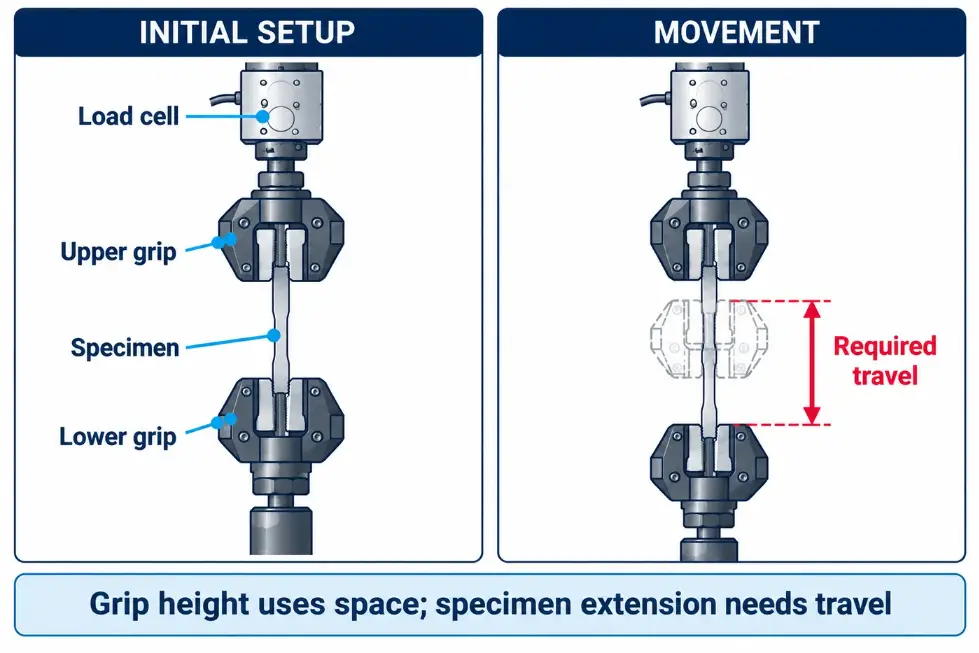
For example, a carton that fits through a chamber door may still obstruct airflow when several specimens are loaded. Equally, a carton that fits between compression platens may not have enough remaining travel for the specified test. Review both loaded arrangements, not only two empty internal dimensions.
If the requirement is compression while temperature and humidity are controlled, state it explicitly. That requires a separately reviewed integrated arrangement; it is not supplied merely by purchasing a DR-H201 and a DR-B211.
08 / APPLICATION GUIDE
Request a Coordinated Equipment Scope
Do the chamber and tester need to be bought as one integrated machine?
Not for every workflow. Conditioning followed by a separately controlled test is different from testing inside an environmental enclosure. Specify which is required.
Can the force option be chosen from carton weight?
Carton mass alone does not define the required compression load. Send the method, expected result or an existing report as well as dimensions.
Does this setup predict a safe stacking height?
Not by itself. The result belongs to the defined mechanical test and conditioning. Storage duration, sustained loading and route-specific assessment may need additional work.
EQUIPMENT CONFIGURATION & QUOTATION
Send the Carton and Test Profile
Share carton dimensions, batch size, conditioning steps and the compression requirement. Ask for chamber size, tester configuration and the transfer workflow in one equipment proposal.