
How to Build a Textile and Furniture Testing Plan from Fabric to Finished Product
Date: September 7, 2026 Categories: Applications、Textile & Furniture Testing Solutions Views: 9043
How to Build a Textile and Furniture Testing Plan from Fabric to Finished Product
A fabric result does not describe the complete chair, sofa, mattress, table or cabinet. Build the test plan in layers: material, seam and upholstery component, furniture structure, then finished-product safety and durability. This keeps each result tied to the decision it can actually support.
Start with the finished use—not the equipment catalogue
Upholstery in a private home, hotel, healthcare space, vehicle or public building may face different wear, cleaning, light, moisture, fire, strength and durability expectations. Furniture also changes by product type: seating, tables, storage units, beds and mattresses use different load points, motions, stability checks and failure criteria.
Identify the user, environment, expected service and requirement owner before selecting a test. Then separate properties belonging to the covering material from those belonging to seams, foam, frames, mechanisms and the assembled product.
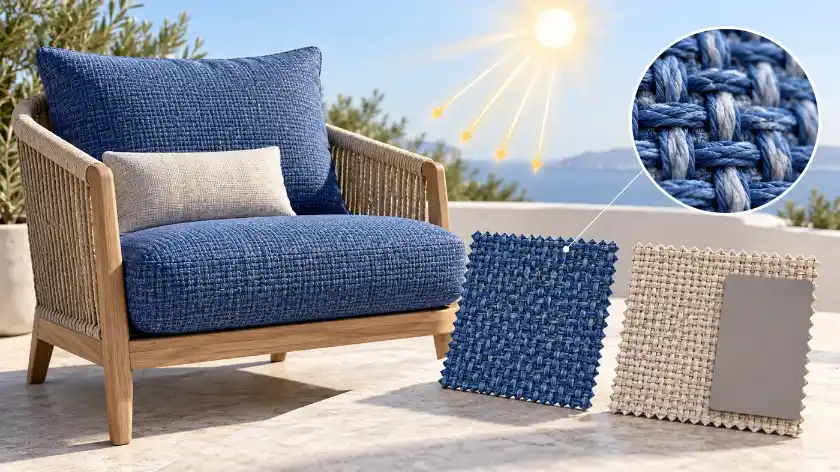
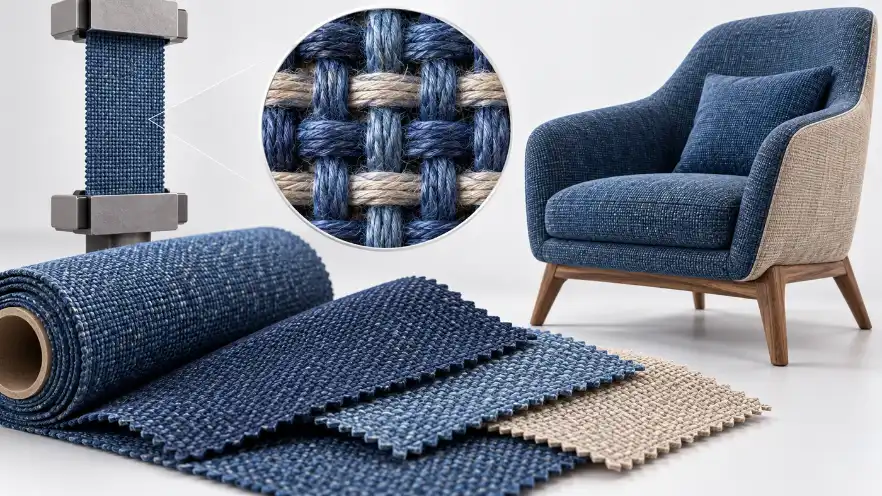
Fabric performance
Abrasion, pilling, tensile, tear, seam slippage, dimensional change, colourfastness, air or water-related properties as required.
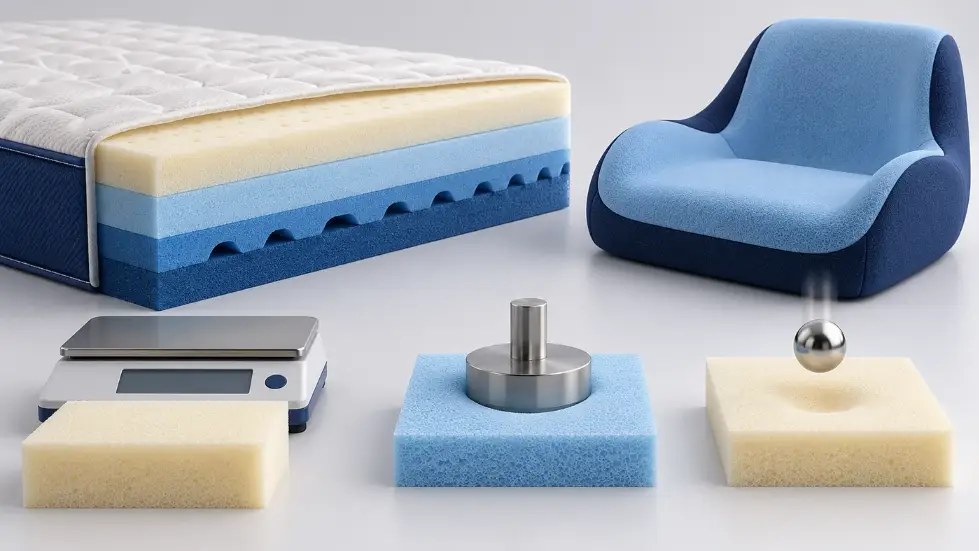
Seams and soft layers
Sewn assemblies, cover-to-foam interaction, foam indentation, recovery, fatigue, rebound and component behaviour.
Frames and mechanisms
Static load, impact, repeated loading, joint performance, castors, drawers, hinges, recliners and other defined components.
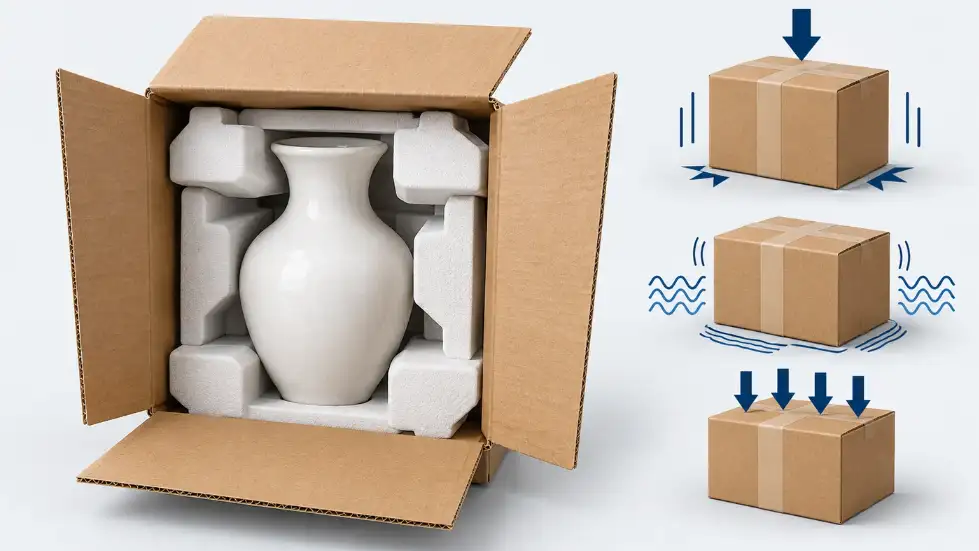
Finished-use evaluation
Stability, strength, durability, safety, function and inspection of the production-intent furniture configuration.
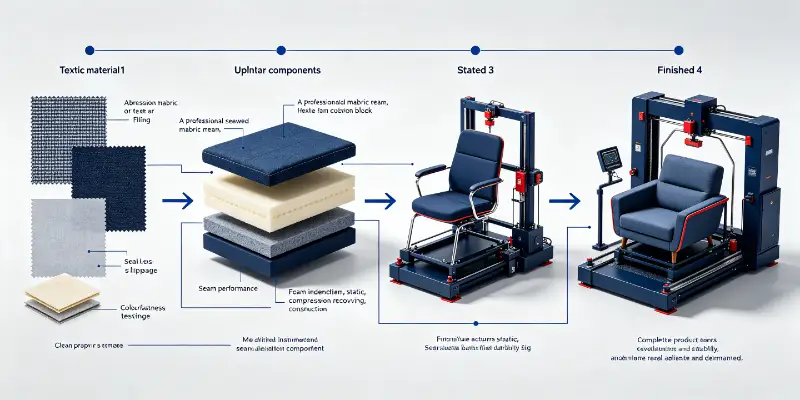
Seven steps for building the test plan
01Define product, user and environment
Record whether the product is residential, commercial, hospitality, healthcare, educational, outdoor, automotive or another application. Include user group, maintenance, exposure, expected frequency of use and any customer, retailer or regulatory requirement.
02Separate material, component and finished-product decisions
State whether the test selects a fabric, releases a textile lot, verifies a seam or foam system, checks a frame or mechanism, or evaluates the assembled product. Do not use a material result as automatic proof of furniture performance.
03Confirm the current method and revision
Identify the applicable ISO, ASTM, EN, BIFMA, BS, customer or internal procedure and its current edition. Record product category, method option, load, motion, cycles, conditioning and inspection requirements rather than relying on the standard number alone.
04Define representative specimens and directions
For textiles, record construction, coating, backing, colourway, warp/weft or machine/cross direction, specimen size and preparation. For furniture, identify production-intent materials, fasteners, joints, cushions, mechanisms, adjustments and the worst-case configuration.
05Match fixtures, loads and movement
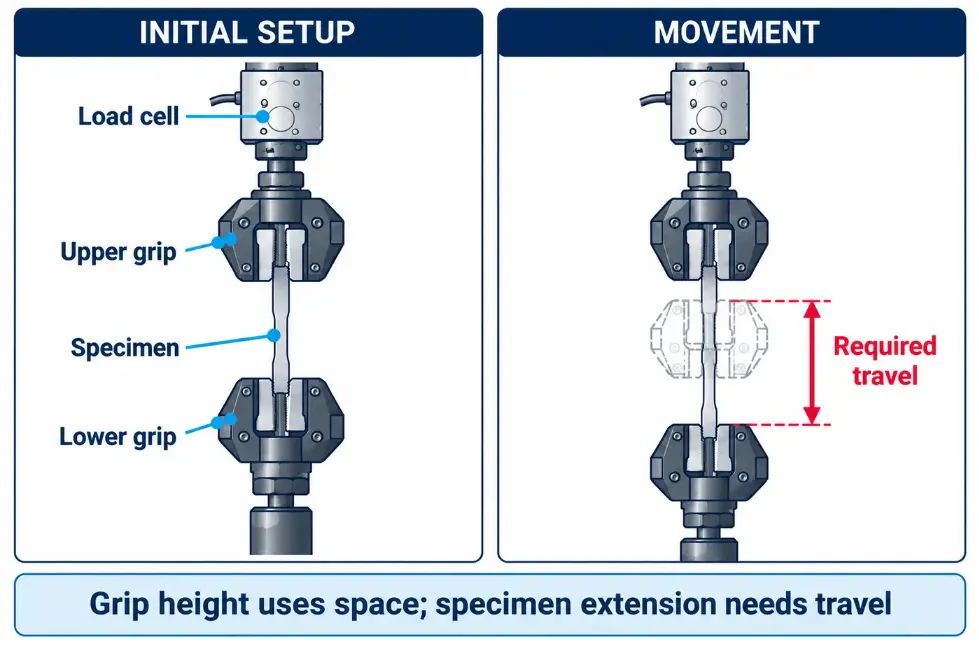
Confirm grips, abrasion heads, specimen holders, loading pads, impact bodies, support conditions, actuator travel, force, speed, frequency and cycle count. Furniture geometry and access often determine whether a standard frame or a dedicated rig is suitable.
06Set inspections and acceptance criteria before testing
Define fabric endpoint, yarn breakage, appearance grade, seam movement, deformation, looseness, fracture, instability, loss of function and other allowable changes. State inspection intervals, measurement tools and the person responsible for pass/fail decisions.
07Plan throughput, traceability and change control
Record specimens per batch, product families, fixture changes, conditioning time, operator tasks, raw data, photographs, report format and maintenance. Reassess the plan when suppliers, materials, dimensions, joints, mechanisms or intended markets change.
Match each result to the correct test level
| Question | Typical test level | Configuration factors |
|---|---|---|
| Will the upholstery surface resist wear or pilling? | Textile specimen | Current method, abrasion/pilling motion, pressure, abradant, endpoint and visual assessment |
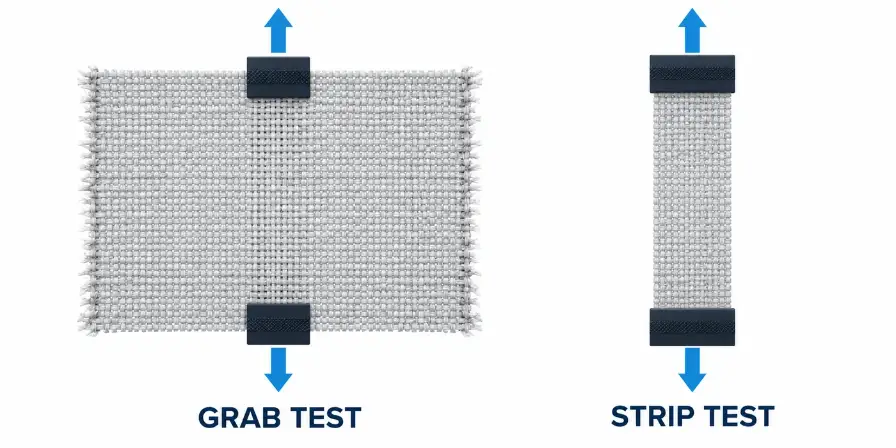
| Will the fabric or seam resist applied force? | Textile or sewn assembly | Specimen direction, grips, gauge length, speed, seam preparation and result definition |
| Will the cushion retain comfort and thickness? | Foam/upholstery component | Indenter, support, preload, deflection, cycles, conditioning and recovery interval |
| Will a chair, table or cabinet withstand repeated use? | Finished furniture or structural subassembly | Load points, actuator motion, restraint, frequency, cycles, adjustments and inspections |
| Will the product remain stable? | Finished furniture | Product configuration, floor condition, applied load/force, drawers or doors and worst-case position |
| Will colour or appearance remain acceptable? | Textile/finish specimen or component | Light source, exposure, rubbing, cleaning, evaluation scale and reference specimens |
Do you need textile instruments, a universal frame or a furniture test rig?
Dedicated textile instruments are generally appropriate when the method defines a specific rubbing path, specimen holder, abradant, pilling action, light exposure, laundering or visual evaluation workflow. A configurable universal testing machine may support tensile, tear, seam and compression methods when its force range, travel, speed, grips and measurement match the procedure.
Finished furniture usually requires dedicated or modular rigs that place loads and motions at defined positions on a three-dimensional product. Seat-and-back durability, arm loading, table loading, drawer cycling, castor testing, mattress rolling and stability checks should not be reduced to a generic maximum-force specification.
For mixed laboratories, group confirmed procedures by shared fixture and motion. This reveals where one configurable platform is efficient and where a dedicated station reduces changeover or improves repeatability.
Information required for a comparable equipment proposal
- Product type, intended use and destination market
- Material/component/finished-product test scope
- Current method, revision and customer deviations
- Specimen drawing, direction, preparation and conditioning
- Furniture dimensions, mass, adjustments and loading locations
- Required force, travel, speed, impact, cycles and fixtures
- Inspection criteria, photographs, calculations and raw data
- Daily workload, changeover, operators and reporting
- Destination country, laboratory space, floor, power and compressed air
Send the same requirement set to each equipment supplier so included fixtures, usable range, controls, installation and exclusions can be compared fairly.
Connect fabric tests with finished-furniture requirements
Send the current procedures, specimen or product dimensions, load and cycle requirements, throughput and site conditions. DERUI can organize the requirement into textile instruments, configurable material testing, upholstery systems and furniture durability rigs.
Textile and Furniture Testing FAQs
Does a high Martindale abrasion result guarantee durable furniture?
No. It describes a fabric's response under a defined abrasion method and endpoint. Furniture durability also depends on seams, foam, support, frame, joints, mechanisms, construction, use and maintenance.
Can one universal testing machine cover every textile test?
No. A suitable UTM can support confirmed tensile, tear, seam or compression methods with the correct range and fixtures. Abrasion, pilling, colourfastness, laundering, flammability and other specialized procedures require different apparatus.
Should upholstery fabric and the completed chair be tested separately?
Usually they answer different questions. Fabric tests support material selection and quality control; component and finished-chair tests evaluate the assembled system under the loads, motions and acceptance criteria required by the governing procedure.
What information is most important when selecting a furniture test rig?
Provide the product category and dimensions, current procedure, load positions, force or mass, travel, motion, frequency, cycles, restraint, inspection criteria, throughput and available laboratory space.