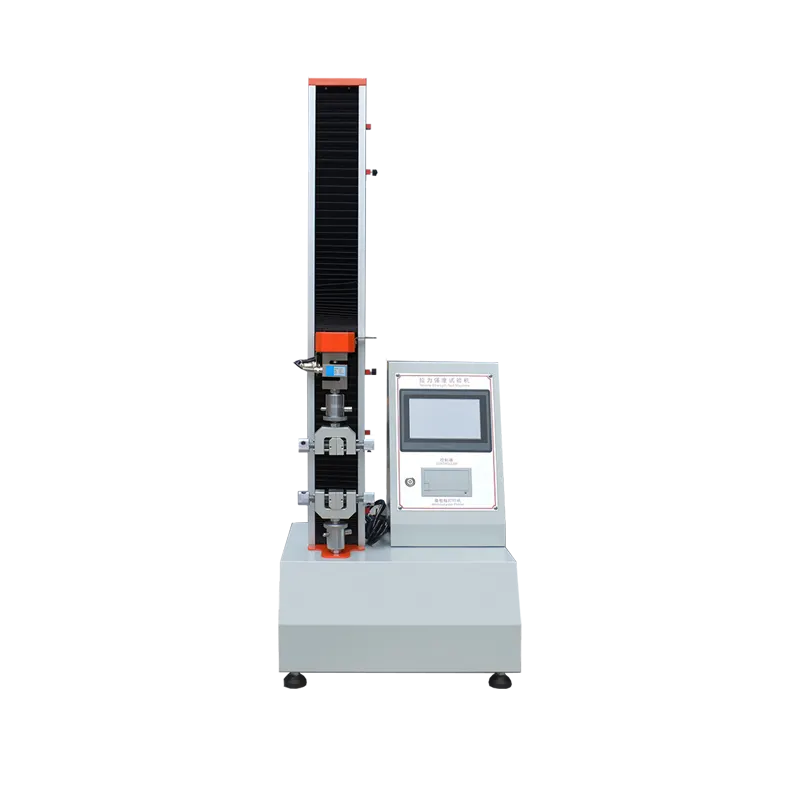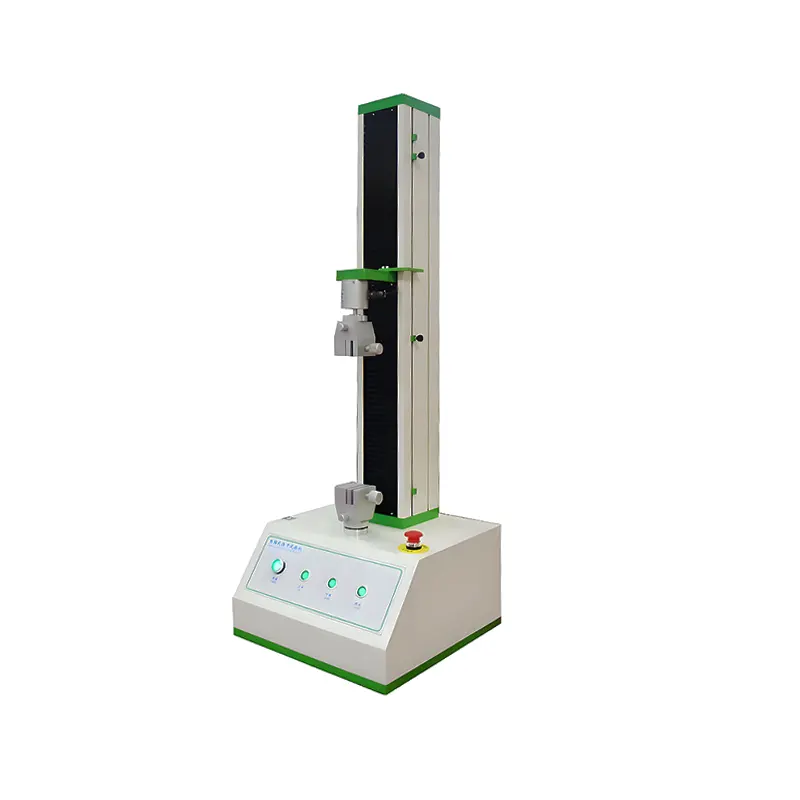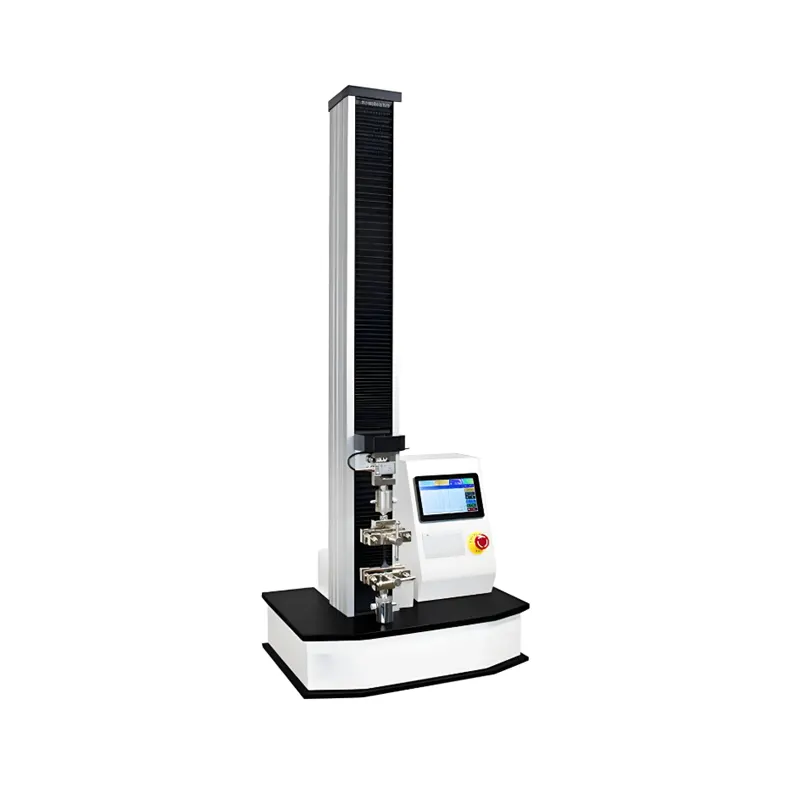
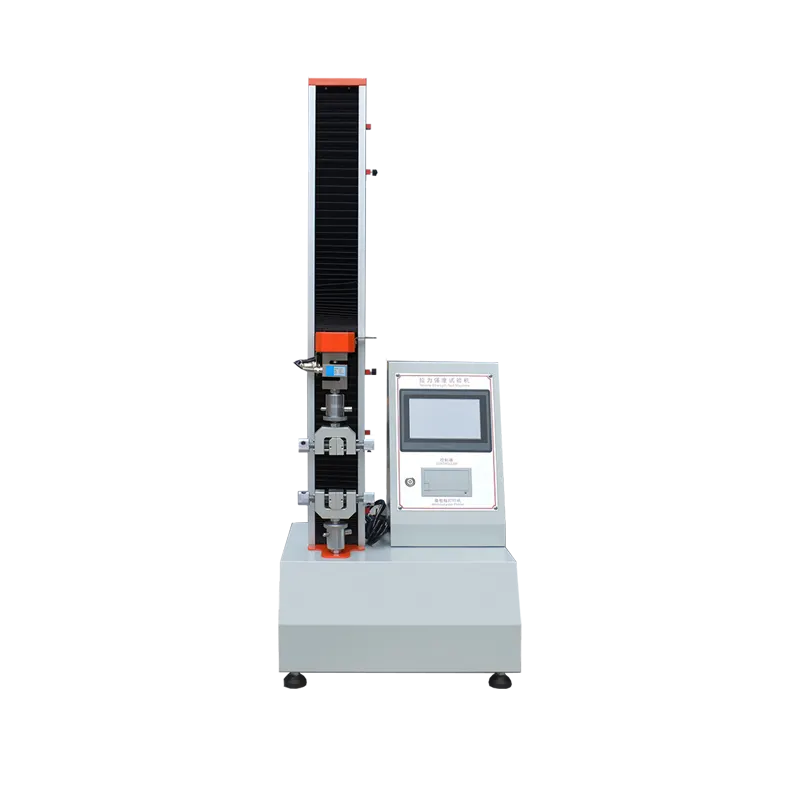



Electronic Fabric Tensile Tester (CRE Principle)
The DERUI DR-L201-8 Electronic Fabric Tensile Tester delivers laboratory-grade breaking force, tear resistance, seam slippage, and elongation measurements from 0.5 kN to 5 kN (500 N – 5,000 N). Operating under the strict Constant Rate of Extension (CRE) principle, it ensures exact compliance with major U.S. and international standards including ASTM D5034 (Grab Test), ASTM D5035 (Strip Test), ISO 13934-1/2, and GB/T 3923.1.

Is the DR-L201-8 the Right Textile Tester?
Material construction, yarn elasticity, expected breaking force, and test protocols determine whether you require a single-column CRE textile tester or a heavy-duty frame.
Potentially Suitable
- Woven & Non-Woven Fabrics: ASTM D5034 Grab and ASTM D5035 Strip tests for apparel, home furnishings, and industrial filter cloth.
- Yarns, Cords & Threads: Single-strand yarn tensile strength, knot strength, and elongation testing up to 5,000 N.
- Medical & Protective Textiles: Surgical gown tear resistance, protective hazmat suit tensile strength, and bandage elasticity.
- Automotive Interior Fabrics: High-repeatability tensile and seam slippage tests for car seat covers, airbags, and headliners.
- Geotextiles & Coated Fabrics: Wide-width tensile testing and puncture resistance under ASTM D4595 and ISO 10319.
Select Another System When
- Test force exceeds 10 kN or 20 kN for heavy structural seatbelts or steel tire cord (select our floor-standing UTM).
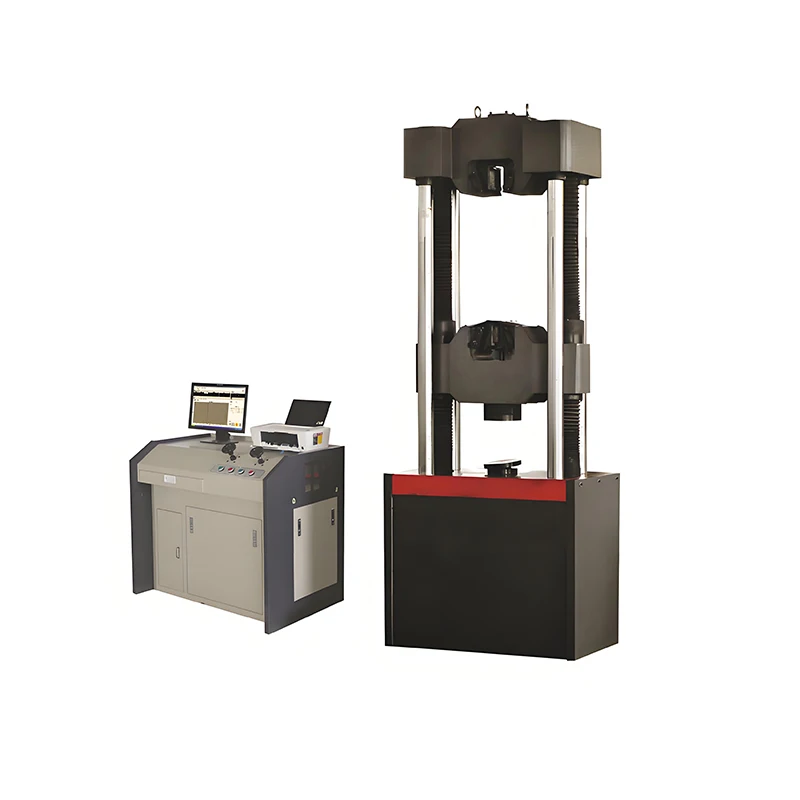
- Testing high-strength steel rebar or concrete specimens (select our 5000KN hydraulic UTM series).
- The required method is pendulum impact tear energy under Elmendorf ASTM D1424 (select our Elmendorf Tear Tester).
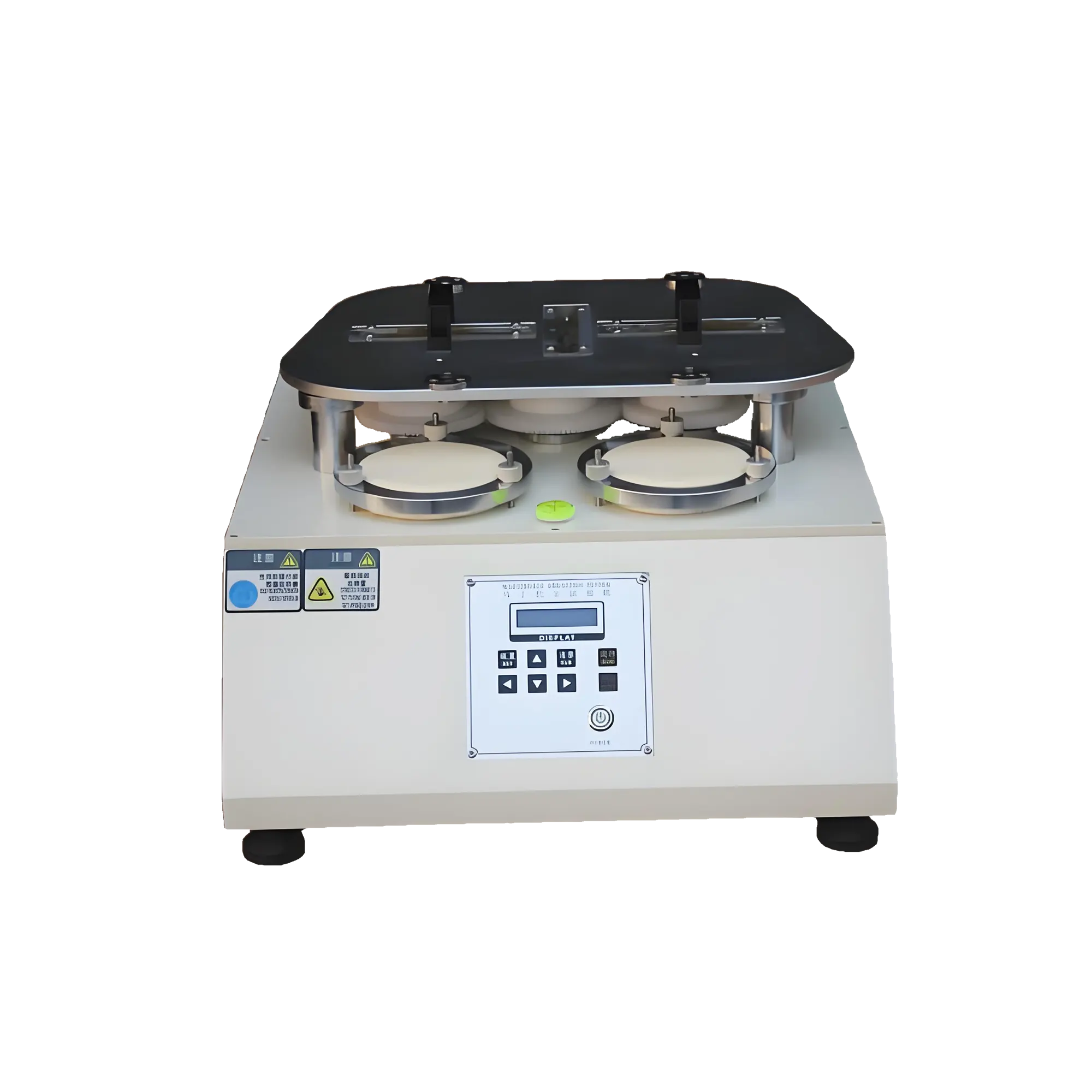
- Testing pure multi-directional fabric abrasion and pilling (select our Martindale Abrasion Tester).
- Evaluating fabric air permeability or water vapor transmission properties.
Six Steps to Zero-Slippage Fabric Tensile Testing
The test takes only seconds to execute, but precise laboratory conditioning, specimen cutting, and pneumatic jaw pressure determine whether your breaking data is valid.
Sample Conditioning
Condition fabric swatches for 24+ hours in standard textile atmosphere (21 ± 1°C, 65 ± 2% RH) per ASTM D1776 prior to cutting.
Precision Specimen Cut
Cut warp and weft samples using standard templates. For ASTM D5035 strip tests, fray long edges down to the precise 25mm or 50mm width.
Pneumatic Clamping
Align specimen vertically between the pneumatic wave jaws. Regulate clamping air pressure (0.4–0.6 MPa) to prevent clamp-edge jaw breaks.
CRE Servo Pacing
Initiate test. The AC servo motor pulls at a constant rate of extension (e.g. 300 mm/min) with zero mechanical gear backlash.
Live Curve Capture
Software samples load and deformation at 1000 Hz, plotting real-time Force-Elongation and Stress-Strain curves to detect initial thread break.
Statistical Export
Upon rupture, the crosshead resets automatically. Software records peak breaking force (N), elongation (%), and exports to Excel/LIMS.
Grab Test vs. Strip Test: Complete Standard Scope
Different textile standards simulate distinct in-service stresses. Derui DR-L201-8 comes pre-loaded with international testing templates for instant laboratory compliance.
Grab Test Method for Woven Fabrics
The universal standard across North America. Clamps the center 25×25 mm portion of a 100 mm wide sample, evaluating fabric strength including lateral yarn support. Ideal for apparel fabrics.
Strip Test Method (Raveled & Cut Strip)
Tests the entire width of a 25 mm or 50 mm fabric strip. Eliminates edge support effects to measure pure longitudinal tensile resistance in industrial and coated textiles.
International Strip & Grab Tensile Specifications
Global standard for textile export compliance. Part 1 defines the maximum force using the strip method; Part 2 defines the grab method for cross-border QA verification.
Tongue & Trapezoid Tear Resistance Testing
Evaluates tear propagation strength on woven and non-woven fabrics using tongue or trapezoid geometry, identifying snagging and tear vulnerability.
CRE Principle Compliance: Both ASTM and ISO strictly specify Constant Rate of Extension (CRE) machines. The Derui DR-L201-8 utilizes digital servo-drive timing to eliminate the inertia errors common in older CRT (pendulum) or CRL testers.
Eight Inputs for a Fabric Tensile Tester Review
Providing these material and laboratory specifications ensures we configure the optimal load cell sensitivity, jaw surfaces, and software templates.
Why Choose Derui for Your Textile Testing Laboratory
Derui testing instruments deliver the accuracy and compliance of premium European/U.S. brands at approximately 25% lower Total Cost of Ownership (TCO).
| Evaluation Feature | Derui DR-L201-8 Fabric Tensile Tester | Traditional Western Instrument Brands |
|---|---|---|
| Direct Purchase Cost | Factory-direct pricing reduces equipment acquisition cost by 25%–35% | High dealer markups and brand premium pricing |
| Manufacturing Lead Time | 15 to 20 days standard dispatch with pre-calibrated setup | 10 to 16 weeks standard order fulfillment |
| Clamping Versatility | Pneumatic wave grips with interchangeable rubber/steel inserts included | Pneumatic fixtures sold separately as expensive optional add-ons |
| Software & Standard Updates | Full-featured textile software with lifetime free template updates | Tiered annual license renewals and paid method modules |
| Proven Industry Adoption | Deployed across major apparel mills in North Carolina, Texas, and Asia | Established brand with high recurring maintenance service costs |
Technical Specifications: DR-L201-8 Textile Tensile Tester
High-resolution load cell accuracy, wide speed range, and versatile specimen clamping geometry.
| Specification Parameter | Engineering Details & Range |
|---|---|
| Model Number | DR-L201-8 |
| Test Force Capacity | 0.5 kN to 5 kN (500 N – 5,000 N / 50 kg – 500 kg) |
| Force Measurement Accuracy | Class 0.5 (±0.5% of indicated value from 1% to 100% FS) |
| Force Resolution | 1/300,000 with 24-bit high-speed A/D converter |
| Test Speed Range | 10 – 500 mm/min (stepless digital speed regulation) |
| Speed Accuracy | Better than ±1.0% |
| Effective Tensile Stroke | 800 mm (excluding grips; supports up to 500% elongation) |
| Displacement Resolution | 0.001 mm via optical rotary encoder |
| Clamping Mechanism | Pneumatic wave action with foot pedal (manual screw grips optional) |
| Clamp Dimensions | 25×25 mm (Grab upper), 25×50 mm (Grab lower), 25×75 mm (Strip) |
| Drive System | Panasonic AC servo motor + precision preloaded zero-backlash ball screw |
| Safety Protections | Overload limit (software + hardware), crosshead travel limiters, emergency stop |
| Data Interface | High-speed USB 2.0 / RS232 communication to Windows PC |
| Machine Dimensions & Weight | 620 × 480 × 1280 mm; Net Weight: approx. 65 kg (143 lbs) |
| Power Supply | AC 110V / 220V, 50/60 Hz single phase (300 W) |
Fabric Tensile Testing Machine FAQ
Direct technical answers for standard compliance, grip selection, and laboratory calibration.
What is the difference between ASTM D5034 (Grab) and ASTM D5035 (Strip)?
ASTM D5034 (Grab Test) clamps only the center 25 mm of a 100 mm wide fabric sample. It evaluates effective fabric strength in garment form, where adjacent un-clamped yarns provide lateral reinforcement. ASTM D5035 (Strip Test) clamps the full width of a 25 mm or 50 mm raveled strip, isolating longitudinal yarn breaking strength without edge yarn support.
How does the machine prevent fabric slippage and clamp-line jaw breaks?
The DR-L201-8 features quick-acting pneumatic wave clamps. Pneumatic pressure provides continuous clamping force that automatically compensates as fabric thickness compresses under tension. Specially contoured wave ridges distribute peak clamping stress over a wider contact area, preventing premature clamp-edge cuts.
Can this machine test elastic and high-stretch fabrics?
Yes. With an effective crosshead travel of 800 mm and high-resolution displacement encoding, the tester easily accommodates fabrics with elongation exceeding 300% to 500% (such as swimwear, sportswear, and spandex blends). For extreme stretch elastomeric bands, an extended column frame is available.
Does this tester meet Constant Rate of Extension (CRE) specifications?
Yes. The DR-L201-8 strictly adheres to the CRE principle required by ASTM and ISO. Driven by a high-precision AC servo motor and preloaded ball screws, the crosshead maintains uniform speed (±1%) under varying load conditions, completely eliminating the inertial lag of older pendulum or mechanical systems.
What test results does the software calculate automatically?
The Windows-based software automatically computes Breaking Force (N, lbf, kgf), Elongation at Break (%), Tensile Stress, Modulus of Elasticity, Average Breaking Force, Coefficient of Variation (CV%), and seam slippage values, with batch data export to Excel and laboratory LIMS systems.
How often does the machine require calibration?
In accordance with ISO 17025 and ASTM E4 recommendations, full load cell and displacement calibration should be performed annually. Derui provides traceable calibration weights, calibration software routines, and video operational manuals for straightforward verification.
Request a Fabric Tensile Tester Technical Proposal
Submit your fabric swatches, target testing standards (ASTM D5034/D5035/ISO), and expected force range. Our textile testing specialists will configure the optimal pneumatic jaw inserts, load cell capacity, and factory-direct pricing within 24 hours.
24-Hour Quotation: Complete technical datasheets & pricing
Free Specimen Grip Review: Custom pneumatic jaw recommendations
Traceable Calibration: ISO 17025 factory calibration included
15–20 Days Delivery: Fast international dispatch & video support