

Material testing equipment configured for your test method and specimen.

DERUI manufactures material testing equipment for quality control and R&D.
WhatsApp Consultation:+86 135 2795 8363

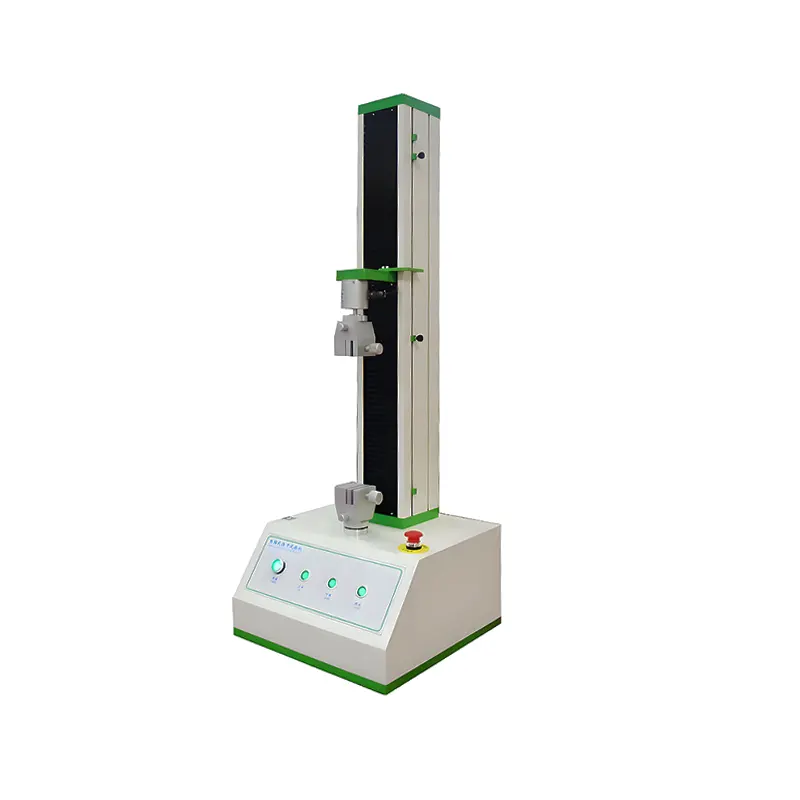
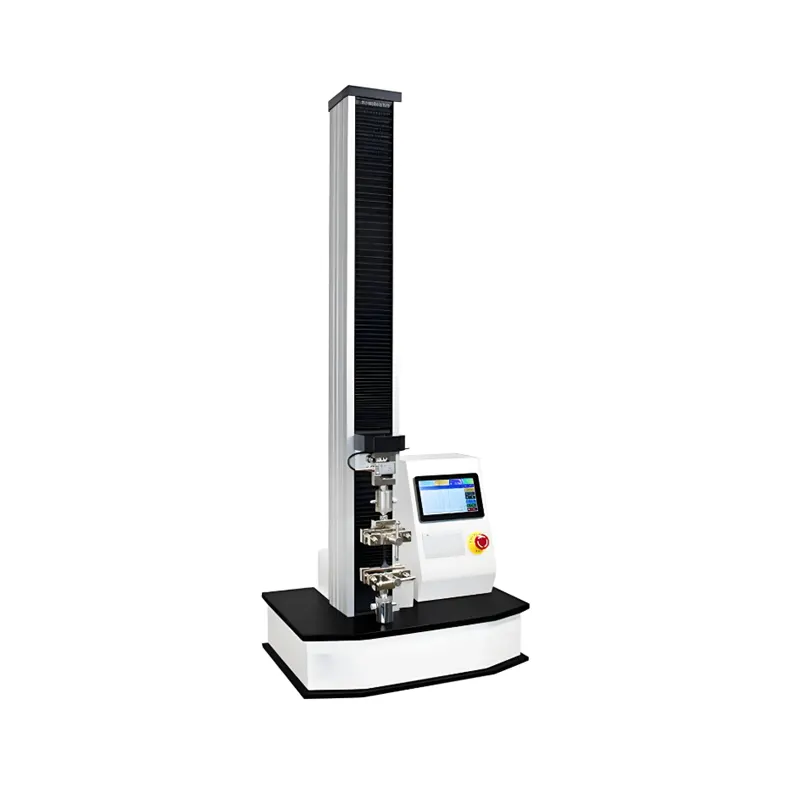
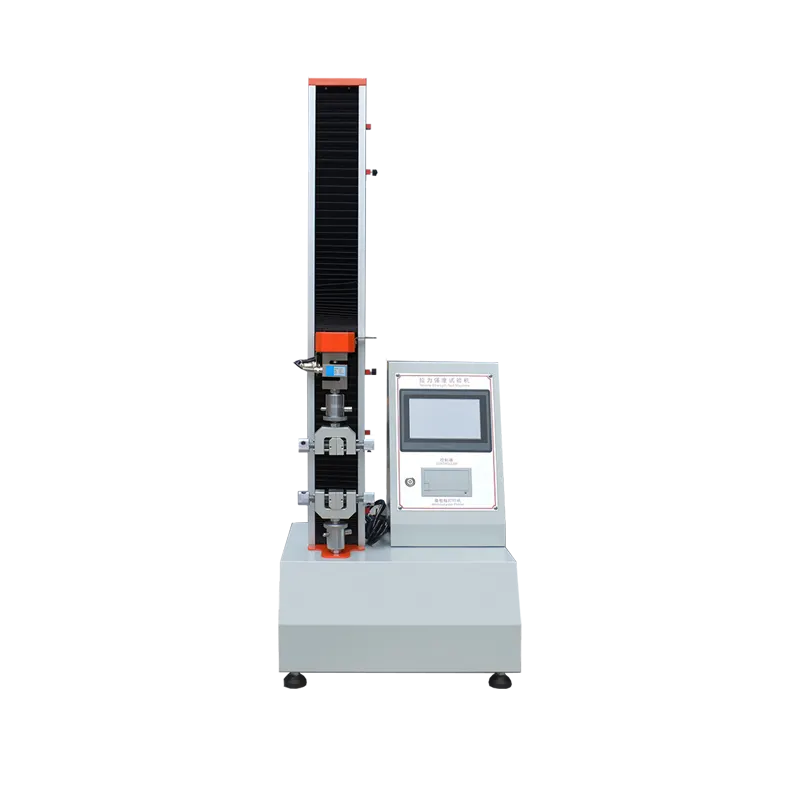
DR-L201-6 Desktop Tensile Testing Machine

High Precision Load Cells

Our Desktop Tensile Testing Machine features high-precision load cells to ensure accurate measurement of tensile strength.

Precision Testing

Robust Calibration

User-Friendly Interface

Safe and reliable
well-made
customization
Quality assurance
MessageWhatsApp
Hotline number +8615580327593
  • Product Details
  • Technical parameters
  • FAQ
  • Contact us
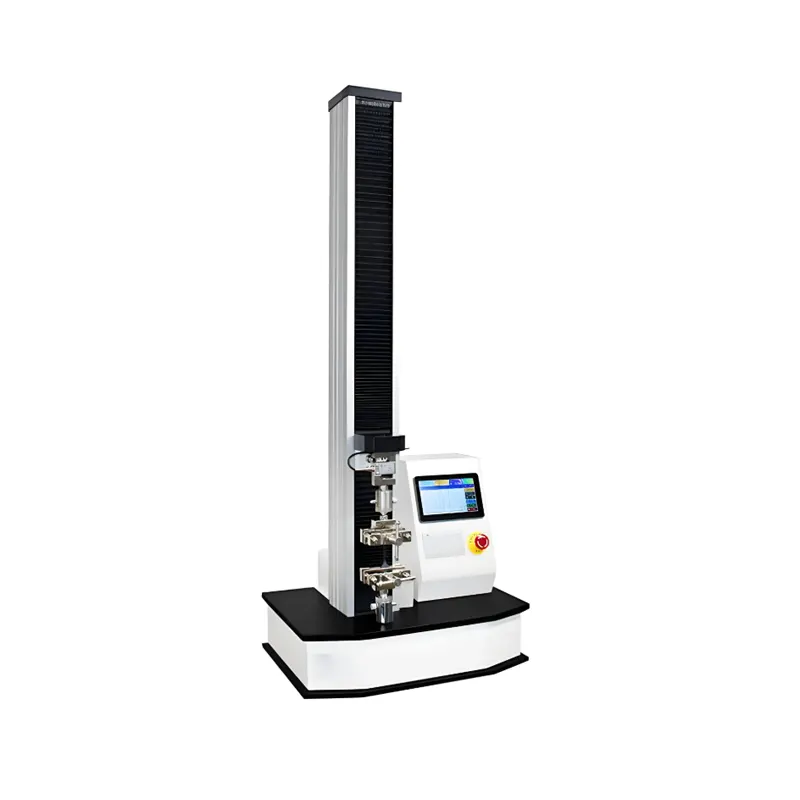
DERUI DR-L201-6 desktop tensile testing machine with 30 kg load cell
DR-L201-6 desktop testing machine. Confirm the ordered load cell, grips, usable space, result calculations and verification documents.
Compact 30 kg force-testing configuration

What Is the DR-L201-6
Desktop Tensile Testing Machine?

The DR-L201-6 is a compact electromechanical test system with a published 30 kg load-cell capacity. It applies controlled crosshead movement and records force and displacement for compatible low-load tensile, compression or component tests when the required grips, fixtures and software procedure are included.

Quick answer: select DR-L201-6 only when the specimen’s working and break forces fit the configured measurement range and the specimen, two fixtures and required movement fit within the published 400 mm vertical test space.

ModelDR-L201-6
Published capacity30 kg
Optional load cells listed5 kg / 10 kg
Vertical test space400 mm including fixture
Published speed0.1–300 mm/min
Published accuracy0.5% F.S.
One family, different search intent

Where DR-L201-6 Fits
in the Benchtop Range

The category page helps buyers compare compact systems. This product page answers whether the 30 kg configuration and 400 mm space suit one actual test. Similar frames do not make their sensors, fixtures or applications interchangeable.

DR-L201-6

Use this page for the published 30 kg desktop configuration and its actual specimen, fixture, speed and test-space review.

Benchtop category

Use for broad model comparison and selection by force, space, grips and measurement.

Compare the category →

Method-specific pages

Use tape, rubber or textile pages when those specimens require dedicated fixtures and procedures.

Choose by test objective →

Published space is not specimen travel

Will the Complete Test
Fit in 400 mm?

The published vertical test space includes the fixtures. Calculate the installed geometry before selecting the model; the remaining movement—not the headline dimension—is what the specimen can use.

Usable movement = 400 mm − upper fixture − lower fixture − starting specimen/grip separation
UPPER FIXTUREGrip, adapter and load-cell connection height
LOWER FIXTUREGrip, platen or application fixture height
SPECIMENOverall and gripping lengths at the start
MOVEMENTExtension or compression required by the procedure

Review another configuration when: long grips, tall compression fixtures, a long specimen or large extension leaves inadequate clearance; the expected force is outside the useful load-cell range; or a method needs direct strain measurement, environmental conditioning or control functions not confirmed for DR-L201-6.

Applications require the correct fixture

Potential DR-L201-6 Test Pathways

These are configuration pathways, not automatic method claims. Confirm the actual material, specimen, expected force, movement, fixture rating and required calculation before ordering.

Low-load tensile

Compatible films, small polymer specimens, light textiles, threads or components when the grip faces prevent slip and damage and the force fits the measurement range.

Component pull or separation

Small assemblies, connectors, tabs, closures or bonded parts when a purpose-built adapter aligns the force with the intended pull direction.

Compression or functional force

Small parts, springs, buttons or packaging components when suitable platens or probes fit the 400 mm space and the procedure uses supported control and results.

Fixture questions

Jaw opening · face material · clamping force · rated load · adapter height · alignment · specimen protection.

Measurement questions

Working force · break force · movement · speed · preload · direct strain need · calculations · report fields.

Configuration before quotation

Eight Inputs to Confirm
DR-L201-6

A model number alone cannot establish a valid test. Provide the complete requirement so the 30 kg/optional load cell, 400 mm space, fixtures, speed and software can be reviewed together.

Material or component

Name, construction, surface, flexibility and expected failure behaviour.

Current method

Standard, customer procedure or internal work instruction and revision.

Specimen drawing

Thickness, width, overall length, gripping section and starting gauge or spacing.

Force range

Typical working and maximum/break forces to compare 5, 10 and 30 kg options.

Movement and speed

Required crosshead rate, extension/compression and total travel before stop or break.

Grips or fixtures

Holding faces, jaw opening, adapter geometry, preload, alignment and rated load.

Required results

Peak, break, average, displacement, strength, strain or another defined calculation.

Workflow and documents

Throughput, reports, data export, verification, power, operator language and destination.

Fastest technical review: send the specimen photo/drawing, method, expected force, required movement and result fields together.

Request a DR-L201-6 Review →

Buyer and AI-ready answers

DR-L201-6 Desktop Tensile Tester FAQs

01What is the published capacity of DR-L201-6?
The current product page publishes a 30 kg load-cell capacity and lists 5 kg and 10 kg as optional. Select the measurement range from the expected working and break forces, not from the highest available number alone.
02Does 400 mm mean the specimen can extend 400 mm?
No. The published 400 mm vertical test space includes the fixtures. Subtract the installed upper and lower fixture heights and starting specimen/grip separation to estimate usable movement.
03Which tests can DR-L201-6 perform?
Potential pathways include compatible low-load tensile, compression and component force tests. Each test requires confirmed fixtures, force and movement ranges, speed, alignment, software procedure and result calculations.
04Is DR-L201-6 automatically compliant with ASTM or ISO methods?
No. Compatibility depends on the exact procedure, specimen, calibrated force range, test speed and space, grips or fixtures, strain/deflection measurement, software calculation and verification status.
05How is this page different from Benchtop Tensile Testers?
This page evaluates one 30 kg desktop configuration. The category page compares multiple compact systems and guides users toward a model using force, specimen, test space, fixtures and measurement requirements.
06When should another model be selected?
Review another system when force exceeds the suitable range, fixtures and specimen do not fit 400 mm, more movement is required, or the method needs direct strain measurement, environmental testing or control functions not confirmed here.

Confirm DR-L201-6 Against the Complete Test Setup

Send the specimen, method, force range, movement, fixtures and required results for review.
Discuss Your Desktop Test →

FacebookLinkedInXRedditWhatsApp
Item Description
Frame capacity 30kg
Load cell brand

Germany brand load cell for high accuracy
30kg (5,10kg are optional)

Load accuracy 0.5% F.S
Control system PC with windows 7 system
Motor Adjustable-speed motor with reduction box, high-precision mechanical ball screw rod
Force reading kgf, Ibf, N, KN, T etc
Vertical test space 400mm including fixture
Test speed 0.1~300mm/min (adjustable by PC)
Software TM 2101
Curves display Load- elongation, Elongation-time, Time-elongation, Stress-strain
Data display Max. force, speed, sample information, strength(Kpa, Mpa, N/mm, N/mm2) etc…
Safety features

E-Stop
Over-load protection
Upper and lower limit switches
Load sensor with automatic retreat

1、What is a Desktop Tensile Testing Machine?
A Desktop Tensile Testing Machine is a precision device used to measure the tensile strength of materials and perform material testing.

2、How does the Desktop Tensile Testing Machine work?
It applies a controlled amount of force to a material sample until it breaks, measuring the stretch and strength of the material.

3、What materials can be tested?
The Desktop Tensile Testing Machine can test plastics, metals, and composites, among other materials.

4、Is the testing process complicated?
No, the machine features a user-friendly interface, making the testing process straightforward for users at all skill levels.

5、What safety features are included?
Safety features include an emergency stop function and overload protection to ensure secure testing.

6、Can I customize load capacities?
Yes, the Desktop Tensile Testing Machine allows for customizable load ranges according to your specific testing needs.

7、What software is included with the machine?
Our machine comes with advanced software for real-time data analysis, providing valuable insights into the testing results.

8、Is there technical support available?
Yes, we offer comprehensive technical support and resources to assist you with any inquiries or troubleshooting.

9、How do I maintain the machine?
Regular calibration and cleaning, along with following safety protocols, are essential for maintaining the Desktop Tensile Testing Machine.

10、Where can I purchase the Desktop Tensile Testing Machine?
You can purchase our Desktop Tensile Testing Machine directly from our website or through authorized distributors.

WhatsAppWhatsApp
WhatsApp
MessageMessage

Send Inquiry