


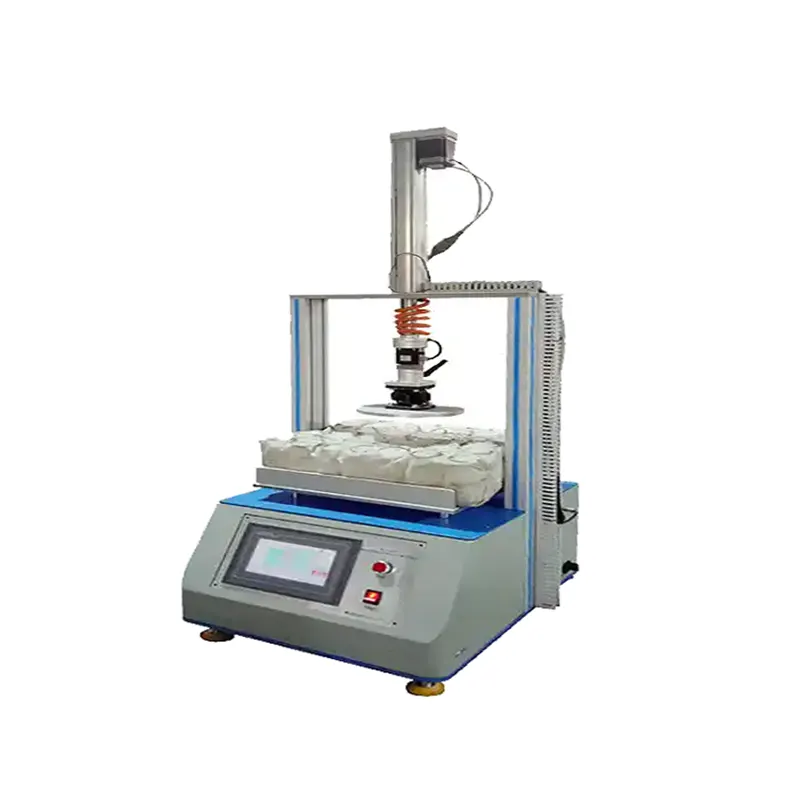
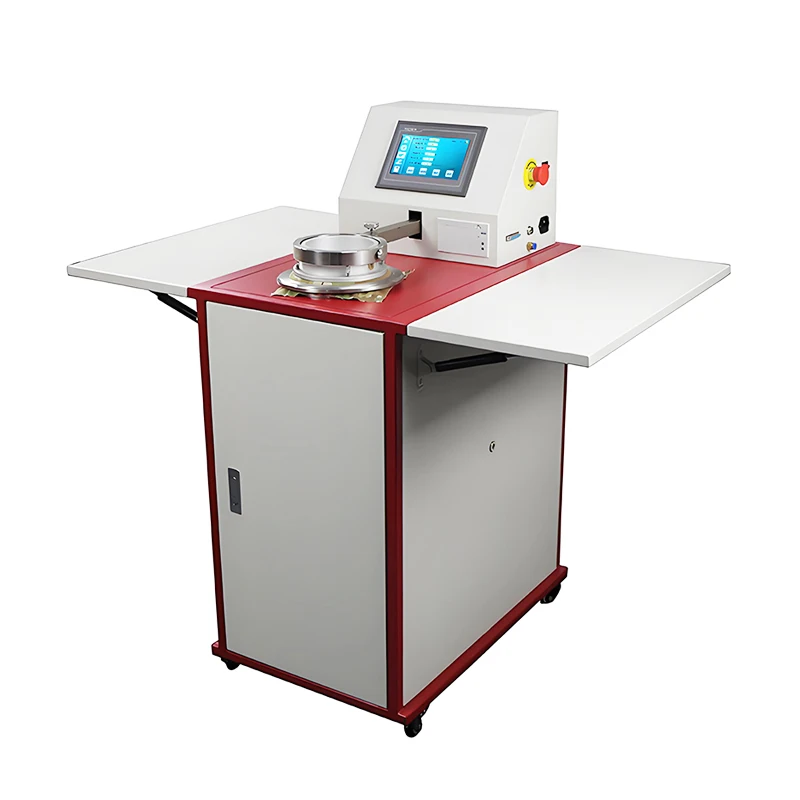
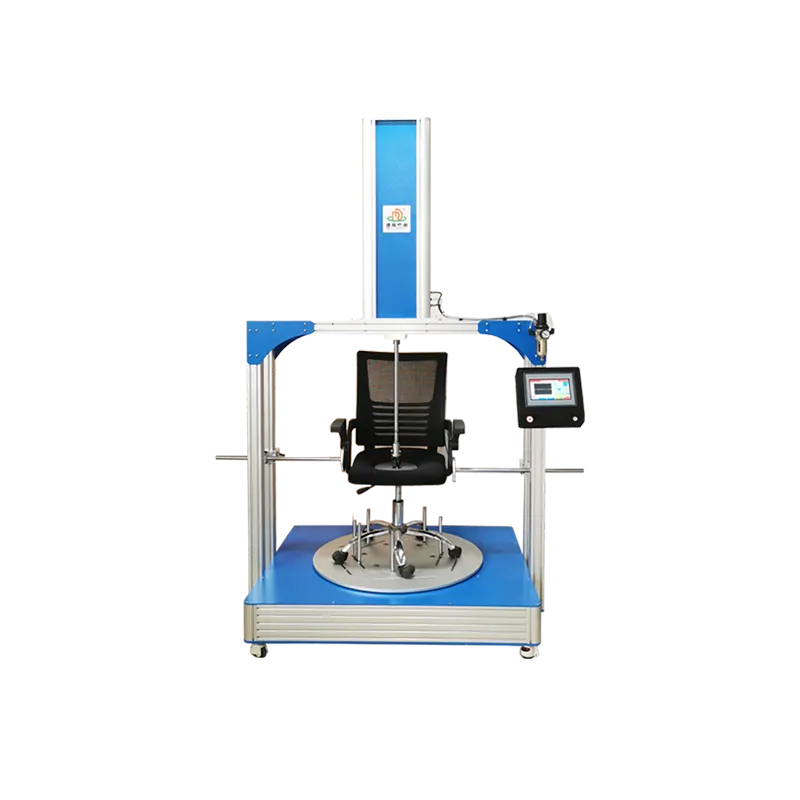
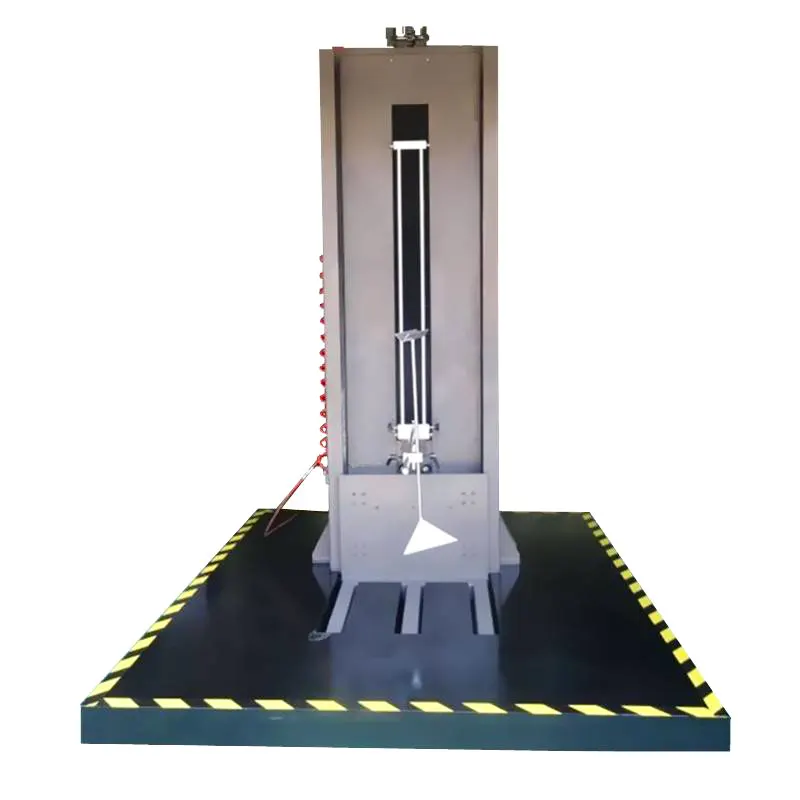
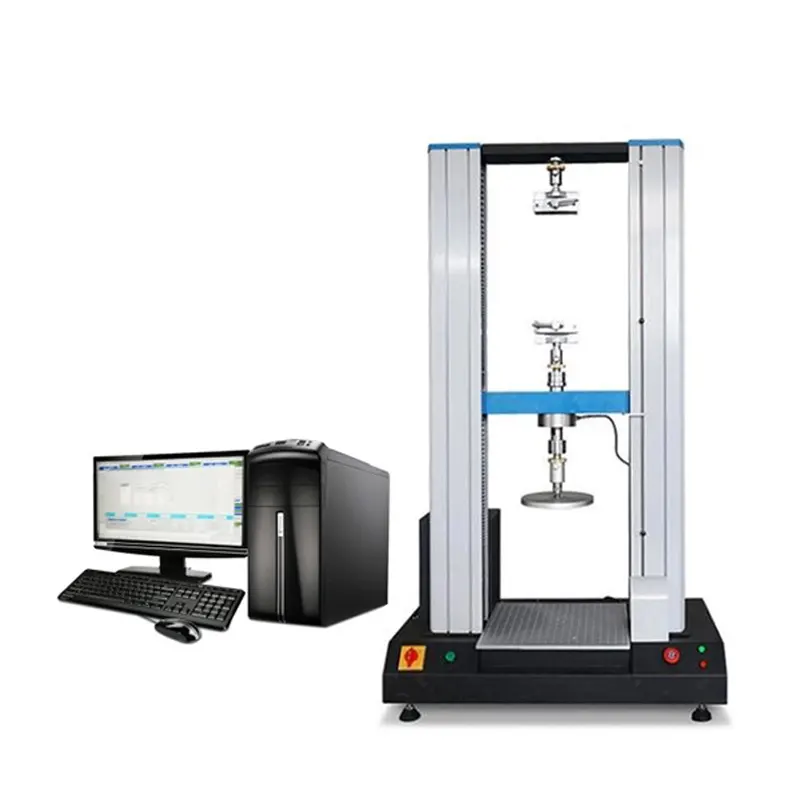
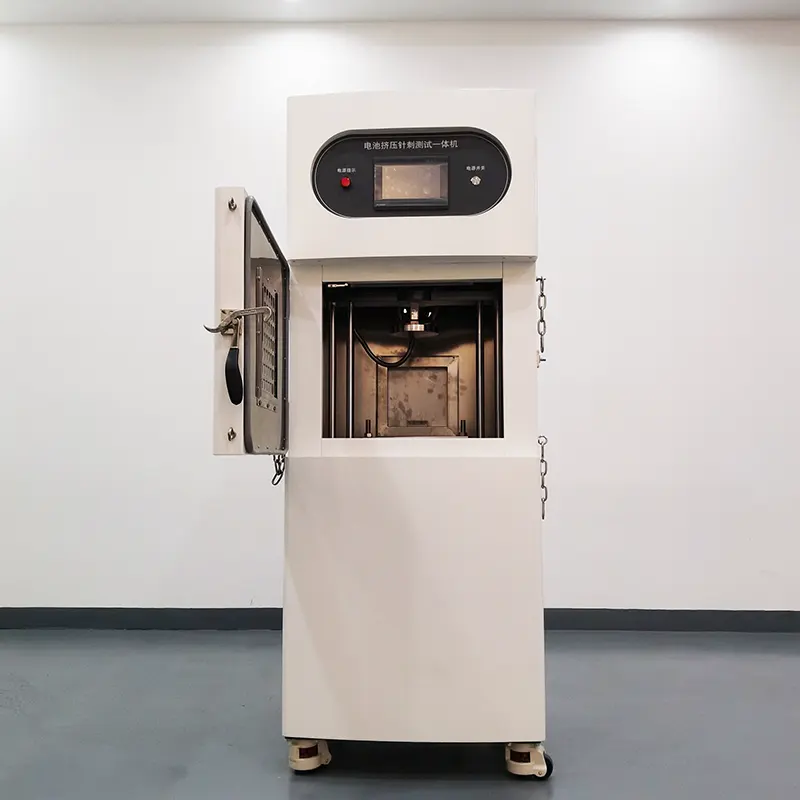
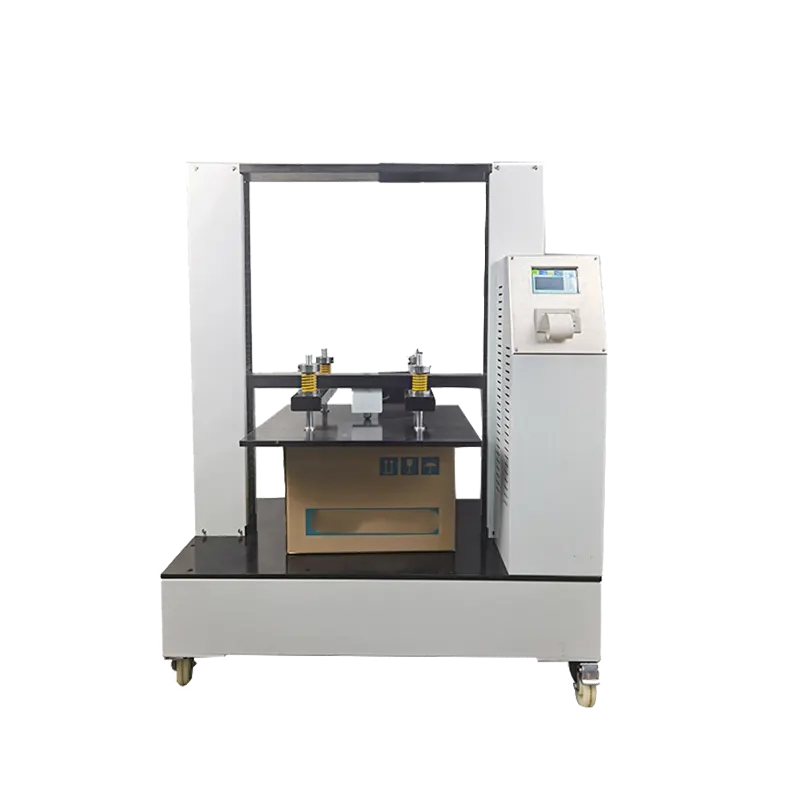
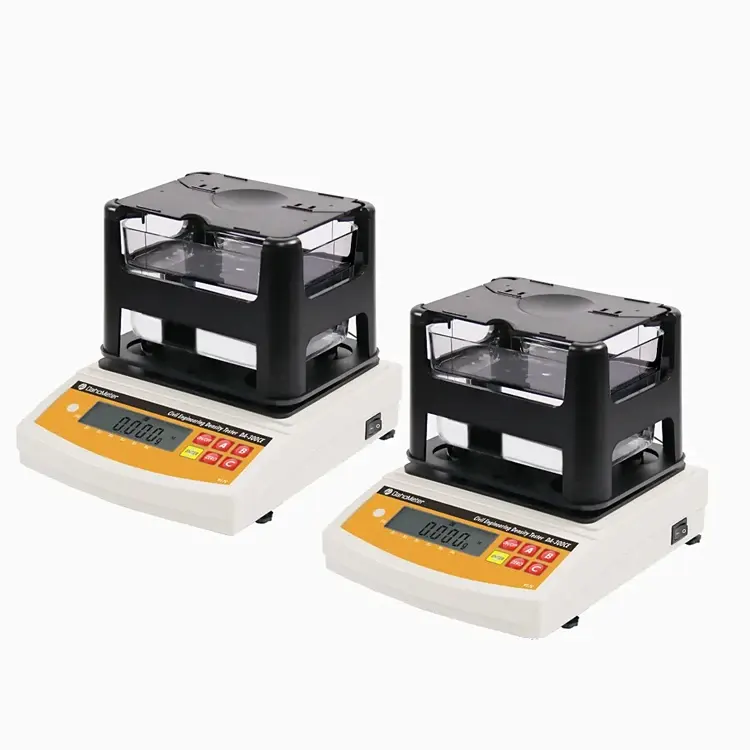
Material testing equipment configured for your test method and specimen.

DERUI manufactures material testing equipment for quality control and R&D.
WhatsApp Consultation:+86 135 2795 8363

Tape Peel Strength Testing Equipment for Adhesive QC

Precision Measurement

Our equipment ensures high accuracy in peel strength measurement, providing reliable data for your adhesive testing.

High Accuracy

User-friendly Interface

Durable Design

Safe and reliable
well-made
customization
Quality assurance
MessageWhatsApp
Hotline number +8615580327593
  • Product Details
  • Technical parameters
  • FAQ
  • Contact us
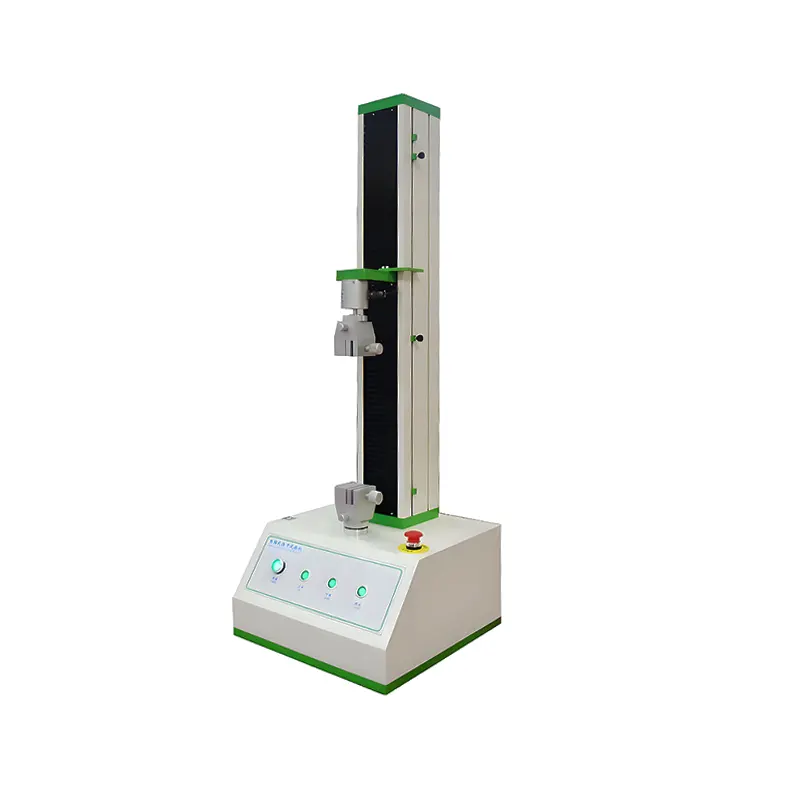
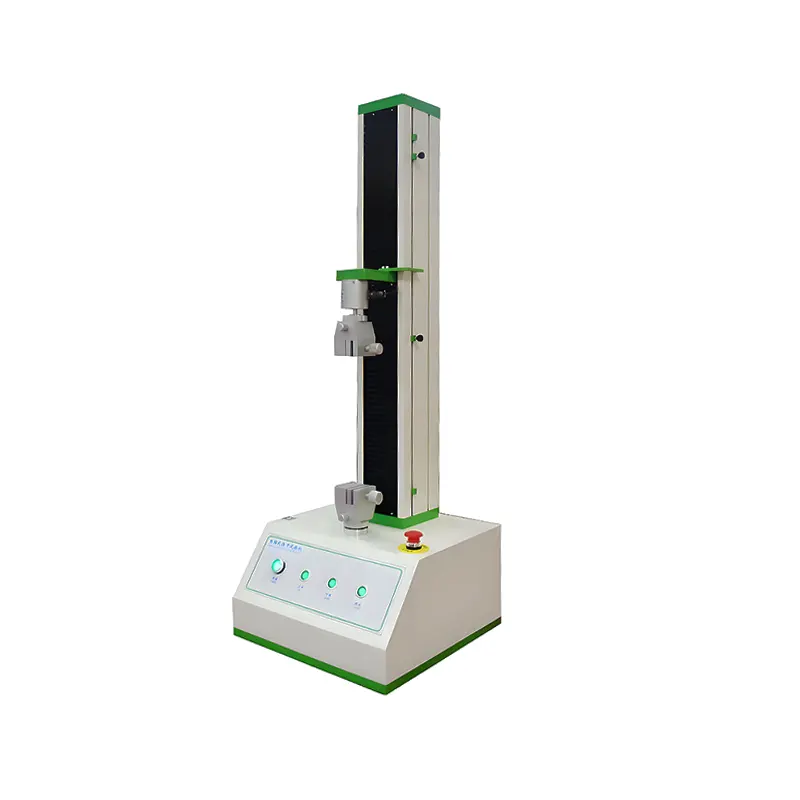
DERUI DR-L201-5 tape peel strength testing equipment for pressure-sensitive tape and adhesive labels
DR-L201-5 product image. Final force range, load cell, peel fixture, software method and accessories must be confirmed for the specimen and procedure.
Adhesive and pressure-sensitive material testing

What Is Tape Peel Strength Testing Equipment?

Tape peel strength testing equipment applies a controlled separation motion and records the force required to peel an adhesive tape, label, film or flexible bonded layer from a defined substrate. A useful configuration must control the peel geometry, force range, test speed, specimen preparation and result calculation—not only move a crosshead.

Quick answer: DR-L201-5 is the model to review when the required result is peel adhesion or peel force. Choose the general benchtop tensile category when the laboratory needs a broader multi-test frame and has not yet defined the method-specific fixture and measurement scope.

Published modelDR-L201-5
Published stroke900 mm including fixture
Published speed50–300 mm/min
Load accuracy≤0.5% published
Load-cell resolution1/100,000 published
SoftwareTM2101
Published safetyE-stop, overload and limits
The result belongs to the complete method

Six Controls Behind a Comparable Peel Result

Peel force is sensitive to preparation and geometry. Two machines can produce different values when the panel, roller, dwell, angle, speed or calculation window changes. Record these conditions with every result.

01 · METHOD

Procedure and revision

Identify the exact method and letter or test configuration.

02 · SPECIMEN

Tape and backing

Width, thickness, carrier, adhesive side and machine direction.

03 · SUBSTRATE

Panel and surface

Material, finish, cleaning process and reuse rule.

04 · APPLICATION

Roll-down and dwell

Roller mass, passes, conditioning and time before peel.

05 · GEOMETRY

Angle and alignment

Maintain the prescribed peel path without rubbing or twisting.

06 · RESULT

Force calculation

Units, averaging region, peaks, exclusions and failure mode.

Important: published load-cell resolution is not the same as overall force accuracy, and frame capability does not prove that a particular standard method is supported. Confirm the calibrated force range and complete method package.

One “peel tester” does not mean one test

Select the Peel Path Before the Fixture

The angle and specimen construction change the force path and result. State the exact method before requesting a quotation; similar-looking fixtures are not automatically interchangeable.

180°

Peel adhesion

Common for pressure-sensitive tape folded back over itself and peeled from a defined panel. Requires suitable grips, panel support and low-force measurement.

90°

Right-angle peel

Requires a fixture or moving platform that maintains the prescribed angle as the bond line advances. A static improvised plate can distort results.

T

T-peel

Used for two flexible bonded adherends pulled in opposing directions. Specimen construction and bending behaviour differ from tape-on-panel peel.

REL

Release or liner force

Measures separation of a liner or release material under its specified geometry and speed. Do not report it as tape-to-panel peel adhesion.

ASTM D3330 example: the standard contains several methods for pressure-sensitive tape, including 180° and 90° arrangements. The method letter, specimen preparation and result calculation belong in the report. Confirm that the ordered fixture and software procedure match the applicable method.
Reduce variation before blaming the machine

Why Tape Peel Results Change

Adhesive behaviour is time-, temperature-, surface- and rate-dependent. A stable force trace begins with controlled preparation and a correctly aligned peel path.

SURFACE

Panel contamination or finish

Oil, residue, scratches, inconsistent cleaning or a different surface energy can change adhesion and failure mode.

APPLICATION

Unequal roll-down pressure

Different roller mass, pass count, speed or entrapped air changes adhesive contact with the substrate.

TIME

Conditioning and dwell

Temperature, humidity and time between application and peel can change wet-out and viscoelastic response.

MOTION

Angle, speed or misalignment

Changing geometry or crosshead rate alters the force path; twisting, rubbing and grip slip add non-peel forces.

Report more than one peak value

Include specimen and substrate identification, width, conditioning, application procedure, dwell, peel angle, speed, force range, calculation region, result units and observed failure mode. Average peel force, maximum force and force per unit width are not interchangeable results.

Configuration before quotation

Eight Inputs for a Peel-Test Configuration

Send the method and specimen together. This determines whether the published frame, 50–300 mm/min speed and 900 mm stroke are suitable and which load cell, fixture, panel and software calculation are required.

Material construction

Tape, label, protective film, laminate or bonded joint; backing and adhesive type; single- or double-coated.

Current test method

Standard, method letter, customer procedure and revision—not only “ASTM” or “ISO.”

Specimen and substrate

Width, thickness, length, orientation, panel material, surface finish and preparation.

Peel geometry

180°, 90°, T-peel, release force or another defined path and required fixture motion.

Expected working force

Typical and maximum force, units and force per width so the calibrated load range can be selected.

Speed and travel

Required peel rate, usable data length, preload and total movement including grips and fixture.

Result and software

Average, maximum, minimum, work, exclusions, failure mode, graph and report/export fields.

Workflow and evidence

Daily throughput, roller and cutting tools, calibration needs, report language, power and destination.

Best inquiry package: specimen photos + method and revision + expected force + peel angle and speed + required result and report.

Request a Peel-Test Review →

Buyer and AI-ready answers

DR-L201-5 Tape Peel Tester FAQs

01What does the DR-L201-5 tape peel tester measure?
It records the force needed to separate an adhesive tape or flexible bonded layer from a defined substrate under a specified angle, speed, preparation and calculation procedure. The result may be reported as force or force per specimen width, depending on the method.
02Is peel strength the same as tensile strength?
No. Tensile strength loads a specimen primarily along its axis, while peel testing progressively separates a bonded interface at a controlled geometry. They require different specimens, fixtures, calculations and result interpretation.
03Can the same result be compared between 90° and 180° tests?
Not directly. Peel angle changes the force path and bending contribution. Compare results only when the method, geometry, substrate, preparation, conditioning, speed and calculation are equivalent.
04Can DR-L201-5 perform ASTM D3330?
Potential compatibility depends on the selected ASTM D3330 method, force range, fixtures, panel, specimen preparation tools, speed control and software calculation. Confirm the current method letter and complete ordered configuration before claiming compliance.
05What causes unstable peel-force curves?
Common causes include contaminated panels, uneven application pressure, air bubbles, inconsistent dwell, grip slip, changing peel angle, specimen misalignment, surface defects and adhesive transfer or cohesive failure.
06How is this page different from a benchtop tensile tester?
This page starts from a defined adhesive peel result and its method-specific accessories. The benchtop tensile category compares more general compact force-testing frames that may support multiple test types only after the relevant grips, sensors and procedures are configured.

Define the Peel Method Before Selecting DR-L201-5

Send the tape or adhesive construction, substrate, method, angle, force range, speed and required report.
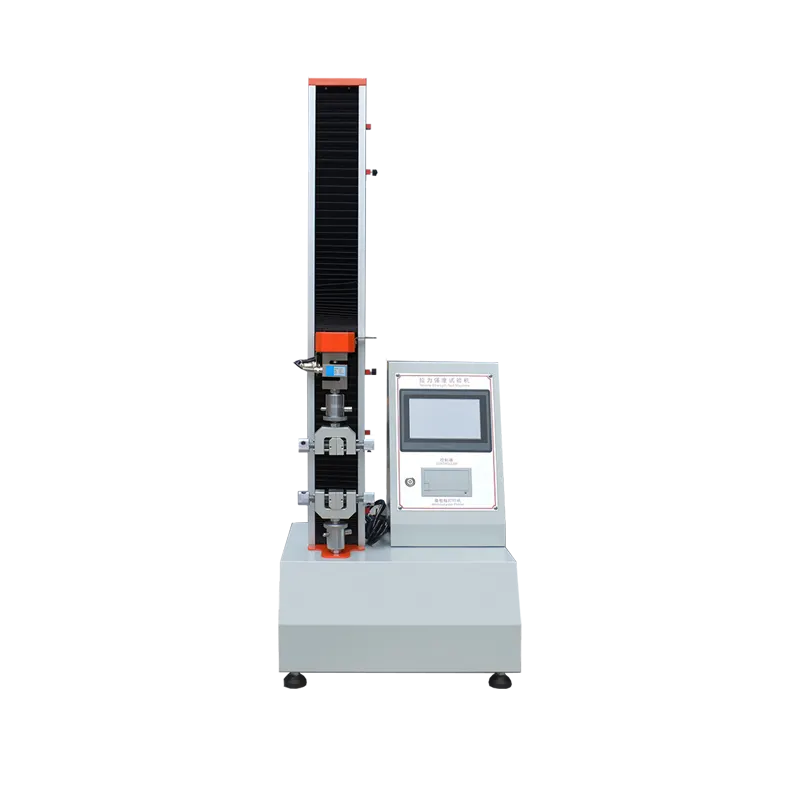
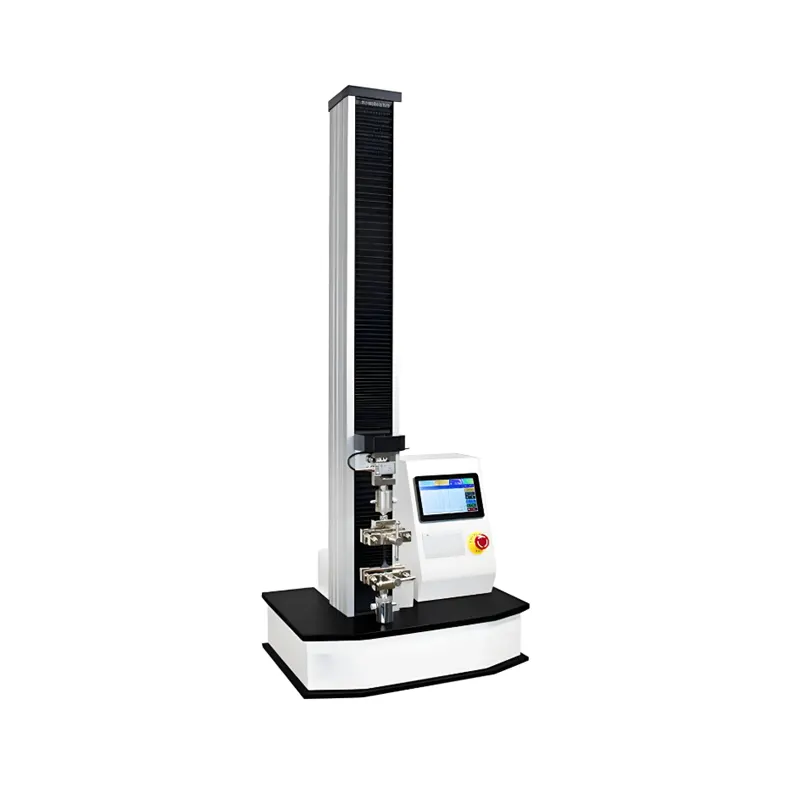
Discuss Your Peel Test →

FacebookLinkedInXRedditWhatsApp

Item    

Description    

Max. Force    

200 kg (2KN)    

Load cell    

China brand load cell    

Control system    

LCD with build-in printer /PC with windows 7 system    

Motor    

adjustable-speed motor with reduction box, high-precision mechanical ball screw rod    

Force reading     

kgf, Ibf, N, KN, T etc    

Stoke    

900mm including fixture    

Load cell Resolution    

1/100,000    

Load Precision    

≤0.5%    

Test speed    

50~300mm/min (adjustable by rotary knob)    

Software    

TM 2101    

Curves display    

Load- elongation, Elongation-time, Time-elongation, Stress-strain    

Data display    

Max. force, speed, sample information, strength(Kpa, Mpa, N/mm, N/mm2) etc…    

Safety features    

E-Stop    

Over-load protection    

Upper and lower limit switches    

Load sensor with automatic retreat    

1、What is tape peel strength testing?
Tape peel strength testing measures the force required to separate two surfaces bonded by adhesive tape.

2、Why is tape peel strength important?
Understanding tape peel strength helps ensure product reliability and performance in real-life applications.

3、How does the testing equipment work?
The equipment applies controlled force to peel the tape away from the surface and measures the force applied.

4、What materials can I test?
Our equipment is designed to test a variety of materials, including plastics, metals, and coated surfaces.

5、Is the equipment user-friendly?
Yes, the equipment features an intuitive interface allowing for ease-of-use regardless of testing experience.

6、Can I integrate the data with other systems?
Yes, our software allows for data exporting and integration with various data management systems.

7、What are the standards for tape peel strength testing?
Testing is typically based on ASTM and ISO standards to ensure accuracy and reliability of results.

8、How long does testing take?
Testing duration varies depending on the material and setup, but results are often available immediately.

9、What applications is this equipment suitable for?
It’s commonly used in manufacturing, quality control, and research and development sectors for adhesive testing.

10、Where can I buy tape peel strength testing equipment?
You can find our testing equipment online on our website or through authorized distributors.

WhatsAppWhatsApp
WhatsApp
MessageMessage

Send Inquiry