
ASTM D6055 Clamp Testing: Package Setup, Force Control and Equipment Selection
Date: August 24, 2026 Categories: Technical Guides & Blog Views: 1314
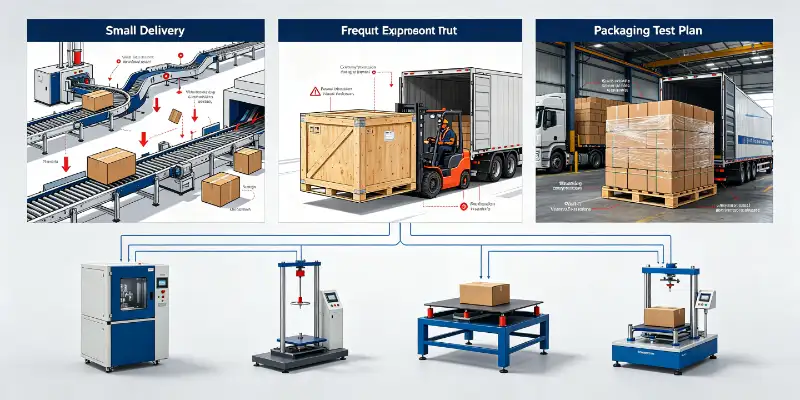
ASTM D6055 is not one universal clamp-compression test. It covers six forms of mechanical handling for unitized loads and large shipping cases or crates. Clamp handling is Method C, which evaluates repeated side compression and lifting by a hydraulic clamp attachment. A stationary two-platen clamp tester can provide controlled horizontal compression, but it should not be represented as a complete Method C handling system unless it can perform every required lift, movement and repetition in the governing procedure.
1. ASTM D6055 Scope
2. What Method C Evaluates
3. Package Setup
4. Force and Motion Control
5. Test Workflow
6. Equipment Selection
7. Stationary Tester vs Clamp Truck
8. ISTA Program Boundary
9. Results and Reporting
Frequently Asked Questions
ASTM D6055 Scope: More Than Clamp Handling
ASTM D6055-96(2019) covers mechanical handling of unitized loads and large shipping cases and crates. Its purpose is to evaluate load integrity and stability, the ability of the contents to withstand normal handling and opportunities to improve a deficient unit-load design. ASTM says the methods are designed, in most cases, for use with the actual equipment expected in distribution.
The standard is not intended as one procedure for every package. ASTM specifically notes that not all methods apply to all products, containers and loads, and excludes individual drums and palletized drums from its stated scope. Select the method according to the real handling mechanism:
| Method | Handling mechanism | Primary question |
|---|---|---|
| A | Fork-truck handling | Can the shipping unit withstand repeated fork-truck handling? |
| B | Spade-lift handling | Can the handling flap withstand repeated lifting and handling? |
| C | Hydraulic clamp handling | Can the shipping unit withstand repeated side compression and lifting? |
| D | Push-pull handling | Can a slip-sheet unit load withstand repeated handling? |
| E | Grabhook lifting | Can the load withstand horizontal grabhook pressure? |
| F | Sling handling | Can the shipping unit withstand compression from the specified sling? |
What ASTM D6055 Method C Evaluates
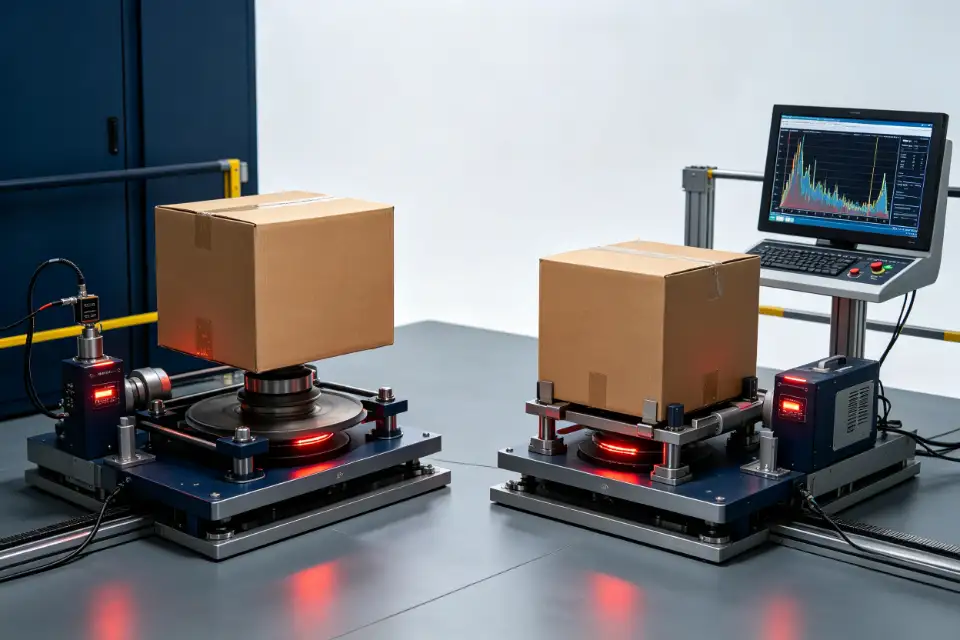
Method C focuses on the squeeze-clamp handling hazard. A hydraulic attachment applies opposing forces to the sides of a large shipping unit, grips it and lifts it. The test can reveal whether the container walls, internal supports, closure, pallet or product can tolerate the force and repeated handling without unacceptable damage or instability.
This is not the same as a finished-box top-to-bottom compression test. Clamp force is applied horizontally through contact plates, often to selected side orientations. The result depends on platen contact area, surface condition, package geometry, internal load path, force level, application rate, duration, lift action and number of repetitions.
Panel crushing, creasing, puncture, closure opening, seam failure and permanent deformation.
Housing damage, internal component movement, cosmetic defects and functional failure.
Shifting, leaning, separation from the pallet and loss of a safe handling condition.
ASTM describes correlation with actual distribution damage as qualitative. A laboratory result becomes more useful when the test configuration represents the clamp surfaces, force behavior and handling sequence observed in the intended distribution system.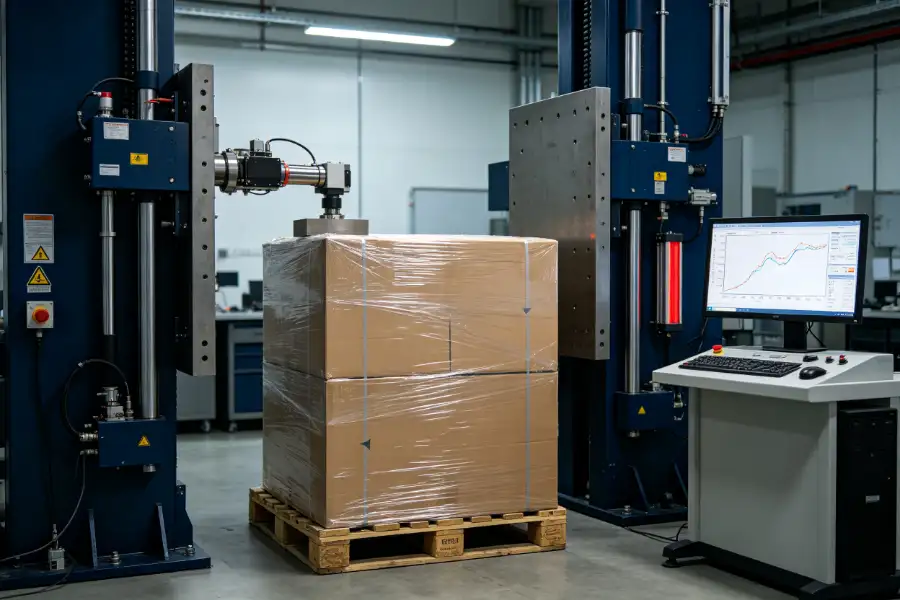
Package Setup: Build a Repeatable Load Path
Use a representative, complete shipping unit unless the governing program permits a justified substitute. The product, internal packaging, case, closure, pallet, straps, stretch wrap and accessories collectively determine how clamp force travels through the load. A rigid dummy product can make a weak package appear stronger; a poorly secured substitute can create failures unrelated to production shipments.
| Setup item | Record before testing | Why it matters |
|---|---|---|
| Load identity | SKU, package revision, gross mass and contents | Prevents unlike constructions from being compared. |
| Dimensions and centre of gravity | Overall L × W × H, pallet overhang and CG where known | Affects opening, plate size, stability and lift safety. |
| Clamp orientation | Which opposing faces contact the plates | Different faces can have different load paths and strength. |
| Contact position | Plate height, alignment and contact coverage | Edge loading or partial contact can change local damage. |
| Package condition | Conditioning history, moisture exposure and visible defects | Corrugated packaging response is sensitive to condition. |
| Restraints | Production wrap/straps and any test-only restraint | Added restraints can suppress the failure being evaluated. |
Mark the package faces and photograph the plate position before the first loading. Use the same orientation language in the procedure, controller program, photo filenames and report. This simple step prevents a common laboratory error: applying the correct force to the wrong pair of faces.
Force Control, Plate Motion and Contact
A clamp test is not defined by maximum force alone. The machine must bring the plates into contact without an unintended impact, increase force in a controlled manner, minimize overshoot, maintain the required condition and release predictably. Excessive overshoot can create a transient peak that damages the package before the intended test level is stabilized.
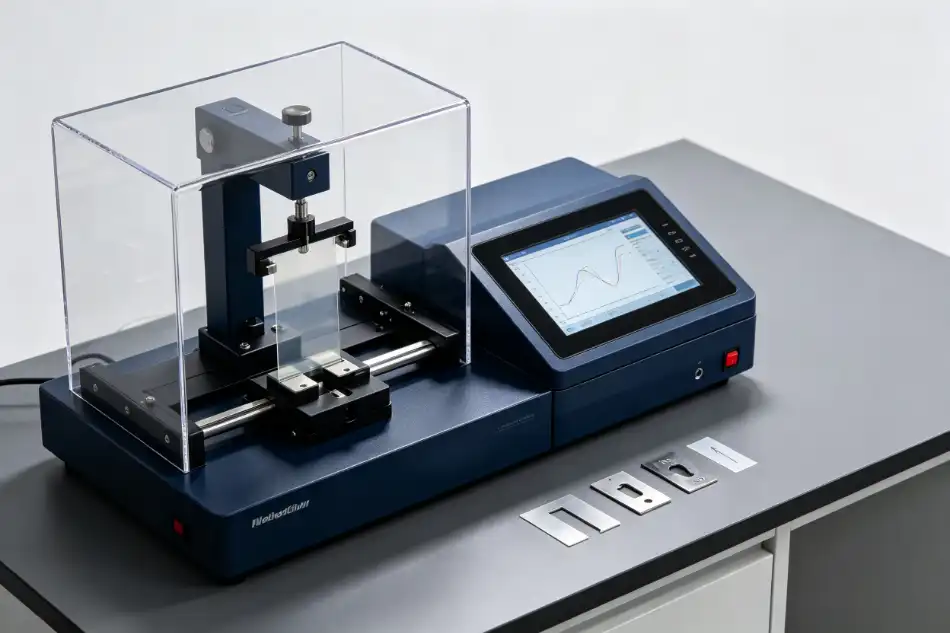
A closed-loop force system uses a calibrated load-measurement device and controller feedback to correct actuator command. Displacement sensing is also valuable because it records package deformation and helps identify plate skew, unexpected collapse or contact with a travel limit. Neither measurement should replace visual inspection and product-function checks.
Controlled plate movement before contact
Repeatable zero or initial condition
Specified rate with limited overshoot
As required by the selected program
Controlled unloading without secondary shock
Actual force, displacement, time and alarms
Do not copy a force level from another product simply because carton dimensions look similar. The required clamp force may come from the customer, a retailer program, field settings or a qualified development study. The article therefore provides no universal “passing force.”
A Practical Clamp-Test Workflow
- Confirm the governing requirement. Record ASTM D6055 edition, Method C, the customer or retailer program, package type and every authorized deviation.
- Define the acceptance criteria. Decide before testing which package damage, product damage, movement, leakage, cosmetic defects or functional results constitute failure.
- Prepare and condition the shipping unit. Use production-representative contents, packing, closure and unitization. Document conditioning and any substitute load.
- Inspect the apparatus. Verify plate faces, parallelism, opening, actuator travel, force-measurement status, guards, limit switches and emergency stop.
- Position and align the package. Place the specified faces against the correct contact zones. Record plate location and orientation with photographs.
- Apply the programmed sequence. Approach, preload, ramp, hold or handle, release and repeat only as the governing procedure requires.
- Inspect at the specified points. Check container panels, seams, closures, pallet, internal packaging and product. Do not continue automatically if a safety-critical instability develops.
- Report actual—not only target—conditions. Save measured force/time and displacement/time data, cycle results, alarms, photographs and deviations.
Clamp Tester Equipment Selection Checklist
| Capability | Information the buyer should provide | Supplier verification |
|---|---|---|
| Maximum controlled force | Required test force and expected operating range | Usable calibrated range—not only structural maximum. |
| Plate dimensions | Package side dimensions and required contact area | Coverage, flatness, surface and interchangeable plate options. |
| Opening and travel | Maximum package width plus setup clearance | Clear opening, actuator stroke and protected limits. |
| Plate parallelism | Package geometry and allowable contact condition | Alignment method under load and inspection procedure. |
| Force control | Ramp, hold, release, repetitions and overshoot tolerance | Closed-loop control, sensor range, sampling and actual-force recording. |
| Motion control | Approach and test speeds; allowable deformation | Speed range, displacement feedback and travel protection. |
| Lift/handling action | Whether full Method C handling is required | Actual lift height, movement/course and safe loaded capacity—or a clear statement that the unit is force-only. |
| Safety system | Load stability, operator access and facility layout | Guards, emergency stops, interlocks, limits and controlled pressure release. |
| Data and calibration | Report format and customer audit needs | Force/displacement/time export, sensor identification and calibration documentation. |
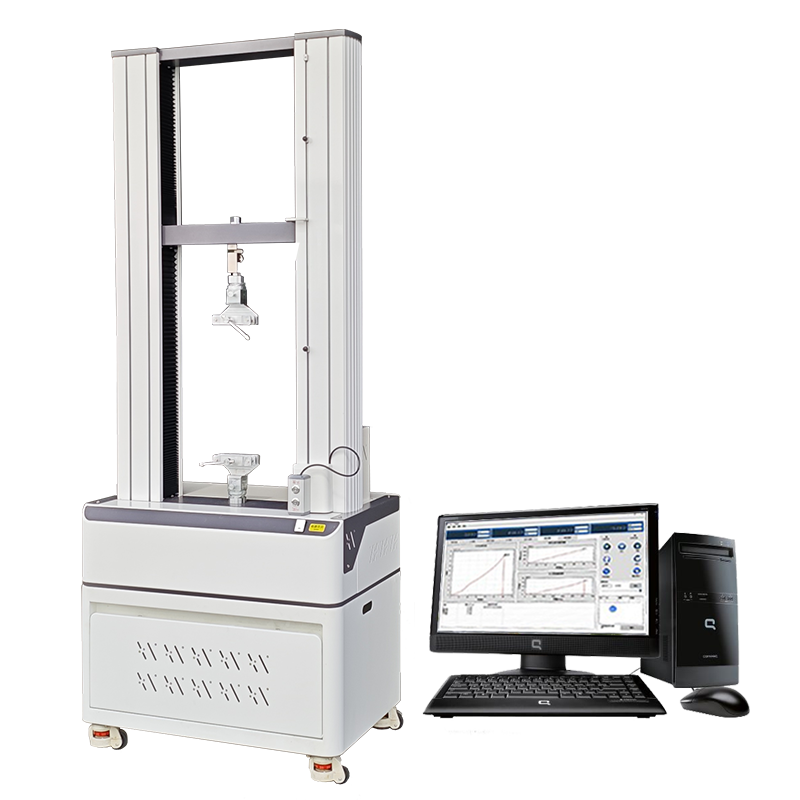
The retained DERUI packaging clamping force testing machine is the relevant product route for controlled horizontal squeeze testing. Before quotation, its verified force range, plate size, opening, control mode and ability—or inability—to perform lifting must be matched to the customer's procedure. Do not link to the retired -2/ or -3/ URLs.
Stationary Clamp Tester or Actual Clamp Truck?
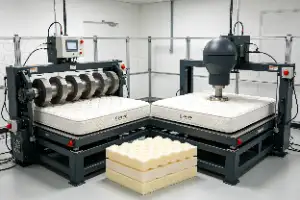
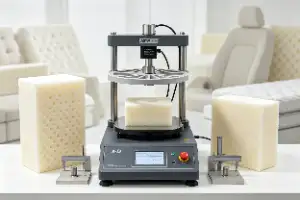
The correct apparatus depends on the claim the laboratory needs to make. A stationary two-platen system offers repeatable force application, controlled speed, displacement measurement and data capture. It is useful for packaging development, comparative screening and programs that explicitly call for horizontal compression or clamping simulation.
An actual clamp truck or a purpose-built system with lifting and movement capability represents additional handling hazards: load pickup, vertical support by friction, plate tilt or alignment, movement while suspended and repeated placement. ASTM D6055 Method C specifically describes repeated side compression and lifting. A force-only machine should therefore be reported as a simulation of the defined compression portion unless the authorized procedure accepts it as the complete apparatus.
The program specifies horizontal compression simulation, controlled force histories and deformation/data measurement are the priority.
The required method includes lifting, carrying, placing or a defined handling course that a stationary frame cannot reproduce.
Ask the customer to approve the apparatus and deviations before testing, especially when results will satisfy a contract, retailer qualification or third-party laboratory report.
Where ISTA and Retailer Programs Fit
Some ISTA retailer-specific projects include mechanical handling or horizontal clamping simulation for particular package types, sizes or distribution modes. That does not mean every ISTA procedure requires clamp testing, nor does an ASTM D6055 reference make one machine automatically compliant with every retailer program.
The laboratory must obtain the current procedure, identify the packaged-product type and follow its equipment, plate, force, speed, sequence and acceptance requirements. Public overview documents are useful for planning, but they are not substitutes for the complete purchased procedure. Requirements can also change between program revisions.
Use the ISTA test machine category to map all hazards in the selected sequence—conditioning, compression, vibration, shock and handling—not to infer that one clamp tester completes the entire program. For a broader laboratory workflow, the packaging validation equipment section separates these functions by hazard.
Results, Failure Criteria and Test Report
ASTM D6055 can reveal integrity and stability problems, but it does not create one universal pass/fail limit for all products. Acceptance criteria should come from the product owner, customer specification, retailer program or documented packaging-development plan. Agree on them before the first test.
Preserve actual force and displacement data rather than reporting only the programmed setpoint. A graph can expose overshoot, creep, sudden collapse or an unintended travel limit that is invisible in a one-line “pass” statement.
For a technical review, provide the ASTM/ISTA program and revision, package L × W × H, gross mass, clamp orientations, required force, plate contact area, speed, hold/repetition sequence and whether the apparatus must lift the load. DERUI can then confirm force range, plate size, opening, control, travel and safety configuration.
Frequently Asked Questions
What is ASTM D6055 clamp testing?
Clamp handling is Method C within ASTM D6055. It evaluates a unitized load or large shipping case under hydraulic squeeze-clamp handling involving repeated side compression and lifting.
Is ASTM D6055 only a clamp test standard?
No. It includes fork-truck, spade-lift, clamp, push-pull, grabhook and sling handling methods. The RFQ and report should name the exact method.
Can a box compression tester perform a clamp test?
A conventional box compression tester usually applies vertical top-to-bottom force and may lack the opening, side plates, horizontal travel and control sequence needed for clamp simulation. Use equipment designed and verified for the required orientation and package size.
Does a stationary clamp tester fully satisfy Method C?
Not automatically. It may reproduce controlled side compression, but full Method C includes lifting and repeated handling. Confirm what the machine can perform and obtain customer approval for any simulation or deviation.
What clamp force should be used?
There is no universal force for every package. Use the value and sequence from the governing customer or retailer procedure, field information or an approved packaging-development study.
Why are platen size and alignment important?
They determine the contact area and load path. Partial contact, tilted plates or edge loading can concentrate stress and create damage that does not represent the intended handling condition.
What should I send for an equipment quotation?
Send the procedure and revision, package dimensions and gross mass, required clamp faces, force, speed, hold time, repetitions, plate area, opening and whether lifting or movement is required.
ASTM D6055-96(2019)
This guide explains selection and reporting principles; it does not reproduce the copyrighted test procedure. Standards and retailer programs are revised. Use the current authorized documents, customer requirements and laboratory scope for the actual test.