

Foam Not Recovering After Compression? Which Test Should You Run?
Date: November 17, 2026 Categories: Buying Guides、Resources Views: 1100
What to Include in a Box Compression Tester RFQ
A carton size is a useful starting point, but it is not a complete machine specification. A useful quotation connects the package, loading direction, measurement range and required result to an explicit equipment configuration.
Describe the package before the machine
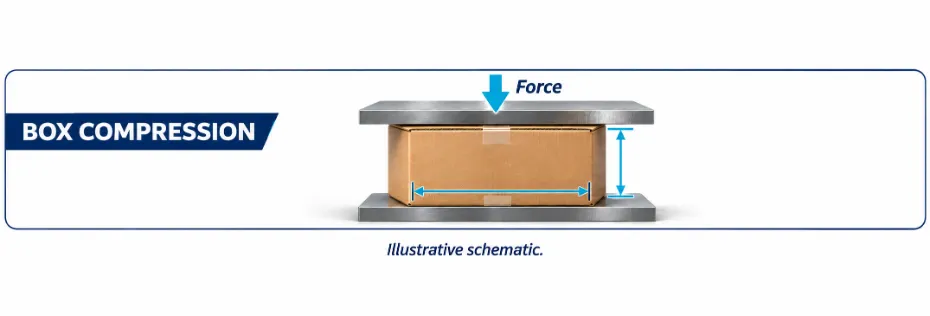
Provide the largest and smallest cartons you expect to test. State the loading orientation and whether boxes are empty, filled, sealed or otherwise prepared. Include unusual geometry, inserts and closure details that affect the test.
List dimensions in a consistent order, such as length × width × height, and identify which dimension is vertical during loading. Give the actual assembled dimensions, not just the flat blank size. Include the largest projected footprint and the tallest package in the planned product range; these may be different cartons.
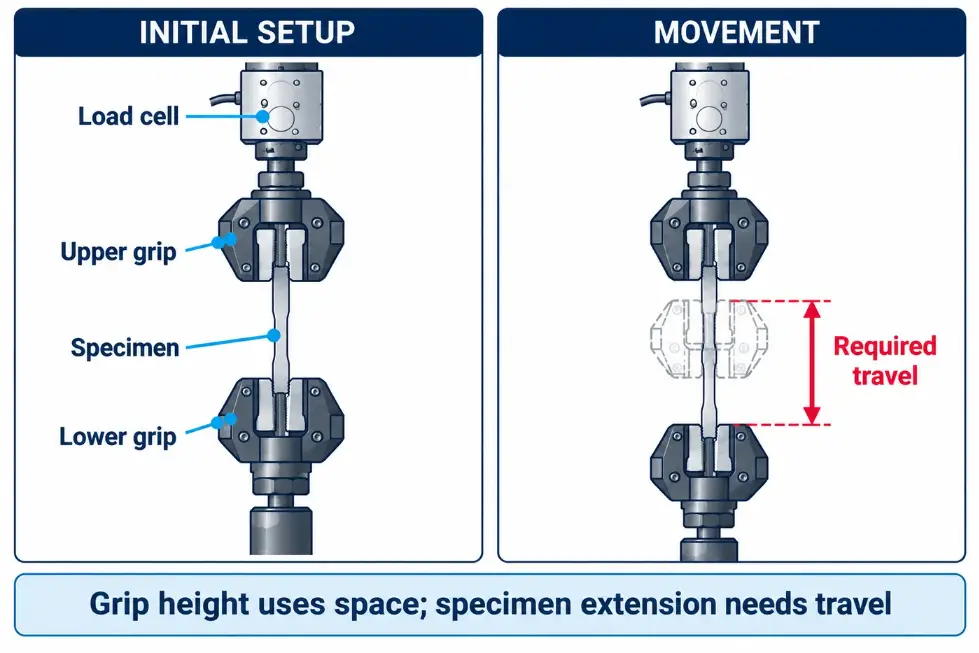
The supplier should explain how that range fits between the platens, including loading access and the usable opening. Frame height is not the same as available specimen height. Do not assume that a carton fits because one external machine dimension exceeds one carton dimension.
Specify whether the job requires fixed or swiveling platens. ASTM D642 distinguishes these arrangements and their applications; a quotation should not silently treat them as identical. Use the agreed method to settle the configuration.
Specify force and usable test space
Send expected peak compression force if known, including its source: a previous test, customer limit or preliminary estimate. Label estimates clearly. The package mass alone does not specify its compression strength.
Ask the supplier to identify the proposed force capacity and measurement performance over the intended working range. A large maximum capacity does not by itself establish suitable low-force performance. Request platen dimensions and usable opening for the actual configuration, not only the outside dimensions of the frame.
State that the force requirement is unknown. Send carton construction, dimensions, intended procedure and any previous results or customer specifications. Ask what further information or sample evaluation is needed to establish a suitable configuration. Do not multiply package weight by an arbitrary factor and present the result as a validated machine requirement.
For procurement budgeting, distinguish the equipment price from installation and optional reporting or accessory costs. There is no defensible universal price in this checklist: capacity, mechanical space and delivery scope can differ.
State the method and the result
Specify the applicable method and edition when a customer requires one. Describe whether the job is compression to a defined endpoint or another loading sequence. A short compression-to-failure test is not automatically equivalent to a prolonged stacking assessment.
Define the required report: peak force, displacement, force-displacement trace, specimen identifier and any customer-required calculation. Ask for a sample report from the proposed software rather than assuming every output is included.
Ask what the laboratory must report: a peak compression result, displacement at a specified condition, or behavior while carrying a load for a duration. A machine capable of running one sequence is not automatically configured for every other sequence.
ASTM D642 addresses compressive resistance and points to ASTM D4577 for constant-load testing. If your brief includes warehouse stacking, specify the actual procedure rather than asking only for a “box compression machine.” Long-duration work can also change sample throughput and laboratory scheduling.
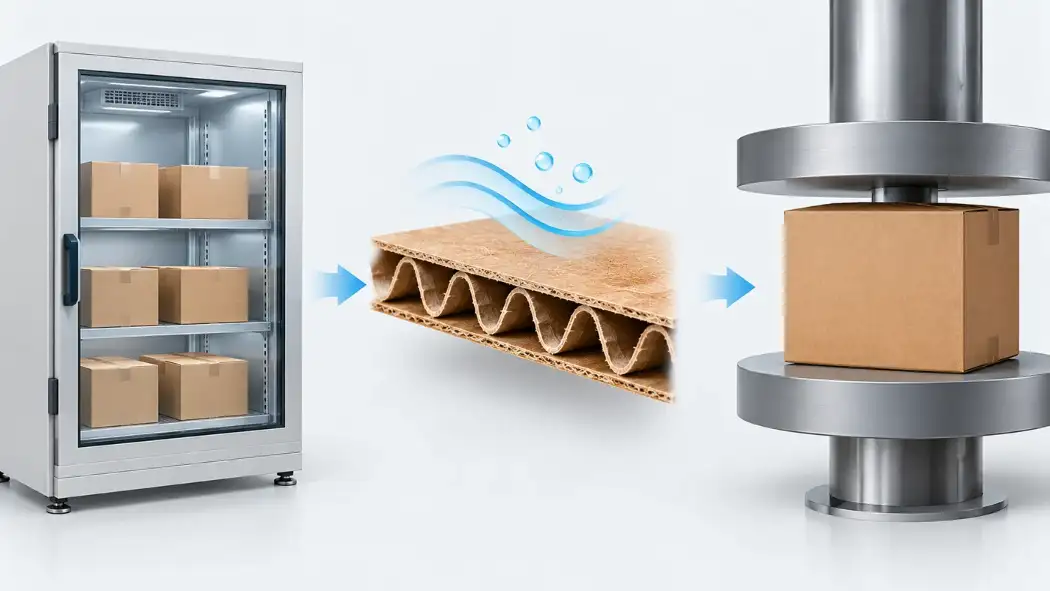
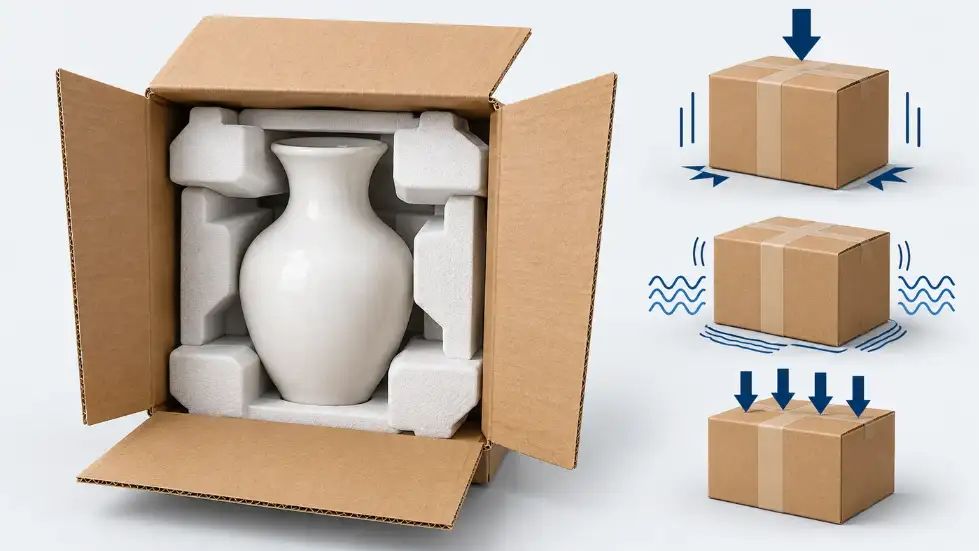
Empty and filled cartons should be identified separately. Contents and internal packaging can share load, so a filled-package result cannot simply be substituted for an empty-carton result. Conditioning and closure preparation belong in the test brief.
Make quotations comparable
- Force capacity and measurement verification scope.
- Platen configuration and usable specimen envelope.
- Specified test sequence, controls and stopping criteria.
- Software, report export and computer requirements.
- Included accessories, exclusions and optional items.
- Installation utilities, delivery access and operator training scope.
- Warranty terms and the process for obtaining technical support.
Request written clarification of differences between quotations. Do not compare a basic frame with a fully configured system solely on headline price. Review the DERUI box compression tester as the equipment starting point.
| Quotation item | What the written offer should identify | Question if unclear |
|---|---|---|
| Measurement | Sensor capacity and verification scope | What evidence supports the expected working range? |
| Mechanical space | Platen dimensions, opening and arrangement | Will all required orientations fit? |
| Control | Required sequence, speed and endpoint capability | Which requested functions are included? |
| Reporting | Software license, export and report fields | Can we review a representative report? |
| Delivery | Installation, utilities, training and documents | Which activities remain the buyer's responsibility? |
| Commercial scope | Accessories, exclusions, support and warranty | Which items are optional or separately priced? |
A lower headline price can reflect a different scope. Compare the quoted configuration before negotiating the price. Conversely, a longer feature list is not automatically useful if it does not serve the required test.
A request you can copy into an email
We need to test [empty/filled] cartons measuring [minimum and maximum dimensions], loaded in [orientation]. Our method is [method/unknown] and the required result is [result]. Expected peak force is [value and source/unknown]. Please propose the force range, platen size, usable opening, reporting package and supplied accessories, and list exclusions and installation requirements.
If force is unknown, say so. A previous report, a customer specification or sample details is more useful than guessing a load range.
First contact versus final approval
First contact: your carton dimensions, empty or filled condition, intended test and contact details are enough to start a technical conversation. Unknown items should be marked unknown.
Before ordering: approve the configuration, applicable procedure, measurement evidence, reporting functions, installation conditions and acceptance plan in writing. Agree who supplies representative samples and what will be demonstrated during acceptance. This prevents a purchase order for a general machine name from being mistaken for a complete test specification.