
How to Build Packaging Test Lab
Date: July 14, 2026 Categories: Technical Guides & Blog Views: 1729
How to Build a Packaging Test Lab
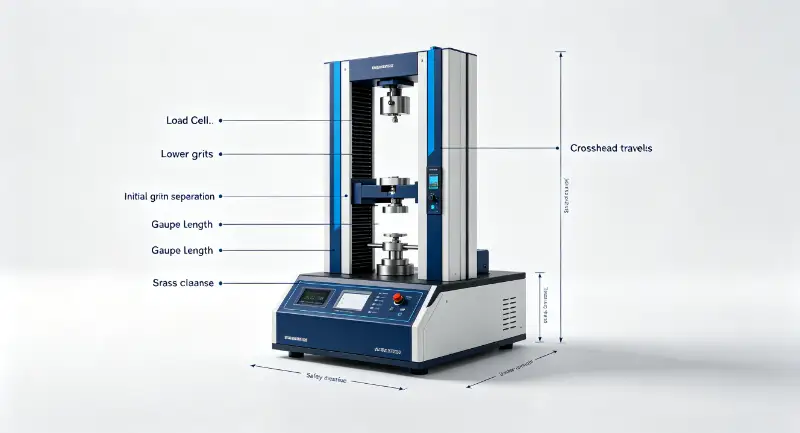
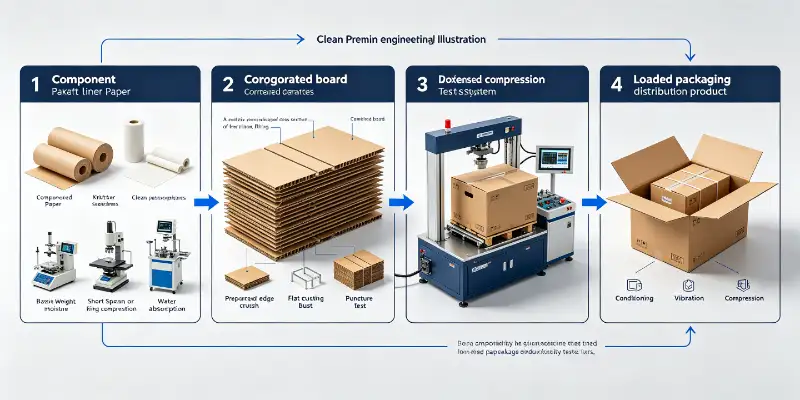
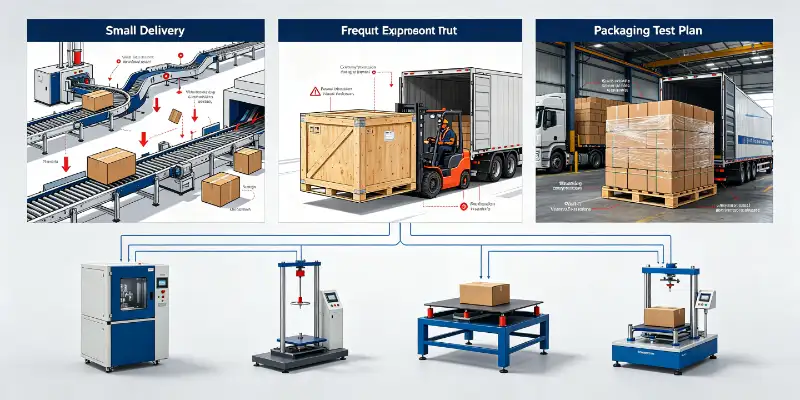
Building an in-house packaging test lab is the single highest-ROI investment a packaging manufacturer or high-volume shipper can make — but most first-time labs waste 30-50% of their budget on wrong equipment and poor planning. This guide gives you a complete, copy-paste-ready plan: three budget-tier equipment checklists (Entry: $12K–$22K, Standard: $25K–$80K, Professional: $85K–$200K+), space requirements from 20 m² to 200 m², ISTA and ISO 17025 certification roadmaps with real timelines, staffing requirements, and a build-vs-outsource ROI calculator. The single most important decision: define your testing scope before buying anything. A lab testing only corrugated boxes for ISTA 1A needs 2-3 machines and ~25 m². A lab doing full ISTA 3A, 6-AMAZON, and ASTM D4169 across multiple packaging types needs 6-8 machines and 80-120 m². Know your scope first — everything else follows.
1. Why Build In-House? ROI & Case Data
2. Step 1: Define Your Testing Scope
3. Step 2: Space Planning & Environment
4. Step 3: Equipment by Budget Tier
5. Step 4: Certification Path
6. Step 5: Staffing & Training
7. Step 6: QC Systems & Documentation
8. Common Mistakes & How to Avoid Them
9. FAQ
10. Next Steps / CTA
Why Build an In-House Packaging Test Lab?
Every year, packaging manufacturers and high-volume shippers spend $15,000–$80,000+ on third-party testing — performing the same ISTA drop, vibration, and compression tests that could be run in-house for a fraction of the long-term cost. Beyond the direct savings, an in-house lab gives you something outsourcing never can: same-day results, unlimited iteration, and real-time quality feedback that prevents failures before they reach your customer.
For more on the core equipment types you'll need, see our drop tester types comparison and vibration tester vs drop tester guides.
Step 1: Define Your Testing Scope — The Decision Every Other Decision Depends On
Before you measure a single square meter of floor space or price a single piece of equipment, answer these five questions. Every dollar you spend, every machine you buy, every standard you follow flows from these answers.
The Five Scope-Defining Questions
| 1. | What packaging types? Corrugated boxes only? Flexible pouches? Pallets and crates? Foam cushioning? Each material type adds equipment requirements. |
| 2. | What products inside? Electronics need different testing than food or furniture. High-value products justify more rigorous testing. |
| 3. | Which standards? ISTA 1A? ISTA 3A? ASTM D4169? ISTA 6-AMAZON? Each standard dictates specific equipment — drop heights, vibration profiles, compression forces. |
| 4. | Maximum specimen size & weight? A 2 kg e-commerce box needs vastly different equipment than an 800 kg machinery crate. This single number drives platen size, drop tester type, and vibration table capacity. |
| 5. | Certification required? Internal QC only? Customer-facing test reports? ISTA-certified lab? ISO 17025 accredited? Each level increases equipment precision requirements and documentation overhead. |
Standards: ISTA 1A, ASTM D642, D5276
Equipment: 2-3 machines
Space: ~25 m²
Standards: ISTA 3A, 6-AMAZON
Equipment: 4-5 machines
Space: ~50 m²
Standards: ISTA 1A–7D, ASTM, ISO
Equipment: 8-12 machines
Space: ~120 m²
Step 2: Space Planning & Environmental Control
Space is the most underestimated cost in lab setup. Equipment footprints are just the beginning — you need clearance for operation, sample staging, and personnel movement. The table below gives you realistic space requirements at each tier.
| Requirement | Entry Tier | Standard Tier | Professional Tier |
| Minimum Area | 20–30 m² | 40–80 m² | 100–200 m² |
| Ceiling Height | 2.8 m min | 3.5 m min | 5.0 m min |
| Floor Load | ≥500 kg/m² | ≥750 kg/m² | ≥1000 kg/m² |
| Power | 220V single-phase | 220V / 380V 3-phase | 380V 3-phase + UPS |
| Temperature Control | ±5°C | ±2°C | ±1°C (23±1°C per ASTM) |
| Humidity Control | Monitor only | 50±10% RH | 50±2% RH |
Critical Environmental Requirements
Step 3: Essential Equipment — Three Budget Tiers with Real Checklists
This is the section no other guide provides. Below are three complete equipment checklists with realistic price ranges, sourced from actual manufacturer quotes. Prices reflect factory-direct equipment (not distributor markups — see our note on factory-direct pricing).
🥉 Entry-Level Lab — Internal QC for Box Manufacturers
| # | Equipment | Est. Price | Notes |
| 1 | Drop Tester — Wing-type, manual | $3,000–$6,000 | ISTA 1A drops; 0-60 kg capacity |
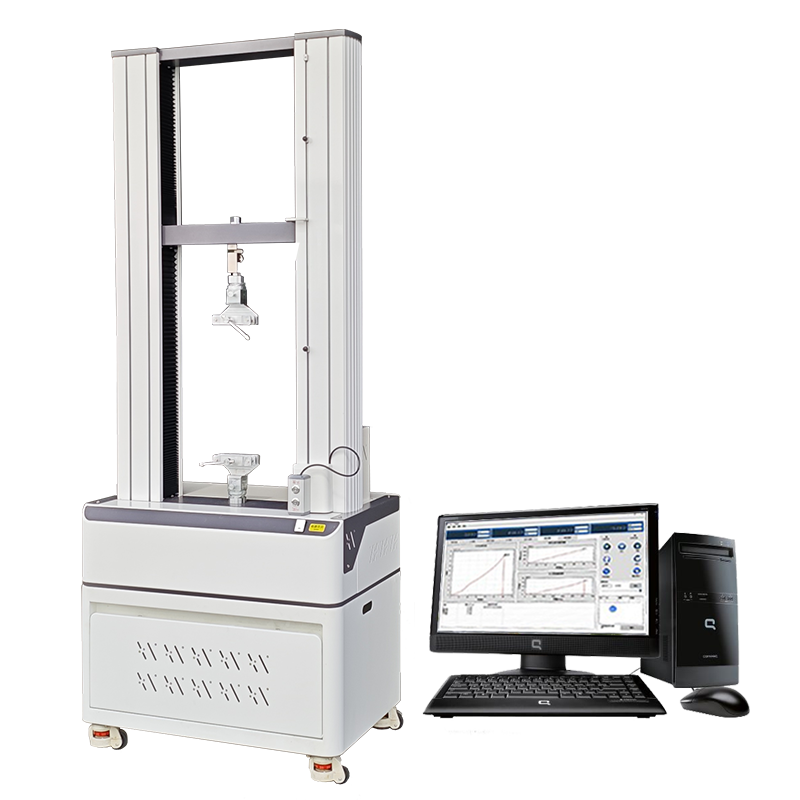
| 2 | Box Compression Tester — 10 kN | $5,000–$8,000 | ASTM D642 stacking strength |
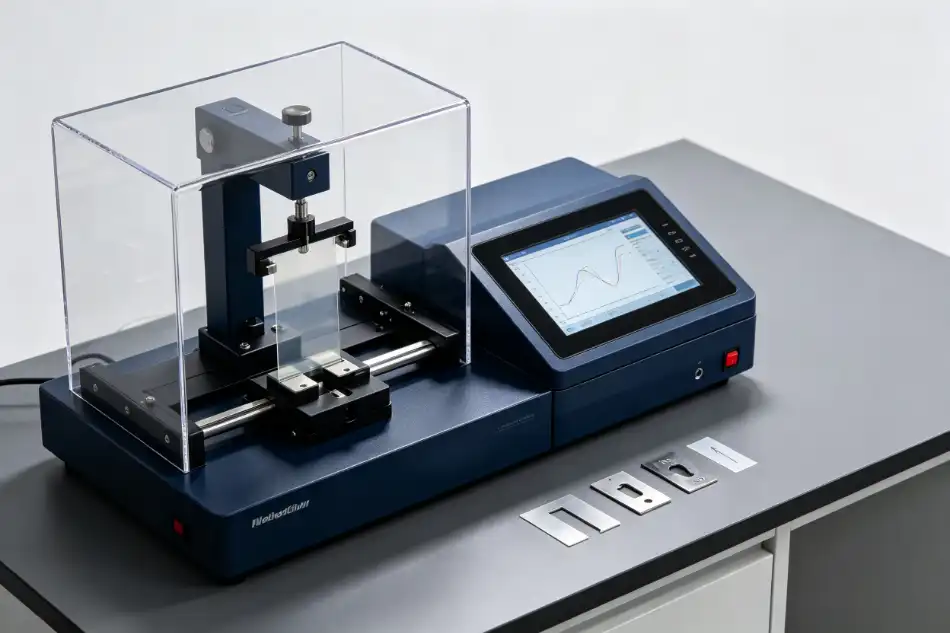
| 3 | Burst Strength Tester (Mullen) | $1,500–$2,500 | Board quality verification |
| 4 | Digital Thickness Gauge | $300–$600 | Board thickness measurement |
| 5 | Moisture Meter | $200–$400 | Humidity monitoring |
| 6 | Basic Tools — scale, ruler, cutter, conditioning area | $500–$1,000 | Essential accessories |
| 7 | Computer + Basic Data Recording | $500–$1,000 | Spreadsheet-based reporting |
🥈 Standard Lab — Full Packaging QA for Manufacturers & E-Commerce
| # | Equipment | Est. Price | Notes |
| 1 | Drop Tester — Pneumatic/Servo, variable height | $8,000–$18,000 | ISTA 1A/2A/3A drops; 0-150 kg; read our drop tester comparison |
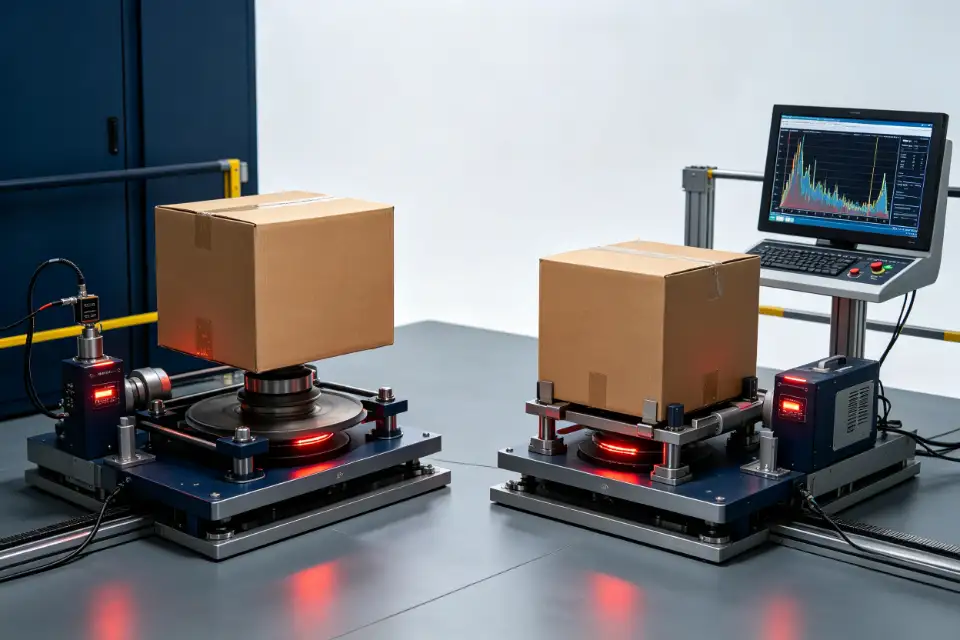
| 2 | Vibration Tester — Hydraulic or Electro-dynamic | $8,000–$25,000 | ISTA 3A/6-AMAZON transport simulation; see our vibration vs drop guide |
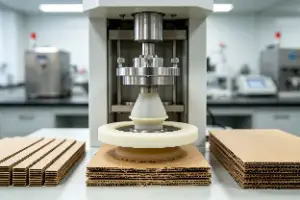
| 3 | Box Compression Tester — 20-30 kN, servo-controlled | $6,000–$15,000 | With load-displacement software |
| 4 | Burst Strength Tester | $1,500–$2,500 | ASTM D3786 |
| 5 | Environmental Chamber | $4,000–$10,000 | Temperature/humidity conditioning |
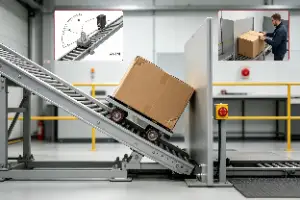
| 6 | Incline Impact Tester | $2,000–$4,000 | Horizontal impact simulation |
| 7 | Digital Instruments — thickness, moisture, weighing | $1,000–$2,000 | Calibrated measurement tools |
| 8 | Data Acquisition System + Software | $2,000–$5,000 | Centralized data management, test reports |
🥇 Professional Lab — Third-Party Testing & ISO 17025 Accreditation
| # | Equipment | Est. Price | Notes |
| 1 | Drop Tester — Zero-distance or Quick-release, heavy-duty | $15,000–$40,000 | Up to 1,500 kg capacity |
| 2 | Electro-dynamic Vibration System — 3-axis | $25,000–$60,000 | Full ASTM D4169, MIL-STD-810 profiles |
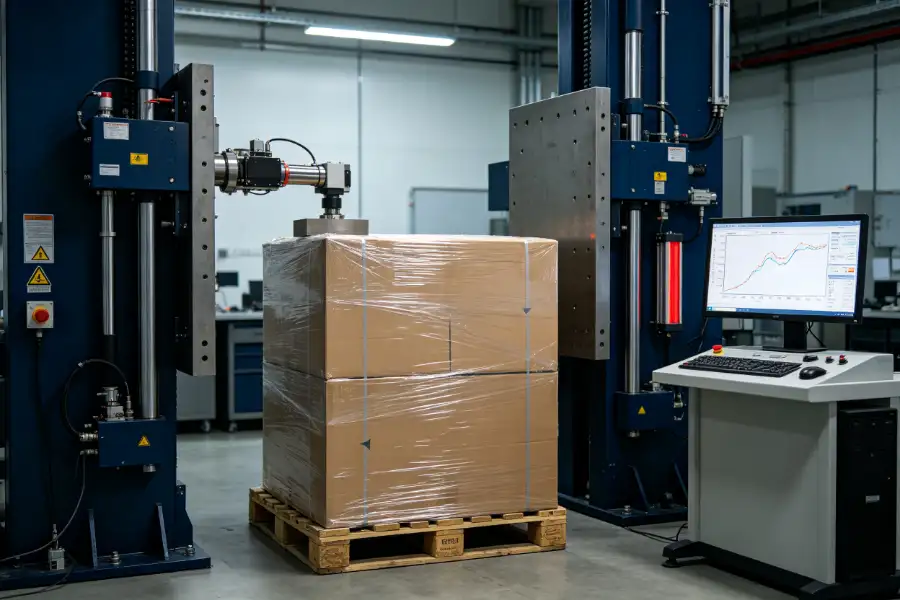
| 3 | Compression Tester — 50-100 kN, closed-loop servo | $15,000–$35,000 | Pallet and crate testing |
| 4 | Environmental Chamber — Walk-in | $12,000–$25,000 | Full ASTM D4332 conditioning |
| 5 | Incline Impact + Horizontal Impact Tester | $5,000–$12,000 | ISTA 3B/3E |
| 6 | Forklift + Pallet Handling Equipment | $5,000–$15,000 | Heavy specimen handling |
| 7 | Multi-axis Acceleration Data Logger | $3,000–$8,000 | Real transport data recording |
| 8 | LIMS + Full Documentation System | $5,000–$15,000 | ISO 17025 compliance ready |
Step 4: Certification Path — ISTA & ISO 17025 Roadmap
Certification is optional for internal QC but mandatory if you plan to sell testing as a service or if your customers require accredited test reports. Here is the realistic timeline and cost for both paths.
📋 ISTA Certified Laboratory
| Timeline | 4–8 months |
| Cost | $3,000–$8,000 (fees + audit) |
| Prerequisites | • Functional lab with required equipment • Documented SOPs for each test procedure • Calibrated equipment with traceability • Trained personnel (ISTA training recommended) |
| Process | 1. Apply via ISTA.org 2. Submit quality manual + SOPs 3. On-site audit by ISTA 4. Proficiency testing 5. Certification (renewed annually) |
🔬 ISO 17025 Accreditation
| Timeline | 12–24 months |
| Cost | $15,000–$40,000 (consultant + audit) |
| Prerequisites | • Professional-tier lab equipment • Quality management system (QMS) • Measurement uncertainty budgets • Proficiency testing participation • Internal audit program |
| Process | 1. Implement QMS per ISO 17025 2. Develop uncertainty budgets 3. Participate in proficiency testing 4. Internal audit 5. Accreditation body assessment |
Step 5: Staffing & Training
Equipment is half the equation. An untrained operator with a $50,000 machine produces worse results than a trained operator with a $10,000 machine.
| Role | Entry | Standard | Professional |
| Lab Technician | 1 (part-time) | 1-2 (full-time) | 2-4 (full-time) |
| QA/Lab Manager | — | (shared role) | 1 (dedicated) |
| Background | QC/Production | Engineering or QA | Packaging engineering |
| Initial Training | 2-4 weeks | 4-8 weeks | 8-16 weeks |
| Annual Training Budget | $500–$1,000 | $1,500–$3,000 | $3,000–$8,000 |
- ISTA/ASTM standard procedures
- Equipment operation & safety
- Sample conditioning per ASTM D4332
- Data recording & report writing
- Basic statistical process control
- Calibration verification
- ISTA Certified Packaging Laboratory Professional (CPLP)
- ASTM packaging committee membership
- ISO 17025 internal auditor (Professional tier)
- Equipment manufacturer training (on-site)
Step 6: Quality Control Systems & Documentation
Your lab's credibility depends on documented, repeatable processes. Even an Entry-tier lab needs basic documentation. A Professional-tier lab needs a full quality management system. Here is what each tier requires as a minimum:
Minimum Documentation by Tier
| Document | Entry | Standard | Professional |
| Equipment calibration log | ✅ | ✅ | ✅ |
| Test SOPs (Standard Operating Procedures) | ✅ | ✅ | ✅ |
| Test result database | ✅ | ✅ | ✅ |
| Sample management system | — | ✅ | ✅ |
| Non-conformance & corrective action | — | ✅ | ✅ |
| Measurement uncertainty budgets | — | — | ✅ |
| Internal audit schedule & records | — | — | ✅ |
| Quality manual | — | — | ✅ |
• Drop testers, compression testers, vibration systems: annual minimum, semi-annual for heavy use (>200 tests/year)
• Environmental chambers: quarterly temperature/humidity verification
• Digital instruments (calipers, scales, moisture meters): annual
• All calibration must be traceable to national/international standards. For ISO 17025 labs, traceability to NIST, NIM (China), or equivalent national metrology institute is mandatory.
• See our packaging validation systems for equipment designed with calibration traceability built in.
9 Common Mistakes That Cost First-Time Lab Builders 30-50% of Their Budget
We have consulted on dozens of lab setups. These are the mistakes we see repeatedly — from small box plants to multinational manufacturers.
- Buying equipment before defining scope. Equipment decisions must flow from testing scope, not the other way around. A drop tester bought for ISTA 1A cannot suddenly do ISTA 3A edge drops.
- Underestimating platen size. The single most common equipment mistake. Your compression tester platens must exceed your largest box dimensions. Buy for your biggest product, not your average.
- Ignoring humidity control. Corrugated strength drops 30-50% at 90% RH vs 50% RH. Without environmental control, your test results are irreproducible — and your customer's warehouse in a tropical climate will see failures your lab never detected.
- Under-budgeting floor space. Equipment footprint × 2.5-3 = realistic total space need. Factor in clearance, operator movement, sample staging, and conditioned storage. Every lab we have seen expands within 18 months.
- Buying manual when you need servo. Manual drop testers save $3K-5K upfront, but you sacrifice repeatability, height precision, and the ability to do ISTA 3A edge/corner drops consistently. For anything beyond basic ISTA 1A, servo/pneumatic is worth the investment.
- No calibration plan from day one. Equipment without a calibration schedule produces data without legal defensibility. If a customer challenges your results, traceable calibration records are your only defense.
- Training only one person. When your sole trained operator leaves — and they will — your lab goes dark for 4-8 weeks. Always train at least two people, even in an Entry-tier lab.
- Testing unconditioned samples. Per ASTM D4332, samples must condition at standard atmosphere (23±1°C, 50±2% RH) for minimum 24 hours. Skipping this step invalidates your results against any published standard.
- Paying distributor markups. Many first-time buyers purchase from regional distributors who add 40-60% markup on factory-direct equipment. Contact the manufacturer directly — especially for mid-to-high-end systems like drop testers and vibration tables where the price difference is $5,000-$20,000+.
Frequently Asked Questions
| How much does it cost to build a packaging test lab? | A basic internal QC lab: $12,000–$22,000. A full ISTA-compliant lab: $25,000–$80,000. A professional third-party lab with ISO 17025 accreditation: $85,000–$200,000+. Budget includes equipment, space preparation, training, and first-year calibration costs. |
| How long does it take to set up a packaging test lab? | Equipment procurement: 4–8 weeks (factory-direct). Installation and commissioning: 1–2 weeks. Staff training: 2–4 weeks. Total from decision to operational: 2–3 months for Entry/Standard tier, 4–6 months for Professional tier including QMS setup. |
| What equipment is absolutely essential? | For any packaging lab, the minimum viable setup is: a drop tester, a compression tester, and basic measurement tools (scale, caliper, moisture meter). These three cover the core ISTA 1A requirements. Add a vibration tester for ISTA 3A and 6-AMAZON compliance. |
| Do I need ISO 17025 accreditation? | Only if you plan to sell testing as a commercial service or if your customers require ISO-accredited reports. For internal QC and most supplier compliance requirements, ISTA certification or even self-declared compliance with documented SOPs is sufficient. Exception: if you sell on Amazon and need Amazon Frustration-Free Packaging certification, ISTA 6-AMAZON compliance testing is mandatory. ISO 17025 adds $15K-40K and 12-24 months to your setup. |
| Drop tester vs vibration tester: which first? | Buy the drop tester first. It is required by every ISTA standard, costs less, and covers the most common failure mode (impact during handling). Add a vibration tester when you need to simulate long-haul transport fatigue. See our detailed vibration vs drop comparison guide. |
| Can I use one compression tester for all box sizes? | Only if your largest box fits between the platens. Common platen sizes: 600×600 mm (small cartons), 1000×1000 mm (standard), 1200×1200 mm (export cartons). Always spec the platen for your largest product, not your average. Platen replacement is rarely cost-effective. |
| What is the ROI of an in-house packaging test lab? | Typical break-even: 12–18 months. Key savings sources: eliminated third-party testing fees ($15K-80K/year), reduced packaging failure rates (from 2-5% to <1%), faster new product development cycles, and reduced customer returns/damage claims. Most Standard-tier labs achieve 200-300% ROI over 3 years. |
Every packaging test lab we have helped build paid for itself within 12-18 months.
Whether you are starting from scratch or upgrading an existing QC station, we provide factory-direct equipment, on-site installation, and operator training — with no distributor markup.