
Drop Tester Types Comparison
Date: July 14, 2026 Categories: Technical Guides & Blog Views: 4320
Drop Tester Types Comparison
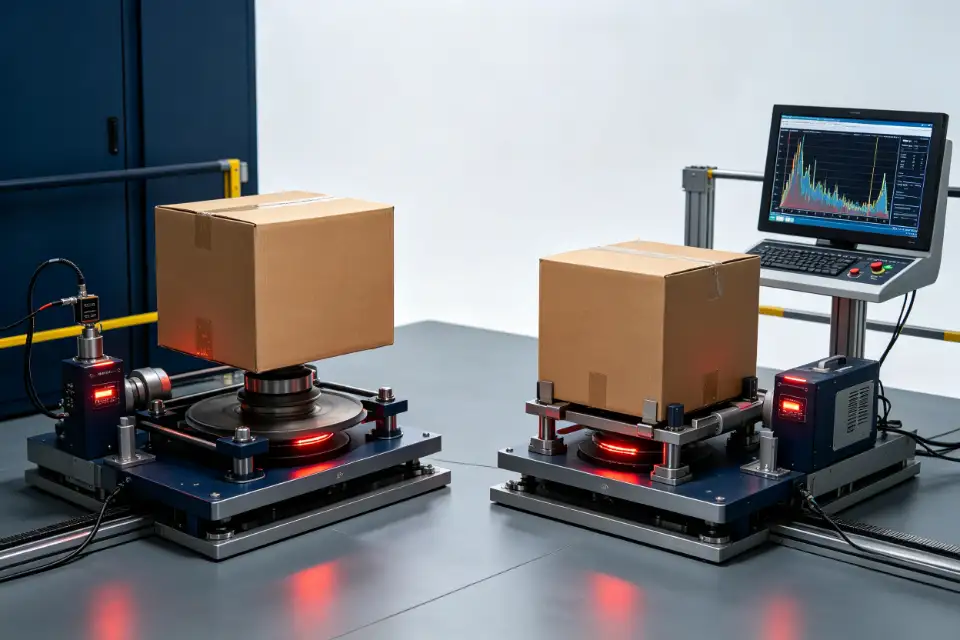
There are 7 distinct types of drop testers, each engineered for specific package weights, sizes, and test standards. Wing-type drop testers (single/double arm) cover ~80% of daily packaging lab needs for loads under 80 kg. Zero-distance drop testers provide superior accuracy and repeatability for heavy/bulky cargo and ISO 17025 labs. Quick-release drop testers handle payloads up to 1,500 kg — ideal for palletized freight and military crates. For most labs testing ISTA 1A/2A/3A packages, a variable-height wing-type or pneumatic drop tester offers the best balance of capability, compliance, and cost. Key decision variables: specimen weight × required drop height × standard compliance × budget.
1. Introduction
2. What Is a Drop Tester?
3. 7 Types Complete Breakdown
4. Head-to-Head Comparison Table
5. Wing Type vs Zero Distance
6. Decision Framework
7. Standards Compatibility Matrix
8. Industry Application Guide
9. Cost & ROI Analysis
10. Maintenance & Calibration
11. FAQs
12. Conclusion & Next Steps
Introduction: Why Choosing the Right Drop Tester Type Matters
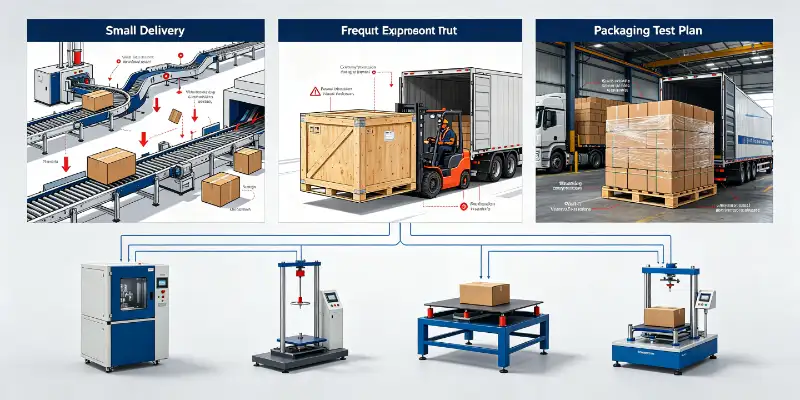
Every package that leaves your facility faces a gauntlet of drops, tumbles, and impacts before reaching the end customer. A conveyor belt misalignment, a courier's toss, a pallet slip off a forklift — these are not anomalies, they are expected events in any distribution chain.
The cost of guessing wrong about your packaging is staggering. Studies show that product damage during transit accounts for 2-8% of total logistics costs in poorly optimized supply chains. For an e-commerce business shipping 10,000 units per month, that can translate to hundreds of thousands in annual losses from returns, replacements, and brand damage. A material testing equipment manufacturer sees this reality every day — packaging labs that invest in the right equipment recover their costs within 6-18 months through damage reduction alone.
But here is what most buyer guides miss: not all drop testers are created equal. A fixed-height manual tester that works perfectly for a corrugated box under 10 kg will be useless — and potentially dangerous — for a 300 kg industrial crate. A zero-distance drop tester that delivers sub-millimeter precision will be overkill for a routine ISTA 1A compliance test. The type of drop tester you select determines not just your test accuracy but your lab's throughput, your compliance certification viability, and your total cost of ownership over a machine's 10-15 year service life.
This guide is the first comprehensive, data-driven comparison of all 7 drop tester types in one place. We break down each type by working principle, technical specifications, ideal use cases, real-world model examples, and — crucially — their limitations that manufacturers rarely mention in brochures. Whether you are equipping a new packaging validation lab or upgrading from a manual system, you will find the decision framework, cost analysis, and standards mapping you need to make an informed choice.
What Is a Drop Tester? A Quick Overview
A drop tester (also called a drop test machine, free-fall drop tester, or package drop tester) is a packaging testing instrument that simulates the impacts packaged products endure during handling, warehousing, and transportation. It lifts a packaged test specimen to a controlled height and releases it in a free-fall onto a rigid impact surface, allowing engineers to evaluate packaging integrity, cushioning performance, and product survivability.
At its core, every drop tester shares four fundamental subsystems:
Electric hoist, motor-driven screw, or pneumatic cylinder that raises the specimen to the target drop height.
The critical component that initiates the free-fall — flip arms, E-shaped fork, pneumatic cylinders, or quick-release hooks.
A massive steel or concrete slab that provides a rigid, non-deforming impact surface per ASTM/ISO requirements.
Digital height presets, remote release control, safety interlocks, and data logging capability.
The differentiators between the 7 types lie primarily in how they lift the specimen (mechanical arm vs. fork vs. hook) and how they release it (gravity flip vs. pneumatic actuation vs. quick release). These mechanical differences determine the maximum payload, minimum drop height, orientation capability, and test repeatability — which is why understanding the type comparison is non-negotiable before purchasing.
7 Types of Drop Testers: Complete Breakdown
3.1 Fixed Height Drop Tester
• Max Load: 20–50 kg
• Height: Fixed at ~1.0–1.5 m
• Accuracy: ±5 mm (height fixed)
• Price: $1,500–$4,000
• Standards: Basic ISTA 1A, ISO 2248 (face drops only)
📌 Best for: Small box manufacturers running a single SKU with consistent weight. Educational labs with basic packaging demonstration needs.
3.2 Variable Height Drop Tester
• Max Load: 60–100 kg
• Height: 300–1,800 mm (custom to 2,000 mm)
• Accuracy: ±10 mm height reproducibility
• Price: $4,000–$12,000
• Standards: ASTM D5276, ASTM D880, ISO 2248, ISTA 1A/2A/3A
📌 Best for: Contract packaging labs, QA departments testing multiple SKUs, e-commerce packaging validation for standard parcel sizes.
3.3 Wing Type (Leaf / Arm) Drop Tester
Single-Wing: One support arm — suitable for lighter packages (up to 80 kg) with stable center of gravity. Simpler mechanism, lower cost.
Double-Wing: Two independently adjustable arms — superior for large, bulky, or irregular packages (suitcases, tool boxes) because weight is distributed across two support points. Lowest achievable height: ~40 mm, highest: ~1.5 m.
• Max Load: 60–80 kg (single), 60 kg (double)
• Height: 400–1,500 mm (custom to 2,000 mm)
• Accuracy: ±2 mm height indication
• Wing Area: ~300×750 mm per arm
• Base Plate: 1,400×1,400×10 mm steel
• Price: $3,500–$10,000
• Standards: ISO 2248, JIS Z0202, GB/T 4857.5, ISTA series
📌 Best for: General packaging QA labs, corrugated box manufacturers, e-commerce fulfillment centers, goods weighing 5–60 kg. See our packaging drop test equipment for wing-type models.
3.4 Zero Distance (Zero Height) Drop Tester
This is considered the gold standard for precision drop testing, particularly for heavy/bulky cargo and ISO 17025 accredited labs where measurement uncertainty must be minimized.
• Max Load: 100–300 kg (some models to 500 kg)
• Height: 0–1,500 mm (custom higher)
• Accuracy: ±1 mm height, ±0.5° orientation
• Release: Pneumatic, < 0.1 sec fork retraction
• Control: PLC + touch screen
• Price: $12,000–$35,000
• Standards: ASTM D5276, ASTM D4169, ISO 2248, ISTA 1A/2A/3A/6-AMAZON
📌 Best for: Accredited test labs, heavy industrial packaging (100–300 kg), automotive parts, palletized loads, medical device packaging, Amazon ISTA 6 certification. Check our zero drop test machine for precision models.
3.5 Angle Drop Tester
• Max Load: 10–50 kg (rolling type)
• Drop Height: 0.3–1.5 m (adjustable angle)
• Roll Speed: 1–20 cycles/min
• Angle Adjust: 0–90° (select models)
• Price: $5,000–$18,000
• Standards: IEC 60068-2-31, GB/T 2423.8, ISTA edge-drop protocols
📌 Best for: Consumer electronics ruggedness testing (phones, tablets, laptops), handheld devices per IEC 60068, products vulnerable to edge/corner impacts in handling.
3.6 Rotational Drop Tester (Tumble Tester)
• Max Load: 10–30 kg
• Drum Speed: 5–30 RPM
• Drop Height: 0.5–1.5 m (internal drum diameter)
• Cycles: Pre-settable (1–9,999)
• Price: $6,000–$20,000
• Standards: ISTA Tumble Test protocols, ASTM D6055 (unitized loads), internal corporate methods
📌 Best for: E-commerce packaging where packages face multiple handling events, courier bag/carton durability testing, comparative packaging material studies, portable electronics.
3.7 Quick Release Drop Tester
This is the only type capable of testing payloads exceeding 300 kg while maintaining controlled orientation. Lansmont's QR 3000 handles up to 3,000 lbs (1,360 kg) and the PDT 700 handles 700 kg.
• Max Load: 300–1,500 kg (QR 3000: 1,360 kg)
• Height: 25–2,450 mm (1"–96")
• Accuracy: ±3 mm height, flatness verified
• Release: Quick-release hook, < 0.05 sec
• Base: Recessed floor installation typical
• Price: $30,000–$80,000+
• Standards: ASTM D4169, ASTM D7386, ISTA 3B/3E/3H, MIL-STD, UN/DOT
📌 Best for: Heavy machinery exporters, military packaging validation, large diagnostic equipment manufacturers, dangerous goods container testing per UN/DOT, palletized freight over 300 kg.
Head-to-Head Comparison: All 7 Types at a Glance
| Type | Max Load | Height Range | Min Height | Accuracy | Price (USD) | Key Standards | Best For |
| Fixed Height | 20–50 kg | Fixed ~1.5 m | N/A | ±5 mm | $1.5K–$4K | Basic ISTA 1A | Single-SKU box lines |
| Variable Height | 60–100 kg | 300–1,800 mm | 300 mm | ±10 mm | $4K–$12K | ASTM D5276, ISO 2248, ISTA 1A/2A/3A | Multi-SKU QA labs |
| Wing Type ★ | 60–100 kg | 400–1,500 mm | 40 mm (2-wing) | ±2 mm | $3.5K–$10K | ISO 2248, JIS Z0202, ISTA series | General packaging, e-com |
| Zero Distance | 100–300 kg | 0–1,500 mm | 0 mm | ±1 mm | $12K–$35K | ASTM D5276, D4169, ISTA 6-AMAZON | Accredited labs, heavy cargo |
| Angle Drop | 10–50 kg | 0.3–1.5 m (angled) | 0.3 m | ±5 mm | $5K–$18K | IEC 60068-2-31, GB/T 2423.8 | Electronics ruggedness |
| Rotational | 10–30 kg | 0.5–1.5 m (drum) | 0.5 m | N/A (random) | $6K–$20K | ASTM D6055, internal methods | Cumulative handling simulation |
| Quick Release | 300–1,500 kg | 25–2,450 mm | 25 mm | ±3 mm | $30K–$80K+ | ASTM D4169, MIL-STD, UN/DOT | Heavy freight, military |
Wing Type vs Zero Distance Drop Tester: Deep Comparison
This is the most common drop tester types comparison question we hear: "Should I buy a wing-type or invest in a zero-distance drop tester?" The answer hinges on three variables: specimen weight, required precision, and budget.
• Buy a Wing Type if your heaviest package is ≤80 kg, you test face/edge/corner orientations, and your budget is under $12,000.
• Buy a Zero Distance if any package exceeds 80 kg, you need ISO 17025-traceable accuracy, or you test to ISTA 6-AMAZON where flatness is audited.
• If 50%+ of your packages are >60 kg: skip the wing type entirely — go straight to zero distance or quick release.
How to Choose: Decision Framework & Flowchart
Use this step-by-step drop test equipment selection guide to narrow down the 7 types to the 1-2 that fit your lab. Work through each filter in order — each step eliminates incompatible types.
→ Go to Step 2
→ Zero Distance or Quick Release
→ Quick Release only
→ Variable Height or Wing Type
→ Zero Distance or Quick Release
→ Angle Drop Tester
→ Any type works
→ Wing, Zero, or Quick Release
→ Rotational (Tumble) Tester
→ Fixed or basic Variable Height
→ Wing Type (best ROI)
→ Zero Distance or Quick Release
→ Wing Type is optimal
→ Zero Distance or Quick Release
For most packaging QA labs, the decision tree terminates at Wing Type (Double-Arm). If your specimen weight or precision requirements push you into the right-hand branches, the investment in zero-distance or quick-release technology is justified by the regulatory and accuracy requirements alone. For personalized guidance, explore our drop testing equipment lineup.
Drop Test Standards Compatibility Matrix
Not every drop tester type can execute every standard. This matrix maps the major international drop test standards to compatible equipment types, so you can verify that your chosen machine will keep you compliant.
| Standard | Full Name | Scope / Weight Limit | Drop Height Rule | Compatible Types |
| ASTM D5276 | Drop Test of Loaded Containers by Free Fall | < 50 kg (110 lbs) | Weight-based table; 300–970 mm typical | Variable, Wing, Zero Distance |
| ASTM D880 | Impact Testing for Shipping Containers & Systems | All container types | Per specified test plan | Variable, Wing, Zero Distance, Quick Release |
| ASTM D4169 | Performance Testing of Shipping Containers & Systems | All sizes (includes drop schedule) | Distribution cycle specific; up to 1,070 mm | Zero Distance, Quick Release |
| ASTM D6344 | Concentrated Impacts to Transport Packages | All packaging types | Per test method; focused impact | Angle, specialized fixtures |
| ISTA 1A | Non-Simulation Integrity (≤ 68 kg) | ≤ 68 kg (150 lbs) | Fixed: 0–10 kg = 760 mm; 10–19 kg = 610 mm; 19–28 kg = 460 mm; 28–45 kg = 310 mm; 45–68 kg = 200 mm | Fixed, Variable, Wing Type |
| ISTA 2A | Partial Simulation (≤ 68 kg) | ≤ 68 kg (150 lbs) | Same height table as ISTA 1A | Variable, Wing Type, Zero Distance |
| ISTA 3A | Parcel Delivery Simulation (≤ 70 kg) | ≤ 70 kg (standard); ≤ 150 kg (extended) | 0–32 kg = 460 mm; 32–70 kg = 300 mm; 70–150 kg = 200 mm | Variable, Wing Type, Zero Distance |
| ISTA 6-AMAZON | Amazon SIOC / Over-Boxing | ≤ 45 kg (Type B: ≤ 45 kg) | 0–32 kg = 460 mm (18"); 32–45 kg = 300 mm (12") | Zero Distance (preferred), Wing Type |
| ISO 2248 | Vertical Impact by Dropping | All transport packages | Per test plan; typically 300–1,200 mm | Variable, Wing, Zero Distance, Quick Release |
| ISO 2206 | Identification of Package Parts for Testing | Reference standard — labeling only | N/A (complementary to ISO 2248) | Any type — orientation labeling standard |
Industry Application Guide: Which Type Fits Your Sector?
Different industries face fundamentally different drop hazards. An e-commerce parcel endures multiple short drops on conveyor belts; an automotive engine crate faces a single high-energy impact during forklift mishandling. Selecting the right drop tester type starts with understanding your industry's unique damage profile.
| Industry | Typical Package Weight | Key Drop Hazard | Recommended Tester Type | Key Standards |
| 📱 Consumer Electronics | 0.5–10 kg | Corner drops, repeated handling | Angle + Variable Height | IEC 60068-2-31, ISTA 2A |
| 🛒 E-Commerce & Retail | 1–30 kg | Multiple low-height drops, sorting machinery | Wing Type (Double-Arm) | ISTA 3A, ISTA 6-AMAZON |
| 🚛 Automotive & Industrial | 20–500 kg | High-energy single impacts, forklift drops | Zero Distance / Quick Release | ASTM D4169, ISO 2248 |
| 💊 Pharmaceutical & Medical | 1–25 kg | Sterile barrier breach, vial breakage | Zero Distance (precision) | ASTM D4169, ISTA 3A |
| 🥫 Food & Beverage | 5–30 kg | Seal rupture, can denting, glass breakage | Wing Type (Double-Arm) | ISTA 1A, ISO 2248 |
• Electronics: Requires both vertical drop (ASTM D5276) AND angle/rolling drop (IEC 60068-2-31) — often needs two different machine types.
• E-Commerce: The fastest-growing segment for drop testing. Amazon's ISTA 6 certification is increasingly mandatory for vendors, and our drop testers are built to comply.
• Automotive: Quick Release is the only viable option for engine/transmission crates (>300 kg). Do not attempt these on a wing-type machine — safety risk.
• Pharma: ISO 17025 accreditation is often a regulatory requirement for medical device labs, making zero-distance the default choice.
Cost & ROI Analysis: What You Really Pay Over 10 Years
Price Tiers by Tester Type
| Tier | Types Included | Price Range (2026) | Typical Buyer |
| Entry | Fixed Height, Basic Variable | $1,500–$5,000 | Small box plants, startups |
| Mid-Range ★ | Wing Type (Single/Double), Variable Height | $3,500–$15,000 | Most packaging QA labs |
| Professional | Zero Distance, Angle Drop | $10,000–$35,000 | Accredited labs, heavy cargo |
| Industrial | Quick Release, Custom Heavy-Duty | $30,000–$80,000+ | Military, heavy machinery |
Total Cost of Ownership (TCO) — 10-Year Model
Purchase price is only ~50-60% of total cost. Estimate your full TCO using this framework:
| Cost Category | Wing Type (10-yr) | Zero Distance (10-yr) | Quick Release (10-yr) | Notes |
| Purchase Price | $8,000 | $22,000 | $50,000 | Factory-direct mid-range estimate |
| Installation | $500 | $1,500 | $5,000–$15,000 | Floor pit, crane rigging for QR |
| Annual Calibration | $300 × 10 = $3,000 | $500 × 10 = $5,000 | $800 × 10 = $8,000 | ISO 17025 certified calibration |
| Maintenance & Parts | $200/yr × 10 = $2,000 | $500/yr × 10 = $5,000 | $1,000/yr × 10 = $10,000 | Seals, bearings, pneumatic parts |
| Operator Training | $500 | $1,000 | $2,000 | Initial + refresher |
| 10-Year TCO | ~$14,000 | ~$34,500 | ~$75,000–$85,000 | Does not include electricity/air |
ROI Calculation: How Fast Does a Drop Tester Pay for Itself?
• Monthly shipments: 5,000 units
• Current damage rate: 3.2% (160 units/month)
• Avg. product value + shipping: $45
• Monthly damage cost: $7,200
• Target: reduce to 1.0% damage
• Savings: $4,950/month
• $8,000 Wing Type payback: ~2 months
• Monthly shipments: 200 crated engines
• Current damage rate: 1.5% (3 units/month)
• Avg. engine value + freight: $4,200
• Monthly damage cost: $12,600
• Target: reduce to 0.2% damage
• Savings: $10,920/month
• $50,000 Quick Release payback: ~5 months
Related: How to Build a Packaging Test Lab
our team to compare.
Maintenance & Calibration Comparison
Maintenance and calibration frequency vary significantly by drop tester type. A poorly maintained release mechanism produces invalid test data long before it shows visible wear — and a calibration gap can invalidate compliance certifications during an audit.
| Type | Calibration Interval | Key Maintenance Tasks | Critical Wear Items | Downtime Risk |
| Fixed Height | Annual (height verification) | Lubricate latch, check base plate flatness | Release latch spring | Low |
| Variable Height | Annual (height, release timing) | Hoist cable inspection, limit switch test | Hoist motor brushes, cables | Low-Med |
| Wing Type | Annual (height + arm sync) | Arm bearing grease, flip mechanism spring check, arm parallelism | Arm pivot bearings, release springs | Medium |
| Zero Distance | ISO 17025: semi-annual; standard: annual | Pneumatic seal inspection (quarterly), cylinder rod cleaning, air filter replacement | Pneumatic seals, solenoid valves, air filters | Medium-High |
| Angle Drop | Annual | Angle verification, strike surface condition | Strike plate, drum lining | Low |
| Rotational | Annual (drum speed, cycle count) | Drum bearing grease, drive belt tension | Drive belt, drum bearings | Low-Med |
| Quick Release | Annual + pre-use safety check | Hook mechanism NDT (annual), sling inspection, hoist overload test | Quick-release hooks, lifting slings | High (safety-critical) |
Frequently Asked Questions
| What's the difference between a drop tester and a shock tester? | A drop tester simulates free-fall impacts by dropping a package onto a rigid surface under gravity. A shock tester uses a programmable shock pulse (half-sine, sawtooth, trapezoidal) to test product fragility and cushion performance. Drop testers evaluate packaging systems; shock testers evaluate product fragility levels (G-force tolerance). They are complementary — most advanced packaging labs use both. See our drop testers for ISTA-compliant impact testing. |
| Can one drop tester perform all types of drop tests? | No single drop tester type handles every scenario. Wing-type testers cover ~80% of common packaging tests (face/edge/corner, 5-60 kg). But for heavy loads (>300 kg) you need a quick-release tester; for precision (±1 mm) you need a zero-distance model; for angle impacts you need an angle drop tester. The closest to "universal" is a zero-distance drop tester with sufficient load capacity — it handles face/edge/corner on standard packages and heavy cargo up to 300 kg, but cannot perform angled or rotational drops. |
| How accurate are different types of drop testers? | Accuracy varies primarily by release mechanism: Zero-distance (±1 mm height, ±0.5° orientation) is the most accurate due to pneumatic fork retraction. Quick-release (±3 mm, flatness verified) is second. Wing-type (±2 mm height, ±3-5° orientation) is sufficient for standard QA. Fixed height (±5 mm) is adequate for single-product lines. The critical variable is drop flatness (orientation at impact), not just height accuracy — a 2° tilt at release creates ~35 mm lateral displacement at 1 m height. |
| Which standards require specific drop tester types? | ISTA 6-AMAZON effectively requires a zero-distance or pneumatic-release tester — Amazon's certification labs audit against orientation deviation. ASTM D4169 with heavy payloads requires quick-release. IEC 60068-2-31 specifies angle/rolling drops that only angle drop testers can execute. Most general standards (ASTM D5276, ISO 2248, ISTA 1A/2A/3A) do not mandate a specific type but require documentation of height accuracy and release method. |
| Is a zero-distance drop tester worth the extra investment? | It depends on three factors: (1) Payback analysis: If your heaviest package exceeds 80 kg, a wing-type simply cannot test it — you have no choice. (2) Compliance requirements: If you need ISO 17025 accreditation or ISTA 6-AMAZON certification, the precision advantage of zero-distance is essential. (3) Test volume: For labs running <10 drops/week on standard packages, a wing-type is sufficient. For >50 drops/week on varied specimens, the repeatability and PLC automation of zero-distance pay off in reduced retest rate and higher throughput. |
| What maintenance tasks are most often overlooked? | Three common oversights: (1) Base plate flatness verification — a warped or dented impact plate absorbs energy, producing false pass results. Inspect with a straightedge annually. (2) Arm/flip mechanism synchronization on double-wing types — if one arm flips 50 ms slower than the other, the package rotates mid-air. Test with a high-speed camera or a flat steel plate specimen annually. (3) Safety interlock testing — operators bypass interlocks when they get impatient. Test all safety systems at every calibration interval. For compressed-air systems (zero-distance), air quality matters — moisture in pneumatic lines degrades seals and slows fork retraction. |
Conclusion & Next Steps
Choosing the right drop tester type is a decision you will live with for 10-15 years. Get it right, and your packaging validation runs smoothly, your certification audits pass without issue, and your transit damage rates plummet. Get it wrong, and you either overspend on capability you never use or — worse — under-buy a machine that cannot validate your heaviest product.
• Zero Distance → Best for precision (±1 mm), heavy cargo (60–300 kg), or ISO 17025 accreditation.
• Quick Release → Only option for payloads >300 kg (machinery, military crates, palletized freight).
• Variable Height → Budget-conscious multi-SKU option when edge/corner drops are not required.
• Angle / Rotational → Supplementary testers for electronics, e-commerce cumulative damage. Do not buy as your primary machine.
• Fixed Height → Single-SKU box lines only. Too limiting for most labs.
If you are still uncertain after working through the decision flowchart in Section 6, here is the simplest heuristic: Go to your warehouse and pick up the heaviest packaged product you ship. Weigh it. If it's under 60 kg, buy a double-wing drop tester. If it's over 60 kg, buy a zero-distance drop tester. If it's over 300 kg, buy a quick-release drop tester. That single rule covers 95% of real-world purchasing decisions.
For a complete packaging validation lab, remember that drop testing is one leg of a three-legged stool. You also need a box compression tester for stacking strength verification and vibration testing equipment for transport simulation. A well-equipped lab tests all three.
The right drop tester pays for itself in months through reduced transit damage. Let us help you choose.