
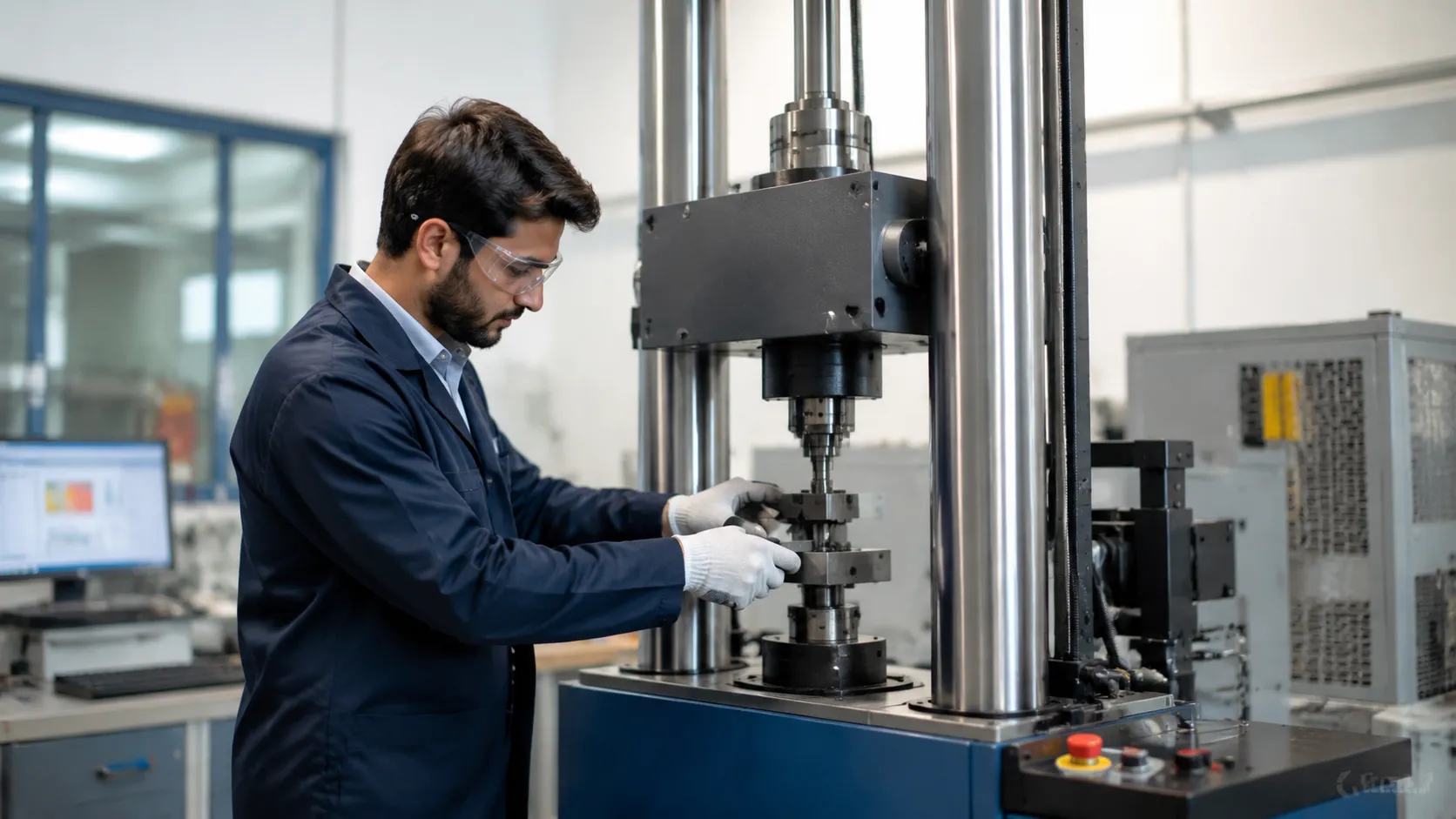
Foam Tensile & Tear Strength Testing (ASTM D3574 Test A & C)
Date: June 12, 2026 Categories: Technical Guides & Blog Views: 2065
Key Takeaways
- Tensile strength and tear resistance are core durability indicators defined in ASTM D3574 Test A and Test C, respectively
- Both tests measure how foam withstands mechanical stress before breaking — tensile tests elongation, tear tests crack propagation resistance
- Test specimens must be dumbbell-shaped (Type A or B) per ASTM D3574 Section 8; incorrect geometry invalidates results
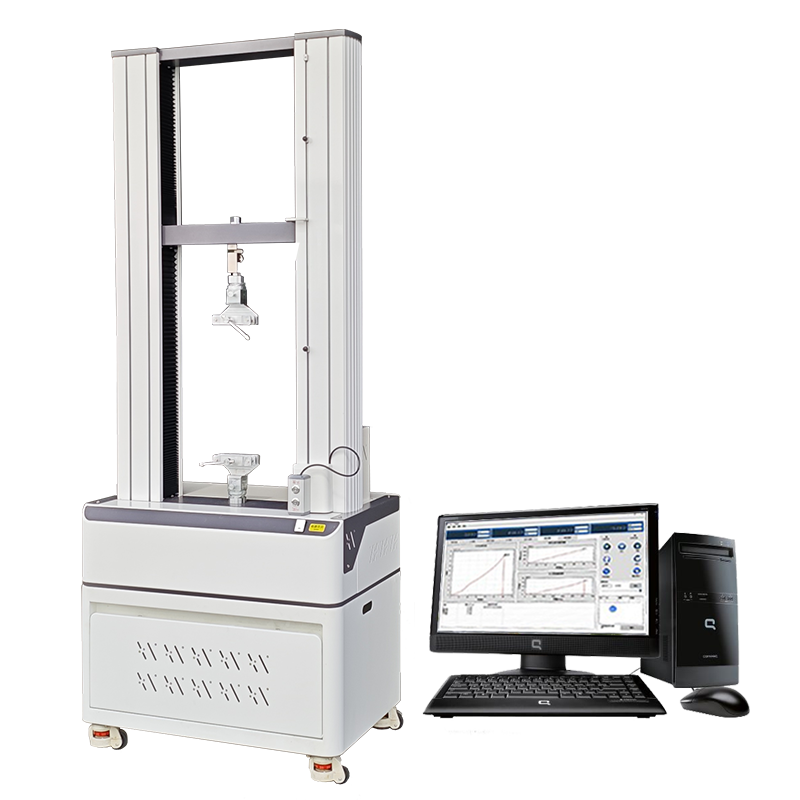
- Industry-standard equipment includes constant rate of extension (CRE) testing machines with 500 N to 5 kN load cells
- Results directly affect product certification: furniture (CAL 117), automotive (FMVSS 302), and medical cushioning applications
🔗 Equipment Partner:
Material Testing Equipment Manufacturer
— Professional foam testing solutions for global manufacturers.
Table of Contents
- Why Tensile and Tear Testing Matters
- ASTM D3574 Test A & C: The Standard Framework
- Test A — Tensile Strength & Elongation
- Test C — Tear Strength
- Test A vs Test C: Side-by-Side Comparison
- Calculation Formulas & Units
- Testing Equipment Selection
- Industry Applications
- Step-by-Step Testing Procedure
- Common Testing Errors & Solutions
- Frequently Asked Questions
- Authoritative Standards & Research Resources
1. Why Tensile and Tear Resistance Testing Matters
What is foam tensile and tear testing? Tensile strength testing measures the maximum force foam can withstand before breaking apart when pulled in two directions. Tear resistance testing measures how well foam resists crack growth when a pre-cut notch is torn open. Both are essential quality control parameters for flexible polyurethane foam used in load-bearing applications.
When foam fails in service — whether in a sofa cushion, automotive seat, or medical positioning pad — the root cause often traces back to inadequate tensile or tear performance during material qualification. A foam batch with low tensile strength will crack under repeated sitting loads. A foam batch with poor tear resistance will propagate tears from seam edges or cut surfaces during manufacturing and end-use.
For manufacturers and quality engineers, these two tests provide complementary data:
- Tensile strength tells you the foam's overall structural integrity under tension
- Elongation at break tells you how much the foam can stretch before fracture — critical for flexible cushioning applications
- Tear strength tells you the foam's resistance to tear initiation and propagation from defects or notches
2. ASTM D3574 Test A & C: The Standard Framework
For a comprehensive overview of foam test equipment covering all seven test methods in ASTM D3574, including Test A through Test G, refer to our complete guide. This standard specification for flexible cellular polyurethane foam, published by ASTM International Committee D20 on Plastics. It defines seven test methods — Test A through Test G — each targeting a specific physical property.
Test A (Tensile Properties) and Test C (Tear Strength) are among the most frequently specified tests in procurement contracts and regulatory compliance documents.
ASTM D3574 Overview
3. Test A — Tensile Strength & Elongation at Break
What does ASTM D3574 Test A measure? Test A measures two properties simultaneously: the maximum tensile force per unit cross-sectional area the foam can withstand before breaking (tensile strength), and the percentage increase in length from the original gauge length at the point of fracture (elongation at break).
The test uses a dumbbell-shaped specimen pulled at a constant rate of extension (CRE) until fracture. The maximum force recorded divided by the original cross-sectional area gives tensile strength in kPa or psi. Elongation is calculated as a percentage relative to the original gauge length.
Test A Specimen Requirements
4. Test C — Tear Strength (Trapezoidal Method)
What does ASTM D3574 Test C measure? Test C measures the force required to propagate a tear through a foam specimen with a pre-cut notch. The trapezoidal specimen shape creates a stress concentration at the notch tip, ensuring the tear propagates consistently along the intended path.
Unlike tensile testing which measures break-force on a pristine specimen, tear testing measures crack propagation resistance on a notched specimen. This simulates real-world conditions where foam may have cuts, seams, or surface defects.
Test C Specimen Requirements
5. Test A vs Test C: Side-by-Side Comparison
| Parameter | Test A — Tensile | Test C — Tear |
|---|---|---|
| ASTM D3574 Section | Section 9 (Test A) | Section 11 (Test C) |
| Specimen Geometry | Dumbbell (Die C) | Trapezoidal |
| Initial Cut | None — pristine specimen | 15 ± 1 mm notch required |
| What is Measured | Force to break intact foam | Force to propagate tear from notch |
| Primary Result | Tensile strength (kPa or psi) | Tear strength (N/cm or lbf/in) |
| Secondary Result | Elongation at break (%) | Peak force at tear propagation |
| Industry Relevance | Overall structural integrity | Resistance to damage propagation |
| Key Failure Mode | Complete fracture across gauge section | Notch-to-notch tear propagation |
| Typical Target Values | 80–200 kPa (11–29 psi) for standard PU foam | 1.5–4.0 N/cm for standard PU foam |
| Common Applications | Furniture cushioning, seat foam | Foam with seams, cut edges, or bonded joints |
6. Calculation Formulas & Units
Understanding how to calculate tensile strength and tear strength from raw test data is essential for quality engineers writing test reports.
Test A — Tensile Strength Calculation
Example: A specimen breaks at 180 N. Cross-section: 25.0 mm wide × 12.5 mm thick = 312.5 mm².
Test A — Elongation at Break Calculation
Example: Original gauge length = 50.0 mm. Length at break = 127.5 mm.
Test C — Tear Strength Calculation
Example: Tear force = 12.5 N. Specimen thickness = 1.25 cm (12.5 mm).
7. Tensile Testing Equipment Selection
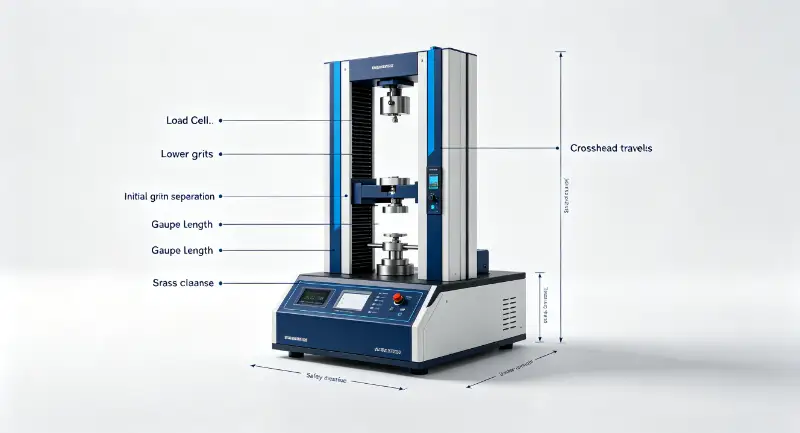
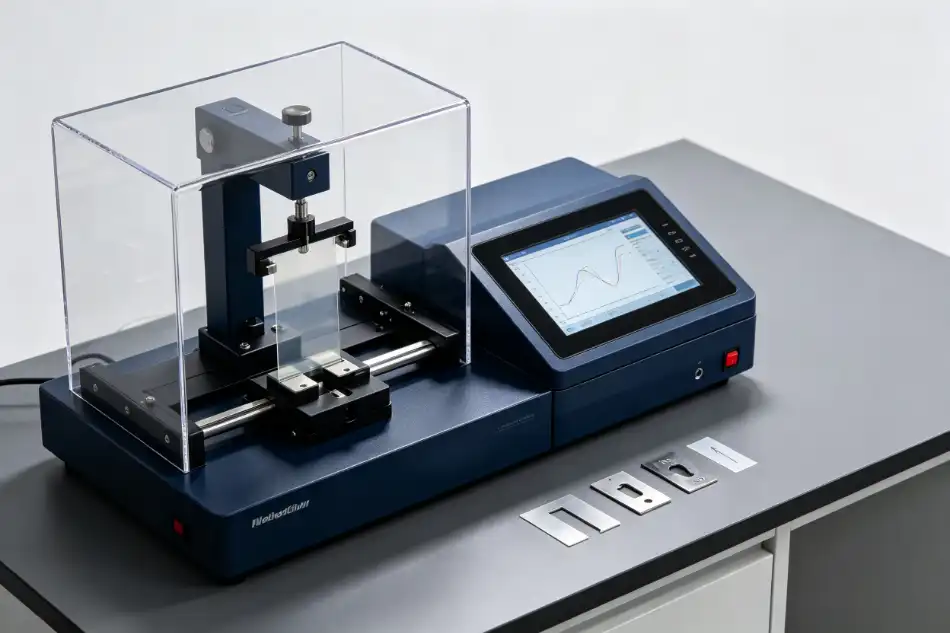
For a detailed guide on tensile testing machines, including load cell sizing and environmental chamber setup, refer to our equipment selection guide. Selecting the right testing machine for ASTM D3574 Test A and C requires understanding both the force range and the extension control requirements. CRE (Constant Rate of Extension) is mandated by the standard.
Universal Testing Machine (UTM) — Recommended
A motorized UTM with PC-based control software is the industry standard. Key requirements:
Die Cutting Equipment
Specimen consistency is critical. Use a precision die cutter with:
- Dumbbell die (Die C per ASTM D412/D3574) for Test A specimens
- Trapezoidal die per ASTM D3574 Figure 3 for Test C specimens
- Hydraulic or lever-action press to ensure clean cut edges
- Cutting board with self-healing surface to extend die life
Conditioning Chamber
ASTM D3574 requires specimens to be conditioned at 23 ± 2°C and 50 ± 5% relative humidity for a minimum of 16 hours before testing. A controlled environmental chamber is essential for consistent results across seasons.
8. Industry Applications
9. Step-by-Step Testing Procedure
Cut a minimum of 5 dumbbell specimens (Test A) and 5 trapezoidal specimens (Test C) from the foam sample using the appropriate dies. Ensure cut edges are clean and parallel with no visible delamination. Measure and record thickness (3 points per specimen) and width.
Place all specimens in the conditioning chamber at 23 ± 2°C and 50 ± 5% RH for a minimum of 16 hours. Remove specimens only immediately before testing. Testing should be completed within 5 minutes of removal from conditioning.
Install the appropriate grips (flat-faced or serrated depending on foam surface). Set crosshead speed to 500 ± 50 mm/min in CRE mode. Verify load cell is within calibration. Mount specimen centrally in grips with 50 ± 1 mm gauge length.
For dumbbell specimens: start the test. Record the maximum force at fracture (Fmax) and the elongation at break. For each specimen, calculate tensile strength and elongation. Discard specimens that break outside the gauge section.
For trapezoidal specimens: insert the pre-cut notch into the upper grip so the notch is at the grip line. Insert the other edge into the lower grip. Start the test. Record the maximum force during tear propagation. Calculate tear strength for each specimen.
Calculate the arithmetic mean, standard deviation, and coefficient of variation (CV) for tensile strength, elongation, and tear strength. Report results in kPa (tensile), % (elongation), and N/cm (tear). Compare against specification limits. A CV exceeding 10% may indicate batch inconsistency requiring investigation. For compliance requirements in compression set testing, see our polyurethane foam testing equipment.
10. Common Testing Errors & Solutions
| Error | Effect | Solution |
|---|---|---|
| Wrong specimen geometry | Tensile values up to 30% lower; results not ASTM compliant | Use verified dies per ASTM D3574. Inspect specimens before testing. |
| Specimens breaking at grip line | Invalid test; grip slippage gives artificially high values | Check grip pressure. Apply sandpaper-faced grips for slippery foam surfaces. |
| Crosshead speed too fast or slow | Results non-compliant; ASTM mandates 500 ± 50 mm/min | Verify speed with external extensometer before each test session. |
| Insufficient conditioning time | Foam absorbs/desorbs moisture during test; tensile values shift ±15% | Enforce 16-hour minimum conditioning. Log removal time and test completion time. |
| Incorrect notch depth (Test C) | 15 ± 1 mm notch is critical; too shallow or deep changes tear path | Use a dedicated trapezoidal notch cutter. Verify with calipers before each batch. |
| Load cell out of calibration | Systematic error in all results; compliance risk | Schedule annual calibration per ASTM E4. Verify with calibration weights monthly. |
| Specimen thickness variation | Cross-sectional area error propagates directly into tensile strength | Measure thickness at 3 points; reject specimens with >1 mm variation across gauge section. |
11. Frequently Asked Questions
12. Authoritative Standards & Research Resources
📋 Standards & Regulatory Documents
- ASTM D3574-25 — Standard Specification for Flexible Cellular Polyurethane Foam (latest edition, published by ASTM International)
- ASTM D412 — Standard Test Methods for Vulcanized Rubber and Thermoplastic Elastomers — Tension (die geometry reference)
- ISO 1798 — Flexible cellular polymeric materials — Determination of tensile strength and elongation at break
- ISO 8067 — Flexible cellular polymeric materials — Determination of tear strength
- California Technical Bulletin 117 (CAL 117) — Foam flammability requirements for residential furniture
- FMVSS 302 — Federal Motor Vehicle Safety Standard 302 — Flammability of interior materials (automotive)
📖 Industry References
- Polyurethane Foam Association (PFA) — Technical bulletins on foam physical testing and quality standards
- ASTM D20 Committee — Annual book of standards, Volume 08.02 — Plastics (I)
- ISO TC 45/SC 4 — Rubber and rubber products — Standards for foam testing methodology
Ready to Strengthen Your Foam Quality Control?
Derui Testing Equipment specializes in precision foam testing instruments — from universal testing machines to die cutting equipment and conditioning chambers. Our systems are calibrated to ASTM D3574 Test A and C requirements.
Foam Test Equipment Foam Testing Standards Material Strength Testing Foam Compression Testing foam compression set testing guide ASTM D3574 foam testing standards guide