



What Is a Transport Simulation Vibration Machine?
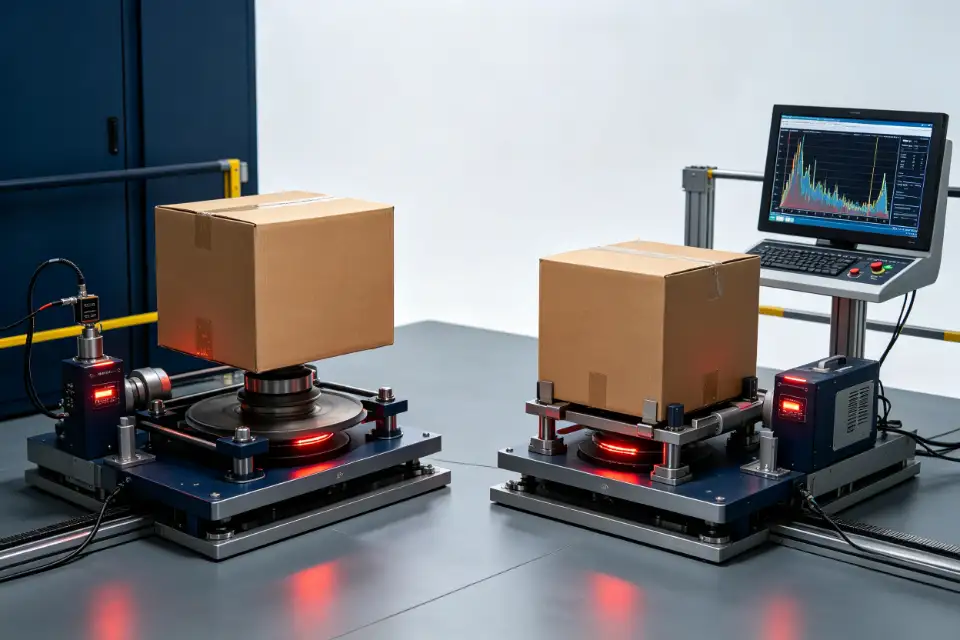
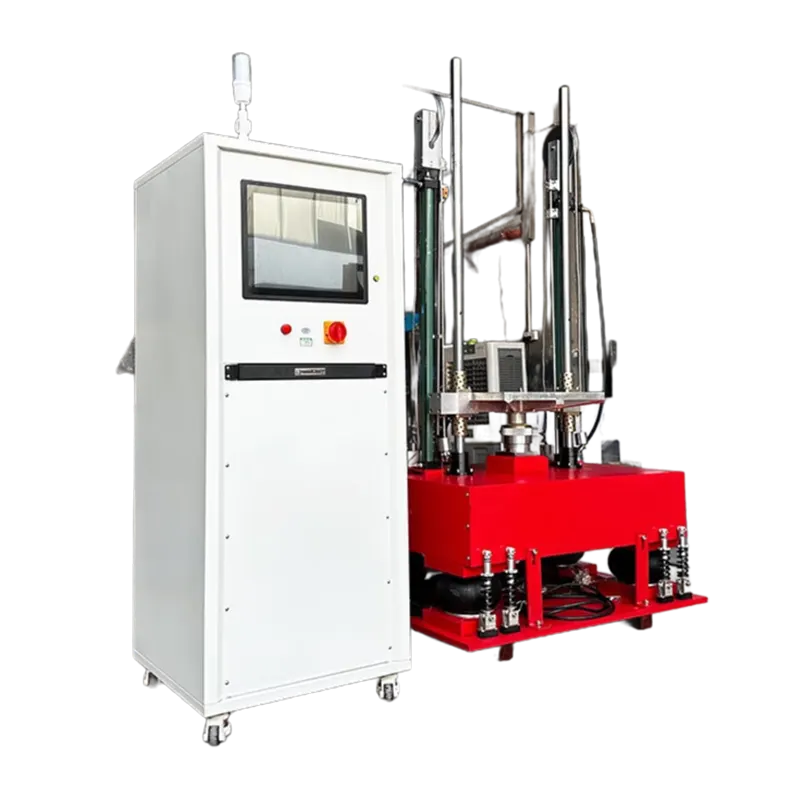
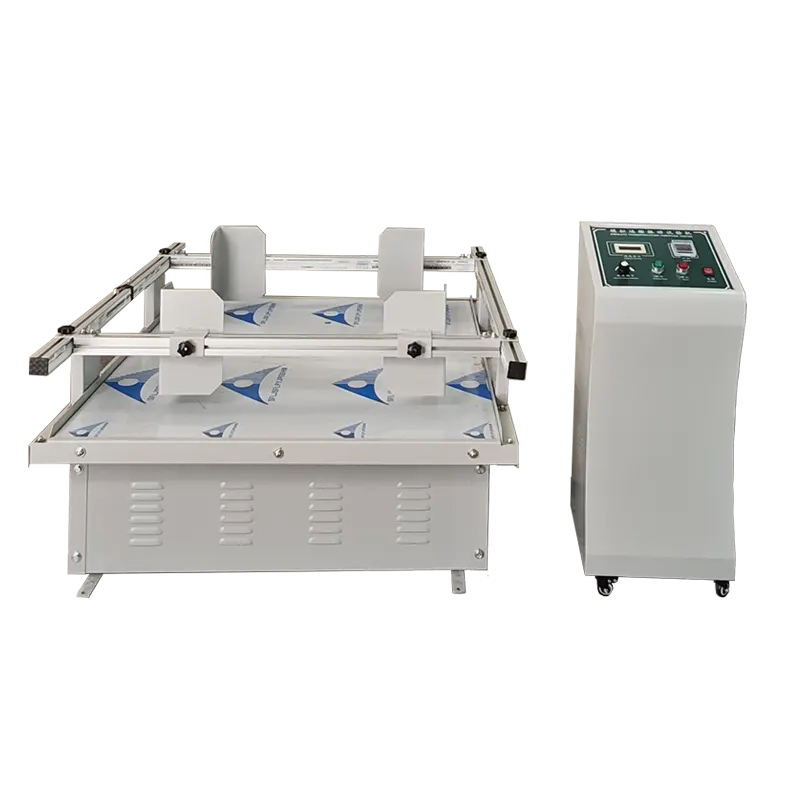
The DERUI DR-B216 uses a rotating eccentric mechanism to move a test platform in a combined vertical and fore-aft path. With a packaged product on the table, the system can produce fixed-displacement, adjustable-frequency repetitive vibration and shock exposure for compatible packaging procedures.
Quick answer: choose this machine only when the current procedure calls for rotary or fixed-displacement repetitive-shock motion. It does not reproduce a broadband random PSD profile and should not be specified for ASTM D4728 random vibration.
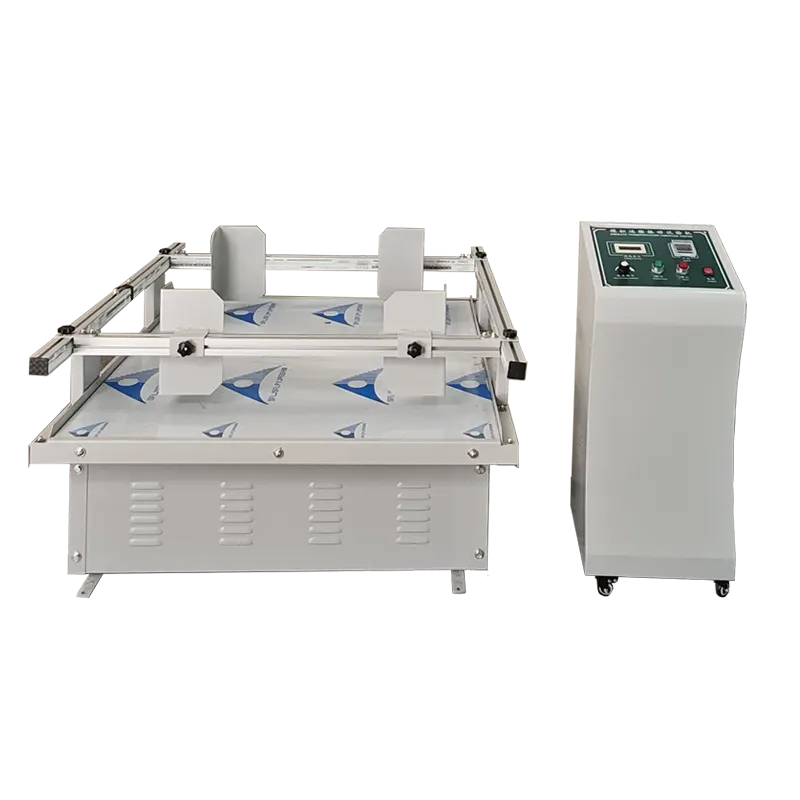
Is DR-B216 the Right Vibration Table?
Start with the specified input motion and complete loaded package. A familiar machine name does not prove that the table can carry, restrain or expose your specimen correctly.
Potentially suitable
- Filled shipping containers requiring fixed-displacement rotary repetitive-shock exposure.
- Procedures whose required motion, stroke and 100–300 CPM operating range match the supplied machine.
- Packages that fit the confirmed table, payload, center-of-gravity and restraint envelope.
- Comparative packaging checks with a documented speed, duration and inspection plan.
- Facilities able to provide safe clearance, stable support, power and noise/vibration control.
Review another system when
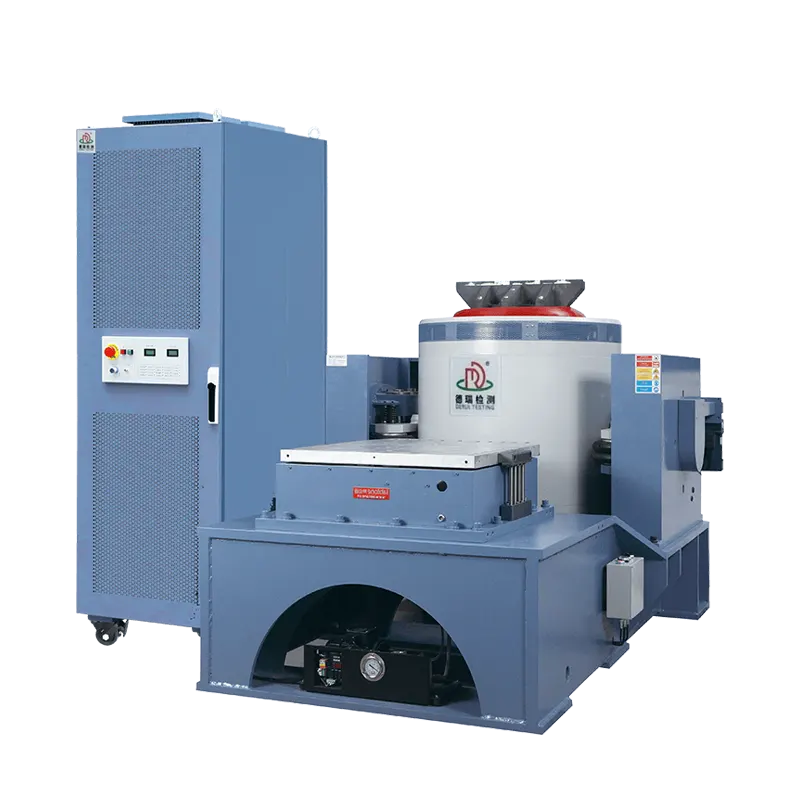
- The procedure requires closed-loop random vibration with a defined PSD and overall Grms.
- A sine sweep, resonance dwell, controlled acceleration or horizontal linear input is required.
- The complete package exceeds the confirmed payload, table size, clamp height or center-of-gravity limit.
- The specimen must be rigidly fixtured to reproduce an operational product environment rather than package transport.
- Multi-axis profiles, field-data replication or acceleration response channels are required but not documented.
Six Conditions That Control a Transport Vibration Test
Speed and time are only two inputs. The package, orientation, restraint, motion verification and post-test decisions must be controlled to make results comparable.
Complete test specimen
Use the actual product, cushioning, closures and accessories. Record total mass, L × W × H and center of gravity.
Method and sequence
Identify the procedure, edition, test orientation, vibration step and any required conditioning before or after exposure.
Table and restraint
Confirm contact area, overhang, free movement or restraint method without unintentionally changing the required package response.
Input motion
Set and verify the required displacement and CPM. Do not translate vehicle speed directly into table speed without a documented method.
Duration and monitoring
Use the method's duration or cycle logic. Record interruptions, package movement and any change in the machine or specimen.
Post-test evaluation
Inspect package damage, cushioning movement, closure integrity, product function and predetermined pass/fail criteria.
Fixed Displacement Is Not Random Vibration
Select the test method first. The machine must reproduce the required motion; changing the duration does not make one vibration type equivalent to another.
Multiple shipping-container vibration methods
D999 covers filled shipping containers and includes repetitive-shock and resonance procedures. A rotary mechanical table may be relevant to Method A2 only after its motion, displacement, capacity and operation are verified.
Random vibration with a PSD profile
D4728 subjects filled shipping units to random vibration. ASTM states there is no direct equivalence between random and sinusoidal vibration; DR-B216 should not be represented as a D4728 random system.
Procedure-specific equipment and sequence
ISTA procedures may call for fixed-displacement or random equipment depending on package type and procedure. Use the current procedure's equipment table, displacement, frequency, orientation and duration.
One vibration step in a distribution cycle
D4169 is a broader performance practice. Vibration can be combined sequentially with conditioning, handling, compression or other hazards; this machine alone does not complete or certify the distribution cycle.
Remove the old claim: ASTM D999 and D4728 do not impose the same equipment requirement. A 25.4 mm rotary table cannot generate a controlled random PSD merely by changing CPM or test time.
Eight Inputs for a DR-B216 Configuration Review
The existing page does not publish several capacity-defining values. Put them into the quotation before making an equipment decision.
Transport Vibration Machine FAQ
Direct answers for package-test selection and laboratory planning.
What motion does DR-B216 generate?
The published page describes a rotating eccentric mechanism that moves the platform vertically and fore-aft in an elliptical path, with fixed 25.4 mm displacement and adjustable 100–300 CPM speed.
Can DR-B216 perform ASTM D4728 random vibration?
No random capability is published. ASTM D4728 requires a controlled random vibration input described by a PSD. A mechanical fixed-displacement rotary table should not be sold as an equivalent random system.
Is DR-B216 suitable for ASTM D999?
It may be a starting point for a compatible repetitive-shock method, especially rotary motion, but D999 contains multiple methods. Confirm the exact method, machine motion, loaded-package capacity and current procedure in writing.
How are test speed and duration selected?
Use the governing procedure and the defined package-test objective. Do not convert truck or ship speed directly into table CPM, and do not use a generic cycle formula unless it appears in the current authorized method.
Should the package be clamped tightly to the table?
Only when the method requires that restraint. Some repetitive-shock procedures require the package to move or bounce within guides. Incorrect clamping can change the input and invalidate the test.
What information is needed before quotation?
Send the loaded package mass and dimensions, method and edition, input motion, CPM, duration, table size, restraint requirement, orientations, reporting needs, electrical supply and site constraints.
Request a DR-B216 configuration review
Send the complete package, required procedure, motion, speed, duration, table size, restraint condition and site details for an equipment review.