
Furniture Foam Testing: Ensuring Comfort and Durability in Upholstered Seating
Date: May 8, 2026 Categories: Technical Guides & Blog Views: 3212
Excerpt:
Furniture foam must balance comfort with years of daily use. Learn the key test methods for furniture foam quality control, from IFD firmness to compression set durability, and the equipment you need.
- Furniture foam testing covers firmness (IFD), flammability, durability, and compression set across multiple international standards
- EN 1021-1/-2 and BS 5852 are the primary European furniture flammability standards; CAL 117 remains the California baseline
- BIFMA X5.1 and X5.6 provide the most widely referenced North American furniture testing protocols for commercial seating
- Furniture foam density requirements vary significantly by application: seat cushions (25-45 kg/m³) vs back bolsters (20-30 kg/m³)
- Third-party certification (CertiPUR-US, OEKO-TEX) has become a market requirement for furniture retail in North America and Europe
Understanding Furniture Foam Testing
Upholstered furniture must balance comfort, durability, and safety across a product lifecycle of 10-15 years for residential furniture and 5-10 years for commercial contract furniture. The foam used in seat cushions, armrests, and back bolsters is the primary determinant of comfort retention over time — making furniture foam testing a critical quality and compliance function.
Furniture foam testing serves three distinct purposes: material qualification (proving a foam formulation meets specifications), product certification (proving the finished furniture meets safety standards), and quality control (verifying production foam meets qualified material specifications batch by batch).
Furniture fires remain a significant public safety concern worldwide. BS 5852, EN 1021-1/-2, CAL 117, and NFPA 260 are all furniture flammability standards that must be met before a product can legally be sold in their respective markets. There are no exceptions — a single batch of non-compliant foam can create legal liability for manufacturers, retailers, and importers.
Key Furniture Flammability Standards
EN 1021-1 and EN 1021-2 — European Furniture Flammability
EN 1021-1 tests with a smouldering cigarette ignition source. EN 1021-2 tests with a match flame equivalent (butane flame). Both tests assess whether the foam substrate is protected adequately by the cover fabric. If the cover fabric alone does not prevent ignition, the underlying foam must be tested with a fire retardant barrier.
BS 5852 — UK Furniture Flammability
BS 5852 is the comprehensive UK furniture flammability standard. It covers ignition by cigarettes (Source 0), matches (Source 1), and a range of other flame sources (Sources 2-7, including wooden cribs for high-hazard applications). Source 5 and Source 7 crib tests are commonly required for contract furniture in hotels and public spaces.
CAL 117 — California Technical Bulletin 117
CAL 117-2013 was the dominant US furniture flammability standard for decades. It tests smouldering ignition resistance using a cigarette and a propane burner. Although largely superseded in California by CAL 133 (foam-only testing for high-risk occupancies), CAL 117 remains a widely accepted voluntary standard in US retail markets.
NFPA 260 — North American Standard
NFPA 260 is widely adopted in the US as the furniture flammability standard referenced by retailers and furniture brands. It includes tests for cigarette resistance and covers the interaction between cover fabric and substrate foam. NFPA 260 is referenced by BIFMA standards as the basis for flammability requirements.
North American Furniture Testing: BIFMA Standards
| Standard | Scope | Key Foam Tests |
|---|---|---|
| BIFMA X5.1 | General purpose office chairs | Arm strength, seat cycle, back strength |
| BIFMA X5.6 | General purpose public seating | Seating durability, arm strength, structural test |
| BIFMA X5.5 | Desk products | Dimensional stability |
| BIFMA G1-2013 | Exterior grounds furniture | UV aging, weather resistance |
BIFMA standards focus on furniture structural performance rather than material testing. However, they implicitly require foam that maintains its mechanical properties throughout the specified test cycles. A foam with poor fatigue resistance will cause a chair to fail BIFMA seat cycle testing before the structural frame fails.
Foam Mechanical Testing for Furniture
Indentation Force Deflection (IFD)
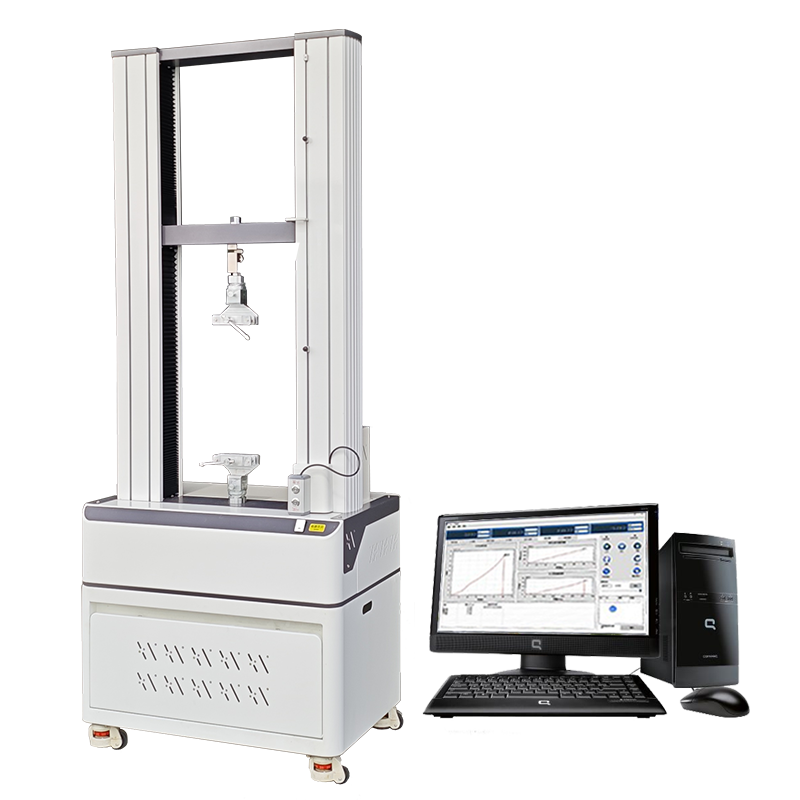
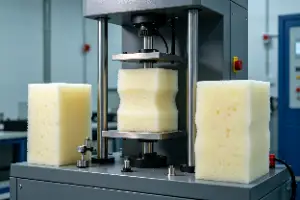
IFD testing measures foam firmness at 25% and 65% deflection — the fundamental comfort measurement for furniture foam. Seat cushion foam typically requires 25% IFD values between 120-280N depending on application (soft residential vs. firm commercial).
Compression Set
Compression set testing evaluates how much permanent deformation occurs when foam is held under sustained compression. For furniture applications, 50% compression for 22 hours at room temperature and at elevated temperature (70°C) provides the most relevant data for warranty-setting.
Cyclic Fatigue (ASTM D3574 Section C)
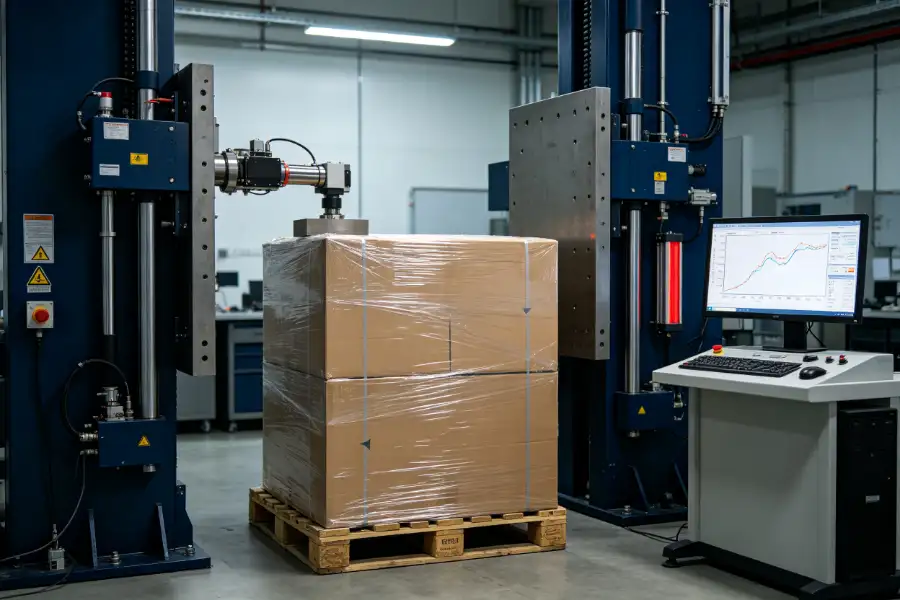
The 80,000-cycle fatigue test simulates extended furniture use. For residential furniture, this represents approximately 10-15 years of use. For commercial contract furniture (hotels, offices), some specifications require 100,000-200,000 cycles. IFD is measured before and after fatigue to quantify retention.
Step-by-Step: CAL 117 Cigarette Test Procedure
Step 1: Fabric-Covered Specimen Preparation
Place the fabric-covered foam specimen on a standard steel wire grid in a draft-free test cabinet. The fabric should be taut but not stretched. Condition the specimen at 21-25°C and 45-55% RH for at least 24 hours before testing.
Step 2: Place the Cigarette
Place a lit, extinguished cigarette (standard reference cigarette, approximately 85mm burning length) in the crevice where the horizontal seat cushion meets the vertical back cushion. If the furniture has welts (tightly covered cords at seams), place the cigarette directly beneath the welt.
Step 3: Observe and Time
Observe for 45 minutes. The test is monitored continuously for the first 15 minutes, then checked every 15 minutes. Record the time of any ignition, the extent of progressive smouldering, and whether the cigarette extinguished on its own.
Step 4: Measure Char Length
If the fabric chars but does not ignite, remove the cigarette at 45 minutes. Measure the char length from the cigarette center to the furthest point of fabric char. If char extends beyond 45mm, the specimen fails CAL 117.
Furniture Foam Density and Firmness Specifications
| Application | Typical Density | Typical 25% IFD | Support Factor |
|---|---|---|---|
| Premium residential seat cushion | 40-55 kg/m³ | 180-280N | 1.8-2.5 |
| Standard residential seat cushion | 28-40 kg/m³ | 120-180N | 1.7-2.2 |
| Commercial contract seat cushion | 35-50 kg/m³ | 150-250N | 1.8-2.5 |
| Back cushion (non-structural) | 22-32 kg/m³ | 80-140N | 1.5-2.0 |
| Armrest padding | 30-45 kg/m³ | 120-200N | 1.6-2.2 |
| Scatter cushion / pillow | 18-28 kg/m³ |