
Automotive Foam Testing Guide: Standards, Equipment, and OEM Specifications
Date: May 14, 2026 Categories: Technical Guides & Blog Views: 5766
Excerpt:
Complete guide to automotive foam testing covering FMVSS 201, SAE J3915, Ford/GM/Toyota specs, 90% IFD fatigue testing, high-temp aging, and heavy-duty equipment selection.
Key Takeaways
- Automotive foam testing covers seating, headrests, armrests, and door panels with standards including FMVSS 201, SAE J3915, and ISO 2439
- IFD fatigue testing at 90% compression simulates real-world load conditions and reveals premature foam degradation
- Heavy-duty load cells (up to 5000N) and high-temperature aging tests are essential for automotive-grade foam validation
- SAE J3915 and Ford ES5X3P are the primary automotive OEM specifications for seat cushion foam testing
- Derui automotive foam testers feature heavy-duty construction, high-temp chambers, and multi-channel fatigue testing capability
The Unique Demands of Automotive Foam Testing
Automotive seating foam faces harsher conditions than virtually any other foam application. A car seat must maintain its comfort and support characteristics over 10-15 years of daily use, across extreme temperature ranges from Arctic cold to desert heat, and under the dynamic loading of entering and exiting the vehicle thousands of times.
Unlike furniture foam, automotive foam must pass rigorous OEM specifications, federal safety standards, and accelerated aging tests that simulate years of real-world service in just weeks of laboratory testing. This makes automotive foam testing among the most demanding in the industry.
| Parameter | Automotive | Furniture/Mattress |
|---|---|---|
| Force range | Up to 5000N (heavy-duty) | Typically 500-2000N |
| Temperature range | -30C to +85C (aging) | 23+/-2C (standard) |
| Fatigue cycles | 25,000-100,000 | 30,000 (QB/T 2914) |
| OEM specs | SAE J3915, Ford, GM, Toyota | ASTM D3574, ISO 2439 |
| Load tolerance | +/-10N | +/-0.5% of reading |
Key Automotive Foam Testing Standards
FMVSS 201 - Occupant Impact Protection
Federal Motor Vehicle Safety Standard 201 specifies performance requirements for instrument panel and interior surfaces to minimize upper interior impact injuries. While not directly a foam hardness test, FMVSS 201 testing uses instrumented headforms and measures HIC (Head Injury Criterion) values that relate to foam energy absorption properties.
SAE J3915 - Lumbar Support Fatigue Test
This standard specifically tests the durability of lumbar support mechanisms embedded in seat foam. The test applies repeated load cycles to the lumbar region, measuring force loss and surface degradation over 25,000 cycles. Seat foam must maintain at least 85% of original IFD after the test.
Ford ES5X3P Specification
Ford's material specification for seating foam requires:
- IFD25: 100-180N for comfort layers, 200-350N for support layers
- 90% IFD fatigue: 25,000 cycles, force retention above 80%
- Humidity aging: 96 hours at 85C, 95% RH
- Thermal cycling: 24 cycles from -30C to +70C
GM / Toyota Specifications
General Motors and Toyota have similar requirements with different tolerance bands. Both require documentation of production lot testing with statistical process control (SPC) charts showing mean and range for each test parameter.
IFD Fatigue Testing for Automotive Foam
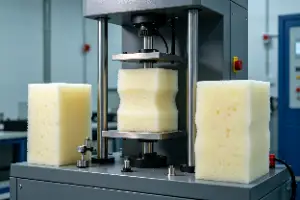
The 90% IFD fatigue test is the most demanding foam test in the automotive industry. Unlike mattress rollator testing which compresses to a fixed percentage of thickness, IFD fatigue compresses the foam to 90% of its original thickness - nearly complete compression - for tens of thousands of cycles.
Standard: ASTM D3574 Test H (IFD fatigue)
Sample: 100mm x 100mm x 50mm, minimum 3 specimens
Precondition: 23+/-2C, 50+/-5% RH, 16 hours minimum
Compression: 90% of original thickness
Cycles: 25,000 (standard) to 100,000 (heavy-duty applications)
Speed: 50+/-5mm/min (ASTM D3574)
Pass criteria: Force retention above 80% of initial IFD value
High-Temperature Aging Tests
Automotive foam must maintain its properties after prolonged exposure to high temperatures - parked cars in summer can reach 70-85C in the cabin. High-temperature aging tests verify that foam does not soften excessively, become brittle, or release harmful emissions after thermal exposure.
Hot Air Aging: 96 hours at 85C, measured IFD change
Humidity Aging: 96 hours at 70C, 95% RH, measured IFD and compression set
Thermal Cycling: Repeated cycling between -30C and +70C, measured physical properties change
UV Aging: 500 hours of UV exposure simulating sunlight degradation of surface foam
Load Cell Requirements for Automotive Testing
Standard furniture IFD testers with 2000N load cells are insufficient for heavy-duty automotive applications. Automotive testing requires:
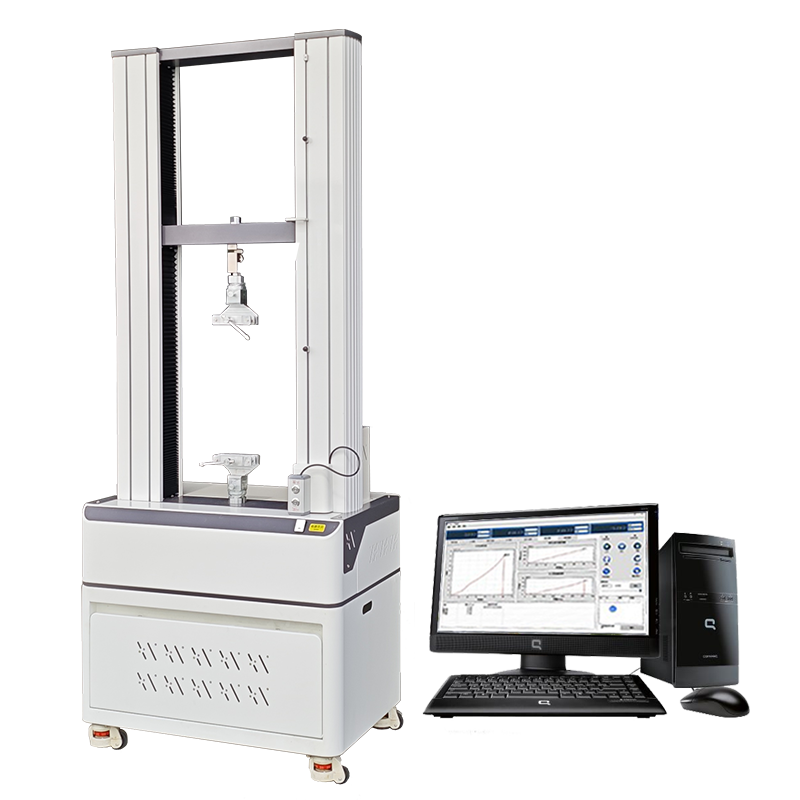
- High-capacity load cells: 5000N minimum for truck and commercial vehicle seats
- High accuracy: +/-0.5% of reading with 100N resolution
- High temperature rating: Load cells must operate in thermal chambers up to 85C
- Multi-axis capability: Some tests require simultaneous force and displacement measurement in multiple axes
Seat Cushion Fatigue Test Systems
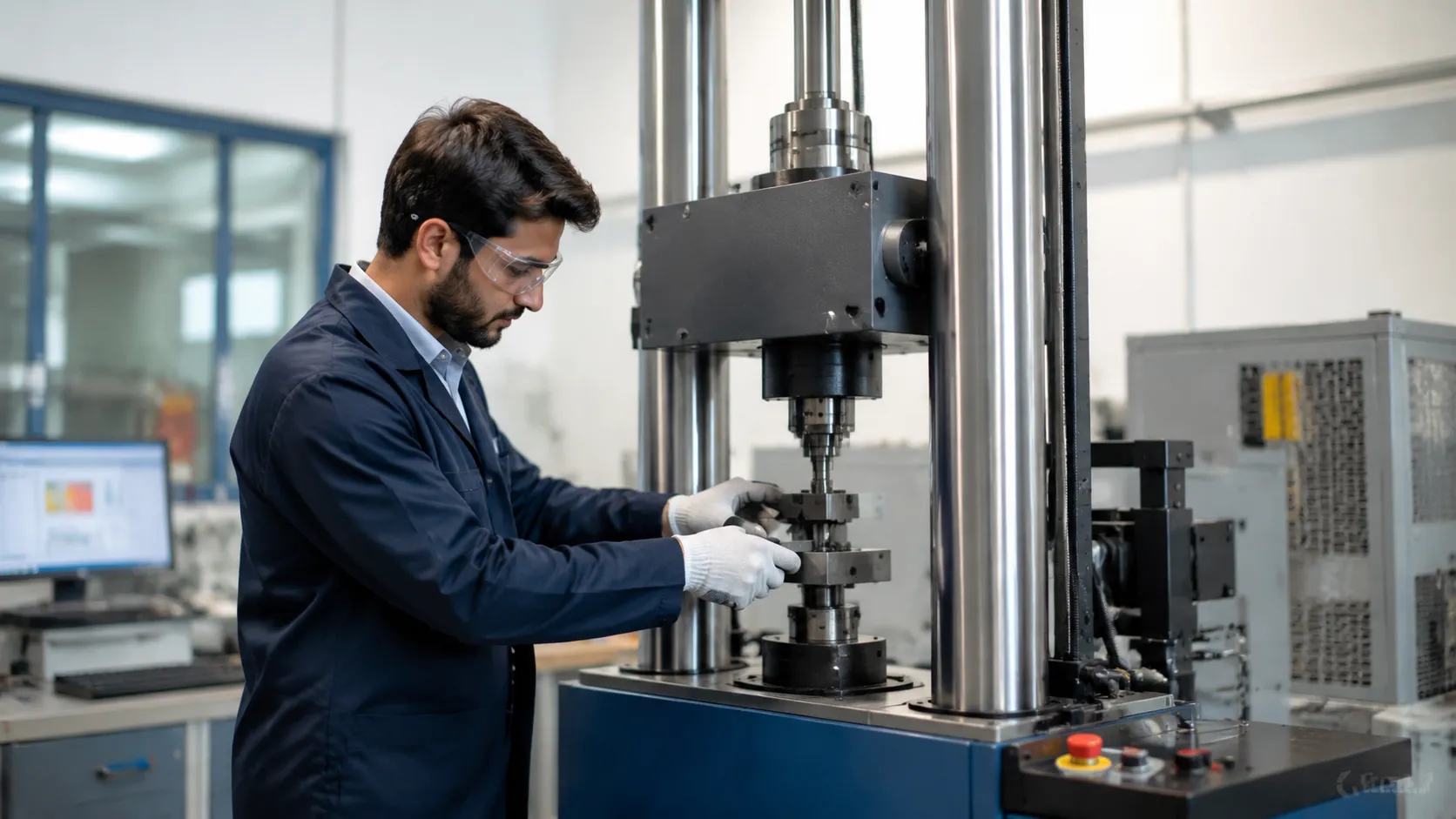
Automotive seat cushion fatigue testing requires specialized equipment that can simulate the dynamic loading of real seat use. This includes:
Continuous Fatigue Testing Machine
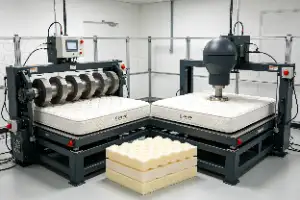
Full-width roller systems that compress the entire seat cushion across its width, simulating the loading pattern of a person sitting down. These machines can run continuously for days, logging force and displacement data throughout the test.
Localized Fatigue Tester
Point-load testers that apply concentrated force to specific areas - the seat edge, lumbar region, and side bolster - to test durability at high-stress zones.
Multi-Station Test Rig
For high-volume automotive suppliers, multi-station test rigs can run 4-8 samples simultaneously, dramatically increasing throughput while maintaining test validity.
Performance Metrics and Acceptance Criteria
| Test | Acceptance Criteria | Measurement |
|---|---|---|
| IFD25 (fresh) | Per OEM specification (typically 100-350N) | Newton |
| 90% IFD fatigue (25k cycles) | Retention above 80% of initial | % retention |
| Humidity aging (96h) | IFD change within +/-15% | % change |
| Hot air aging (96h) | IFD change within +/-20% | % change |
| Compression set | Below 10% (ASTM D3574) | % |
| Tensile strength | Per ISO 1798 (min 80kPa) | kPa |
| Elongation at break | Per ISO 1798 (min 100%) | % |
OEM-Specific Testing Requirements
Ford Motor Company
- Primary spec: ES5X3P (seat cushion), ES5X4P (headrest)
- IFD fatigue: 25,000 cycles at 90% compression
- Aging: Humidity (85C, 95% RH, 96h) and hot air (105C, 96h)
- Testing frequency: Every production lot with SPC data submission
General Motors
- GMW 14867 (seat foam material specification)
- IFD at multiple compression levels (IFD25, IFD40, IFD65)
- Fatigue: 50,000 cycles for heavy-duty truck seats
- Emissions testing: VDA 278 for odor and fogging
Toyota
- TSM 7109G (polyurethane foam material standard)
- IFD25 target: 120-200N (comfort), 200-350N (support)
- Fatigue: 30,000 cycles with localized heating to 50C during test
Quality Control for Automotive Foam Suppliers
Automotive suppliers must maintain rigorous quality systems including:
- IATF 16949 certification: Quality management system for automotive production
- PPAP (Production Part Approval Process): Documentation of test results for new parts
- SPC (Statistical Process Control): Continuous monitoring of test data with control charts
- Calibration traceability: ISO 17025 accredited calibration for all test equipment
- First Article Inspection (FAI): Full testing of first production samples before shipment
Equipment Selection Guide
When selecting automotive foam testing equipment, ensure the system meets these requirements:
- Load capacity of 5000N minimum for heavy-duty applications
- Thermal chamber capability from -30C to +85C
- IFD fatigue capability with 90% compression and 25,000+ cycle capacity
- Automated data logging with OEM-specified report formats
- Multi-channel capability for simultaneous testing of multiple samples
- Software compatible with automotive industry data formats (ASCII, CSV, custom)