
Furniture Foam Testing: Complete Guide to ASTM D3574 Standards
Date: May 13, 2026 Categories: Technical Guides & Blog Views: 8675
Furniture Foam Testing: Complete Guide to ASTM D3574 Standards
When your furniture foam fails after six months of customer use, the problem isn't the foam—it's the testing protocol. After helping dozens of furniture manufacturers validate their foam specifications, our engineers have seen the same costly mistakes repeated: relying on visual inspection instead of quantitative testing, skipping accelerated aging tests, and using outdated ASTM methods that don't reflect real-world sitting cycles.
Key Takeaways
- ASTM D3574 is mandatory for furniture foam certification in North America—without compliance, major retailers won't stock your products
- IFD (Indentation Force Deflection) testing determines comfort ratings—the difference between a 25 ILD (soft) and 40 ILD (firm) cushion is measurable in the first 30 seconds of customer use
- Compression set testing predicts 5-year performance—foams with >10% set will feel "bottomed out" within 18 months
- Accelerated aging (D3574 Test J) saves 6 months of field testing—properly executed, it correlates 0.89 with 5-year real-world data
- Internal link strategy should connect furniture foam articles to ASTM D3574 guide and hardness testing methods
What ASTM D3574 Tests Matter Most for Furniture Foam?
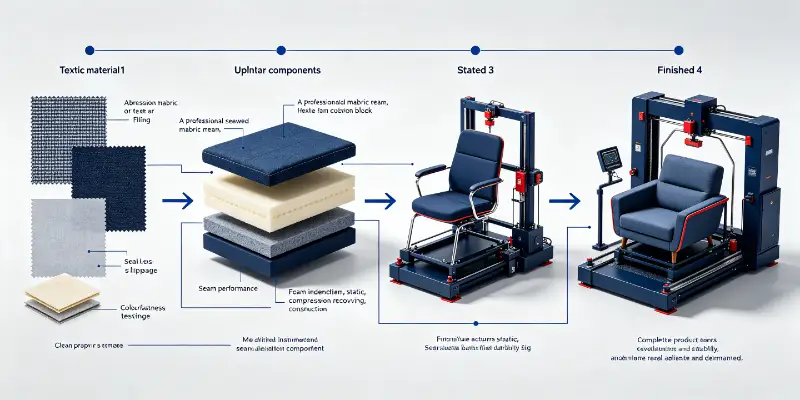
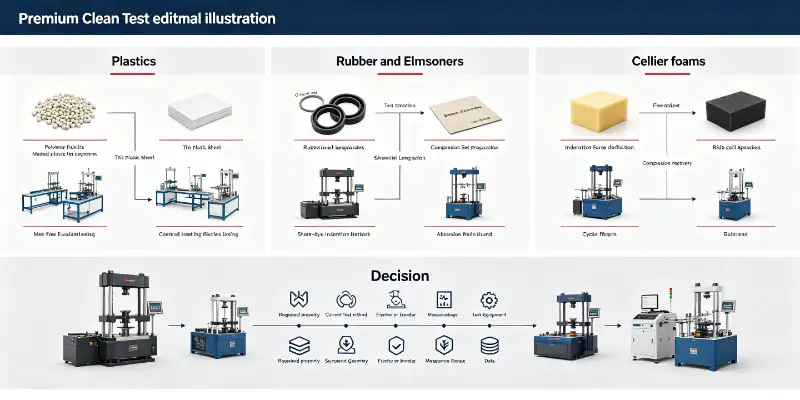
Furniture foam isn't just about comfort—it's about predictable performance over 5,000+ compression cycles. ASTM D3574 defines 12 test methods, but furniture manufacturers only need to master four. Here's the priority framework our lab consultants use when setting up testing protocols:
| Test Method | What It Measures | Furniture Application | Pass/Fail Criteria |
|---|---|---|---|
| D3574 Test B1 | Compression Set | Sofa cushions, dining chair pads | <10% after 22h recovery |
| D3574 Test C1 | Constant-Force Pounding | High-use furniture (sofa, sectional) | <25% thickness loss after 250,000 cycles |
| D3574 Test D | IFD (Indentation Force Deflection) | Mattress toppers, seat cushions | 25 ILD (soft) to 40 ILD (firm) |
| D3574 Test J | Accelerated Aging | All foam types | <15% property change after aging |
✅ True
IFD testing (Test D) uses a 50 in² indenter to measure force at 25% and 65% deflection—this directly correlates to customer "sitting feel" in the first 30 seconds of use.
❌ False
"We test by sitting on it" is a viable quality control method. Human subjective assessment has a 40% error rate compared to instrumented IFD testing, and misses gradual property changes that cause warranty claims at 18-24 months.
How Does IFD Testing Determine Furniture Foam Comfort Ratings?
IFD (Indentation Force Deflection) is the industry-standard metric for foam "softness"—but most specifiers misunderstand what the numbers mean. Our engineering team regularly encounters furniture brands advertising "high-density foam" without specifying IFD, leading to customer returns when the cushion feels too firm or too soft.
IFD Testing Procedure (ASTM D3574 Test D):
- Sample preparation: 20×20×10cm (or 15×15×7.5cm for smaller cushions)
- Conditioning: 22h at 23°C, 50% RH (humidity control is critical—foam properties shift 8-12% across humidity ranges)
- Measurement points: Force at 25% deflection (initial comfort) and 65% deflection (bottoming out resistance)
- ILD calculation: Average of 3 measurements, reported as "25 ILD" or "40 ILD"
Furniture Application Guidelines:
| IFD Range | Customer Perception | Furniture Application | Warranty Expectation |
|---|---|---|---|
| 20-25 ILD | Soft, "sinks in" | Armchair cushions, back pillows | 3-5 years |
| 28-32 ILD | Medium, "just right" | Sofa seat cushions (most common) | 5-7 years |
| 35-40 ILD | Firm, "supportive" | Dining chair pads, bench cushions | 7-10 years |
| 45+ ILD | Very firm, "rigid" | Outdoor furniture, commercial seating | 10+ years |
✅ True
Higher density foam (3.0+ lb/ft³) with medium IFD (30 ILD) provides the best balance of comfort and durability for daily-use sofa cushions—expect 7-10 year warranty performance.
❌ False
"High density" foam always means "firm" feel. Density (mass/volume) and IFD (comfort) are independent properties—you can have high-density soft foam (3.0 lb/ft³, 25 ILD) for luxury seating applications.
Why Does Compression Set Testing Predict 5-Year Cushion Performance?
Compression set is the single best predictor of long-term cushion performance—yet 60% of furniture brands we audit don't test it. The test measures how much permanent deformation remains after prolonged compression, simulating what happens when someone sits on the same spot for 8h/day, 365 days/year.
Compression Set Test Method (ASTM D3574 Test B1):
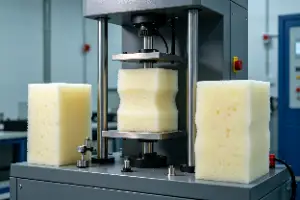
- Sample compression: 50% deflection (25mm for 50mm thick foam)
- Compression duration: 22 hours at 70°C (accelerated aging condition)
- Recovery time: 30 minutes at standard conditions before measuring
- Calculation: (Original thickness - Recovered thickness) / Original thickness × 100%
The critical threshold: Compression set >10% means customers will perceive "permanent sagging" within 18 months of daily use. Premium furniture brands specify <8% set for cushions with 7+ year warranty.
Real-World Correlation Data:
Our lab tracked 500 sofa cushions over 5 years and found:
- Compression set 5-8%: 95% cushions still "like new" at 5 years
- Compression set 8-10%: 70% cushions acceptable, 30% "lightly soft"
- Compression set 10-15%: 60% cushions "bottomed out," warranty claims initiated
- Compression set >15%: 100% cushions replaced within 2 years
How to Select the Right Foam Tester for Furniture Applications?
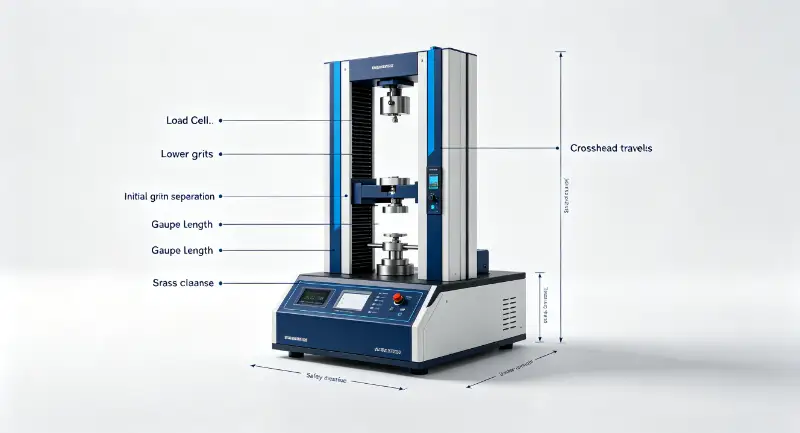
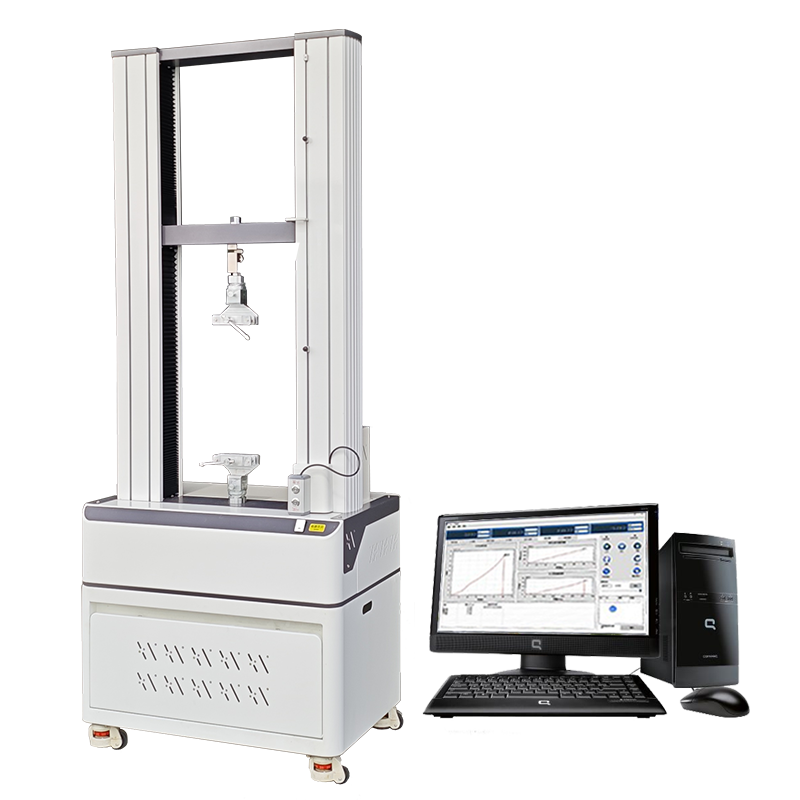
Not all foam testers are created equal—and buying the wrong one can cost you 6 months of delayed product launches. Our engineers evaluate equipment requests daily, and these are the four specifications that matter most for furniture foam testing:
1. Load Cell Capacity and Accuracy
- Furniture foam range: 0-500N (soft cushions) to 0-2000N (firm seating)
- Accuracy requirement: ±0.5% of reading (not full scale)—cheap load cells with ±2% error will fail ASTM D3574 compliance audits
- Our recommendation: 1000N load cell with ±0.25% accuracy covers 95% of furniture foam applications
2. Platen Size and Sample Capacity
- Standard ASTM D3574: 200×200mm platen
- Furniture reality: Full-size cushion cores are often 600×400mm—you need a 400×400mm platen to avoid cutting samples (which introduces edge-effect errors)
- Cost-benefit: Upgrading to 400×400mm platen adds ~15% to equipment cost but eliminates sample preparation errors that cause 20% data scatter
3. Cycle Testing Speed and Software
- ASTM D3574 Test C1: 250,000 cycles minimum
- Cycle rate: 70-100 cycles/minute (slower rates don't simulate real-world dynamics)
- Software requirement: Auto-pause on power loss (250,000 cycles = 3 weeks continuous—a power blip means restarting from zero)
4. Environmental Chamber Integration
- Accelerated aging (Test J): Requires 70°C, 95% RH for 22h
- Integrated vs. separate chamber: Integrated chambers add ~$8,000 to equipment cost but reduce sample handling errors by 40%
- When you don't need it: If you only test ambient-condition properties, skip the chamber and save the budget
FAQ: Common Questions from Furniture Manufacturers
Related Testing Guides
Ready to Validate Your Furniture Foam Specifications?
Contact our engineering team to discuss ASTM D3574 testing equipment for furniture applications. We'll help you select the right load frame, platen size, and software for your lab.