
Packaging Foam Testing: Protecting Products Through Scientific Material Selection
Date: May 8, 2026 Categories: Technical Guides & Blog Views: 8890
Excerpt:
Packaging foam must absorb impact energy and protect fragile products during shipping. Learn CFD testing, dynamic cushion curves, and the test methods that ensure your packaging foam performs when it matters most.
- Packaging foam testing combines material testing (cushioning curves, compression) with full-package transit simulation testing (ISTA, ASTM D4169)
- Cushioning curves are the fundamental data set for selecting the right foam density and thickness for a specific product fragility level
- ISTA 3A is the most widely referenced package testing standard for e-commerce and parcel delivery applications worldwide
- Foam packaging types include EPS, EPP, EPE, PU, and PE — each with distinct cushioning, compressive, and environmental properties
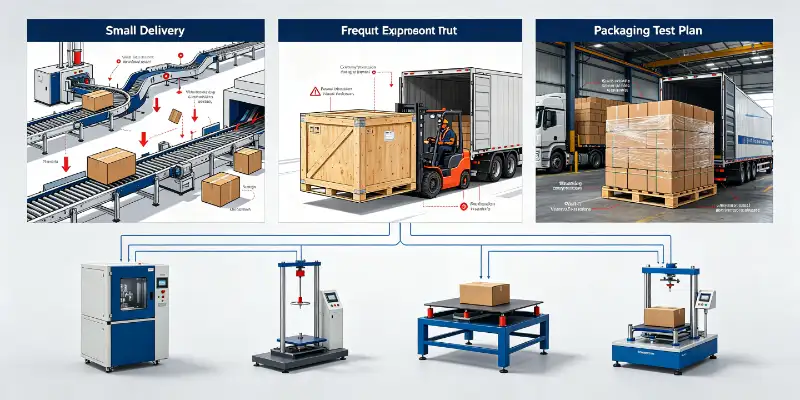
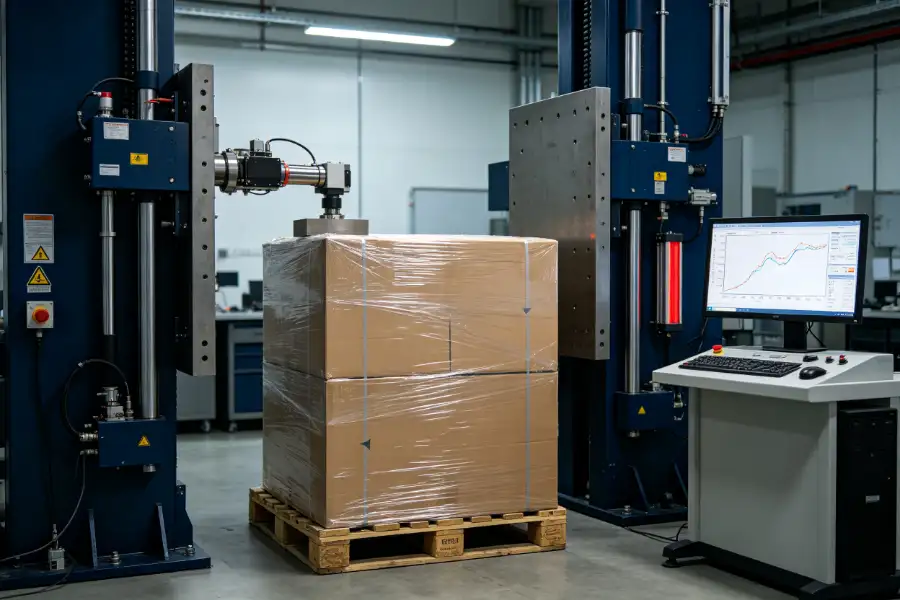
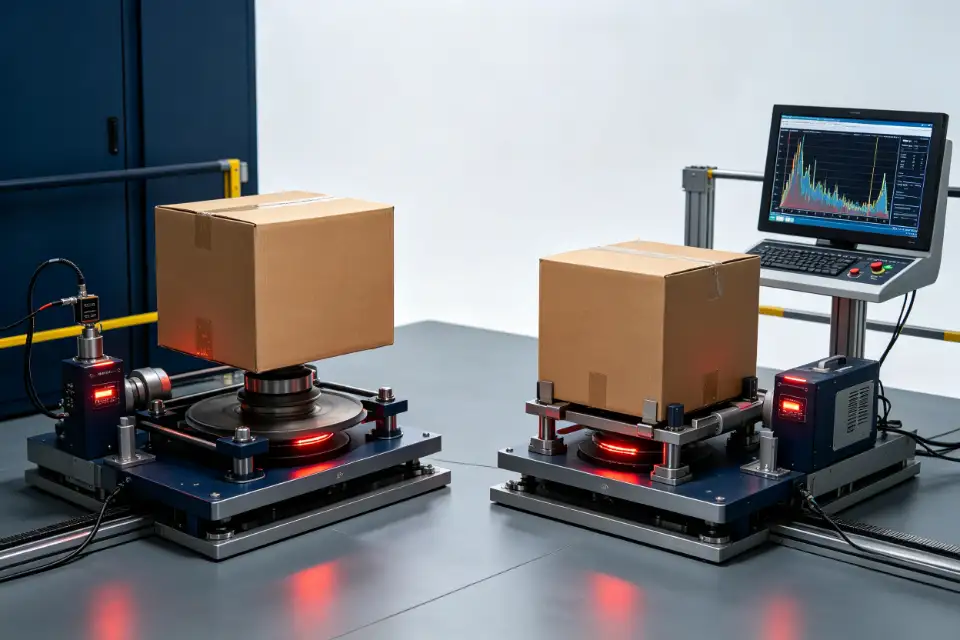
- Drop testing, vibration testing, and compression testing together simulate the full distribution environment a package will encounter
The Science of Packaging Foam Testing
Every product that ships — from a fragile wine glass to a 50kg industrial motor — requires packaging foam that absorbs shock, dampens vibration, and prevents product damage during transit. Packaging foam testing bridges material science and logistics engineering, providing the data needed to select, design, and validate foam packaging systems that protect products through the rigors of global distribution.
The consequences of inadequate packaging foam testing are severe: product damage rates, return costs, customer complaints, and reputational harm. Studies estimate that 5-10% of shipped goods experience some form of transit damage, with inadequate cushioning accounting for the majority of preventable cases. Scientific packaging foam testing reduces damage rates to under 0.5% when properly implemented.
Every packaging foam design begins with the product's fragility rating, expressed in G-shock (peak acceleration) that the product can withstand without damage. Delicate electronics may tolerate only 15-30 G, consumer furniture 50-75 G, and industrial equipment up to 100+ G. The entire cushioning design is built around protecting the product against its specific fragility threshold.
Understanding Cushioning Curves
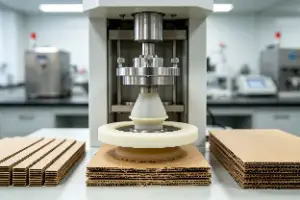
A cushioning curve plots the peak deceleration (in G) transmitted through a foam specimen to a simulated product mass, against the static stress (foam load divided by foam area) applied to the specimen. These curves — generated by dropping a known mass onto foam of a specific density and thickness — are the primary tool for selecting the right foam for a packaging application.
Key elements of a cushioning curve:
- Peak G Level: The maximum acceleration transmitted through the foam to the product, measured by an accelerometer on the impact surface.
- Static Stress: The product weight per unit area on the foam cushion, expressed in kPa or psi. This determines where on the curve the product operates.
- Cushion Thickness: The foam thickness significantly affects the curve shape — thicker cushions generally provide better shock absorption but increase package size.
- Foam Density: Higher density foams typically have lower peak G levels at a given static stress, but the relationship varies significantly by foam type.
How to Read a Cushioning Curve
Locate your product's static stress (weight/contact area) on the horizontal axis. Read up to find the lowest point on the cushioning curve for your foam density. If that G level is below your product's fragility threshold, the foam selection is appropriate. If above, either increase foam thickness, change foam density, or modify the contact area to reduce static stress.
Key Packaging Foam Testing Standards
ISTA 3A — General Simulation Performance Test
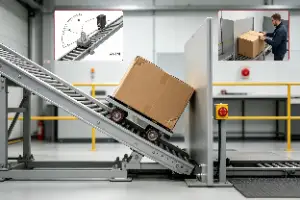
ISTA 3A is the dominant package testing standard for products shipped through parcel delivery networks (FedEx, UPS, DHL, Amazon). It simulates the compression, vibration, and shock hazards of a typical e-commerce distribution cycle, including: atmospheric preconditioning, manual handling drops, vehicle vibration simulation, and warehouse stacking compression.
ASTM D4169 — Standard Practice for Performance Testing of Shipping Containers
ASTM D4169 provides a comprehensive framework for testing shipping containers across 18 distinct service levels (from light parcel to heavy truck freight). Each service level specifies which test sequences to run and at what intensity. The standard covers: loose load vibration, concentrated loads, forklift truck handling, rail car vibration, and truck vibration.
MIL-STD-810 — Environmental Engineering Considerations
MIL-STD-810 is the US Department of Defense standard for environmental testing of equipment, including packaging. Method 516.6 covers transit drop and shock. It specifies rigorous drop heights based on package weight and transport mode, and is commonly required for defense, aerospace, and medical device packaging applications.
ISO 2248 — Packaging: Complete Filled Boxes — Horizontal Impact Test
ISO 2248 specifies a horizontal impact test for complete filled packages using a pendulum or guided free-fall impact machine. The package is accelerated to a specified velocity and impacts a vertical target surface. Suitable for testing packages in a controlled orientation rather than random tumbling.
Foam Material Testing Methods
| Test Method | Standard | Purpose | Key Measurement |
|---|---|---|---|
| Cushioning Curve | ASTM D1596 | Shock absorption characterization | Peak G at various static stresses |
| Dynamic Compression | ASTM D3575 | Load-bearing under impact | Stress-strain response at strain rates |
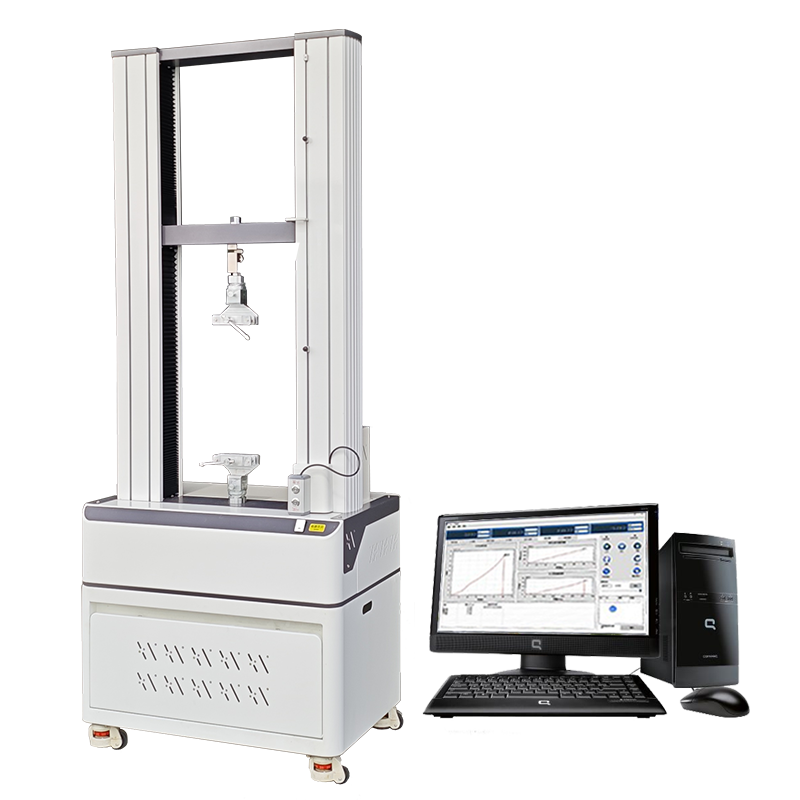
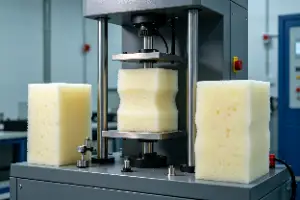
| Static Compression | ASTM D3574 | Stacking load capacity | Compression force at 25%/50%/75% |
| Creep / Compression Set | ASTM D395 | Long-term load performance | Height loss after sustained load |
| Recovery Rate | ASTM D3574 | Cushion rebound after impact | Height recovery percentage |
| Density | ASTM D1622 | Material specification | Mass per unit volume (kg/m3) |
Step-by-Step: Cushioning Curve Generation (ASTM D1596)
Step 1: Prepare Foam Specimens
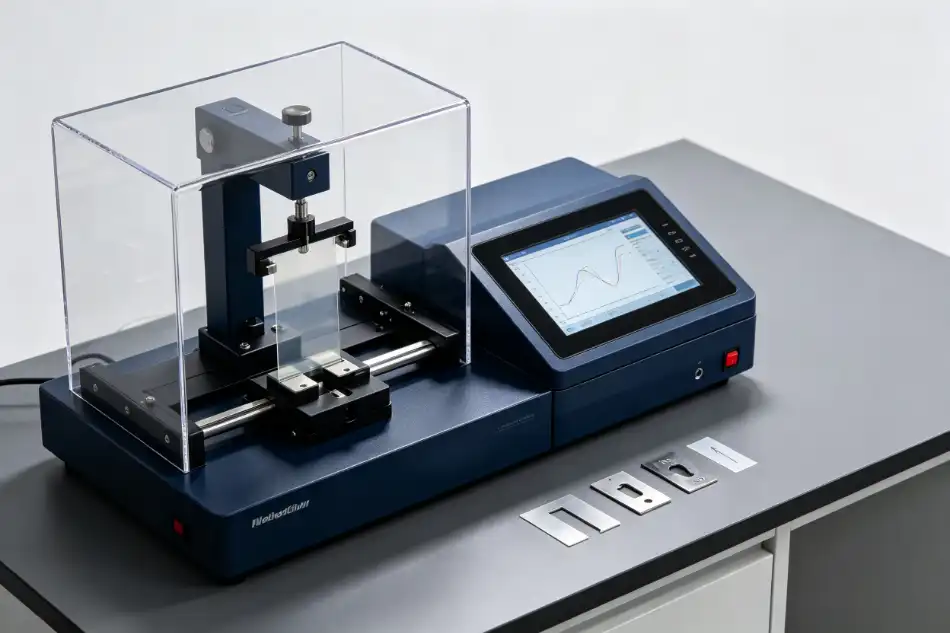
Cut foam specimens to the dimensions that will be used in the actual packaging design. Standard specimen sizes for cushioning testing are 150 x 150mm or 100 x 100mm. Condition specimens at 23°C, 50% RH for at least 24 hours. Record density, thickness, and mass for each specimen.
Step 2: Select Drop Heights and Static Stress Levels
Choose drop heights representing your distribution hazards: 300mm for parcel handling, 600mm for forklift drops, 900mm for warehouse drops. Test at static stress levels from 1 kPa to 50 kPa to generate the full curve. For each test, calculate static stress = (drop mass + product mass) / contact area.
Step 3: Mount Accelerometer
Attach a piezoelectric accelerometer to the flat bottom surface of the drop mass. Connect to a data acquisition system with at least 10 kHz sampling rate. Set the trigger threshold to start recording before impact. Calibrate the accelerometer before the test series.
Step 4: Conduct Drop Tests
Drop the specimen onto the flat anvil from each specified height. Repeat at each static stress level. Record the peak G and impulse shape for each test. At least 3 drops per condition are recommended for statistical validity. Allow the foam to recover between drops (5-10 minutes for most foams).
Step 5: Plot the Cushioning Curve
Plot peak G (Y-axis) against static stress (X-axis) for each foam density and thickness tested. The lowest point on each curve identifies the optimum static stress for that foam configuration — this is the design point for your packaging.
Types of Packaging Foam and Their Properties
| Foam Type | Density | Cushioning | Compression | Key Applications |
|---|---|---|---|---|
| EPS (Expanded Polystyrene) | 10-40 g/L | Excellent at low static stress | Moderate | Electronics, appliances, cold chain |
| EPP (Expanded Polypropylene) | 20-100 g/L | Good, with excellent recovery | High | Automotive, industrial, reusable packaging |
| EPE (Expanded Polyethylene) | 20-45 g/L | Good at moderate static stress | Moderate-High | Electronics, furniture, consumer goods |
| PU Flexible Foam | 15-60 kg/m3 | Excellent, broad curve plateau | Low-Medium | High-value fragile products, custom inserts |
| PU Rigid Foam (Spray) | 30-80 kg/m3 | Good for block inserts | High | Industrial, marine, custom fitment |
| PE Foam (Closed Cell) | 25-200 kg/m3 | Excellent at high static stress | Very High | Heavy industrial, military, load bearing |