
Foam Density Testing Methods: How to Measure and Why It Matters
Date: May 8, 2026 Categories: Technical Guides & Blog Views: 3783
Excerpt:
Foam density is the single best predictor of durability and performance. Learn ASTM D3574 Test A methods, the relationship between density and foam properties, and equipment needed for accurate measurement.
📋 Key Takeaways
- Foam density is the most fundamental property affecting product performance, durability, and cost
- Four primary testing methods: Mass/Volume, Archimedes' Principle, Geometric, and MDSD — each with specific use cases
- ASTM D3574 is the global standard for flexible cellular material testing, with density as the mandatory first test
- Density directly correlates to load-bearing capacity, compression resistance, and cost efficiency
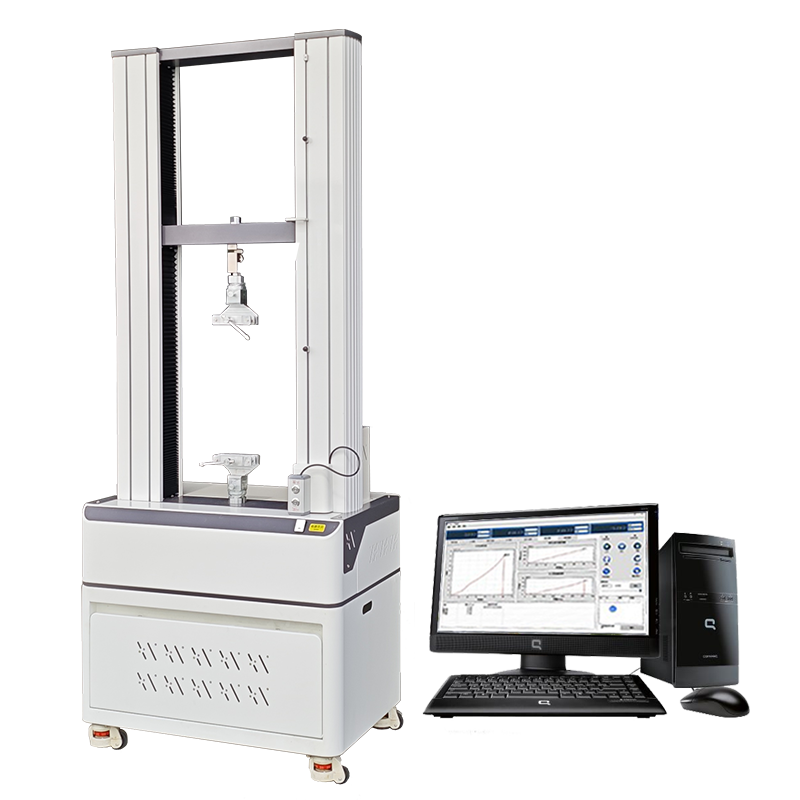
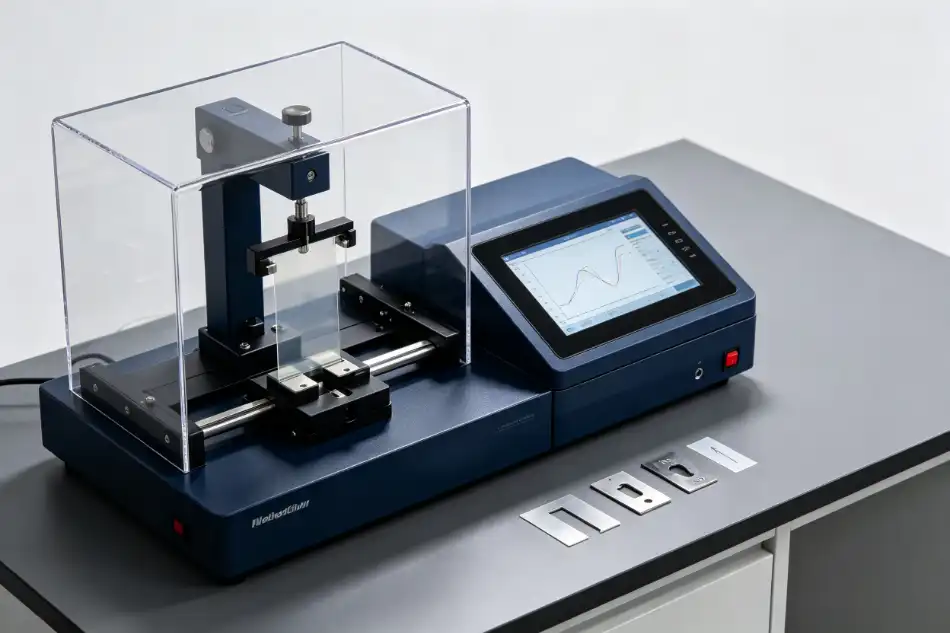
- Proper testing requires calibrated equipment, controlled environment, and adherence to sample preparation protocols
Table of Contents
What Is Foam Density and Why Does It Matter?
Foam density is defined as the mass per unit volume of a foam material, typically expressed in kilograms per cubic meter (kg/m³) or pounds per cubic foot (pcf). In the polyurethane foam industry, density is universally measured in kilograms per cubic meter (kg/m³).
Density is the single most important specification when selecting foam for any application. It determines:
- Load-bearing capacity — Higher density foams support greater weights without excessive compression
- Durability and lifespan — Denser foams maintain their properties longer under repeated stress
- Comfort characteristics — In seating applications, density affects how the foam "feels" over time
- Cost structure — Raw material costs scale directly with density; selecting the correct density prevents over-specification and unnecessary expense
- Processing parameters — Density affects demolding time, cure cycles, and downstream processing
For quality control purposes, density testing is performed on every production lot before the foam is released for shipment. A deviation of even 5% from target density can significantly alter end-product performance.
4 Primary Foam Density Testing Methods
Principle
The most straightforward method: measure the mass of a sample using a precision balance, measure its dimensions with calipers, calculate volume geometrically, then compute density using the formula:
Density (kg/m³) = Mass (g) ÷ Volume (cm³) × 1000
Procedure
- Cut a rectangular sample with known dimensions (typically 100mm × 100mm × 50mm)
- Weigh the sample on an analytical balance (accuracy ±0.01g)
- Measure dimensions at three points, average the results
- Calculate volume from averaged dimensions
- Apply the density formula
Best For
Regularly shaped samples, production floor testing, and quick quality checks. This is the most common method used in manufacturing environments.
Principle
Based on Archimedes' principle: a body submerged in fluid experiences an upward buoyant force equal to the weight of displaced fluid. By measuring the weight of the sample in air and in a displacing liquid (typically water or isopropyl alcohol), the volume can be calculated:
Volume = (Weight in Air − Weight in Liquid) ÷ Liquid Density
Procedure
- Weigh the dry sample in air (Wa)
- Immerse the sample in liquid using a fixture, weigh again (Ws)
- The buoyant force equals Wa − Ws
- Divide by liquid density to get sample volume
- Divide mass by calculated volume for density
Best For
Irregularly shaped samples, porous materials, and high-accuracy requirements. This method eliminates geometric measurement errors.
Principle
For samples with perfectly regular geometry, direct dimensional measurement provides volume with high accuracy when performed carefully.
Sample Requirements
- Cubes or rectangular blocks with clean-cut edges
- No skin or surface irregularities
- Minimum 50mm in any dimension
- Edges must be parallel and perpendicular
Measurement Protocol
- Measure length, width, height at center and two additional points
- Use digital calipers with 0.01mm resolution
- Average all measurements for each dimension
- Calculate volume as L × W × H
- Weigh and calculate density
Principle
The most technologically advanced method uses a mass-sensing system that continuously monitors weight as the sample is immersed in a controlled-temperature liquid bath. The system automatically calculates volume and density with minimal human intervention.
Advantages
- Automated measurement reduces operator error
- Temperature compensation built-in
- Direct digital output to lab systems
- High repeatability (typically ±0.1 kg/m³)
- Can test multiple samples in sequence
Best For
High-volume testing laboratories, certification testing, and research applications requiring maximum precision and audit trails.
Method Comparison
| Method | Accuracy | Speed | Sample Shape | Equipment Cost | Best Use Case |
|---|---|---|---|---|---|
| Mass/Volume | ±1-2 kg/m³ | 5-10 min | Regular only | $500-2,000 | Production QC |
| Archimedes | ±0.5-1 kg/m³ | 15-20 min | Any shape | $1,000-5,000 | Lab certification |
| Geometric | ±1 kg/m³ | 10-15 min | Regular only | $200-500 | Quick checks |
| MDSD | ±0.1 kg/m³ | 3-5 min | Any shape | $10,000-30,000 | Advanced labs |
ASTM D3574: The Industry Standard
ASTM D3574 is the Standard Test Method for Flexible Cellular Materials—Slab, Bonded, and Molded Urethane Foams. It is the globally recognized standard for polyurethane foam testing and is referenced in virtually all foam material specifications worldwide.
Density Requirements Under ASTM D3574
The standard specifies density testing under Test Method A (Mass/Volume) with the following requirements:
- Sample size: Minimum 100mm × 100mm × 50mm, or equivalent volume
- Conditioning: 24 hours minimum at 23°C ± 2°C and 50% ± 5% relative humidity
- Measurement precision: Balance accuracy ±0.01g; caliper accuracy ±0.05mm
- Number of samples: Minimum 3 specimens per test lot
- Report format: Individual values, average, standard deviation
Density Ranges by Foam Type
| Foam Type | Density Range (kg/m³) | Typical Applications | Notes |
|---|---|---|---|
| Super Soft | 12 - 20 | Packaging, cushioning | High comfort, low load-bearing |
| Standard Flexible | 20 - 35 | Furniture cushioning, bedding | Most common commercial range |
| High-Resilience (HR) | 35 - 60 | Automotive seating, premium furniture | Better support and durability |
| Semi-Rigid | 60 - 150 | Instrument panels, armrests | Structural applications |
| Rigid | 150 - 600+ | Insulation, structural panels | Closed-cell dominant |
Step-by-Step Testing Procedure
How to Interpret Density Results
Acceptance Criteria
Most foam specifications allow a ±5% tolerance from the nominal density value. For example, a foam specified at 40 kg/m³ would have an acceptable range of 38-42 kg/m³.
What Low Density Indicates
- Manufacturing issue: Improper chemical mix ratio, incomplete reaction, or excessive blowing agent
- Material concern: Lower raw material content per unit volume
- Performance impact: Reduced load-bearing, faster fatigue, shorter product life
What High Density Indicates
- Over-formulation: More raw material than necessary, increasing cost
- Processing issue: Incomplete expansion or mold underfill
- Potential opportunity: Cost optimization possible without performance loss
Industry Applications
Common Testing Issues & Solutions
• Incorrect sample conditioning (too short or wrong temperature/RH)
• Measurement errors from worn or uncalibrated instruments
• Irregular sample geometry not accounted for in method selection
• Statistical outliers from non-representative sampling
Issue 1: Results Outside Tolerance
Possible Causes:
- Batch formulation error — check mix ratio and raw material batch records
- Process drift — review machine parameters and environmental conditions
- Statistical anomaly — retest with fresh samples; check sampling procedure
Resolution: Quarantine affected material, conduct root cause investigation, implement corrective action before resuming production.
Issue 2: High Variability Between Samples
Possible Causes:
- Poor mixing during production — foam not homogeneous
- Sample from edge vs. center — density gradients common near mold walls
- Insufficient conditioning — moisture content not equalized
Resolution: Review sampling plan to ensure representative collection from multiple locations; extend conditioning time; audit mixing process.
Issue 3: Discrepancy Between Lab and Customer Results
Possible Causes:
- Different conditioning protocols — verify both labs follow ASTM D3574
- Method differences — Archimedes vs. geometric method can show ±1 kg/m³ variation
- Instrument calibration drift — compare calibration certificates
Resolution: Establish a mutually agreed test protocol; use reference samples to verify both labs; implement cross-lab comparison program.
Frequently Asked Questions
Related Testing Resources
Need Professional Foam Density Testing Equipment?
Derui Equipment specializes in high-precision foam testing systems compliant with ASTM D3574, ISO 3386, and global automotive standards.
Request a Quote →Last updated: May 2026 | This article is for informational purposes. Always consult current ASTM standards for official testing requirements.