What is the difference between electrodynamic and servo-hydraulic shakers?
Electrodynamic shakers use a moving coil in a magnetic field and excel in high-frequency applications (up to 3,000 Hz+) like electronics testing. Servo-hydraulic shakers use hydraulic actuators and are ideal for high-force, large-displacement, low-frequency tests (typically below 500 Hz) on heavy structures like vehicles or airframes.
How can I choose the right drop tester for my needs?
When selecting a drop tester, consider factors such as the types of products you are testing, the required drop heights, and the features you need (like data logging or automation). It's also beneficial to look for testers that comply with industry standards relevant to your products. Consulting with manufacturers and reading user reviews can provide valuable insights to make an informed choice.
What industries benefit from using drop testers?
Several industries benefit from the use of drop testers, including consumer electronics, automotive, packaging, and aerospace. These sectors rely on drop testing to ensure their products can withstand impact forces during transport and use. By identifying vulnerabilities through testing, companies can enhance product durability and reduce return rates, leading to improved customer satisfaction.
Can drop testers be used for all types of products?
What are the key features of a drop tester?
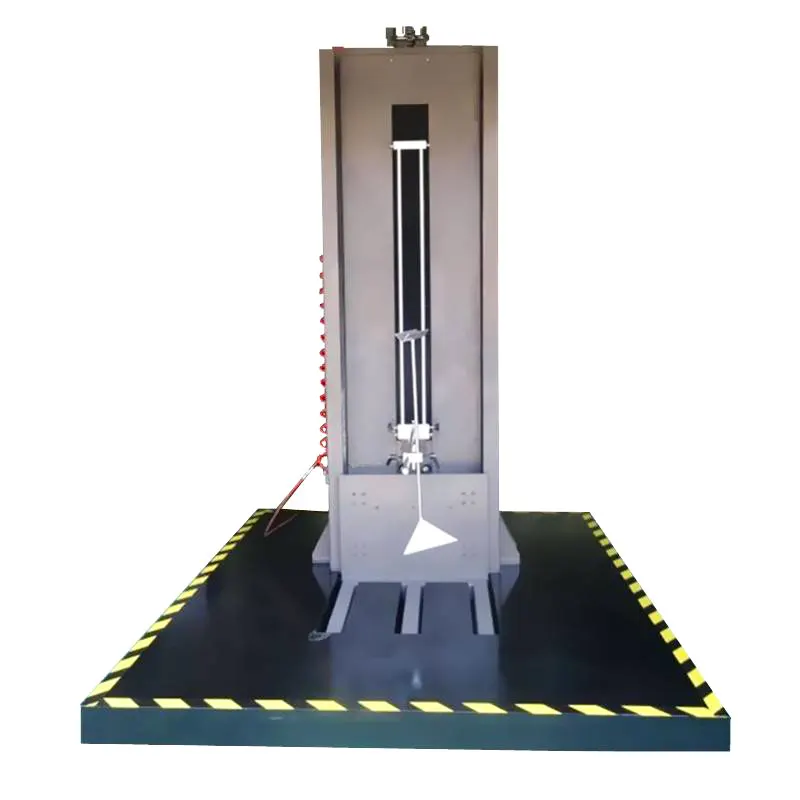
Key features of a drop tester may include adjustable drop heights, various impact surfaces, data logging capabilities, and high-speed cameras for detailed analysis. Advanced models may offer automated testing cycles and software integration for easier data analysis and reporting, making them invaluable in product testing for quality assurance.
We are new to standardized drop testing. Can you provide guidance?
Absolutely. Our applications engineers are experts in transit testing standards. We can provide guidance on selecting the appropriate test sequence for your distribution channel, help define a test plan, and even offer sample testing services to get you started.
Do you offer validation (IQ/OQ) or on-site calibration services?
We offer comprehensive service packages, including Installation/Operational Qualification (IQ/OQ) documentation and on-site calibration performed by certified technicians with traceable measurement standards to ensure your system remains audit-ready.
What does routine maintenance involve?
Maintenance is minimal but crucial. It primarily involves regular inspection and cleaning of the release mechanism, verification of drop height calibration, and checking the condition of the impact surface. We provide clear schedules and support for these activities.
Can your software help us manage compliance documentation?
Yes. Our optional ProDrop Software Suite not only controls the tester but also stores standard test methods, records all test parameters and results, and generates formatted PDF reports with pass/fail summaries—streamlining audit preparation and quality documentation.
How critical is the release mechanism to test accuracy?
It is the most critical component. A poor release can impart spin or lateral motion, drastically altering the impact angle and energy. Our electromagnetic and pneumatic releases are engineered for clean, consistent disengagement, which is essential for repeatable, standard-compliant testing.
Our products vary widely in size and weight. How do we select the right capacity?
Choose a model where your heaviest, largest sample is within 60-75% of the tester's maximum rated weight and platform size. This ensures longevity of the machine and accurate, consistent results. Our team can help you analyze your product mix.
What is the key difference between a "free-fall" and a "shock" (or "zero-drop") tester?
A free-fall tester drops the sample itself from a height. A shock tester lifts and drops the impact base while the sample is stationary on top, simulating an impact to the underside of a large, non-droppable product. The choice depends on your test standard and product type.
Can you help us design a test plan for a specific retail compliance standard?
Absolutely. This is a core part of our partnership. Our application engineers routinely assist clients in developing test plans for standards like Amazon’s FRUSTA-Free, Target’s T3000, or Walmart’s packaging requirements. The process involves: 1) Analyzing your specific supply chain and the retailer’s protocol, 2) Mapping the required tests to our equipment capabilities (e.g., defining correct drop sequences, vibration profiles, compression forces), and 3) Configuring the software and fixtures to execute the plan accurately. We ensure your lab is not just equipped, but optimally set up to achieve and document compliance efficiently.
How often should packaging test equipment be calibrated?
For reliable, audit-ready data, a rigorous calibration schedule is essential. We recommend:
-
Annual Calibration: A full, traceable calibration by an accredited lab for all critical sensors (load cells, accelerometers, displacement transducers) to ensure absolute accuracy against national standards.
-
Regular Verification: Frequent “in-house” checks (e.g., monthly or quarterly) using certified reference weights or calibration fixtures to confirm system stability and repeatability between annual calibrations.
-
Event-Based Recalibration: Immediate recalibration after any event that could affect measurement integrity, such as equipment relocation, physical shock, or a major repair.
Derui offers comprehensive calibration services and support plans to help you maintain this schedule, ensuring your lab’s data is always defensible.
What's the difference between ISTA 3A and ASTM D4169?
While both are core to packaging validation, they serve different purposes. ISTA 3A is a prescribed performance test procedure that simulates a specific parcel delivery environment. It provides a fixed sequence of tests (e.g., vibration, shock, compression) with defined parameters that your package must pass. ASTM D4169, on the other hand, is a practice for performance testing that offers a “toolbox” of test methods and allows you to assemble a custom test plan based on your unique distribution cycle (DC) hazards. Think of it this way: ISTA 3A is a fixed menu, while ASTM D4169 is a build-your-own menu guided by your DC profile. Many labs use both—ISTA for standard compliance and ASTM for tailored, risk-based validation.
What Should I Look for When Choosing a Packaging Validation Lab?
When selecting a Packaging Validation Lab, consider their accreditation, expertise, and the range of tests they offer. Evaluate their experience with your specific product type and industry norms. Additionally, look for labs equipped with modern technological resources and those that provide clear timelines and communication throughout the validation process.