Do you provide samples for correlation testing before purchase?
Yes. We strongly encourage correlation testing. We can provide certified reference materials or work with you to test your own samples, comparing results against your existing equipment or known values. This hands-on validation ensures the instrument meets your specific accuracy requirements before installation.
What kind of data export and integration capabilities do your systems offer?
Our systems are designed for modern labs. Standard features include generating PDF reports (with curves and stats) and exporting raw data to CSV/Excel. For higher integration, many models support direct network connectivity and can be configured to output data to a SQL database or interfaced with your Laboratory Information Management System (LIMS) for full traceability.
Our lab needs to test according to both TAPPI and ISO standards. Is that possible with one instrument?
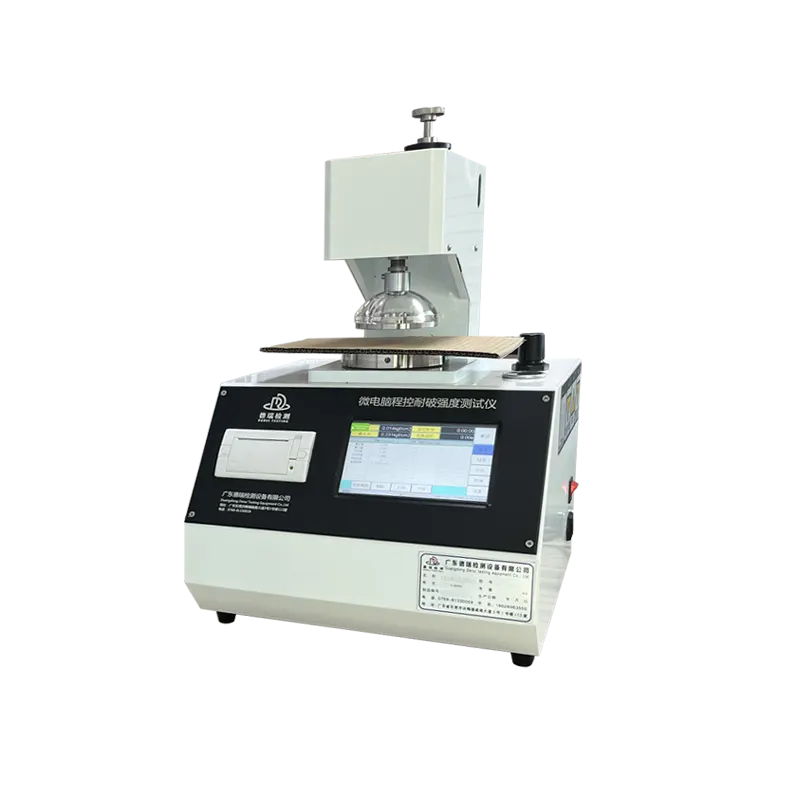
Absolutely. Our equipment software typically includes pre-configured test profiles for multiple global standards. For instance, a burst strength tester may have separate, selectable programs for TAPPI T403, ISO 2758, and ASTM D774, automatically applying the correct clamp pressure, speed, and calculation for each. This flexibility ensures global market compliance.
How do you ensure the long-term accuracy and compliance of your testing equipment?
We ensure accuracy through a multi-layered approach: 1) Precision Manufacturing: High-rigidity frames and certified load cells. 2) Traceable Calibration: Every instrument ships with a certificate traceable to national standards. 3) Compliant Software: Pre-programmed, locked test methods prevent accidental deviation from standards. We also offer scheduled recalibration and maintenance services to keep your lab audit-ready.
Can your tensile testers handle both standard paper strips and other flexible packaging materials?
Yes. Our advanced paper tensile testers feature interchangeable grips, including those for standard paper strips, plastic films, and laminates. With customizable test methods in the software, a single instrument can characterize a broad range of sheet materials, making it a versatile investment for labs testing beyond just paper.
How often should paper testing equipment be calibrated?
We recommend an annual calibration by an accredited service to ensure traceability and accuracy. For high-use environments or critical applications, a semi-annual check with traceable reference standards is advisable. Derui offers comprehensive calibration services and certificates.
Can one machine perform both tensile and compression tests on paper?
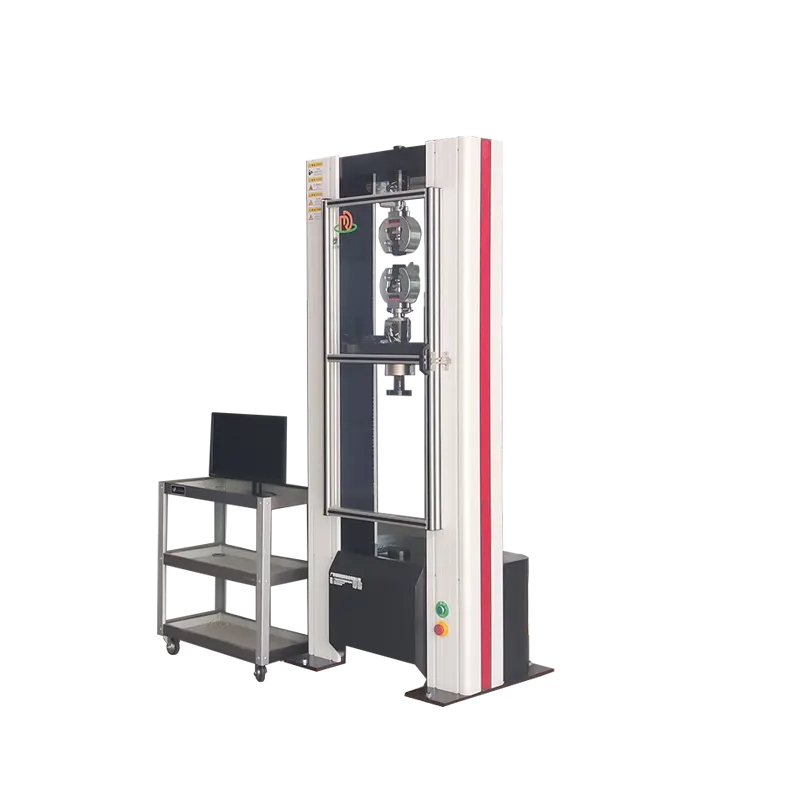
While a high-end Universal Testing Machine (UTM) can do both with fixture changes, it is not optimized for standardized paper tests like RCT or Burst. For accurate, efficient, and standard-compliant results, dedicated testers are recommended. They offer faster operation and direct output of specific industry metrics.
What is the difference between Ring Crush (RCT) and Edge Crush (ECT) tests?
Both measure compressive strength but use different samples. RCT uses a carefully prepared ring of containerboard, isolating the material's inherent strength. ECT tests a small segment of finished corrugated board's edge, factoring in flute structure. RCT is often used by mills, while ECT is common for box manufacturers.
For sensitive industries like medical or food packaging, are the equipment materials compliant with relevant contact regulations?
Yes. For parts that may contact samples (e.g., platens, fixtures), we can provide options made from materials compliant with regulations such as FDA 21 CFR upon request. Please inform our sales engineers of your specific industry and compliance requirements during consultation.
Can your testing software integrate with our existing Laboratory Information Management System (LIMS)?
Yes. The software for our advanced models supports data export in universal formats (e.g., CSV, PDF) and data transmission via standard interfaces (e.g., RS-232, Ethernet). For deep integration needs, our engineering team can provide an SDK or work collaboratively to enable seamless connectivity with your LIMS.
Our lab space is limited. What are the dimensions and utility requirements for your equipment?
Most benchtop specialized testers are designed to be compact, requiring only standard desk space and a 220V power outlet. Some high-capacity units (e.g., large board compression testers) may require a stable floor foundation. During the quotation process, we provide detailed specification and site preparation guides, including dimensions, weight, and power/air requirements to help you plan ahead.
Can test data from different brands or models of specialized testers (e.g., foam hardness testers) be compared?
If all testers strictly adhere to the same international standard (e.g., ASTM D3574) and are properly calibrated, data should theoretically be comparable. However, minor differences in fixtures, software algorithms, or sensor types can introduce slight variances. For strict comparisons, we recommend cross-verification using a common reference material across all devices.
How can we verify the accuracy of your tester against our internal standards?
We offer two primary methods: 1) Traceable Calibration: All instruments come with a standard calibration certificate traceable to NIST or equivalent national metrology institutes. 2) Correlation Testing: We encourage and support customers to perform correlation tests using their own known reference materials on our equipment to visually verify data consistency and reliability.
Can your testers generate reports suitable for supplier audits or regulatory compliance?
Yes. Our advanced software doesn’t just collect data; it generates complete, standards-compliant test reports. These include key parameters, test curves, statistics, and operator information, which can be archived or printed, providing full traceability for quality audits and supplier certifications.
For a new lab, should we invest in a UTM or a specialized tester first?
This depends entirely on your testing scope. If your work involves varied materials and exploratory R&D, a UTM offers necessary flexibility. If your core activity is routine quality control on a specific material (e.g., testing every batch of incoming foam), starting with a specialized tester provides immediate efficiency, accuracy, and a faster return on investment.
What is the main advantage of a specialized tester over a Universal Testing Machine (UTM)?
The core advantages are standardization, speed, and simplicity. A specialized tester has the test method and analysis logic built-in, drastically reducing setup time, operator training, and interpretation variance. It delivers faster, directly applicable results (like an ILD value), making it far more efficient for dedicated, high-volume testing.