
Derui is a specialized manufacturer and supplier of material testing equipment.Our products serve quality control, research, and development needs
across industries like aerospace, automotive, and manufacturing.
Floor-Standing Universal Testing Machines: High Capacity & Stability
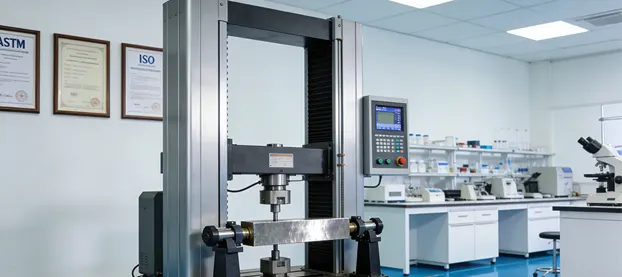
This page details our range of high-performance floor-standing universal testing machines (UTMs)—engineered to deliver uncompromising rigidity, alignment, and accuracy for laboratories where precision, high force capacity, and long-term reliability are paramount.
Designed for demanding applications, these dual-column universal testing machines provide full compliance with ASTM, ISO, and other stringent international standards for testing high-strength metals, advanced composites, concrete components, and finished industrial parts. They are the cornerstone of rigorous quality control (QC), advanced research & development (R&D), and certification laboratories worldwide.
Our Range of High-Capacity Floor-Standing UTMs
Explore our robust selection of floor-standing and large-frame universal testing machines. Each model is built with Derui’s commitment to unparalleled frame stability, measurement precision, and modular flexibility, backed by comprehensive global service and support.
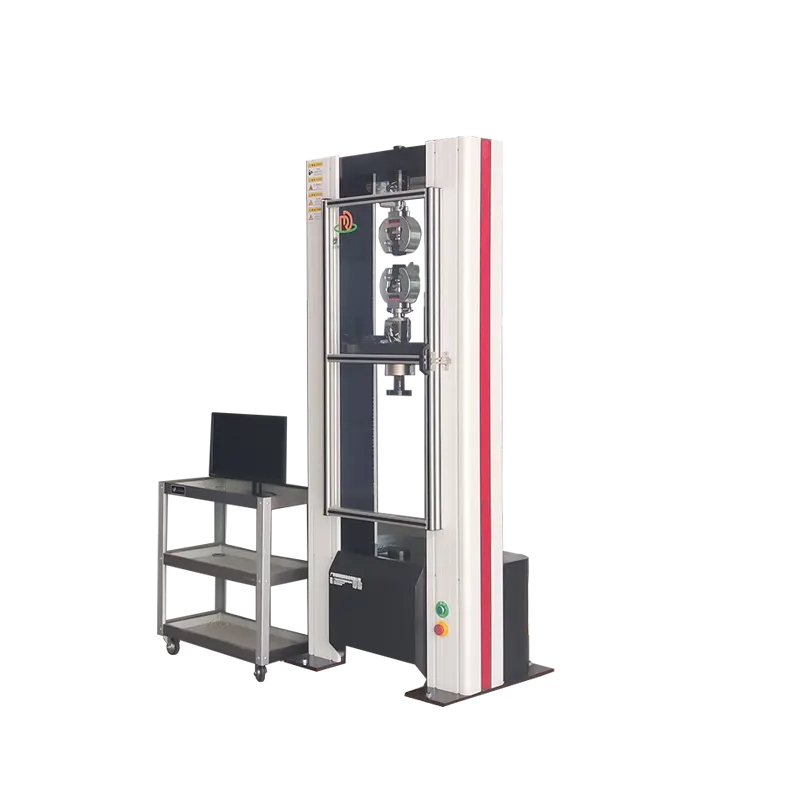
One: Unmatched Frame Rigidity & Alignment
The dual-column (double-column) design provides inherent structural stability and superior axial alignment, virtually eliminating bending moments during testing. This is critical for obtaining accurate modulus of elasticity values, precise yield point detection, and consistent, repeatable results on stiff materials like metals and composites.
Two: Extended Testing Space & Future-Proof Design
The generous clearance between columns accommodates larger fixtures, environmental chambers (e.g., high-temperature furnaces, cryogenic boxes), extensometers, and custom setups. This enables complex testing protocols such as fatigue, creep, and multi-step conditioning, protecting your investment as testing needs evolve.
Three: Engineered for High-Force & Demanding Applications
Built to handle mid-range to very high force capacities (typically from 5kN up to 1000kN+), these machines are the workhorses for testing structural steels, aerospace alloys, automotive components, construction rebars, and heavy-duty polymers where standard benchtop testers reach their limits.
Four: Advanced Performance & Data Integrity
Equipped with high-resolution servo-electric or servo-hydraulic drives, ultra-precision load cells, and sophisticated digital controllers, our floor-standing UTMs ensure smooth, controlled loading and data acquisition that meets the most stringent calibration standards (e.g., ASTM E4, ISO 7500-1), essential for certification and published research.
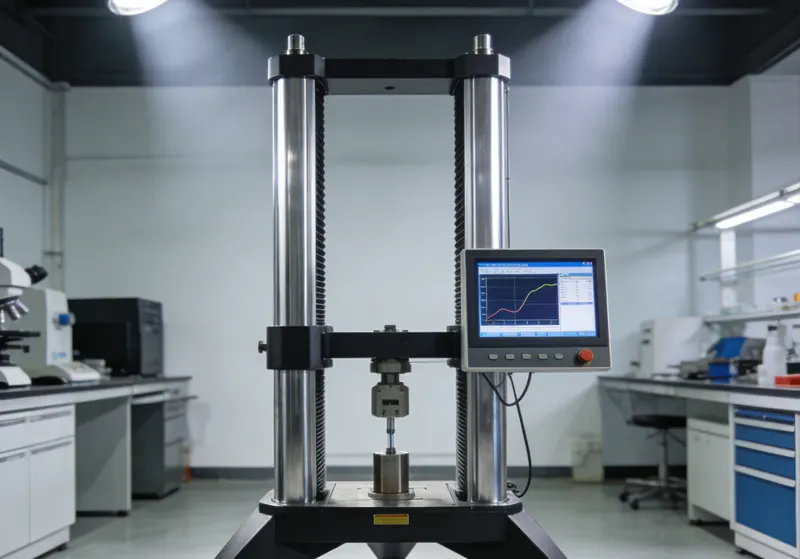
A floor-standing universal testing machine is a high-capacity, dual-column materials testing system engineered to perform precise tension, compression, flexure, and shear tests on materials and components that demand maximum force and minimal frame deflection. It represents the industrial-grade standard for accuracy, built as a permanent, stable installation in the laboratory.
The essence of a floor-standing UTM lies in its robust, ground-supported load frame. This foundation, combined with a powerful drive system, high-accuracy sensors, and advanced software, delivers the data integrity required for advanced material characterization, quality assurance in manufacturing, and failure analysis. It is the indispensable choice for industries including aerospace, automotive, construction, and advanced materials research.
The operation of a floor-standing tester follows the core principles of materials testing but leverages a heavyweight platform for ultimate precision and capability.
-
Sample Preparation & Secure Mounting: A specimen (e.g., metal coupon, composite panel, concrete cylinder) is meticulously aligned and secured using high-capacity grips (hydraulic wedge grips, vise grips) or compression platens. The rigid frame prevents any off-axis movement during clamping.
-
Advanced Test Configuration: The operator uses powerful software to select pre-configured test methods (e.g., ASTM E8, ISO 6892 for metals) or to program complex, multi-stage sequences involving load holds, cyclic steps, or strain-rate controls.
-
Controlled, High-Force Application: A high-torque servo system moves the crosshead with exceptional smoothness and control, applying significant tensile or compressive forces. The massive, ground-connected frame absorbs energy without flexing, ensuring all force is applied axially to the specimen.
-
High-Fidelity, Multi-Channel Data Acquisition: Redundant, high-accuracy load cells and advanced extensometry (contact or non-contact video extensometers) capture force and deformation data. The stable mechanical platform minimizes vibrational noise, enabling crystal-clear signal acquisition.
-
Comprehensive Analysis & Certified Reporting: The software automatically analyzes data to generate stress-strain curves and calculate key properties (tensile strength, yield strength, modulus, elongation). It produces detailed, audit-ready test reports with full traceability, crucial for ISO-accredited labs.
This process demonstrates how a Derui floor-standing UTM transforms challenging material samples into reliable, authoritative engineering data.
More Than Just High Force: Your Industrial-Grade Testing Hub
The true value of a floor-standing UTM is its role as the central, versatile powerhouse for a laboratory’s most critical and varied mechanical tests.
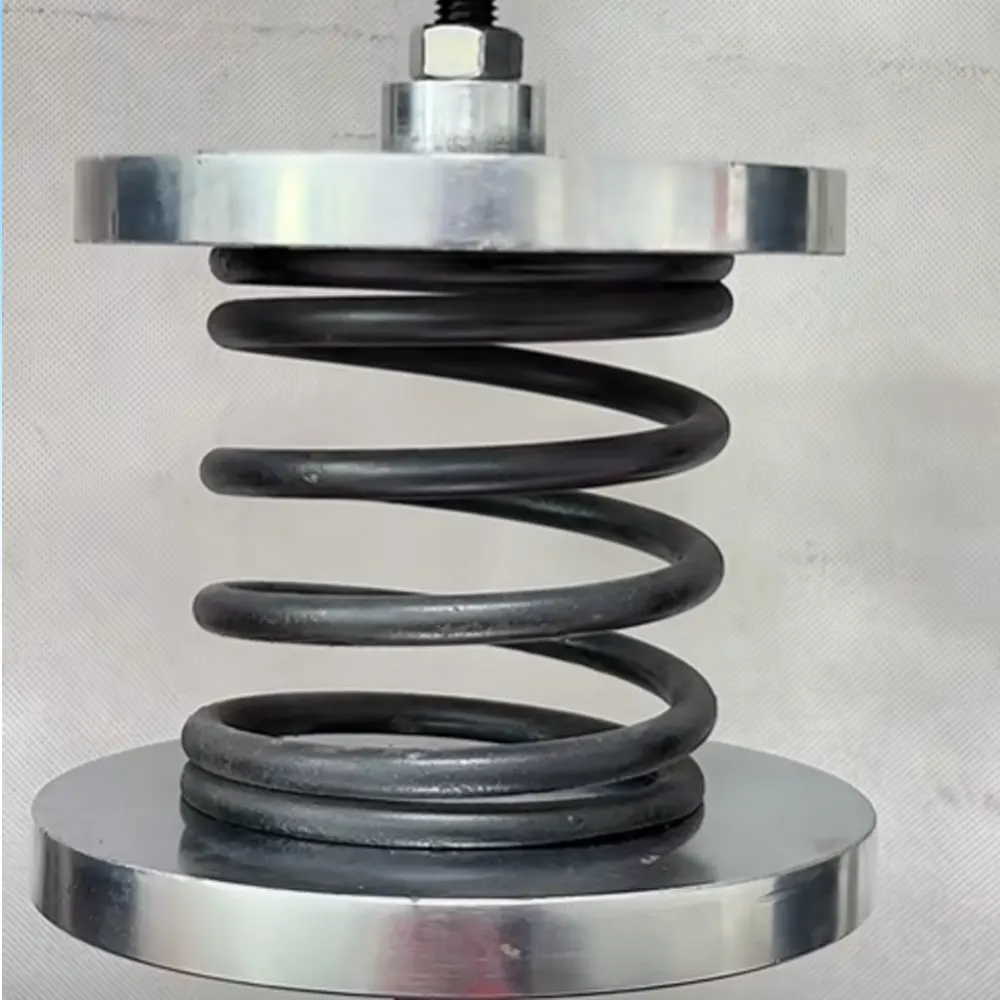
Large-Scale Compression & Crush Testing
Evaluate the ultimate load-bearing and crush resistance of large or high-strength components.
-
Typical Applications: Testing concrete cylinders, structural foams, pipeline sections, automotive crush cans, and palletized goods.
-
How It Works: Using large-diameter compression platens or custom fixtures, the machine applies a controlled, axial compressive force until failure or to a specified deflection.
-
Standards & Value: Conduct tests per standards like ASTM C39 (concrete) or ISO 844 (rigid foams) to validate structural integrity, safety factors, and compliance with building or transportation codes.
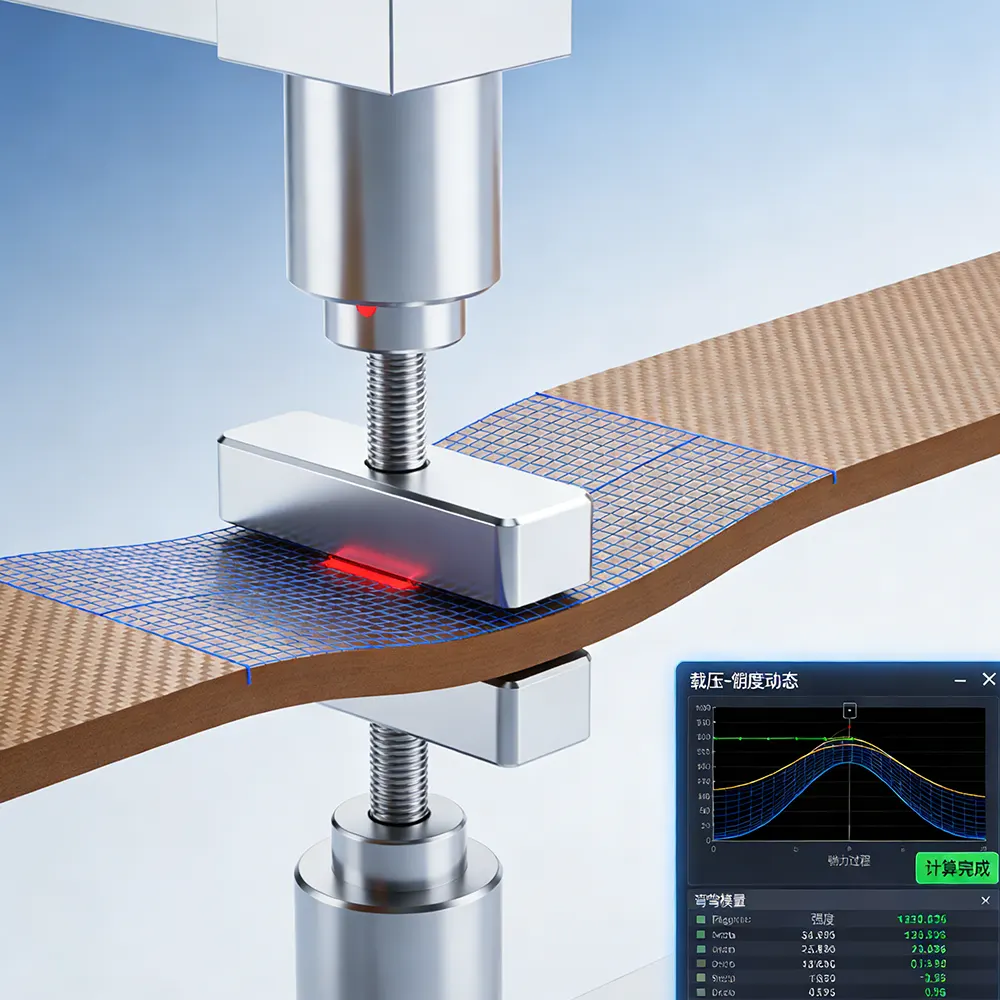
Structural Flexure & Stiffness Testing
Determine the bending strength and stiffness of beams, panels, and other structural elements.
-
Typical Applications: Evaluating I-beams, composite bridge decks, large plastic profiles, laminated wood, and architectural glass.
-
How It Works: Utilizing long-span three-point or four-point bend fixtures, the specimen is supported while force is applied. The software calculates flexural modulus, strength, and load-deflection behavior.
-
Standards & Value: Perform tests per ASTM D790 or ISO 178 to guide structural design, material selection, and quality verification for construction and infrastructure projects.
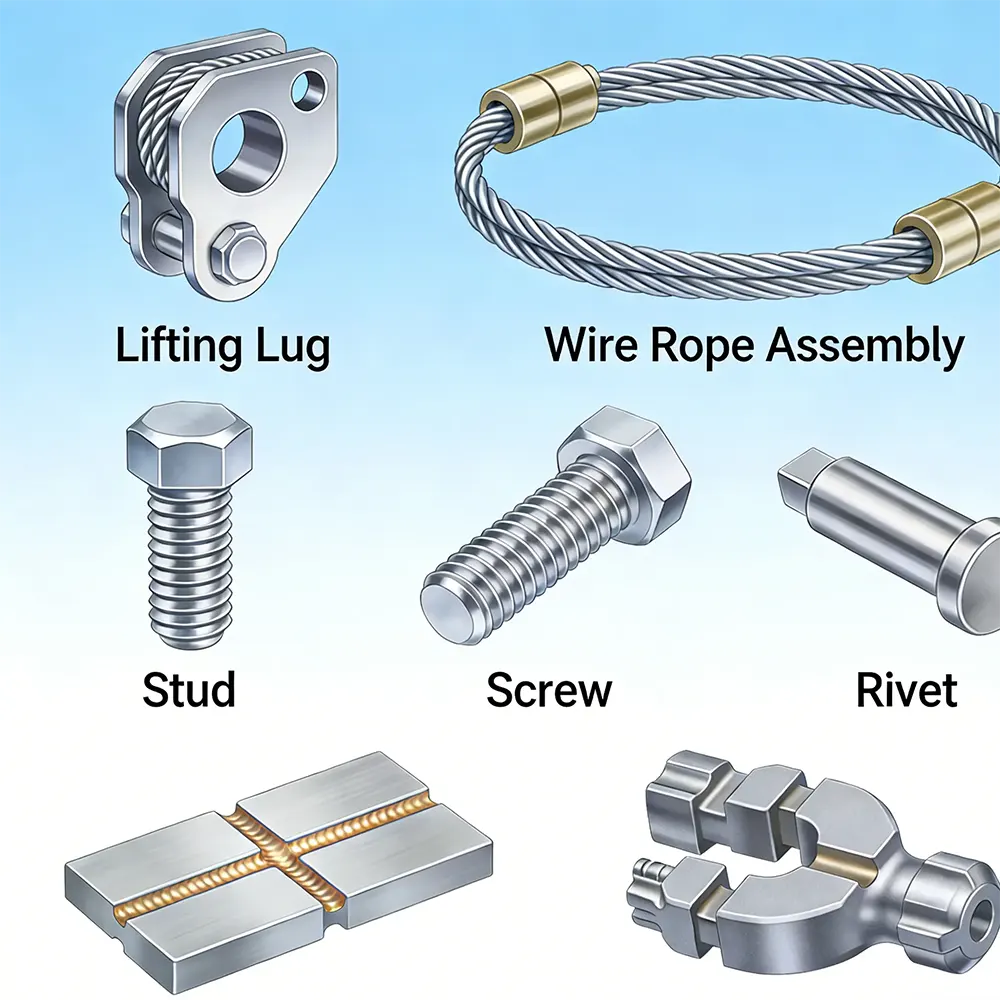
Component & Fastener Proof Testing
Apply tensile or shear forces directly to finished products to validate design and assembly.
-
Typical Applications: Proof-load testing of lifting eyes, wire rope assemblies, bolts, rivets, welded joints, and medical implants.
-
How It Works: Custom-designed fixtures hold the component, and the UTM applies force to simulate real-world operating conditions or to a specified proof load without causing failure.
-
Standards & Value: Ensure product safety and reliability, comply with industry-specific standards (e.g., ASME, DIN), and prevent field failures through 100% batch testing or audit-based verification.
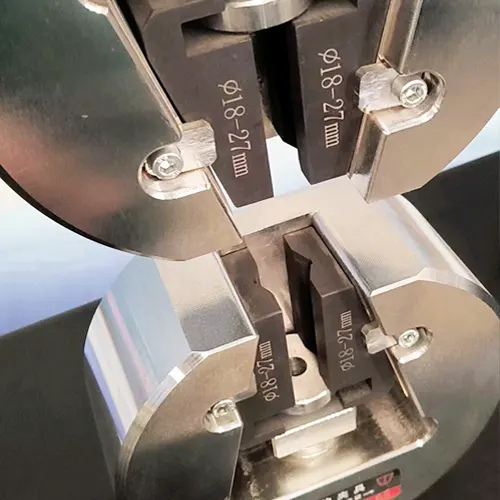
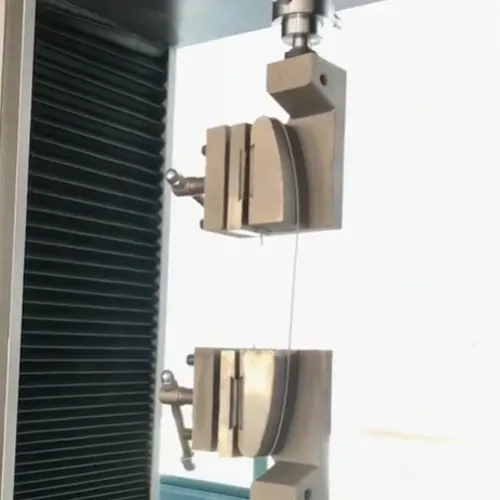
Floor-Standing UTM Fixtures & Accessories
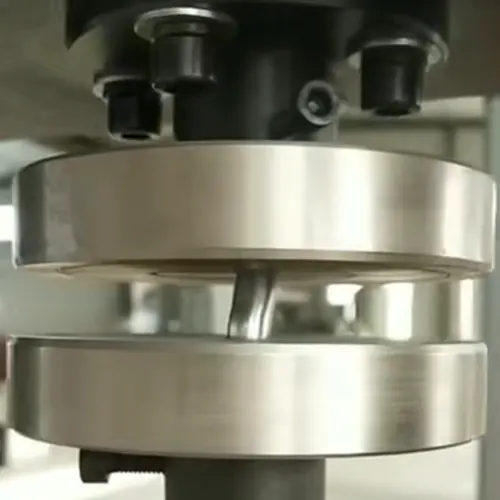
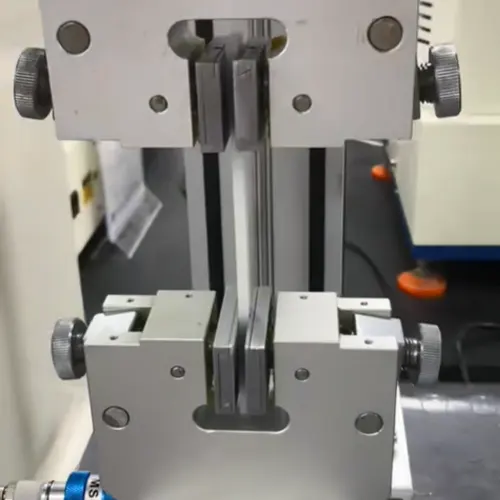
Unlock the full potential of your high-capacity testing system with our range of industrial-grade fixtures and accessories. From hydraulic wedge grips and large bend fixtures to custom-built jigs for product validation, our ecosystem is designed for durability, precision, and seamless integration with your floor-standing UTM.
What to Look for When Choosing Floor-Standing Universal Testing Machines
Selecting a floor-standing universal testing machine (UTM) is a major capital investment that will define your laboratory’s testing capabilities for years to come. To ensure you choose a system that delivers reliable data, operational efficiency, and a strong return on investment, look beyond the basic specifications and carefully evaluate these seven critical factors.
The core of any floor-standing UTM is its load frame. Prioritize a true dual-column (double-column) design constructed from high-strength, stress-relieved steel. This architecture provides superior axial alignment and minimizes frame deflection under load, which is non-negotiable for obtaining accurate modulus of elasticity (Young’s Modulus) and precise yield point detection on stiff materials like metals and composites. The inherent stability ensures that the force you apply is purely tensile or compressive, not lost to bending or twisting of the machine itself.
Frequently Asked Questions About Floor-Standing Universal Testing Machines
What is the typical price range for a floor-standing universal testing machine?
The cost of a floor-standing UTM varies significantly based on force capacity, controller sophistication, and accessories. A basic system might start in the range of $7000 to $15000, while high-capacity models (300kN+) with advanced software, video extensometers, or environmental chambers can range from $10000 to over $20000. For an accurate quote tailored to your specific testing needs (materials, standards, throughput), we recommend contacting our engineering team for a detailed configuration and price.
What materials and applications are floor-standing UTMs best suited for?
Floor-standing UTMs are engineered for high-force and high-precision testing of robust materials. They are the ideal choice for:
-
Metals: Tensile testing of steel, aluminum, and alloys per ASTM E8 / ISO 6892.
-
Composites: Characterizing the strength and modulus of carbon fiber and fiberglass laminates.
-
Construction Materials: Testing concrete rebar, structural components, and plastics.
-
Finished Components: Performing proof, flexure, and crush tests on automotive, aerospace, or industrial parts.
What are the main advantages of a floor-standing UTM over a large benchtop model?
Floor-standing models offer significantly greater frame rigidity (higher stiffness), which is critical for accurate modulus measurement on stiff materials. They typically have higher force capacities (often >50kN), larger test spaces for environmental chambers, and are installed as permanent, vibration-damped systems, enhancing long-term stability and accuracy.
What kind of laboratory space and preparation is required?
A firm, level concrete floor is essential. The machine requires a defined footprint, access to standard three-phase electrical power (for higher-capacity models), and sufficient clearance for operator access and fixture handling. We provide detailed site preparation guidelines and can offer installation services.
How does the software for these advanced UTMs differ?
Software for high-end floor-standing UTMs includes features for complex test programming (multi-stage profiles, loops, external sensor input), advanced analysis modules (for anisotropy, energy calculation), enhanced data security and traceability, and robust networking capabilities for integration into Laboratory Information Management Systems (LIMS).
Can these machines be upgraded with new accessories or controllers?
Yes. The modular design allows for the addition of new grips, extensometers (including non-contact video systems), environmental chambers, and even controller upgrades. This future-proofs your investment against evolving testing standards and requirements.
How accurate are floor-standing UTMs compared to benchtop models?
Floor-standing UTMs are designed for superior accuracy, especially for stiff materials. Their dual-column design provides exceptional frame rigidity (stiffness), which minimizes deflection during testing. This is critical for obtaining precise modulus of elasticity (Young's Modulus) measurements. They are calibrated to meet or exceed stringent standards like ASTM E4 and ISO 7500-1, often achieving force accuracies within ±0.5% of the indicated load or better.
Can a floor-standing UTM perform tests other than tension, like compression or bending?
Absolutely. A key advantage of a universal testing machine is its versatility. By simply changing the grips and fixtures, the same system can perform:
-
Compression Tests: Using compression platens for concrete, foam, or components.
-
Flexure (Bend) Tests: Using 3-point or 4-point bend fixtures for plastics or beams.
-
Shear and Peel Tests: With specialized fixtures for adhesives and composites.
What kind of maintenance and calibration services are needed?
To ensure ongoing accuracy and data integrity, we recommend:
-
Regular Calibration: Annual calibration by an accredited service (traceable to NIST) is standard for quality labs. Derui offers global calibration services.
-
Preventive Maintenance: Periodic lubrication and inspection of mechanical components.
-
Software Updates: Keeping the control and analysis software up to date.
We offer comprehensive service contracts to cover calibration, maintenance, and technical support, ensuring your investment is protected.
How do I choose between a single-column and a dual-column (floor-standing) UTM?
Choose based on your force requirements and needed precision:
-
Single-Column (Benchtop): Best for lower force tests (typically <5 kN), smaller samples (plastics, thin metals, textiles), and labs with severe space/budget constraints.
-
Dual-Column (Floor-Standing): Essential for higher forces (>5 kN to 1,000+ kN), superior alignment/rigidity for accurate modulus on stiff materials, and accommodating larger fixtures or environmental chambers. It's the choice for industrial QC and advanced R&D.
What are some typical industry applications for these machines?
Our floor-standing UTMs are used across industries for critical testing:
-
Automotive: Testing seat belts, airbag fabrics, metal brackets, and composite panels.
-
Aerospace: Qualifying lightweight alloys, composite laminates, and fastener systems.
-
Construction: Verifying the yield strength of rebar and the performance of structural connectors.
-
Medical Devices: Validating the strength of bone screws, joint implants, and surgical tooling.
What is the lead time, and what support is included after purchase?
Lead times typically range from 4 to 6 weeks for standard configurations, depending on customization. Every Derui system includes:
-
Professional Installation & Commissioning: Our engineers ensure it's set up correctly.
-
Comprehensive On-Site Training: We train your operators on hardware and software.
-
Warranty & Ongoing Support: Access to technical support, spare parts, and calibration services to ensure your lab's productivity for years to come.