
Derui is a specialized manufacturer and supplier of material testing equipment.Our products serve quality control, research, and development needs
across industries like aerospace, automotive, and manufacturing.
Environmental Test Chamber Solutions for Packaging & Product Stability Validation
Precision Climate Simulation for Demanding Packaging Laboratories
Transform your testing capabilities with professional-grade Environmental Test Chambers designed specifically for packaging validation. Our chambers create precise, repeatable climatic conditions that accurately simulate the harsh realities of global supply chains—from tropical humidity to arctic cold, warehouse storage to cold chain transportation vibrations. Discover hidden failure points before they reach customers, turning your quality control lab into a predictive risk management center.
Engineered for Real-World Packaging Challenges
Accurately simulates: Long-term warehouse storage, international freight cycles, desert heat exposure, tropical humidity degradation, winter cold embrittlement, and altitude pressure changes.
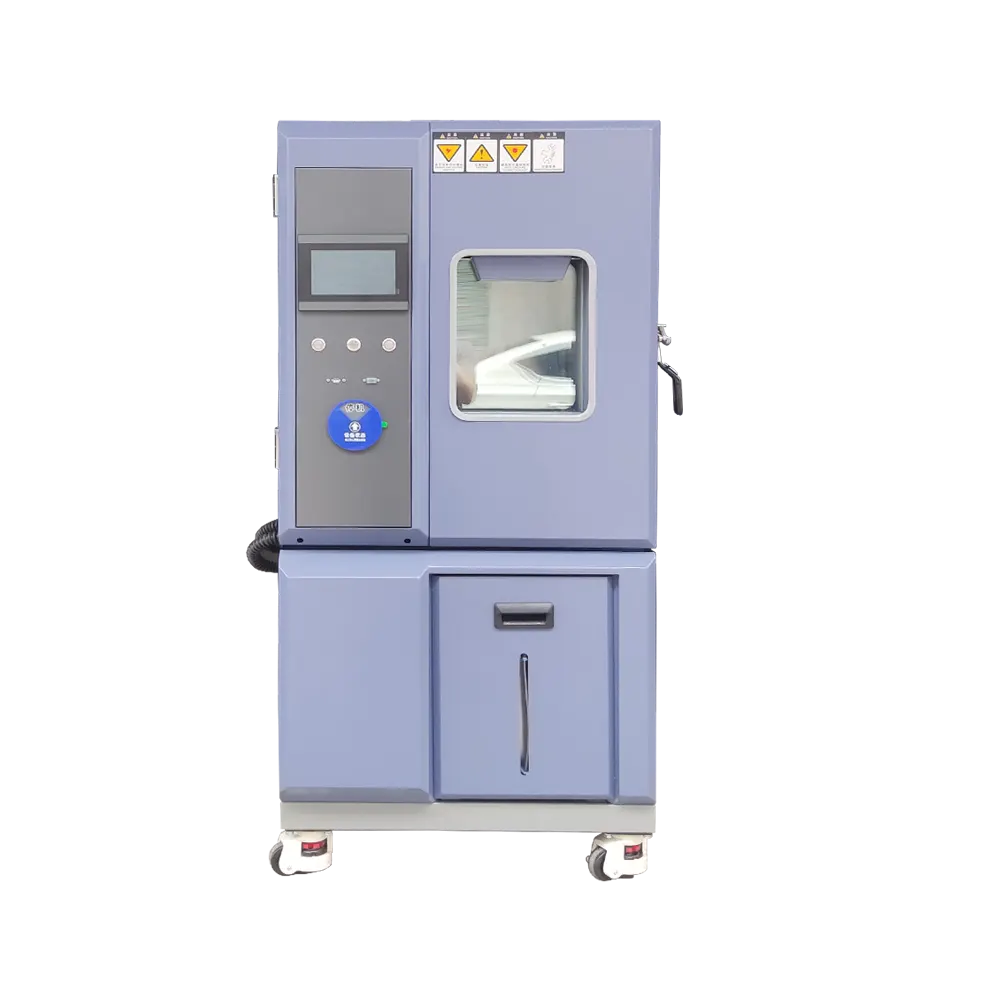
Why Our Environmental Test Chamber Delivers Unmatched Value
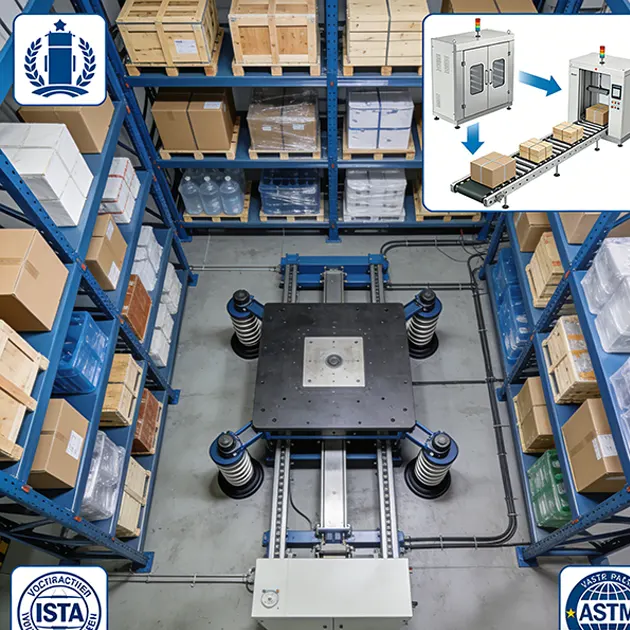
Purpose-Built for Packaging Validation Standards
Unlike generic chambers, our systems incorporate features critical for packaging testing: vibration-isolated construction to prevent test interference, heavy-duty shelving supporting full shipping loads, and rapid temperature transition rates that realistically simulate transit shocks. Full compliance with ISTA 2A/3A/3E, ASTM D4332, and ICH Q1A requirements.
Industry-Leading Precision & Uniformity
Achieve spatial uniformity of ±0.5°C and ±2.5% RH across the entire workspace—even with maximum loading. Advanced microprocessor control maintains setpoints within ±0.1°C stability, ensuring every product experiences identical conditions for truly comparable data.
Engineered for 24/7 Reliability & Safety
Constructed with 316 marine-grade stainless steel interiors, industrial compressors with redundant systems, and comprehensive safety packages including independent overtemperature protection, automatic water refill, and emergency power-off. Built for continuous operation in demanding QC environments.
From Data Collection to Strategic Insights
Transform climate exposure into competitive intelligence with our 21 CFR Part 11 compliant software. Design complex test profiles, monitor real-time conditions, predict failure points through trend analysis, and generate audit-ready reports that satisfy FDA, ISO, and retail compliance requirements.
How to Select the Perfect Environmental Test Chamber: 5 Critical Considerations
-
Transport Simulation: ISTA 2A/3A requires specific temperature/humidity cycles with defined transition rates
-
Material Conditioning: ASTM D4332 mandates precise 23°C/50% RH control for 48-hour preconditioning
-
Pharmaceutical Stability: ICH Q1A demands long-term (25°C/60% RH) and accelerated (40°C/75% RH) studies
-
Military/Electronics: MIL-STD-810 specifies extreme temperature ranges with rapid cycling
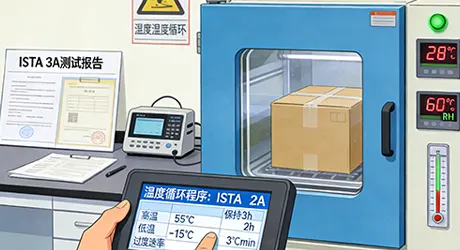
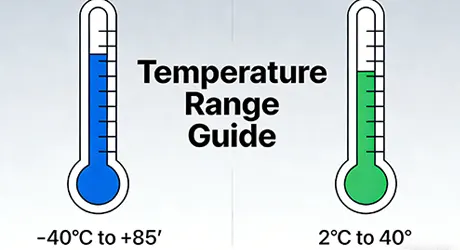
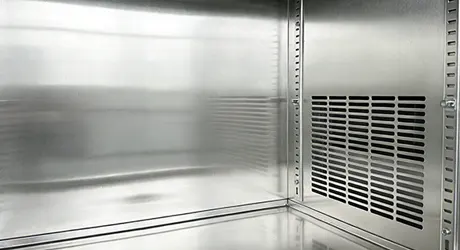
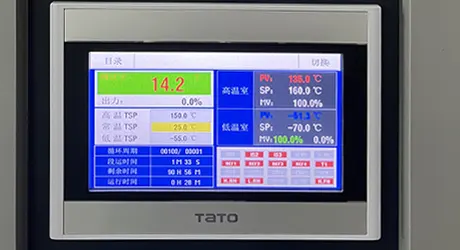
An Environmental Test Chamber is a precisely engineered enclosure that generates and maintains controlled climatic conditions—including temperature, humidity, light, and sometimes atmospheric pressure—for extended periods. In packaging validation, it serves as an accelerated aging laboratory, compressing months of real-world exposure into weeks of controlled testing.
The chamber's core function is risk mitigation through predictive analysis. By exposing products and packaging to calculated stresses, engineers can identify failure modes related to material degradation, adhesive failure, condensation formation, and structural compromise—issues that typically only emerge after extended real-world exposure.
Phase 1: Profile Development
Based on distribution analytics (e.g., "Chicago to Shanghai via ocean freight with 30-day warehouse storage"), engineers create time-based temperature/humidity profiles in the chamber controller, often adapting ISTA 3A standard sequences or developing custom simulations.
Phase 2: Instrumentation & Loading
Test units are strategically placed with wireless data loggers between packages to map microenvironment conditions. Products are positioned to simulate actual stacking patterns while ensuring unobstructed airflow—typically leaving 20% free space around specimens.
Phase 3: Controlled Stress Application
The chamber executes programmed profiles with precision, ramping between setpoints at specified rates. The refrigeration system modulates cooling capacity while humidification and dehumidification systems maintain exact moisture levels, all coordinated by PID-controlled algorithms.
Phase 4: Continuous Monitoring & Adjustment
Throughout multi-day or multi-week tests, the system logs over 100 parameters including compressor status, heater output, humidity saturation, and door openings. Automatic deviation correction maintains conditions within ±0.5°C of programmed values.
Phase 5: Post-Test Failure Analysis
Samples undergo multi-level evaluation: visual inspection for macroscopic failures, functional testing for performance degradation, and material analysis (FTIR, microscopy) to detect microscopic changes indicating impending failure.
Beyond Temperature Control: Strategic Applications
Supply Chain Risk Assessment
Map your entire distribution network's climatic extremes and program sequential exposure—testing how packaging withstands transitions from frozen storage to tropical humidity to desert heat within single shipments.
Sustainability & Cost Optimization
Quantify how reduced packaging materials perform under stress. Provide data-driven justification for lightweighting initiatives while maintaining protection levels—typically identifying 15-25% material reduction opportunities.
New Market Expansion Validation
Test products against destination climate data from NOAA and World Meteorological Organization databases. Validate performance for specific regions like Middle Eastern heat (50°C+) or Southeast Asian humidity (95% RH continuous).
Regulatory Compliance & Certification
Generate evidence for Amazon Frustration-Free Packaging, Walmart Packaging Scorecard, EU Packaging Directive compliance, and retail-specific requirements that mandate environmental testing documentation.
Root Cause Failure Investigation
Reproduce field failure conditions precisely. Isolate whether failures resulted from temperature extremes, humidity exposure, thermal cycling, or combined factors—enabling targeted corrective actions.
Frequently Asked Questions About Environmental Test Chamber
What training ensures proper chamber operation?
We provide comprehensive certification programs: Basic Operator (4 hours), Advanced Programming (8 hours), and Maintenance Technician (16 hours)—all with competency testing and annual refresher courses included.
How does your chamber reduce energy consumption?
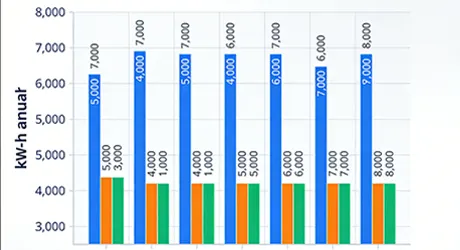
Our EcoMode technology reduces energy use 30-40% through variable-speed compressors, heat reclaim systems, and intelligent defrost cycles. Typical 64 cu.ft. chamber operates on ≤ 4 kW at 23°C versus industry standard 5-6 kW.
How do we validate chamber performance before purchase?
Request third-party uniformity mapping per ISO 17025 with your actual test load. Reputable suppliers provide this data showing temperature/RH at 9-27 points throughout the workspace under loaded conditions.
What's the lead time for custom chamber configurations?
Standard units: 8-12 weeks. Custom walk-in rooms: 14-20 weeks. Critical path items include compressor manufacturing (6 weeks) and control system programming (2 weeks). We maintain inventory of common components to accelerate delivery.
Can chambers simulate altitude/pressure changes?
Yes—combined environment chambers integrate vacuum systems to simulate altitudes up to 100,000 feet while maintaining temperature/humidity control. Critical for air freight validation and electronics testing.