
Derui is a specialized manufacturer and supplier of material testing equipment.Our products serve quality control, research, and development needs
across industries like aerospace, automotive, and manufacturing.
Hydraulic Tensile Testing Machine | High-Force Servo-Hydraulic UTM
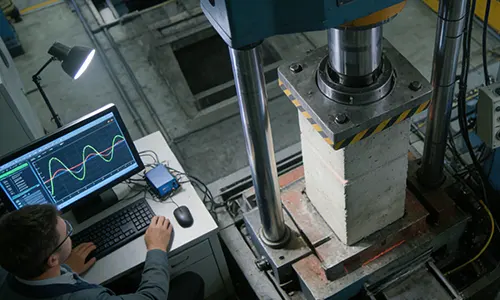
This page details our range of high-performance hydraulic tensile testing machines—also known as servo-hydraulic universal testing machines (UTMs). Engineered to deliver exceptional high-force capacity, long-stroke performance, and dynamic testing capabilities, these systems are built for laboratories where testing large components, construction materials, and heavy-duty metals under extreme loads is a daily requirement.
Designed for the most demanding applications, our hydraulic tensile testing machines provide full compliance with ASTM, ISO, and other rigorous international standards for testing materials like concrete rebar, structural steel, aerospace components, and geosynthetics. They are the cornerstone of heavy-industry quality control (QC), advanced materials research, and certification testing worldwide.
Our Range of High-Force Hydraulic Tensile Testing Machines
Explore our robust selection of servo-hydraulic universal testing systems. Each model is built with Derui’s commitment to power, precision, and reliability, featuring advanced digital controllers and modular designs backed by comprehensive global service and engineering support.
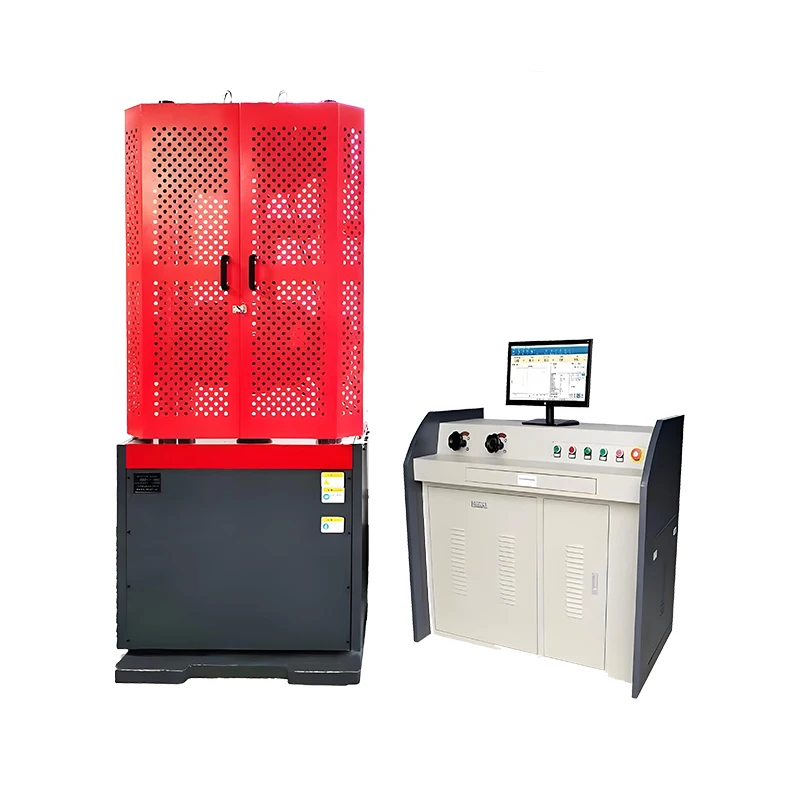
One: Unmatched High-Force and Long-Stroke Capability
Unlike electromechanical systems, a hydraulic tensile testing machine generates immense force in a compact footprint. Our servo-hydraulic systems deliver smooth, controlled forces from 100kN up to several meganewtons, with strokes long enough to test large structural components and geotextiles, making them the only choice for true high-capacity applications.
Two: Dynamic and Fatigue Testing Ready
The core advantage of a servo-hydraulic system is its ability to perform not only static tests but also dynamic and fatigue testing. With high response speeds, our hydraulic tensile testing machines can apply cyclic loads at varying frequencies, enabling you to study material durability, crack propagation, and component life cycles on the same platform used for routine tensile tests.
Three: Robust Construction for Industrial Environments
Built with heavy-duty, hardened steel frames and industrial-grade hydraulic components, these machines are designed for longevity in demanding laboratory or production floor environments. The inherent durability of a hydraulic universal testing machine ensures minimal maintenance and maximum uptime, even under continuous high-load operation.
Four: Superior Value for High-Load Applications
When force requirements exceed 500kN, a hydraulic tensile testing machine often presents a more cost-effective and space-efficient solution than an equivalently sized electromechanical system. This provides exceptional return on investment (ROI) for testing labs, construction material plants, and heavy manufacturing facilities that regularly validate high-strength materials.
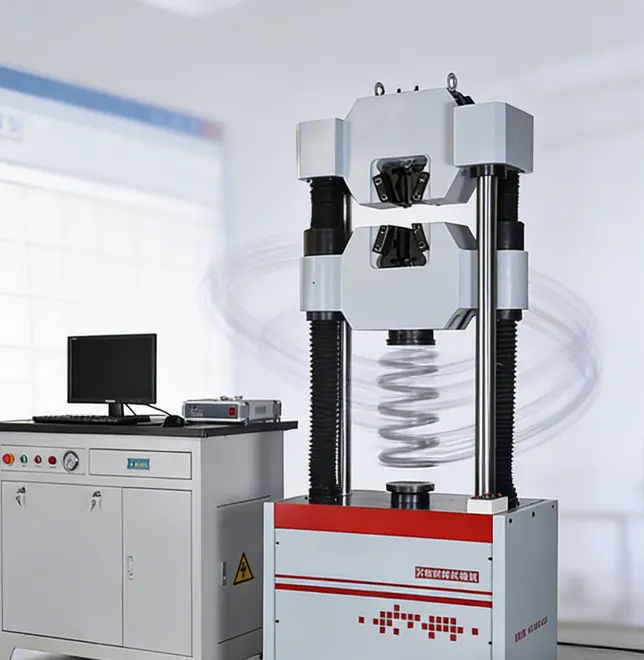
A hydraulic tensile testing machine (often called a servo-hydraulic universal testing machine) is a high-force materials testing system that uses a hydraulic actuator powered by a servo-controlled pump to apply tensile, compressive, and flexural loads. It is specifically engineered for applications where the required force exceeds the practical range of standard electromechanical UTMs, typically starting at 300kN and extending to 10,000kN and beyond.
The essence of a modern hydraulic tensile testing machine lies in its closed-loop servo control. A digital controller precisely regulates hydraulic fluid flow to the actuator based on real-time feedback from load cells and displacement sensors. This allows for accurate application of both static loads for measuring ultimate strength and dynamic loads for fatigue analysis, making it an indispensable tool for civil engineering, heavy manufacturing, and advanced materials research.
The operation of a hydraulic tensile testing machine combines robust hydraulic power with precise digital control to handle the most challenging tests.
Sample Preparation & Secure Mounting: A large specimen (e.g., steel rebar, heavy-duty chain, concrete cylinder) is secured using high-capacity hydraulic wedge grips or specialized fixtures. The machine’s rigid frame ensures perfect alignment to handle extreme forces safely.
Advanced Test Configuration: The operator uses sophisticated software to select a test method (e.g., ASTM A615 for rebar) or program complex load profiles, including static ramp-to-failure, low-cycle fatigue, or load-holding sequences.
Servo-Controlled Force Application: Upon initiation, the software sends a command to the servo valve, which directs pressurized hydraulic oil into the actuator cylinder. The piston extends or retracts, applying a smoothly controlled force to the specimen. The system constantly adjusts the valve to match the target load or displacement profile precisely.
High-Fidelity Data Acquisition: High-accuracy, fatigue-rated load cells measure the applied force, while an LVDT or encoder measures actuator displacement. For dynamic tests, data acquisition rates are high enough to capture detailed transient responses.
Comprehensive Analysis & Reporting: The software generates complete force vs. displacement curves, calculates all key mechanical properties, and produces detailed test certificates. For fatigue tests, it tracks cycle count, load amplitude, and can detect specimen failure automatically.
This process demonstrates how a Derui hydraulic tensile testing machine transforms large, high-strength samples into reliable, certifiable engineering data.
More Than Just Tension: Your High-Capacity Testing Powerhouse
The versatility of a hydraulic universal testing machine extends far beyond simple tensile pulls, making it a central asset for diverse industrial testing needs.
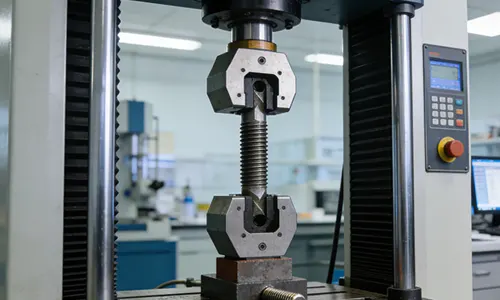
Apply extreme tensile or proof loads to full-scale construction and industrial components.
Typical Applications: Testing the ultimate tensile strength of anchor bolts, lifting eyes, welded connections, and pre-stressing tendons.
How It Works: Using custom-designed fixtures, the hydraulic tensile testing machine pulls the component to failure or to a specified proof load, validating its safety factor and compliance with engineering standards like ASME or DIN.
Standards & Value: Ensures structural integrity and safety in critical applications like bridges, buildings, and heavy machinery, preventing catastrophic failures.
What to Look for When Choosing Hydraulic Tensile Testing Machines
Investing in a hydraulic tensile testing machine is a significant decision that impacts your laboratory’s long-term testing capabilities, data integrity, and operational efficiency. To ensure you select a system that meets your high-force requirements and delivers reliable performance for years, evaluate these seven critical factors beyond basic specifications.
Capability
The primary reason for choosing a hydraulic tensile testing machine is its ability to generate immense force. Determine your maximum required force with a substantial safety margin (25-50% is standard) to avoid operating at the system’s limit. Equally important is stroke length—ensure it accommodates the elongation of large specimens like geotextiles or the compression of tall concrete cylinders. Finally, assess frame stiffness; a rigid, heavy-duty frame minimizes deflection under full load, which is critical for accurate modulus measurement and safe high-force operation.
Frequently Asked Questions About Hydraulic Tensile Testing Machines
What is the typical force range and cost for a hydraulic tensile testing machine?
Force capacities typically start around 300kN and can exceed 10,000kN. Prices vary significantly with capacity and sophistication, generally starting in the range of $10,000 to $30,000 for a basic static system and can exceed $20000 for high-capacity systems with dynamic controllers and advanced software. Request a detailed quote based on your specific force, space, and application needs.
What kind of maintenance does a hydraulic UTM require?
Regular maintenance includes monitoring and changing hydraulic fluid and filters, checking for leaks, and verifying system calibration. Compared to electromechanical systems, they require more attention to the hydraulic power unit but are exceptionally robust. Derui provides clear maintenance schedules and offers comprehensive service contracts to ensure optimal performance and uptime.
Can a hydraulic tester perform static, dynamic, and fatigue tests?
Yes, this is a key advantage. A modern servo-hydraulic tensile testing machine with a digital controller can be configured for standard static tension/compression tests, low-cycle fatigue tests, and high-frequency dynamic tests. The same machine can be a versatile hub for both routine QC and advanced R&D.
What industries are the primary users of hydraulic UTMs?
Key industries include:
-
Construction & Civil Engineering: For testing rebar, concrete, tendons, and soil/geo-synthetics.
-
Aerospace & Defense: For testing large composite structures and landing gear components.
-
Heavy Manufacturing: For validating the strength of large forgings, castings, and welded assemblies.
-
Automotive: For testing chassis components, axles, and suspension parts, especially for fatigue life.
-
Research & Certification Labs: For conducting advanced material research and providing third-party certification for large-scale products.
What is the difference between a servo-hydraulic and a standard hydraulic tester?
The key difference is control precision. A standard (or open-loop) hydraulic tester uses manual valves to apply force, offering basic functionality for simple break tests. A servo-hydraulic tensile testing machine employs a closed-loop digital control system. It uses real-time feedback from sensors to a servo valve, allowing for precise control of load, displacement, or strain. This enables not only highly accurate static tests but also complex dynamic waveforms, sine waves, and fatigue cycles, making it essential for modern R&D and certification labs.
What maintenance does a hydraulic UTM require, and how often?
Regular maintenance is crucial for reliability and accuracy. Key tasks include:
-
Daily/Weekly: Check for hydraulic oil leaks, verify fluid levels, and inspect hose connections.
-
Every 6-12 Months: Change hydraulic filters and perform an oil analysis to check for contamination or degradation.
-
Annually: Schedule a professional preventive maintenance and calibration service by the manufacturer or an accredited lab. This ensures all sensors, the servo valve, and the controller are performing to specification. Derui offers comprehensive service contracts to manage this proactively.
Can a hydraulic tensile tester perform low-cycle fatigue tests?
Absolutely. This is a core strength of a servo-hydraulic system. These machines are exceptionally well-suited for low-cycle fatigue (LCF) testing, where materials are subjected to high-strain, cyclic loads until failure (typically from 1 to 100,000 cycles). The fast response of the servo valve allows for precise control of complex load or strain waveforms, making them ideal for studying the durability of welds, aerospace components, and structural metals under simulated service conditions per standards like ASTM E606.
What are the main applications in the construction industry?
In construction and civil engineering, hydraulic tensile testing machines are indispensable for quality assurance and compliance:
-
Rebar and Pre-stressing Steel: Tensile testing per ASTM A615, A706, and A416 to verify yield strength, tensile strength, and elongation.
-
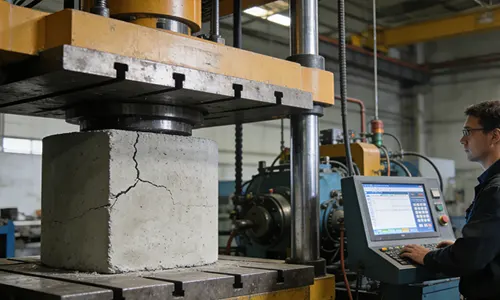
Concrete Compression: Testing cylinders and cores per ASTM C39/C39M using high-capacity compression platens.
-
Geosynthetics and Soil Mechanics: Wide-width tensile tests on geotextiles and geogrids (ASTM D4595) and direct shear tests.
-
Anchors and Fasteners: Proof testing and determining ultimate load capacity of post-installed anchors and heavy-duty bolts.
What kind of foundation or lab space is needed for installation?
Installation is more involved than for a benchtop unit. Key requirements include:
-
Substantial Foundation: A thick, reinforced concrete floor (often >12 inches) is mandatory to absorb the massive reaction forces and prevent vibration.
-
Adequate Space: Plan for the machine’s footprint plus 3-4 feet of clearance on all sides for operator access, fixture handling, and maintenance.
-
Utilities: Requires a 3-phase electrical supply for the hydraulic power unit and potentially process water cooling. The lab must have adequate ventilation and a stable ambient temperature.
-
Professional Installation: Always requires factory-trained technicians for assembly, alignment, and commissioning.
What is the lead time from order to installation?
Lead times for a custom-configured hydraulic tensile testing machine are typically 16 to 24 weeks. This includes manufacturing of the load frame and power unit, assembly, factory acceptance testing (FAT), and ocean freight. Complex systems with dynamic controllers or large custom fixtures may take longer. It’s crucial to factor in this timeline and any site preparation work (like pouring a foundation) that must be completed before delivery.
Can you integrate an environmental chamber with a hydraulic tester?
Yes, this is a common and powerful combination. High-force servo-hydraulic frames are often paired with environmental chambers for temperature testing (from -70°C to +300°C or higher). This allows for evaluating material properties under extreme conditions—such as testing aerospace alloys at cryogenic temperatures or polymers at elevated temperatures. The integration requires specially designed chamber access ports and often upgraded seals on the hydraulic actuator.
How do I choose the right grips for testing steel rebar and large specimens?
For high-force applications like rebar testing, hydraulic wedge grips are the standard and most reliable choice. Key selection criteria:
-
Capacity: Grips must be rated for the machine’s full force. Never use under-rated grips.
-
Jaw Face: Use serrated (v-groove) jaws for round rebar and flat knurled jaws for flat specimens.
-
Self-Alignment: Look for grips with spherical seating to ensure perfect axial alignment, which is critical for accurate results and preventing premature jaw breakage.
-
Safety: Ensure the grip design includes a safety shield to contain fragments in case of specimen failure. For very large diameters, custom split-collar grips may be required.